If you’re leading a company in 2026, your phone isn’t a phone.
It’s where confidential decisions land first: the board pack you skim between gates, the term sheet your counsel sends at 11:47 p.m., the message you can’t afford to misread. The last few years trained executives to accept “AI everywhere.” 2026 is when the next question becomes unavoidable: can you use that AI without giving up control?
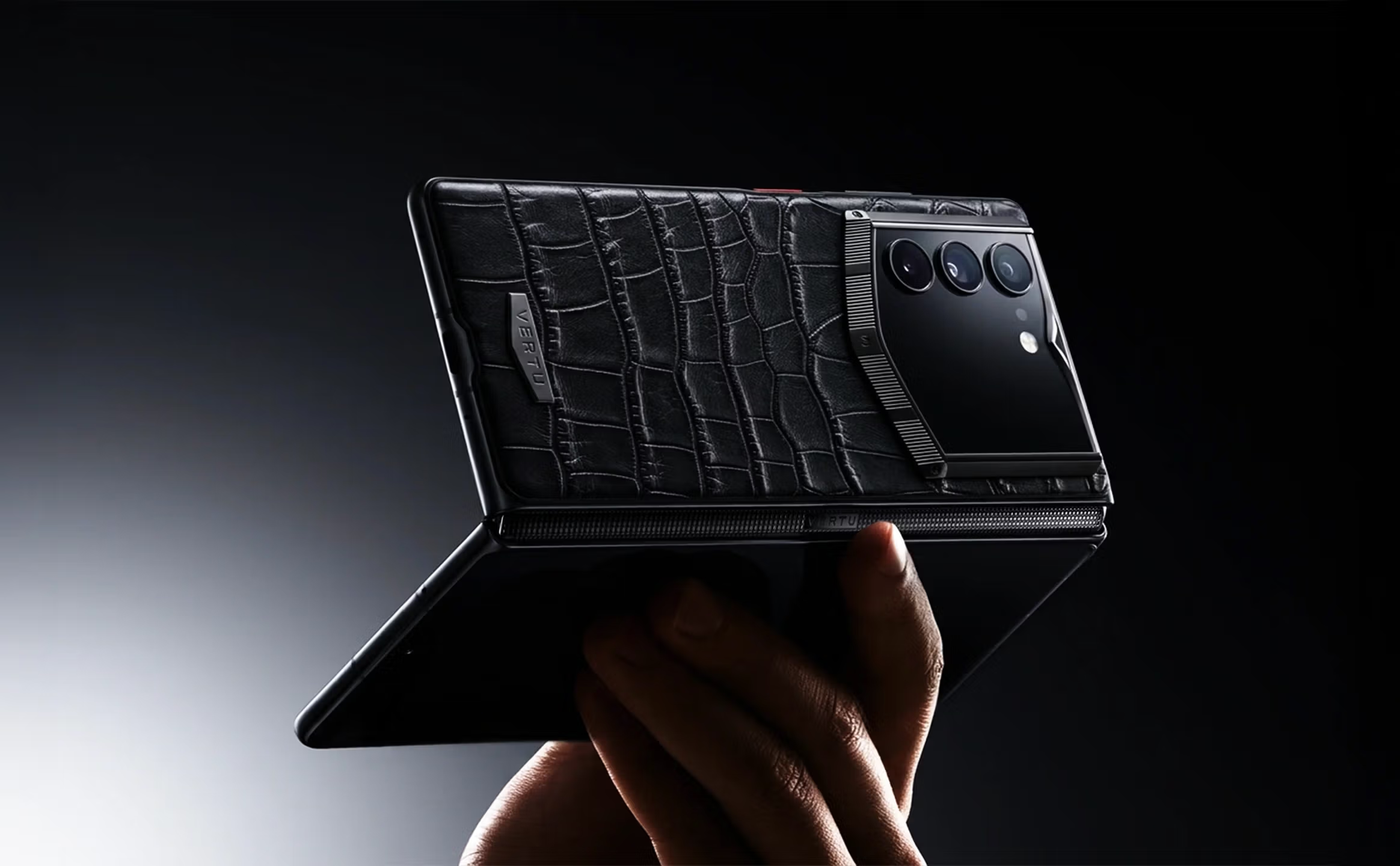
That’s why the phrase luxury AI foldable phone for executives is suddenly showing up in conversations that used to be about laptops.
Not because a foldable is a status object.
Because, when it’s done well, it’s a private command center.
The 2026 shift: why executives are choosing AI foldables now
A foldable’s value used to be simple: a larger screen in your pocket.
Now it’s more specific. Foldables are being judged on whether they can keep two or three high-stakes contexts open at once—without friction.
Mainstream foldable guides have converged on a few hard truths: durability, hinge quality, inner/outer display usability, software optimization, and long-term updates are what decide whether a foldable becomes a daily tool or an expensive curiosity. PCMag’s 2026 guide, for example, builds its recommendations around the reality of multitasking continuity, crease/hinge durability, and real-world usability in addition to raw performance (PCMag’s foldable phone testing guide for 2026).
At the same time, AI features have moved from novelty to workflow. Wirecutter’s foldable coverage is blunt about the current moment: AI can be genuinely useful, but it’s still uneven—some implementations feel practical, others feel “hit-or-miss” in daily use (Wirecutter’s foldable phone picks and testing criteria).
For executives, that combination is compelling:
A bigger, foldable display turns “reviewing” into “deciding”—you can see the entire email thread, the attachment, and the calendar without juggling devices.
AI assistance reduces context switching—summaries, transcription, translation, and search become a layer over your day.
The privacy question becomes central—because the more your phone does, the more it touches.
Collector’s note: Executives didn’t suddenly become more security-conscious in 2026. The device category simply caught up with the way leadership actually works: fast, mobile, and information-dense.
What “luxury” means in an AI foldable—beyond materials
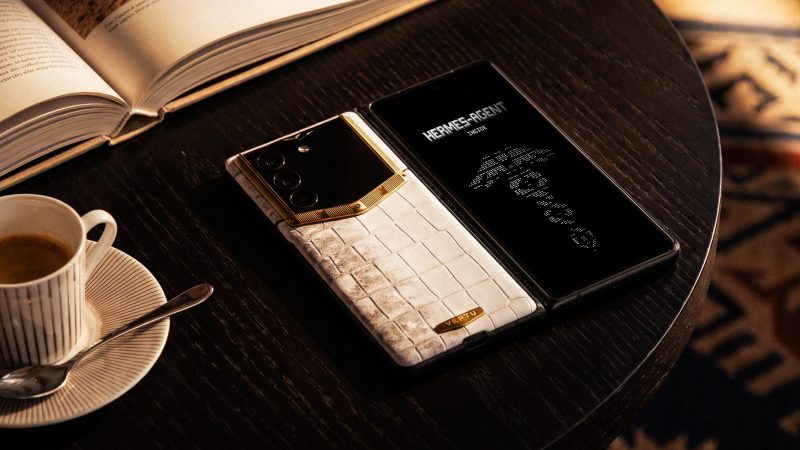
Luxury is easy to imitate on a spec sheet. Leather, gold, exotic textures.
Executive luxury is harder. It shows up when something goes wrong.
1) Service and setup as risk reduction
The most expensive moment in an executive’s week is not a purchase.
It’s an interruption.
A “luxury” device earns the category when it reduces ownership friction:
fast, discreet setup
secure migration (especially with multiple numbers, multiple regions, and multiple identities)
responsive support when you’re traveling
repair/replacement pathways that don’t cost you two days of productivity
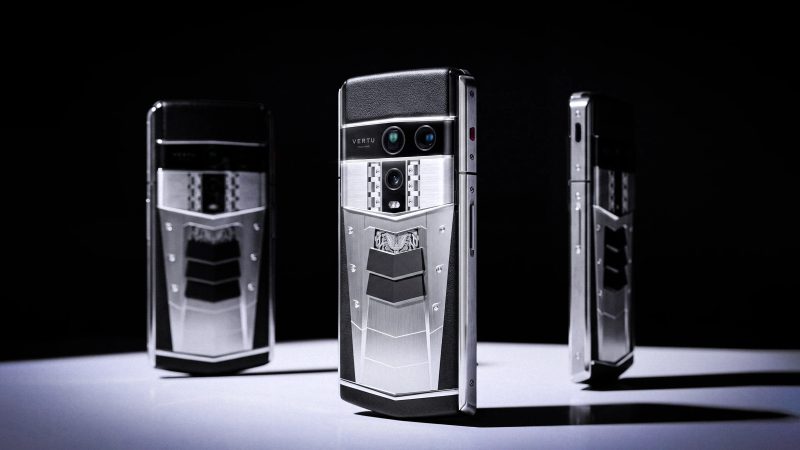
This is where brands like VERTU have historically positioned themselves: not as “a different kind of camera,” but as a different standard of ownership—craftsmanship paired with concierge-style support and a privacy-forward narrative.
2) Privacy posture you can actually live with
Security isn’t one feature.
It’s a posture: how the device behaves when you’re tired, rushed, offline, or crossing borders.
An executive-grade privacy posture typically includes:
clear boundaries around what data AI can access
strong authentication options (and a lock you’ll actually use)
app isolation and permissioning that prevents accidental leakage
reliable update support (because “secure” ages quickly)
In 2026, the distinction that matters is often on-device AI vs cloud AI.
On-device AI can reduce exposure because it can perform certain tasks without sending sensitive content to remote servers. Cloud AI can be powerful, but you should assume it requires stricter governance.
If you’re specifically evaluating on-device AI smartphone privacy, look for two signals: (1) the ability to run core assistive tasks offline (summaries, transcription, translation), and (2) transparent controls that let you restrict which apps and content the model can access.
How to verify: Pick three real workflows—(1) summarizing a confidential email thread, (2) transcribing a meeting, (3) translating a message. For each, check whether the device can run the feature locally, whether it works offline, and whether you can restrict cloud processing for sensitive content.
A practical executive scorecard for 2026
If you’re looking for the best luxury foldable phone 2026—not just a popular one—use a scorecard that reflects executive reality.
On-device AI vs cloud AI (privacy + reliability)
Ask two blunt questions:
Where does the intelligence run?
What data does it touch by default?
A useful AI foldable phone for business should help you do less busywork: capture notes, extract next steps, find the attachment you need, and keep you oriented across time zones.
But the best experience is the one that stays predictable. “Agentic” features are only a benefit when they respect boundaries.
Multitasking continuity and cover-screen utility (time, not novelty)
A foldable earns its place when it minimizes switching costs.
Evaluate:
whether apps preserve state when you open/close the device
whether split-screen feels stable (not fragile)
whether the cover screen is truly usable for quick replies and approvals
If you want to test the form factor against the real alternative executives carry, this decision guide—foldable phone vs tablet for executive work—is a practical way to sanity-check your workflow.
Durability and downtime (hinge anxiety is real)
Foldables have matured, but they’re still mechanical.
So the question isn’t “does it fold?” It’s “will it still fold the same way after a year of travel?”
Wirecutter’s foldable criteria emphasizes durability signals like materials, hinge quality, and protection ratings, alongside long-term software support. That matters for executives because durability isn’t only physical—it’s operational.
Global travel readiness (the hidden executive requirement)
If you travel internationally, evaluate for:
eSIM flexibility (and how quickly you can switch)
multi-region connectivity consistency
whether core AI features degrade when you’re roaming or offline
Convenience is great—until you’re in a car, crossing a border, and the device suddenly behaves differently.
The best luxury AI foldable phone for executives is the one you can govern
The quiet truth about executive devices is that they’re not purely personal.
They’re endpoints.
Even for founders, the phone is where company risk concentrates: sensitive messages, deal docs, customer context, travel details, family details.
So “best” is less about the loudest AI demo and more about whether you can govern the device’s behavior.
Permissioning, containers, and boundaries
In 2026, a secure foldable phone for executives should make it easy to enforce boundaries:
what is work vs personal
which apps can access contacts, files, microphones, cameras
which AI features can use which data
The ideal is not paranoia.
It’s clarity.
A simple red-flag list
If you’re evaluating a luxury AI foldable, treat these as red flags:
AI features that can’t explain what they accessed
unclear settings around cloud processing
short or vague update commitments
fragile multitasking (apps reload, split-screen breaks, cover screen is mostly decorative)
support that feels like a ticket queue, not an executive service
Further reading (VERTU resources)
If you want to go deeper—without turning this into a spec binge—these are useful next reads:
Cheap vs luxury foldable phones — if you want a clean way to separate materials from ownership experience
Key takeaways
In 2026, foldables win when they behave like reliable workflow devices, not gadgets—multitasking continuity, usability, and updates matter.
“Luxury” for executives is risk reduction: privacy posture, support quality, setup confidence, and downtime avoidance.
The phrase luxury AI foldable phone for executives should be evaluated as a system: on-device AI boundaries, governance, durability, and travel resilience.
The best device is the one you can use for sensitive work without negotiating with it.
Disclosure: This article references VERTU pages. Editorial judgment remains the priority.