A foldable is not “a phone with a bigger screen.” It’s a moving mechanism, a delicate display stack, and—if you use AI heavily—a new privacy posture.
So when you see a cheap foldable phone next to a luxury foldable, the number on the tag is only the beginning.
You’re paying for (or giving up): materials, hinge and display tolerances, service economics, security controls, and the quality of the AI experience that now sits on top of your most sensitive data.
Key TakeawayWith foldables, the real price isn’t just MSRP—it’s the cost of downtime, repair risk, and whether your “helpful” AI features stay inside boundaries you actually control.
Key takeaways
The biggest hidden cost in cheap foldable phones is often risk: hinge feel drifting over time, higher chance of expensive inner-display repairs, and weaker service pathways.
Luxury foldables aren’t simply “more premium.” At their best, they’re designed to reduce ownership friction: durability signals, faster support, and privacy-first controls.
If AI assistants or agentic features touch your calendar, messages, files, or travel, you should buy for governance (permissions, isolation, confirmation gates)—not demos.
Cheap foldable phones vs luxury foldables (fast comparison)
What you’re evaluating | Cheap foldable phones | Luxury foldables |
|---|---|---|
Materials & tactile build | Functional materials, less emphasis on long-wear feel | Higher-grade materials, better long-term finish discipline |
Hinge feel (torque + alignment) | Works, but more variability; “fine now” can become “loose later” | More consistent motion targets; hinge feel treated as a product signature |
Inner display stack | Usable, but higher risk of visible wear or costly failures over time | Better protected stacks (still not invincible), with better service handling when things go wrong |
Service & warranty path | Standard support; repairs can be slow and disproportionately painful | White-glove or premium support expectations; downtime reduction is part of the value |
Security posture | Core platform security, fewer premium-layer privacy controls | More emphasis on isolation, private spaces, secure comms, and policy-like controls |
AI experience | Basic assistants, less integrated workflows | Better integrated AI + multitasking; in the best implementations, stronger boundaries for sensitive actions |
1) Materials and build: what “premium” actually buys you
Most buyers think “materials” means bragging rights. In practice, materials change three decision-critical things:
how the phone holds its geometry over time (twist resistance, hinge-adjacent rigidity)
how it ages (micro-scratches, dents, finish wear)
how it feels (the quiet cues that determine whether a device reads as a tool—or a collectible)
Cheap foldables typically prioritize a simpler material stack that keeps costs down. That’s not inherently bad. But it tends to show up in:
edges that pick up wear faster
chassis rigidity that feels less confident near the hinge
a “good enough” tactile finish that doesn’t improve with familiarity
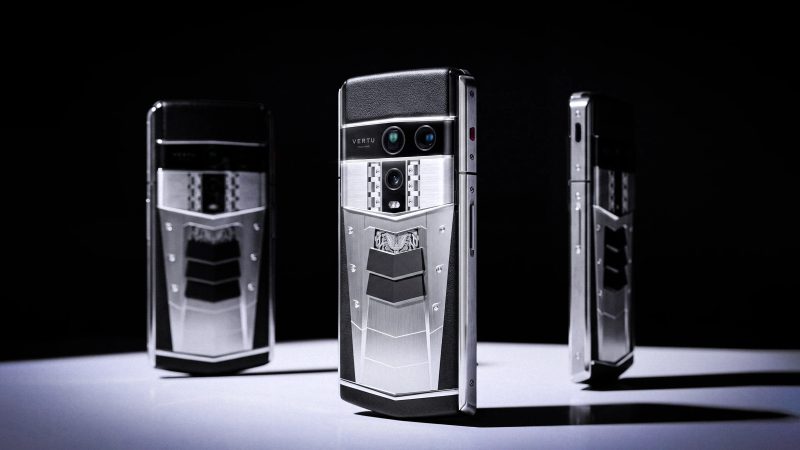
Luxury foldables usually treat build as part of the ownership promise: better long-wear surfaces, tighter fit-and-finish targets, and materials chosen for how they behave after months of travel.
Collector’s note: Materials are also about confidence. When a foldable feels slightly flexy, you handle it differently—and that changes real-world durability.
2) Hinge + inner display: the difference between “folds” and “lasts”
Foldables don’t fail like slab phones. The weak points are predictable: hinge contamination, hinge wear, and inner-display fatigue.
Hinge feel is not aesthetic—it’s early-warning telemetry
A foldable hinge has to do multiple jobs at once: guide the bend radius, hold positions, and survive repetition.
What premium engineering tries to buy you is consistency:
the same resistance through the full arc
stable half-open positions
clean alignment when closed
Cheap foldables can feel fine in week one. The risk is feel drift: torque that changes, tiny play that develops, and subtle misalignment that you start to notice only after daily use.
If you want a practical durability framework that looks beyond spec sheets, start with VERTU’s guide on foldable durability beyond the hinge.
The inner display is a system—and repairs are rarely “small”
Foldable inner screens are layered systems (protective layers, touch layers, OLED, adhesives, support structures). When something goes wrong, repair often means swapping a module—not fixing a single layer.
That’s why the cheap-vs-luxury decision can be summarized bluntly:
A cheap foldable phone can be inexpensive to buy. It can be expensive to keep.
Pro TipIn a store, open/close 10 times slowly. You’re not testing strength—you’re listening for new sounds and feeling for “two-step” catches that hint at inconsistency.
3) Service and warranty: the part of the price tag most people ignore
Foldables are closer to luxury watches than people admit: moving parts, tighter tolerances, and a higher penalty for accidents.
So a luxury foldable’s cost often includes an invisible product:
faster, clearer service paths
better repair handling for inner-display issues
higher-touch support when you travel (shipping, replacement workflows, escalation)
For decision-stage buyers, service isn’t a perk. It’s the answer to one question:
If the phone fails on a travel week, what happens next—and how quickly?
A cheap foldable phone is often sold as a value proposition. But if your life runs on the device, value is not just “what you paid.” It’s what failure costs.
4) Security and privacy: why AI changes what “value” means
If your phone only holds photos and social apps, the platform defaults may be sufficient.
If your phone holds travel routes, private numbers, deal terms, and sensitive messages, then your baseline has to be higher—especially when AI features are involved.
NIST’s SP 800-124 Rev.2 (2023) is a sober reminder: mobile security is still about permissions, transport, storage, and lifecycle discipline. AI doesn’t replace those basics—it puts stress on them.
The five controls that matter more than “AI features”
Across security guidance, the same controls keep showing up:
Least privilege (the assistant doesn’t need everything, all the time)
Data minimization (don’t ingest or retain what you can’t defend)
Isolation (separate sensitive spaces from everyday spaces)
Explicit confirmation gates for high-risk actions
Monitoring / auditability (so actions aren’t a black box)
The Cloud Security Alliance frames the core idea well in CSA’s Data Security within AI Environments (2025): classify and minimize sensitive data, control access, and treat AI pipelines like real production systems—not toys.
⚠️ WarningThe riskiest moment is often not “the model.” It’s the handoff—when an assistant moves from summarizing to acting across apps, accounts, or files.
5) AI experience: what you lose with a cheap foldable phone
“AI experience” isn’t just whether a phone can answer questions. It’s whether it can support real workflows without turning your private life into training data or collateral damage.
This is where agentic AI matters.
MIT Sloan’s agentic AI explainer draws the line clearly: agents are designed to take actions, not just respond. That’s useful—and it raises the bar for control.
In practical terms, here’s what you can lose with cheap foldable phones:
slower, less integrated cross-app workflows (more manual switching)
weaker boundaries around what the assistant can access
fewer “stop points” before sensitive actions
less confidence that private work stays compartmentalized
If you’re buying a foldable for executive productivity, AI is now part of the hinge decision. It’s the layer that touches everything.
Best foldable phone value: price vs privacy vs AI
Value isn’t a single number. It’s a balance.
Use this decision lens:
If you mainly want the form factor and you’re comfortable treating the device gently, a cheap foldable phone can be a good entry point.
If you travel frequently, keep a phone for years, or store high-sensitivity data on it, a luxury foldable can be the more rational choice because it’s buying risk reduction.
The cleanest way to decide is to score each option on four axes:
Durability confidence (hinge feel, alignment, contamination tolerance)
Service confidence (repair path, turnaround, escalation)
Privacy posture (isolation, secure comms, permission discipline)
AI governance (confirmation gates, scoping, data minimization)
A cheap phone often wins axis #1 at checkout (the price). Luxury wins by lowering the penalty on #2–#4.
Where VERTU AlphaFold fits: what you’re paying for as a combined package
If you want a clear example of how a luxury foldable’s pricing can be justified beyond specs, look at the combined stack VERTU positions around craftsmanship + privacy-first architecture + high-end service + AI.
Handcrafted materials are treated as part of the object’s identity (not an accessory).
Hermes Agent is positioned as a private AI concierge and command layer rather than a basic chatbot; see VERTU’s overview of Hermes AI Agent.
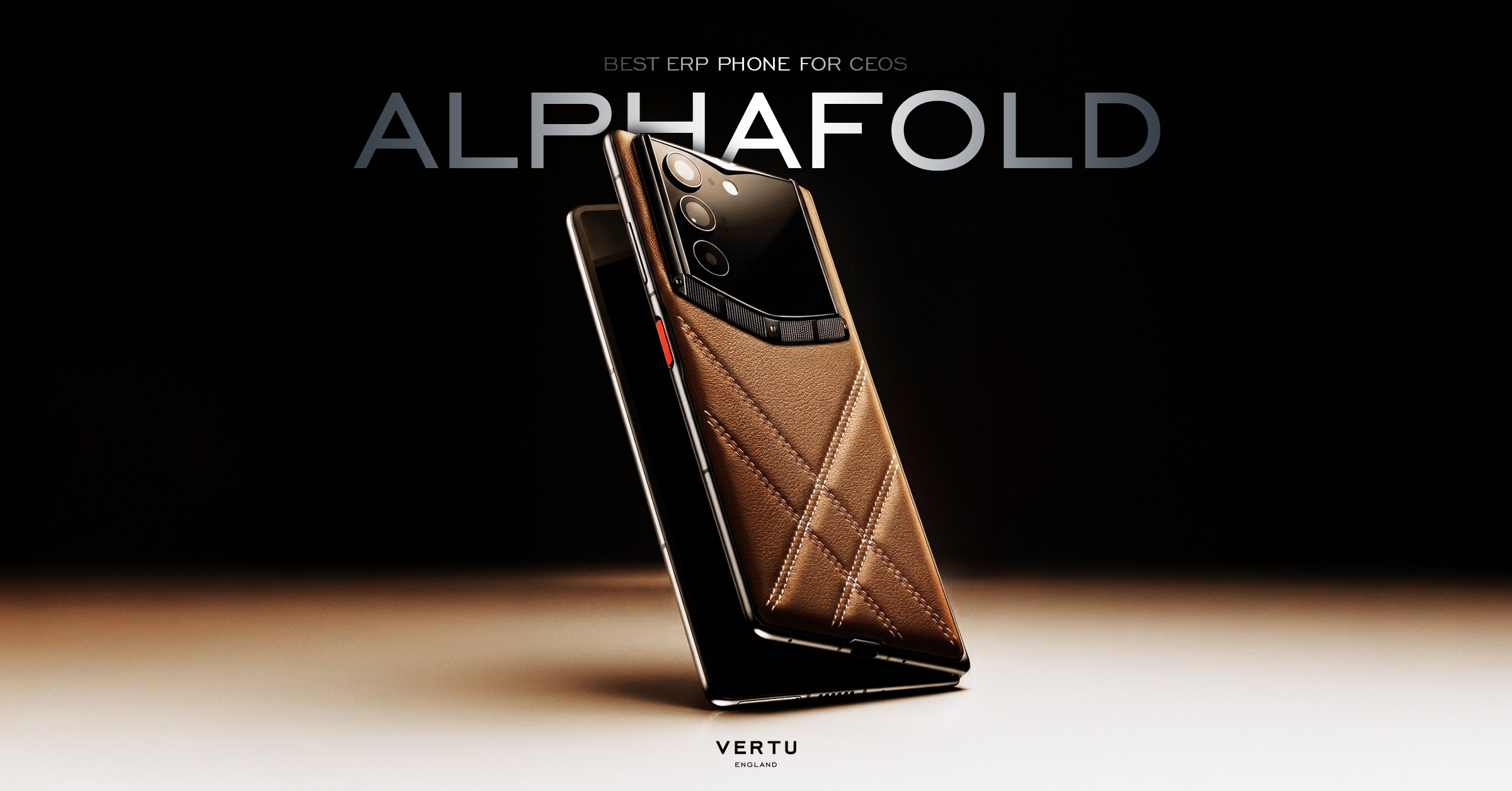
The foldable device itself is framed as an executive workspace with privacy controls and service expectations; see VERTU AlphaFold.
This is the point: luxury pricing is rarely one feature. It’s an additive system—materials, mechanism, security posture, AI boundaries, and the human service that keeps the whole thing reliable.
FAQ
Are cheap foldable phones worth it?
They can be—if your primary goal is the foldable form factor and you’re comfortable accepting higher ownership risk (especially around inner-display repairs and service delays).
What’s the biggest thing you lose with a cheap foldable phone?
Usually: confidence. Not that it won’t work, but that it will keep working the same way after months of folds, travel, and daily handling—and that support will be fast when something does go wrong.
Why do luxury foldables cost more than mainstream models?
Because you’re paying for more than components: tighter mechanical tolerances, higher-grade materials, a more controlled service experience, and—when AI is central—stronger privacy and governance expectations.
What should I look for if I care about privacy and AI?
Look for explicit controls: least-privilege permissions, isolation between private and everyday spaces, and confirmation gates for sensitive actions. Use mobile-security fundamentals as your baseline, as described by NIST in SP 800-124 Rev.2 (2023).
Next steps
If you’re deciding this week, don’t ask “Which foldable is the best?” Ask a more practical question:
Which option minimizes regret if something breaks—or if private data leaks—six months from now?
If you want a private consultation on availability and configurations, start with VERTU AlphaFold.
Disclosure: This article references VERTU pages. Editorial judgment remains the priority.