The price gap between a premium foldable and the most expensive foldable phone isn’t explained by a faster chipset or a brighter screen.
It’s explained by what you’re actually buying.
A mainstream foldable is a high-performance device with complex engineering. A luxury foldable is that, plus scarce materials, hand finishing, privacy boundaries designed for the AI era, and a service relationship that reduces friction when things go wrong.
Key takeaways
Foldables are costly before luxury enters the conversation, because the hinge and display stack are precision engineering with higher failure risk than slab phones.
The true luxury premium comes from a second layer: scarcity materials (alligator leather, 18K gold, diamonds), craftsmanship, and availability.
“Luxury AI” should mean controlled execution, not a chat box. You want approvals, permissions, and compartmentalized spaces.
In a decision-stage purchase, the difference is less “specs” and more: privacy posture + service + ownership confidence.
Mainstream vs luxury vs bespoke: the decision table
| What you’re paying for | Mainstream foldable flagship | Luxury foldable | Bespoke luxury foldable (custom commission) | |---|---|---| | Foldable engineering | Mature, mass-produced hinge + UTG stack | Often overbuilt; tuned for ownership feel and durability | Overbuilt, plus custom tolerances/finishing | | Materials | Aluminum/titanium variants, glass, standard trims | Exotic leathers, sapphire/precious detailing depending on model | 18K gold, diamonds, one-of-one materials and engraving | | AI | Assistant features (summaries, writing, translation) | Agent-style workflows and executive “command” layer (varies) | Same as luxury foldable, plus custom privacy/workflow setup | | Privacy posture | Platform security (e.g., enterprise suites) | Privacy architecture is part of the product story | Privacy + policy + onboarding are part of the commission | | Service | Standard warranty + retail/authorized service | White-glove support and concierge access (brand-dependent) | Highest-touch: dedicated adviser, sourcing, provenance support | | Resale/collectibility | Tech depreciation curve | Mixed: depends on brand + editions | Closest to collectible behavior (if provenance is strong) |
Collector’s note: A “luxury price” without a luxury service model is just an expensive device. For UHNW buyers, service is part of risk management.
Why are foldable phones so expensive, even before “luxury”?
Foldables are expensive because they’re not just phones. They’re compact mechanical systems with a flexible display stack.
Four cost drivers matter most.
1) The display stack (including UTG)
A premium foldable inner display usually relies on a layered stack that includes ultra-thin glass (UTG). UTG is engineered to bend repeatedly while still feeling more “glass-like” than older plastic-only approaches.
That adds cost because it’s harder to manufacture consistently, and because a foldable display is one of the most expensive parts to replace.
If you want a technical baseline, Samsung Display’s early UTG commercialization announcement (2020) and SCHOTT’s overview of UTG in foldable displays explain why this material class is not a commodity.
2) The hinge is a precision mechanism
A foldable hinge is a tolerance problem. Smoothness, symmetry, crease control, and long-term wear all depend on parts that have to behave like a watch mechanism while dealing with dust, impact, and real-world use.
That’s why “feel the hinge” is not superficial advice. It’s a proxy for engineering maturity.
For a practical buyer lens, VERTU’s guide on how to judge foldable hinge technology is a useful checklist even if you don’t buy a VERTU.
3) Lower yields and more testing
Foldable components are harder to make consistently than rigid phone parts. That means more units fail inspection, and more testing is needed before a device ships.
Prices also reflect warranty exposure. A slab phone can survive with a cracked back. A foldable inner display failure is a different category of repair.
4) Service risk is real
A foldable buyer should think about downtime and access, not just MSRP.
If the device is central to travel, approvals, and confidential communications, you’re buying a continuity plan.
What makes a foldable “luxury” (and why the prices spike)
Once you understand the mainstream cost stack, luxury pricing becomes easier to judge.
A luxury foldable earns its premium when it adds scarcity, craft, privacy, and service in ways that change ownership.
Scarcity materials: alligator leather, 18K gold, diamonds
Rare materials aren’t just decoration. They’re sourcing, selection, and finishing complexity.
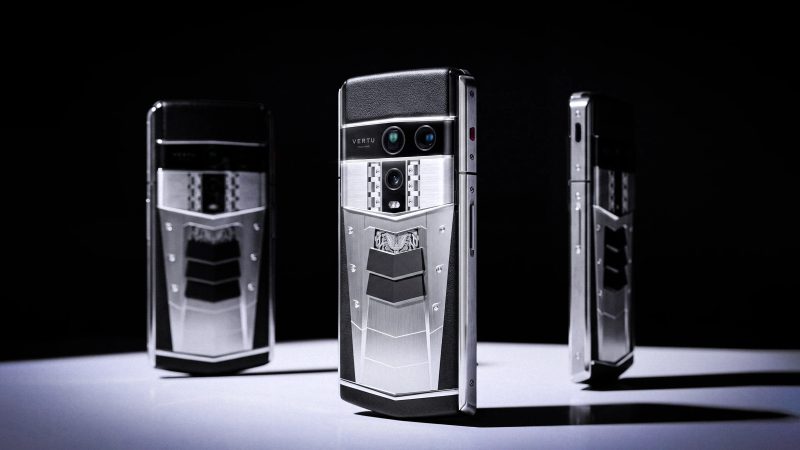
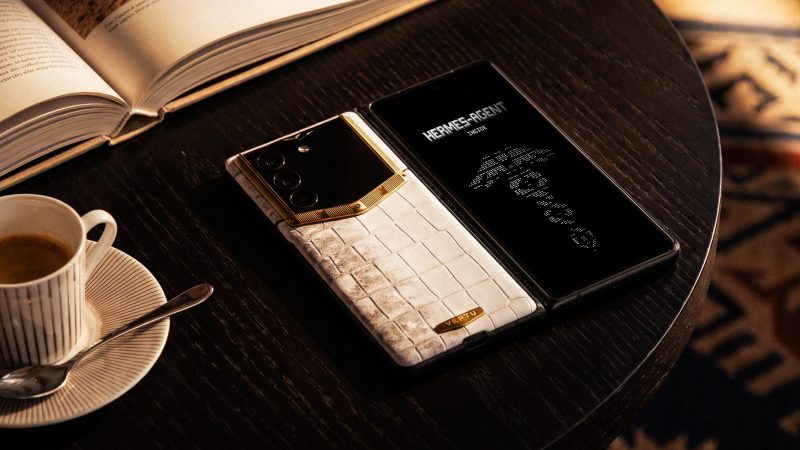
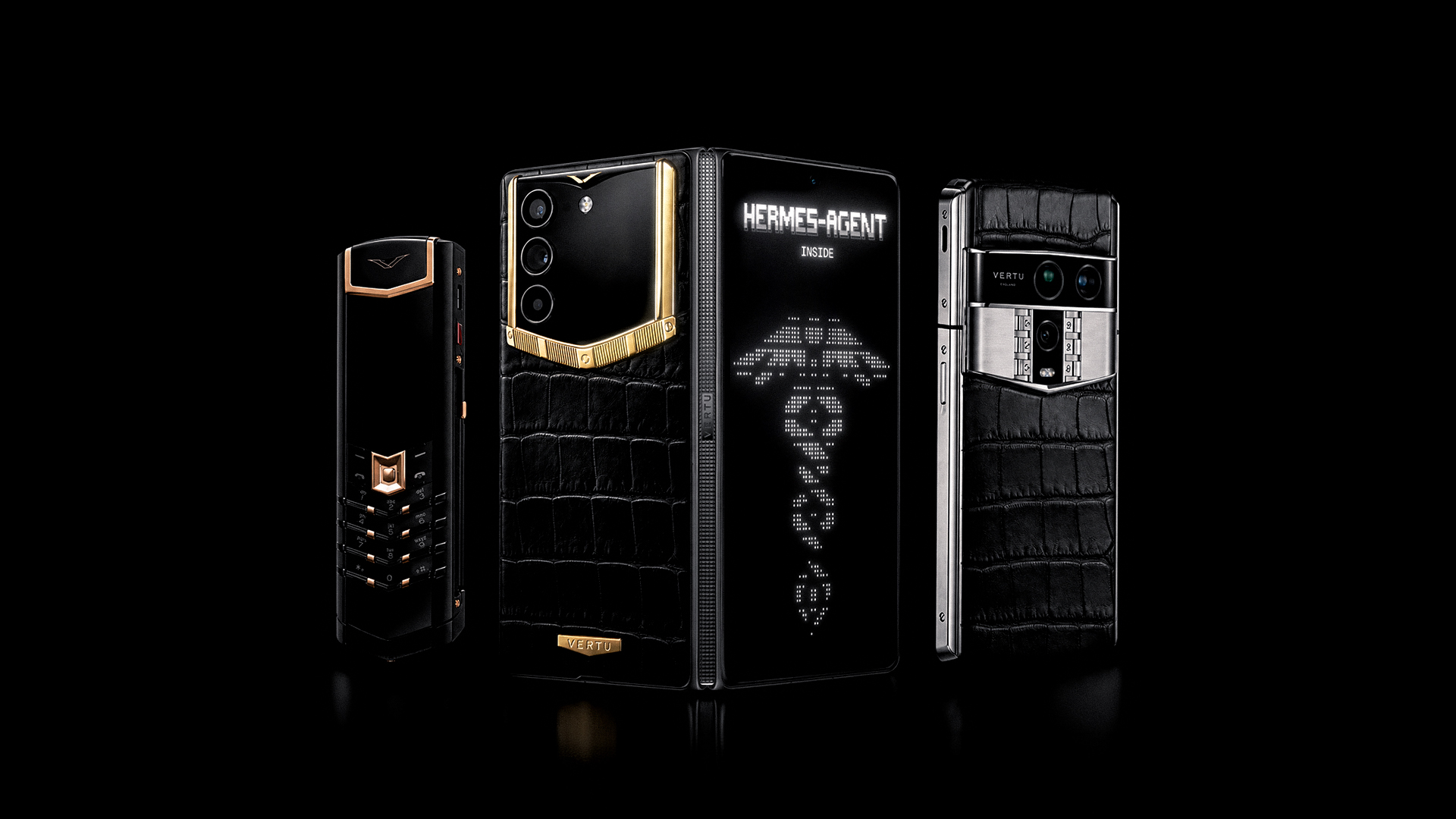
In launch coverage, TechCrunch reported that VERTU’s AlphaFold starts at $6,880 and that higher-end models include alligator leather, 18K gold, and natural diamond accents, with a highest-end standard model cited at $46,800 in TechCrunch’s AlphaFold launch report (2026).
Android Authority also listed specific trims, including an alligator-leather edition and a top tier with gold and diamonds in its AlphaFold overview (2026).
This is the material layer of “most expensive.”
Structural engineering that’s tuned for ownership, not just specs
Luxury buyers don’t only want “durable.” They want a device that feels stable every day: opening force, alignment, closure, and how the hinge behaves after months of travel.
That’s why a luxury foldable should be judged like a daily-wear object.
How to verify: Open and close it slowly. Then quickly. Then one-handed. The question isn’t whether it folds. It’s whether it behaves consistently.
Luxury AI: why a premium assistant isn’t the point
Most phone AI features are assistive: summaries, rewrite, translation. Useful, but not decisive at the luxury tier.
Luxury AI becomes valuable when it reduces executive friction.
That means:
turning intent into a workflow across apps,
keeping permissions scoped,
requiring confirmation on high-risk actions,
separating business from personal context.
VERTU describes Hermes Agent as an “agentic” layer built for cross-app execution, including app connections and voice-to-action workflows. Their internal explainer, Hermes Agent inside AlphaFold, emphasizes compartmentalized spaces and an approval model.
This is the difference between “AI that talks” and “AI that acts.”
Privacy architecture: the BOFU questions to ask before you trust an AI phone
If your phone is becoming an execution layer, privacy isn’t a setting. It’s an architecture.
Ask five questions before you pay a luxury premium:
Where does sensitive context live? Is it separated into spaces, or flattened into one assistant history?
What leaves the device? Are prompts redacted or minimized before they’re sent to cloud models?
What requires explicit approval? Financial transfers, permissions changes, and high-impact actions should never be silent.
Is there hardware isolation? If a brand claims a secure element or security chip, look for clear wording and future audit plans.
What is the recovery path? If you lose the device, can you revoke access quickly and restore securely?
TechCrunch’s coverage explicitly notes privacy and security positioning, including a security chip claim and a note that third-party audits were not yet complete at the time of reporting. (See the TechCrunch link above for the full context.)
For a buyer-oriented privacy lens, VERTU’s guide on mobile AI security in the AI-enabled phone era lays out why permissions and boundaries matter more when assistants become agents.
Most expensive foldable phones vs mainstream flagships: what changes the decision
If you’re deciding today, don’t argue with yourself about raw performance. Flagships are good enough.
Argue about three things instead.
1) What problem are you solving?
If it’s screen real estate and productivity, a mainstream foldable may be the rational pick.
If it’s privacy posture and ownership confidence, you’re shopping in a different category.
A criteria-first example is VERTU’s own decision-stage comparison, Samsung foldable phone vs VERTU AlphaFold.
2) Is your value in time, discretion, or collectibility?
Luxury can be justified by any of these:
Time: fewer handoffs, fewer steps, less app-switching.
Discretion: compartmentalization, controlled execution, minimized sharing.
Collectibility: provenance, limited materials, and workmanship that holds up visually.
Different buyers weight these differently. Be honest about which one you care about.
3) How much do you want service to carry?
Android Authority’s AlphaFold overview explicitly mentions concierge access. (See the Android Authority link above for details.)
That matters because the luxury purchase isn’t only the device. It’s the expectation that issues are handled quickly, discreetly, and competently.
A quick buyer checklist for luxury foldables
Use this before you buy, regardless of brand.
Hinge feel: smooth, consistent resistance, no lateral play.
Crease visibility: check under angled light.
Repair path: cost and availability of inner display service.
Privacy boundaries: spaces, scoped permissions, confirmation model.
Service model: who answers when you need help? how fast? what’s included?
Materials provenance: if you’re paying for rare leather, gold, or diamonds, ask what documentation comes with it.
Video: VERTU AlphaFold
FAQ
What is the most expensive foldable phone?
It depends on how you define “phone.” Mainstream foldables top out in the low-thousands in many markets, while luxury foldables can climb far higher once you add scarce materials and bespoke finishing.
For example, TechCrunch reported VERTU AlphaFold pricing from $6,880 up to a $46,800 highest-end standard model in its 2026 launch coverage (see the TechCrunch link above).
Why are foldable phones so expensive compared to normal phones?
Because the display stack and hinge are complex, manufacturing yields are lower, testing is heavier, and repair risk is higher than on slab phones. UTG and precision hinge engineering are a meaningful part of that cost.
Do gold and diamonds make a phone “luxury”?
They can make it expensive. They only make it luxury if the underlying engineering, privacy posture, and service model match the material promise.
What luxury AI phone features justify premium pricing?
Not “more chat.” Look for controlled execution: cross-app workflows, permissions that are scoped, high-risk confirmations, and compartmentalized spaces that prevent sensitive context from leaking across your digital life.
Next steps
If your checklist says you’re buying ownership confidence as much as hardware, start with configurations and materials, then ask the hard questions about privacy boundaries and service terms.
Explore the VERTU AlphaFold collection to see available editions and materials.
Disclosure: This article references VERTU pages. Editorial judgment remains the priority.