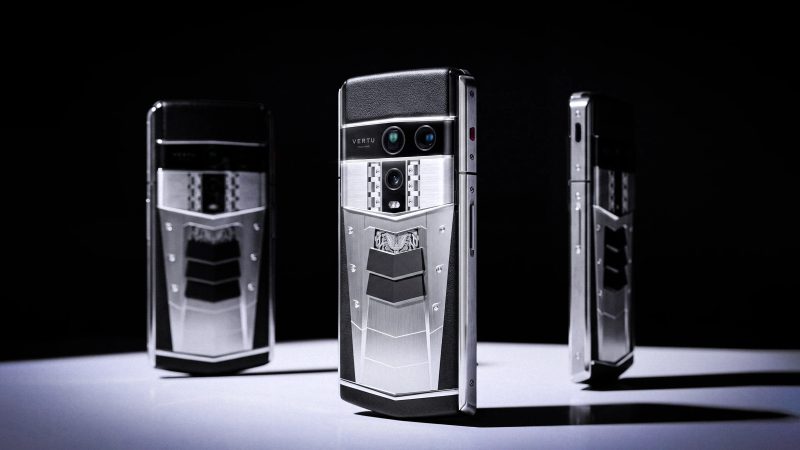
Executives don’t lose time because they lack apps.
They lose time because the work arrives fragmented: a board pre-read in one place, a contract redline in another, approvals in three systems, travel changes in a fourth, and “quick questions” everywhere. The phone becomes a conveyor belt of context switching.
An AI workflow phone is the first credible attempt to change that. Not by adding another assistant that talks—but by turning intent into controlled execution across the tools you already use.
In this guide, you’ll get a decision framework for AI workflow phones for executives: what to demand, what to prohibit, and how to pilot one without turning your most sensitive workflows into an experiment.
Key takeaways
An AI workflow phone is most valuable when it can act across apps (with permission) and stop for approval at high-stakes moments.
The executive standard is not “smart.” It’s governed: least privilege, clear audit trails, and human-in-the-loop checkpoints.
The screen matters more than people admit. If you can’t view “the ask” and “the context” at the same time, you’ll keep switching—and switching is where errors happen.
Treat meetings and approvals as separate risk classes. Recording and summarizing is one thing; acting on outcomes is another.
Answer 7-day pilot should prove three things: accuracy under pressure, boundary discipline, and speed-to-decision.
What an AI workflow phone is (and what it is not)
MIT Sloan describes agentic AI as autonomous software that can “perceive, reason, and act” in digital environments on behalf of humans, and stresses governance and permission-based controls as adoption becomes real (MIT Sloan’s agentic AI explainer).
That’s the right starting point for an executive phone: action, not just conversation.
An AI workflow phone is a mobile device (and its on-device systems) designed to:
Understand your intent (voice or text)
Assemble context (calendar, messages, documents—only what you authorize)
Execute multi-step tasks across apps (or across enterprise systems)
Pause at decision points so you approve, delegate, or deny
What it is not:
A chatbot that generates nice-sounding text but can’t complete the work
A notification layer that adds more noise
An automation toy with no auditability and no boundaries
IBM’s framing is useful here: agentic workflows are processes where AI agents coordinate tasks with minimal human intervention, with escalation or human feedback when needed (IBM’s definition of agentic workflows). For executives, “minimal human intervention” should never mean “minimal human control.”
The executive workflows that actually matter
If you’re evaluating an executive phone for business productivity, don’t start with features. Start with four workflows. These are where time disappears—and where mistakes are expensive.
1) Meetings: from “notes” to decisions (without turning the room into evidence)
Meeting AI looks simple until it touches confidentiality.
Your baseline expectations should be:
- Pre-briefagenda, attendees, last decisions, open risks
- Capturesummaries and action items (with explicit disclosure and consent)
- Delivera clean decision memo you can approve or amend
But your red lines matter more.
Faegre Drinker’s analysis of AI meeting assistants emphasizes consent variability (one-party vs all-party states), accuracy risk, vendor data handling/retention, discoverability in litigation, and uncertainty around privilege when AI tools are involved (Faegre Drinker’s permission-to-record considerations).
That translates into a simple rule: if the meeting can’t tolerate a recording, it can’t tolerate a meeting agent. Your AI workflow phone needs a clean, fast way to enforce that—by meeting type, by invite tag, or by a single “no capture” mode.
⚠️ WarningIn high-stakes meetings, the safest productivity move is often reducing the record—not improving the summary.
2) Approvals: the phone as a controlled checkpoint
Approvals are where “helpful automation” turns into liability.
A true AI workflow phone should handle approvals as a human-in-the-loop system design, not as a prompt.
AWS’s human-in-the-loop constructs are a useful mental model even outside healthcare: insert deliberate checkpoints that interrupt an agent’s loop, require tool-specific approval, or route decisions asynchronously to an approver—then resume only when approved (AWS’s human-in-the-loop constructs for agentic workflows).
For an executive, that means:
Approvals must be explicit (not implied by a message)
The system should show you what it’s about to do before it does it
The default should be “draft + propose,” not “execute”
Sensitive operations should require re-authentication (biometrics/passcode) and a final confirm
A useful litmus test: If you accidentally approve the wrong thing while boarding a flight, how quickly can you unwind it—and who is accountable?
3) Business travel: decision support under time pressure
Travel is where executives need speed, but it’s also where privacy is fragile.
A strong AI workflow phone should be able to:
Re-plan itineraries when meetings shift
Draft outbound communications (“running 15 minutes behind; propose X”) without sending until you approve
Keep a compact “travel context” pack: address, local contacts, security notes, backup options
But travel data is sensitive. Your itinerary is a map of your vulnerabilities.
The executive-grade requirement is data minimization: the phone should ask for the minimum it needs, and it should clearly show what it will store, where, and for how long.
4) Information organization: the executive “second brain,” not a dumping ground
Information organization is not about storage. It’s about retrieval at the moment of decision.
An AI workflow phone should help you:
Capture voice notes into structured briefs
Classify documents by deal, board, client, and risk
Pull the right context when someone asks, “Can you approve this right now?”
The key capability is bounded memory.
You want a system that remembers preferences and patterns—but only inside the spaces you authorize, and only with a clear boundary between personal and work contexts.
Six criteria to choose an AI workflow phone (executive phone standards)
Use these criteria as your shortlist filter. If a device fails one, you don’t negotiate it back into adequacy.
1) Permission design: least privilege by default
An AI workflow phone should behave like an internal operator with a badge:
It can see only what the badge allows.
It can do only what the badge permits.
It can’t silently upgrade its own badge.
If permissions are an afterthought, the rest is theater.
2) Human-in-the-loop checkpoints you can actually live with
“HITL” is meaningless unless it’s fast.
The phone should support:
Preview before action (show the exact email, calendar change, approval payload)
One-tap deny and “explain why” feedback
Delegation (route to EA / CFO / GC) without losing context
Done well, the workflow feels like this:
AI proposes the next action.
You approve/deny/delegate.
Execution happens with an audit trail.
3) Cross-app execution (not just summarization)
Summaries are nice. Execution saves hours.
Your evaluation question:
Can it coordinate across the apps you already use—calendar, email, messaging, docs, approvals—without forcing you into a new ecosystem?
If the answer is “only if you copy/paste,” it’s not a workflow phone. It’s a typing assistant.
4) Display ergonomics: can you see the context and the decision at once?
This is where large-screen productivity stops being a lifestyle detail and becomes an error-reduction tool.
If you can’t view:
the contract excerpt and the approval request
the meeting brief and the inbox thread
the itinerary change and the calendar impact
…you will keep switching. And switching is where executives misread, mis-send, or mis-approve.
5) Privacy model: clear boundaries, not vague reassurances
You should be able to answer, in plain language:
What runs on-device?
What runs off-device?
What data is retained?
Who can access it?
If the vendor can’t explain that crisply, you can’t govern it.
6) Escalation path: when to use AI, when to use humans
Executives don’t want “automation.” They want outcomes.
The best systems draw a clean line:
AI for preparation, options, drafting, and structured execution
Humans for judgment, access, and exceptions
That escalation path matters most during travel and crisis.
A concrete example: Hermes Agent + large-screen execution
To make the criteria tangible, here’s a grounded example from VERTU’s ecosystem.
VERTU positions its foldable as a device built around workflow execution. The VERTU AlphaFold is presented as the “world’s first Hermes Agent phone,” designed to support app orchestration and private work modes.
VERTU also describes AlphaFold’s larger inner display (8.05-inch) as a productivity surface for documents, dashboards, meetings, and multitasking; those specs and capability framing appear on its AlphaFold product details.
On the agent side, VERTU describes Hermes Agent as a system that turns voice intent into actions across supported apps, supports connections to 70+ apps, can control up to 64 phone settings by voice, uses memory to learn preferences, and requires human verification for sensitive actions—outlined in its guide to Hermes Agent inside AlphaFold.
The point isn’t that you need this specific device.
The point is that the category becomes meaningful only when three things are true at once:
Agentic execution (it can do, not just say)
Governed approval (it pauses where it should)
Screen-as-control-surface (you can inspect and decide without context switching)
Watch: Hermes Agent on AlphaFold (owned channel)
If you want a quick sense of what “voice → workflow → confirmation” looks like in practice, this walkthrough is a useful reference:
<div data-type="node-video" data-provider="youtube" data-url="https://www.youtube.com/watch?v=4673nnLapS8" data-embed-url="https://www.youtube.com/embed/4673nnLapS8"></div>
Red flags (deal-breakers) for executive use
If any of these are true, you’re not buying a workflow phone—you’re importing risk.
It cannot show a preview of the action payload before execution.
It cannot separate work/personal contexts with a clear boundary.
It cannot provide an audit trail for approvals or changes.
It requires always-on recording for meetings.
It offers “autonomous approvals” as a default feature.
The privacy model is described with adjectives instead of controls.
Collector’s note: The most expensive failure mode isn’t a hacked device. It’s an executive who approves the wrong thing because the phone hid the context.
A 7-day pilot plan (how executives should test an AI workflow phone)
Do not test this with hypothetical prompts. Test it against your real week.
Day 1: Map your red zones
Write down what the phone must never touch:
board materials
legal privilege
M&A and sensitive deal flow
personnel actions
security itineraries
If you can’t define your red zones, no vendor can protect them.
Days 2–3: Meetings pilot (low-risk only)
Use it on internal, non-sensitive meetings.
Measure: summary accuracy, action-item completeness, and speed.
Decide the “recording policy” for your environment.
Days 3–4: Approvals pilot (human-in-the-loop required)
Route a small set of approvals (expense, scheduling, standard purchase).
Require preview + confirmation for every action.
Measure: time-to-approve vs current process, and error rate.
Days 5–6: Travel pilot (context-minimized)
Have it draft itinerary options and comms drafts.
Require manual confirmation for bookings/changes.
Measure: how it handles last-minute changes under weak connectivity.
Day 7: Second brain pilot (bounded memory)
Capture voice notes across the week.
Ask for a decision brief: “What are the open risks I’ve mentioned this week?”
Verify for omissions and hallucinated additions.
FAQ
Are AI workflow phones secure enough for executive use?
Security is not a single feature. The executive question is whether the system is governable: least privilege, clear retention rules, and human checkpoints for sensitive actions. If those controls are vague, the answer is “not yet.”
Will an AI workflow phone replace an EA?
No. It can remove low-value friction—drafting, organizing, routing, and preparing options. But judgment, access, and exception handling remain human work. Treat the best setup as partnership: AI for execution, humans for decisions and escalation.
Should meetings always be recorded for AI summaries?
No. Many organizations will need explicit consent and clear policies, and some conversations should not be recorded at all. Use a “green/yellow/red” meeting classification and enforce it by default.
Is a foldable screen actually worth it for business productivity?
If your work involves reviewing and approving while traveling, the ability to see context and the decision payload side-by-side reduces switching and mistakes. If your mobile work is mostly messaging and calls, it matters less.
Next steps
If you’re ready to evaluate an executive phone in this category, start by writing your red zones and approval checkpoints—then test devices against that governance model.
If you want a first-party example of the “large-screen workflow phone” approach, explore AlphaFold on VERTU’s site.
Disclosure: This article references VERTU pages. Editorial judgment remains the priority.