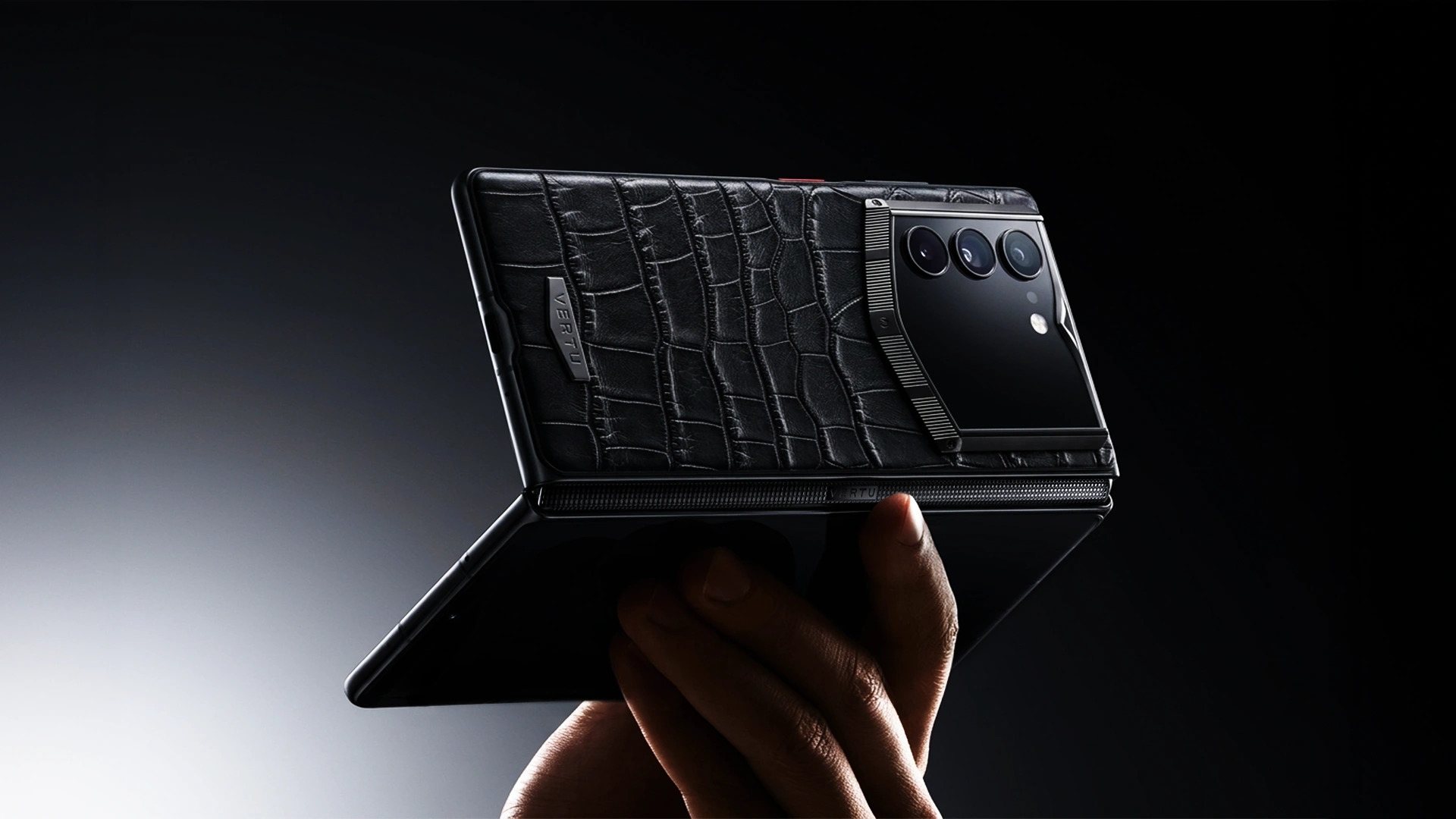

When you buy a foldable, you’re not just buying a bigger screen. You’re buying a moving mechanism you’ll touch—often dozens of times a day.
The foldable phone hinge is the difference between a device that feels quietly precise and one that feels like a prototype you’re babysitting. It shapes four things you’ll notice long before you notice a chipset: opening/closing feel, durability, the crease, and the phone’s overall “build quality” impression.
Key TakeawayIn the consideration stage, your job isn’t to chase the smallest crease in a demo unit—it’s to judge whether the hinge design will still feel controlled, aligned, and smooth after months of real travel and daily use.
What you’re really buying when you buy a hinge
A hinge has to do three jobs at once:
Guide the fold so the display bends in a controlled shape (not a sharp pinch).
Hold position so the device can stay partially open without wobbling.
Survive repetition without grinding, loosening, or letting tiny misalignments become visible.
That’s why hinge engineering matters more than spec sheets suggest. Small decisions—tolerances, materials, friction design, dust management—compound into the experience you feel every time you open the device.
Foldable phone hinge feel: torque is the luxury signal you can’t fake
A premium foldable hinge doesn’t announce itself. It feels quiet.
What “good” feels like
Look for a motion that’s:
- Consistentthe resistance feels the same through the entire arc.
- Controlledit doesn’t “fall open” or slam shut.
- Confident at the endpointsfully open feels flat and stable; fully closed feels flush and decisive.
Google’s engineering story about its Pixel Fold is unusually direct about how intentional this is—describing the hinge as a “fluid friction hinge” and explaining how the team tuned torque and closure magnets for a satisfying, reliable motion profile in “How we designed and built the Pixel Fold’s hinge” (Google, 2023).
Why torque consistency matters in real life
One-handed openings in cars, lobbies, and airports become effortless instead of awkward.
Desk use feels stable—no micro-wobble when you tap near the fold.
Long-term confidence improves because inconsistent resistance is often the first “tell” of contamination or uneven wear.
Pro TipOpen the phone slowly. If you feel a “two-step” motion (smooth… then a small catch… then smooth again), that’s worth noticing. Sometimes it’s normal design, sometimes it’s early friction inconsistency.
Durability: what actually wears in a foldable hinge
Durability is not just “how many folds.” It’s how well the hinge tolerates dust, time, and imperfect handling.
The hinge’s quiet enemies
- Particle ingresstiny grit can change friction, introduce noise, or accelerate wear.
- Tolerance driftsmall looseness becomes visible as lateral play or misalignment.
- Uneven loadone-handed opening with torque applied off-center can amplify stress over time.
You won’t get a full lab report in a store demo. But you can make a buyer’s decision using reliable proxies.
Practical durability checks you can do
In-store (5 minutes)
Open/close 10 times. Listen for new sounds after repetition.
Hold it half-open and gently tap the top half: does it feel planted or springy?
With the device closed, check if the halves align cleanly.
Week one
Pay attention to “feel drift.” A good hinge feels the same on day 7 as it did on day 1.
If your use includes travel, treat pocket lint and sand as real inputs—not edge cases.
If you want the broader durability lens beyond hinge mechanics alone, VERTU’s guide on fold phone durability beyond the hinge is a useful companion read.
Crease reality: hinge geometry sets the bend radius
The crease is not a moral failure. It’s physics, materials, and geometry.
If you want one concept to keep in your pocket, it’s bend radius: a tighter bend concentrates stress; a wider curve spreads stress out.
That’s why newer “teardrop” or “waterdrop” approaches matter. Instead of forcing the display into a tight U-shape, the hinge creates a cavity so the display can fold along a gentler curve—often reducing how sharply the crease catches light.
VERTU’s crease explainer puts it plainly in “Foldable Phone Crease Explained” (VERTU): focus on bend radius, not marketing slogans.
What to do when a brand says “no crease”
Treat it as a claim about visibility under certain angles, not a promise of zero geometry.
Use a simple test:
Tilt the display under strong overhead lighting.
Then tilt under softer natural light.
Check whether the crease disappears in the angles you actually use.
⚠️ WarningIf the crease looks uneven, suddenly deeper, or appears alongside flicker or bubbling film, that’s not “normal crease”—that’s a service conversation.
The “premium body” feeling is hinge quality made visible
Even if you never read a teardown, you’ll feel these hinge-dependent cues:
- Gapless closea clean fold reduces pocket contamination paths and improves visual refinement.
- Flush edges and alignmentthe phone shouldn’t look slightly twisted when closed.
- Rigidity near the foldpressing near the hinge area shouldn’t feel hollow.
Samsung, for example, explicitly frames its newer hinge as delivering a smooth fold with virtually no gap in its support documentation: “Discover the new hinge technology for the Galaxy Z Flip5 and Fold5” (Samsung). It also notes an honest nuance: smoother motion can feel slightly looser compared to prior models—something many buyers misinterpret if they don’t know to expect it.
A foldable hinge evaluation checklist you can actually use
Use this as a fast decision framework. It keeps you out of “demo-unit obsession” and focused on what lasts.
Must-haves
Consistent torque throughout the arc
Stable half-open positions (no wobble)
Clean closure (flush, aligned, confident)
No new noise after repetition
Crease behavior that matches your usage angles
Nice-to-haves
A hinge that opens fully flat (useful for reading and desk work)
Gapless closure aesthetics
A hinge feel you can describe in one word: “quiet,” “solid,” “controlled”
Deal-breaker red flags
Grinding, crunching, or “sand-in-the-hinge” sensations
Noticeable lateral play when lightly twisting the halves
Visible misalignment when closed
A hinge that “snaps” unpredictably rather than moving predictably
Video: see hinge geometry (and the waterdrop idea) in plain terms
5/28+ update: AlphaFold, titanium alloy, and liquid metal hinge structure (proof-led)
You specifically asked to include a post‑5/28 update about AlphaFold titanium alloy and a liquid metal hinge structure.
Here’s the disciplined way to handle it in a buyer’s guide:
It’s reasonable to say why these materials are chosen in premium hinges—titanium alloys for strength-to-weight and dent resistance in thin sections; “liquid metal” alloys for high strength and elasticity in compact components.
It’s not responsible to present them as confirmed AlphaFold specifications unless we can cite an official, extractable statement.
VERTU’s own slim-foldables guide models that proof-led approach directly in “Thin Foldable Phones: Strength Behind Slim Design” (VERTU), noting that the specific technical claims were not clearly published in extractable text on the official AlphaFold pages at the time of writing.
How to verify (and what to ask for)
Ask for one of the following:
An official AlphaFold product-page section that explicitly states “titanium alloy” and “liquid metal hinge,” or
A VERTU press release / spec sheet with that wording.
Then treat that exact wording as the claim—no paraphrases, no dealer summaries.
If you want to explore the product at a high level, the official product page is here: VERTU AlphaFold.
Disclosure: This article references VERTU pages. Editorial judgment remains the priority.
FAQ
Does a better foldable hinge reduce the crease?
A better hinge can reduce crease visibility by shaping a gentler bend radius, but the crease is also influenced by the display stack (cover layer, support plate, adhesives). Hinge geometry is a major lever, not a magic eraser.
Is a “looser” hinge always worse?
Not always. Some designs intentionally trade a tighter feel for smoother motion. What matters is consistency and stability: no wobble, no drift, no sudden catches.
What’s the most important hinge trait for travel?
Two things: contamination tolerance (dust and lint resilience) and closure/alignment. If you travel frequently, also read VERTU’s guide on foldable phone lifespan.
How can I judge durability without lab tests?
Use proxies: repeat the motion, listen for new noise, check for lateral play, and observe whether the hinge’s feel changes over the first few weeks. For a broader framework, see a long-horizon perspective in “2025’s Toughest Folding Phone: 1-Year Durability Test” (VERTU).
Next steps
If you’d like, we can turn this checklist into a one-page “inspection card” you can use in-store—and map it to the way you actually live (travel cadence, one-handed use, meetings, privacy requirements).
(Disclosure line moved to the AlphaFold update section.)