

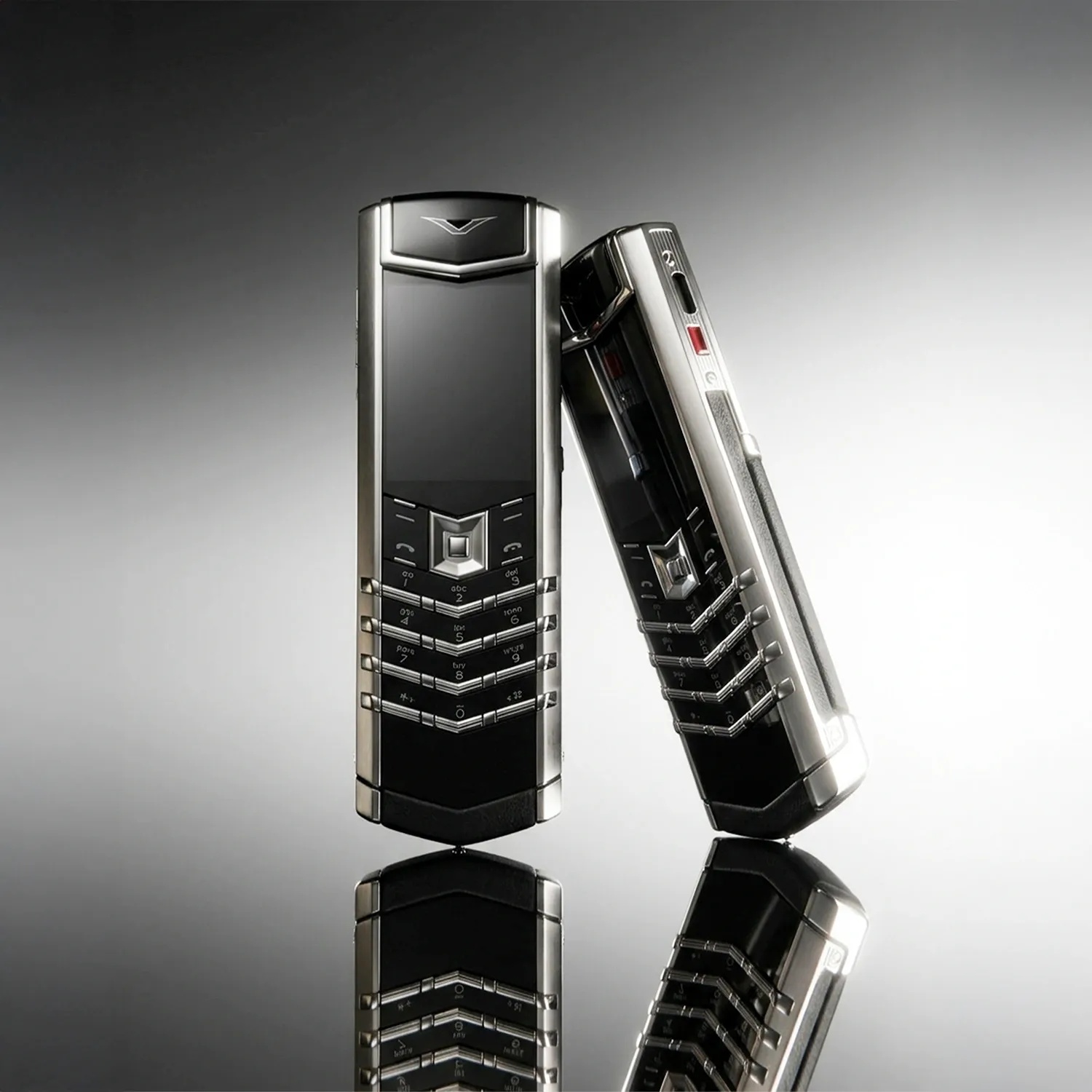
Touchscreen phones are brilliant at one thing: turning your pocket into an infinite feed.
But the longer you live with glass-only interfaces, the more you notice what they remove. The certainty of a click. The calm of a device that doesn’t beg for your attention. The ability to act without looking.
That’s why luxury keypad phones still exist. Not as nostalgia. As a deliberate choice about how you want technology to behave around you.
Key TakeawayA luxury keypad phone is less about “going backwards” and more about reclaiming control: attention, input certainty, and discretion.
What “luxury keypad phones” actually are (and aren’t)
A keypad phone is defined by a physical interface: real keys with travel and boundaries. A luxury keypad phone takes that interface seriously. The keys aren’t an afterthought. They’re the point.
What it isn’t:
It isn’t a flagship smartphone replacement for everyone.
It isn’t trying to win a spec race.
It isn’t “simple” because it’s cheap.
What it is:
A phone designed for communication you can trust under friction (low light, travel, one-handed use).
A device where feel is part of the product—materials, weight, finishing, and key response.
Often, a different ownership model: service, aftercare, and provenance matter more than the app ecosystem.
Luxury keypad phone vs. luxury smartphone
A luxury smartphone is usually a premium version of the same touchscreen idea: bigger display, better camera, better materials, higher price.
A luxury keypad phone is a different idea. It treats the phone as an instrument. You don’t “tap around.” You press a specific key and get a specific outcome.
That’s why many collectors and privacy-sensitive owners keep a keypad phone alongside a smartphone: one for breadth, one for focus.
“Luxury feature phone” explained
A luxury feature phone typically keeps the essentials (calls, messaging, core tools) and intentionally limits the rest. Some models add modern touches, but the point is not to become a second smartphone.
In this category, “feature” is not an apology. It’s a boundary.
Tactile craft is not nostalgia. It’s an interface advantage
When people say they miss buttons, they’re rarely talking about aesthetics.
They’re talking about certainty.
Physical controls give you feedback the moment you act. You don’t need to look for a visual cue or wait for a haptic buzz that may or may not feel distinct through your hand.
In other industries, this is treated as a serious usability issue. New Euro NCAP tests due in 2026 will encourage manufacturers to use separate physical controls for basic functions, specifically to reduce driver distraction (European Transport Safety Council summary of Euro NCAP’s 2026 changes (2024)).
The same principle applies to a phone you operate while walking, traveling, or moving through a crowded evening event. If a device needs your eyes for every action, it’s not supporting your attention. It’s taking it.
Even outside the car context, designers and component specialists describe tactile controls as better suited to eyes-free operation because the interface itself provides confirmation (Snaptron’s overview of tactile vs capacitive feedback (2025)). In practice, that advantage shows up in small moments:
dialing without glancing down
navigating a menu by feel
ending a call cleanly without an accidental tap
A luxury keypad phone doesn’t ask you to “get used to it.” It meets you where your hands already are.
Four reasons keypad phones still make sense in a smartphone world
There are many reasons people keep or return to keypad phones. These four show up again and again for high-trust, high-tempo lifestyles.
1) Attention discipline (by design)
A touchscreen phone is built for optionality. The problem is: optionality becomes default behavior. You pick up the device for one action, and ten distractions volunteer themselves.
A keypad-first phone reduces that surface area. You still communicate, but you don’t drift.
This is also why the “dumb phone” trend exists at all: people are tired of being shaped by their devices. A simpler phone can be a practical boundary, not a moral statement.
2) Eyes-free confidence
Keypads excel in moments where you can’t—or don’t want to—stare at a screen:
moving through airports and transfers
standing outside a venue in low light
handling a call one-handed
The keys become landmarks. Once you learn them, you act faster because your hands aren’t negotiating with a flat surface.
3) Discretion
A keypad phone is quieter in public. Not in volume—in posture.
It doesn’t broadcast “I’m available for infinite scrolling.” It looks like what it is: a tool for communication. For many owners, that understatement is the luxury.
4) Ownership longevity
Most smartphones are designed around upgrade cycles.
Luxury keypad phones lean into a different idea: the phone as a long-term possession. That’s where materials and aftercare start to matter. The keys you press thousands of times must feel right today and still feel right years later.
This is also where the phrase expensive feature phone can be misleading. Expensive for what? If you measure only apps and camera sensors, the category won’t make sense. If you measure craft, tactility, and the ownership layer, it starts to.
What makes a keypad phone “luxury”
Luxury in this category is mostly about the parts you touch.
Materials that age well
A luxury keypad phone is often built with materials chosen for durability and feel:
metal frames with real weight
sapphire-like hardness for the display
fine leathers that don’t feel synthetic
ceramics where the device meets skin
Those materials aren’t decoration. They change the daily experience.
Finishing that respects the hand
If you’ve ever used a device where the keys wobble or the edges bite into your palm, you already understand the point.
Luxury finishing shows up in:
key travel that feels consistent
edges that are precise, not sharp
surfaces that don’t squeak, flex, or cheapen over time
Service and access
In the luxury world, ownership is not just the object. It’s what the object unlocks.
Some high-end keypad phones are designed around that idea: a dedicated hardware path to real support, not a buried menu or a chatbot.
A Signature example: craft, materials, and the Ruby Key
If you’re looking for a clear modern example of a vertu keypad phone done as a luxury object, the Signature line is a reference point.
On the brand’s official pages, Signature is positioned around craftsmanship and materials—such as sapphire crystal, steel construction, and premium leathers—rather than a spec checklist (Signature phone craftsmanship).
That matters because a keypad phone succeeds or fails on the tactile details. The keys are the interface.
The Ruby Key: hardware that leads to a human
A defining part of the ownership model is the Ruby Key: a dedicated physical button intended to give direct access to concierge support. The brand describes it as a core service pathway, not an app (Ruby Key concierge).
For an UHNW buyer, this is the difference between “a luxury-looking phone” and a luxury system: a device with an intentional workflow.
The Signature V series as the modern lineup
If you want the clean overview of the lineup, start at the official category page for the Signature V series. It’s the best way to see how the series is framed today.
How to verify: buying a luxury keypad phone without regrets
Luxury categories attract replicas. A keypad phone also has one more risk: service access may depend on provenance.
How to verifyPrioritize official brand channels and confirm service eligibility before you commit. For VERTU buyers, start with the brand’s own VERTU Signature phone guide and official purchase pathways.
A simple rule: if the seller can’t clearly explain provenance and aftercare, you’re buying a story, not an object.
FAQ
Are luxury keypad phones just “dumb phones for rich people”?
Not really. The best examples are purpose-built: designed around tactile certainty, discretion, and ownership experience. Some are simpler by choice. Some add select modern features. The point is that the interface is intentional.
What’s the difference between a luxury feature phone and a luxury keypad phone?
“Feature phone” usually describes a simpler capabilities set. “Keypad phone” describes the physical interface. Many luxury keypad phones are also luxury feature phones, but the term “keypad” is about how the device feels and how you interact with it.
Will a keypad phone feel slow if I’m used to a smartphone?
Some tasks, yes—especially anything that depends on full app ecosystems. But core communication tasks can feel faster because the interface is direct.
Who is a luxury keypad phone for?
Often: travelers, collectors, privacy-sensitive owners, and anyone who wants a phone that supports focus rather than competition for attention.
Next steps
If you’re exploring luxury keypad phones, start by clarifying what you want to protect: attention, discretion, tactile certainty, or the ownership layer.
From there, it becomes easier to judge whether you want a minimalist device, a secondary “focus phone,” or a craft-first flagship in keypad form.
If you want to see how one of the best-known luxury keypad lineages is positioned today, explore the Signature V series.
Disclosure: This article references VERTU pages. Editorial judgment remains the priority.
![Top 10 Tourbillon Watches for Men [2026 Latest]](https://cdn.sanity.io/images/e0gp1l2g/production/8cb6bc45133cf9453382fc7d074465af588bb610-1800x1080.webp?w=180&h=180&q=78&auto=format&fit=crop)
![Top 10 Tourbillon Watches for Men [2026 Latest]](https://cdn.sanity.io/images/e0gp1l2g/production/8cb6bc45133cf9453382fc7d074465af588bb610-1800x1080.webp?w=800&h=450&q=82&auto=format&fit=crop)
![Top 10 Anniversary Gift Watches for Men [Full Guide]](https://cdn.sanity.io/images/e0gp1l2g/production/00dfa030a876edbe6ea7b146f6b1d8197c7656b0-3840x1860.webp?w=800&h=450&q=82&auto=format&fit=crop)