A “Vertu Signature phone” isn’t a spec sheet. It’s a decision about how you want to communicate: tactile, discreet, and deliberately separate from the noise of app-first life.
The confusion is real, though. “Signature” can refer to Vertu’s original keypad heritage and to current Signature offerings—so this guide will clarify what the name means today, then give you a practical framework for evaluating whether a luxury keypad phone fits your priorities.
Key TakeawayIf you’re buying a Vertu Signature phone for the experience—materials, craftsmanship, and the Ruby Key service model—you’ll evaluate it differently than any mainstream smartphone.
Key takeaways
“Signature” is best understood as Vertu’s iconic keypad lineage, with modern Signature offerings centered around the Signature V family.
For most buyers, the real differentiators are materials + build philosophy and the Ruby Key concierge access, not app ecosystems.
The smartest way to shop is to use an evaluation checklist: authenticity, service access, aftercare, and lifestyle fit.
What “Vertu Signature phone” refers to (and what it doesn’t)
On Vertu’s official site, the phone category explicitly frames Vertu as a luxury mobile house that covers both “flip” and “keypad” models in its current catalog: see the VERTU luxury phones collection.
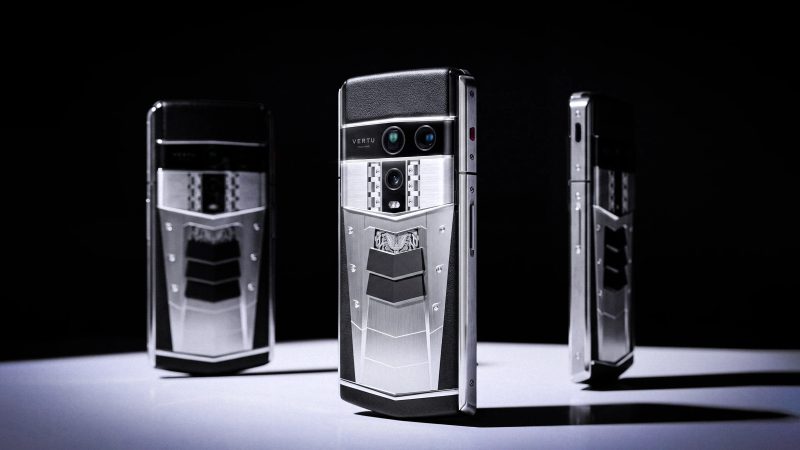
In current Vertu positioning, the Signature name is strongly associated with keypad-first luxury design, and the modern Signature family is presented as the Signature V series, described on the VERTU Signature V series page as featuring the ruby button, sapphire crystal screens, and 24-hour concierge service.
What it typically doesn’t mean:
It doesn’t mean you’re buying the latest mainstream flagship experience.
It doesn’t mean you should expect the same upgrade cadence or app-centric lifestyle as an iPhone or top Android device.
A useful mental model: a Signature phone is closer to a mechanical watch than to a consumer tech product. You don’t buy it because it wins benchmarks. You buy it because it changes the feel and intent of ownership.
The buying criteria that matter for a luxury keypad phone
If you’re considering a Vertu Signature phone, evaluate it like a collector would: by provenance, materials, service access, and long-term ownership confidence.
1) Craftsmanship and materials (what’s actually worth paying for)
Luxury keypad phones live or die on tactility: key travel, feedback, surface finishing, and durability of the parts you touch a thousand times.
Vertu’s official Signature V writing emphasizes two hallmark elements: the ruby button engineering and the sapphire screen, described in “The Unwavering Icon” (VERTU).
From a buyer’s point of view, the questions aren’t “Is sapphire impressive?” but:
Does the phone keep its visual integrity after months of travel?
Do the materials age with dignity (patina, resistance to scratches, tolerance to temperature changes)?
Do you enjoy using it—every day, not just on day one?
A helpful historical note: mainstream tech press has long described the early Signature concept as pairing sapphire crystal with ruby-bearing key engineering (see BGR’s overview of early Vertu Signature design). Consider this context, not proof.
Collector’s note: In this category, “materials” only matter when they change ownership outcomes—durability, feel, aging, and serviceability—not when they exist as decoration.
2) The Ruby Key and human concierge access
For many owners, the Ruby Key is the point—not an accessory.
Vertu describes the Ruby Key as a single-press gateway to its concierge, emphasizing immediate access and human expertise in Ruby Key concierge access.
In practice, you can treat the Vertu Ruby Key as a service interface: a dedicated pathway for high-trust requests, rather than another icon on a crowded screen.
To keep this practical, evaluate the Vertu concierge service the way you’d evaluate private banking or a family office partner:
Responsiveness: Do you reach a qualified person quickly?
Capability: Can they execute globally (time zones, languages, last-minute changes)?
Taste and discretion: Do they understand privacy and preference without over-explaining?
Continuity: Are you treated as a relationship, not a ticket number?
3) Privacy and discretion (what’s real vs. assumed)
In UHNW circles, “privacy” can mean three different things:
Social privacy: your device doesn’t attract the wrong attention.
Operational privacy: fewer apps, fewer notifications, fewer moments of accidental exposure.
Technical privacy: what the device and services can truly protect.
A luxury keypad phone can do a lot for (1) and (2) by design—especially if it becomes your “clean line” for calls, essential messages, and concierge.
For (3), be cautious. Do not buy on vague security claims. Instead, ask for clear explanations of what’s protected, how, and under what conditions—then decide whether that matches your risk profile.
4) Practical usability: the travel test
A luxury keypad phone is often purchased for travel and high-stakes days—when simplicity wins.
Ask yourself:
Will you use this as a primary phone, or as a second device?
Do you need it to work reliably across regions, or primarily in a single market?
What matters more: app convenience—or a quieter, more intentional communication layer?
If you’re looking for a phone to replace your smartphone entirely, be honest about the trade-off.
Primary phone vs. second phone: a cleaner way to decide
Most buyers don’t need a dramatic “switch.” They need a division of labor.
Choose “primary” if your day is mostly calls, essential messaging, and calendar coordination—and you want fewer surfaces where sensitive information can leak.
Choose “second phone” if you live inside modern app ecosystems (banking, travel apps, corporate authentication, fleets of group chats) but still want a quieter line for high-trust communication.
The point isn’t owning two devices. It’s owning two modes.
What to ask about connectivity before you commit
Because this is a consideration-stage decision, don’t rely on assumptions. Ask the seller or brand team:
Which regions and carriers are supported for your use case.
Whether the device is intended for voice-only reliability, or broader data use.
What the realistic “travel scenario” is for your profile (US-only, transatlantic, global).
A good answer is specific. A vague answer is your signal to pause.
5) Aftercare, service, and long-term ownership confidence
Luxury ownership isn’t just purchase—it’s support.
Before you commit, you want clarity on:
service and repair pathways
warranty and coverage terms
how concierge access is provisioned and maintained
what documentation you receive for provenance
If you’re unsure where to start, a direct, discreet next step is to speak with the team via VERTU’s contact page.
How to verify authenticity before you buy
Counterfeits and grey-market uncertainty are a real risk in luxury categories.
Use this practical checklist:
Verify the selling channel and documentation.
Confirm how Ruby Key/concierge access is provisioned for the specific device.
Inspect finishing details that are difficult to fake (key feel, tolerances, material transitions).
Ask for a provenance narrative: where it was purchased, how it was stored, why it’s being sold.
How to verify: Don’t treat “luxury” as something you can spot from a photo. Authenticity is a chain of proof: seller credibility, documentation, service access, and physical inspection.
Who should choose a Vertu Signature phone (and who shouldn’t)
Choose a Vertu Signature phone if:
You want a tactile, quiet device that supports a more deliberate way of communicating.
You value materials, craftsmanship, and service as much as technology.
You want concierge access as part of your lifestyle workflow.
You probably shouldn’t if:
You want the fastest app experience and constant feature updates.
You expect the device to replace every function of your smartphone.
Your buying logic is primarily “performance per dollar.”
A practical shortlist: questions to ask before you purchase
Use these questions to keep the decision clean:
What role will this phone play in my life—primary, secondary, or travel-only?
Is concierge/Ruby Key access essential for me, or merely interesting?
What does “privacy” mean in my situation (social, operational, technical)?
What’s my tolerance for ecosystem trade-offs?
Can I verify provenance and service access with confidence?
Where to explore current Signature options
Start with Vertu’s official catalog pages you’ve already seen in this guide. Then, if you want a guided recommendation based on how you travel and communicate, use the direct route and reach out through contact VERTU.
FAQ
Is the Vertu Signature phone a smartphone?
In current Vertu framing, the Signature line is best understood as a luxury phone identity that includes keypad-first designs (with Signature V positioned as a modern icon). It’s less about being app-first and more about craftsmanship and service.
What makes the Signature V different from a normal keypad phone?
Vertu’s own descriptions center on hallmark elements like the ruby button engineering and sapphire screen, plus concierge access (covered earlier in this guide).
Is the Ruby Key a real concierge or just an automated system?
Vertu describes it as human expertise and immediate access via the Ruby Key (covered earlier in this guide).
Should I buy a Signature phone as my only phone?
Most buyers are happiest when they choose the Signature for what it’s best at—intentional communication and service access—while keeping a mainstream smartphone for app-heavy work. Your right setup depends on whether you want “fewer moving parts” or “fewer distractions.”
Next steps
If you’d like to compare current Signature options with your travel cadence and privacy preferences in mind, start with the official catalog pages and then reach out for availability and guidance.
Disclosure: This article references VERTU pages. Editorial judgment remains the priority.