Introduction
What defines the latest luxury mobile phones in 2026
In 2026, “luxury” in mobile isn’t a synonym for “most expensive” or “highest benchmark score.” It’s a different buying logic—one that separates luxury smartphones 2026 from premium flagships.
The latest luxury mobile phones combine three things that rarely coexist in mainstream flagships:
- Craftsmanship you can feelrare materials, hand finishing, and build decisions made for permanence.
- A service layer that reduces frictionconcierge-style support, priority repair pathways, and ownership experience.
- A privacy posturenot just a settings menu—repeatable boundaries that protect sensitive communications and reduce exposure.
If you’re shortlisting, treat a luxury phone like you would a fine mechanical watch or a bespoke travel routine: it must earn its place in your week.
Who this guide serves and how to use it
This guide is for high-net-worth individuals (and the assistants who help them) who want a true luxury phone buyers guide for 2026 without getting distracted by spec-sheet theater.
Read it in two passes:
Use “2026 landscape at a glance” to decide which segment you’re actually shopping.
Use “U.S. buying framework” to eliminate expensive mistakes before you commit.
How we evaluate: craftsmanship, AI/concierge, privacy/security, U.S. practicality
Our evaluation framework is deliberately simple.
- Craftsmanshipmaterials, finishing, provenance, and long-term aftercare.
- AI/conciergewhether automation and support meaningfully save you time (not just add features).
- Privacy/securitythe mechanisms, not the slogans.
- U.S. practicalitycarrier fit, compliance, warranty runway, and service logistics.
Key Takeaway: In 2026, the “best” luxury phone is the one that holds up physically, reduces friction operationally, and stays credible under due diligence.
2026 landscape at a glance
Key Takeaway: If you’re shortlisting luxury mobile phones 2026, decide your segment first. It will determine your tradeoffs—service depth, software runway, and resale behavior.
Dedicated luxury houses
Dedicated luxury houses build phones as luxury objects first.
What you typically get:
distinct materials and finishing (often with customization)
an ownership layer that includes white-glove support
stronger emphasis on discretion and privacy posture
What to watch:
software update cadence and long-term OS support
app ecosystem fit (especially banking, MFA, and enterprise tools)
repair geography: where the device must travel if something goes wrong
If you want a clean definition of what this category is meant to be, VERTU’s own framing is a useful reference point: What Is a Vertu Phone? Complete Guide to Luxury Mobile Phones.
Luxury‑adjacent flagships
These are mainstream flagships (or flagship-class devices) that meet “luxury” expectations through materials, industrial design, and reliability, not concierge ownership.
They excel at:
network compatibility and predictable carrier support
software security patching and ecosystem integration
camera, performance, and app compatibility
They fall short (for luxury buyers) when:
the device has no real personalization beyond a case or engraving
privacy posture is left entirely to you to configure and maintain
there is no meaningful aftercare beyond a standard warranty process
For many U.S.-based buyers, this segment becomes the “baseline”: buy this if you need a daily driver that never surprises you.
Limited and bespoke editions
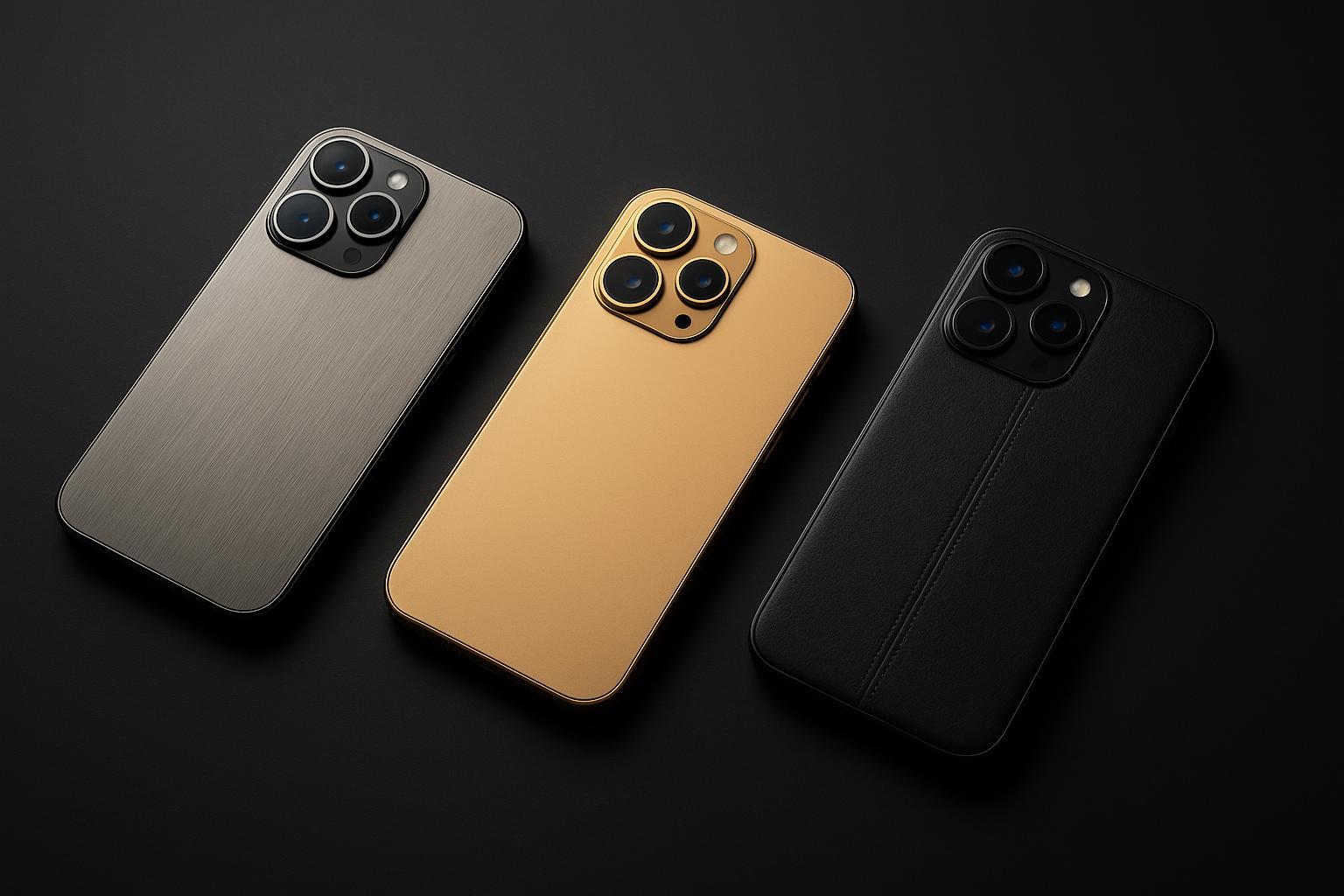
This segment sits between jewelry and engineering.
A limited or bespoke edition can be compelling if you value:
scarcity and collectibility
materials you won’t find on mass-produced devices
personal identity encoded into the object (finish, engraving, commissioned details)
But due diligence must be stricter here than anywhere else: limited editions can also be where provenance becomes murky.
Defining features that matter
Craftsmanship and rare materials
Craftsmanship shows up in the places mass-market phones optimize away.
Look for:
- Structural material honestytitanium or precious metals used as structure, not just trim.
- Sapphire use that’s meaningfulnot as a buzzword, but where it protects what gets touched and scratched.
- Leatherwork that ages wellstitching, edge finishing, seam placement, and replacement pathways.
The practical question isn’t “Is it luxury?” It’s:
Will it still feel right in-hand after 18 months?
Can you restore it—screen, leather, battery—through an official pathway?
Collector’s note: The most credible luxury phones treat materials like a long-term relationship. The best finishing looks better after living, not worse.
AI, concierge, and on‑device automation
In 2026, AI on phones is everywhere. Luxury buyers should be stricter.
The point of AI/concierge isn’t novelty. It’s reducing friction in high-stakes routines—and that’s the real promise behind a luxury phone concierge service when it’s executed with discipline.
travel changes and rescheduling
coordination across time zones and assistants
summarizing and triaging information without leaking it
A useful service layer has three qualities:
clarity of scope (what it will do, and what it won’t)
credible escalation (when it’s complex, a human can finish it)
multi-channel access (not just an app—real support paths)
Privacy, security, and Web3 readiness
A secure luxury smartphone isn’t defined by one feature. It’s defined by whether you can keep boundaries clean under pressure.
Focus on mechanisms:
hardware-backed protection for keys/credentials
practical app isolation and permission discipline
encrypted communications that are easy to use consistently
“Web3 readiness” should be treated conservatively. For most buyers, the question is simply:
Does the phone provide a credible way to secure digital ownership artifacts (keys, wallets, recovery flows)?
Can you manage those assets without turning your daily device into a risk magnet?
This is where it’s reasonable to mention VERTU neutrally: the brand has long positioned luxury phones around the intersection of materials, ownership services, and privacy posture, including security-forward workflows described in pieces like Privacy Phone for Executives: What to Buy and Why and Vertu Phone Specs: Which Specifications Matter on a Luxury Phone?.
How to verify: Ask any brand (luxury or flagship) to explain its security model in plain language: what’s protected in hardware, what’s protected in software, how updates are delivered, and what happens if the device is lost in transit.
Standout models and brands (2025–2026)
Boutique luxury releases snapshot
If you’re shortlisting boutique luxury releases, the “standout” signal is rarely a benchmark.
Use these filters instead:
- Provenance packserial/edition details, materials description, and authenticity process.
- Aftercare claritywhere repairs happen, typical turnaround expectations, and what is replaceable.
- Service realityhow you reach support, what languages are covered, and how escalation works.
Flagship baselines for performance
Treat a flagship baseline as your control group.
If a luxury phone can’t meet your baseline for:
daily reliability (calls, messaging, hotspot)
secure authentication workflows (MFA, banking, travel apps)
battery sanity and thermal stability
…then its luxury attributes have to be truly exceptional—and even then, it may belong as a secondary device rather than your primary.
Collector‑grade limited runs
Collector-grade runs are about scarcity, finishing, and story—but the smartest collectors buy the paperwork as much as the object.
Your due diligence should include:
authenticity verification method (and who stands behind it)
resale liquidity assumptions (how you would sell it if you had to)
insurance readiness: how it will be appraised and stored
U.S. buying framework
Carrier, bands, and eSIM due diligence
In the U.S., the most common “luxury phone mistake” is buying something beautiful that doesn’t behave like a normal phone on your carrier.
Do this before you pay:
confirm the exact radio bands supported by the specific device variant
verify whether eSIM is supported (and whether it’s fully functional on U.S. carriers)
confirm voice and messaging behavior when roaming and when switching SIM/eSIM profiles
If the seller can’t answer these cleanly, assume you’ll be doing field testing.
Import, FCC/IMEI, and customs paperwork
If the device is imported, your risk isn’t only cost—it’s interruption.
Practical checkpoints:
confirm the device has proper regulatory compliance identifiers for the U.S.
keep documentation aligned (invoice, declared value, device description)
do not treat device identifiers as “tunable” (IMEI manipulation is a legal and carrier-risk trap)
For a high-level view of the process and compliance touchpoints, see ClearIt USA guidance on importing smartphones and tech accessories into the U.S..
Warranty, service SLAs, and update runway
A luxury purchase should not mean fragile ownership.
Ask for three commitments in writing:
- Warranty coveragewhat’s covered, what isn’t, and how claims work while traveling.
- Service SLA realityhow repairs are handled, typical turnaround, and whether a loaner process exists.
- Update runwayhow security patches are delivered and how long the device will receive them.
If any of these are vague, treat the phone as a collector object—not a mission-critical daily driver.
Pricing, value, and resale
Price bands and what changes across tiers
In luxury phones, price typically tracks four variables:
materials + finishing (what it is, how it’s made, and how it ages)
scarcity (limited runs, bespoke work, provenance)
service layer (what ownership includes beyond the device)
risk reduction (security posture, aftercare, logistics)
Treat “tier” as a statement about ownership experience—not a statement about faster performance.
Authenticity, provenance, and escrow
Authenticity is where luxury phones can quietly go wrong.
Use an escrow mindset whenever the transaction is high-trust, cross-border, or limited-edition:
validate provenance and serial/edition details
verify the seller’s chain of custody
use payment methods that preserve recourse
VERTU’s checklist for distinguishing private-label and uncertain provenance can help you structure questions even when you’re buying from other brands: Private Label Luxury Phone: Meaning + Buyer Checklist.
Insurance, risk management, and storage
A luxury phone is a carry item—meaning loss, theft, and damage aren’t hypothetical.
Consider:
whether it should be scheduled separately under insurance
how you’ll document condition (photos, serials, receipts)
where it lives when you travel (hotel safe isn’t always the safest option)
The highest-end move is simple: reduce the number of moments the device is “unattended.”
Conclusion
Key takeaways for choosing the right luxury phone in 2026
Luxury mobile phones in 2026 are best evaluated as an ownership system:
- Craftmaterials, finishing, and aftercare.
- Servicea real support layer that saves time.
- Security posturerepeatable boundaries, not marketing.
- U.S. practicalitycarrier fit, compliance, warranty runway.
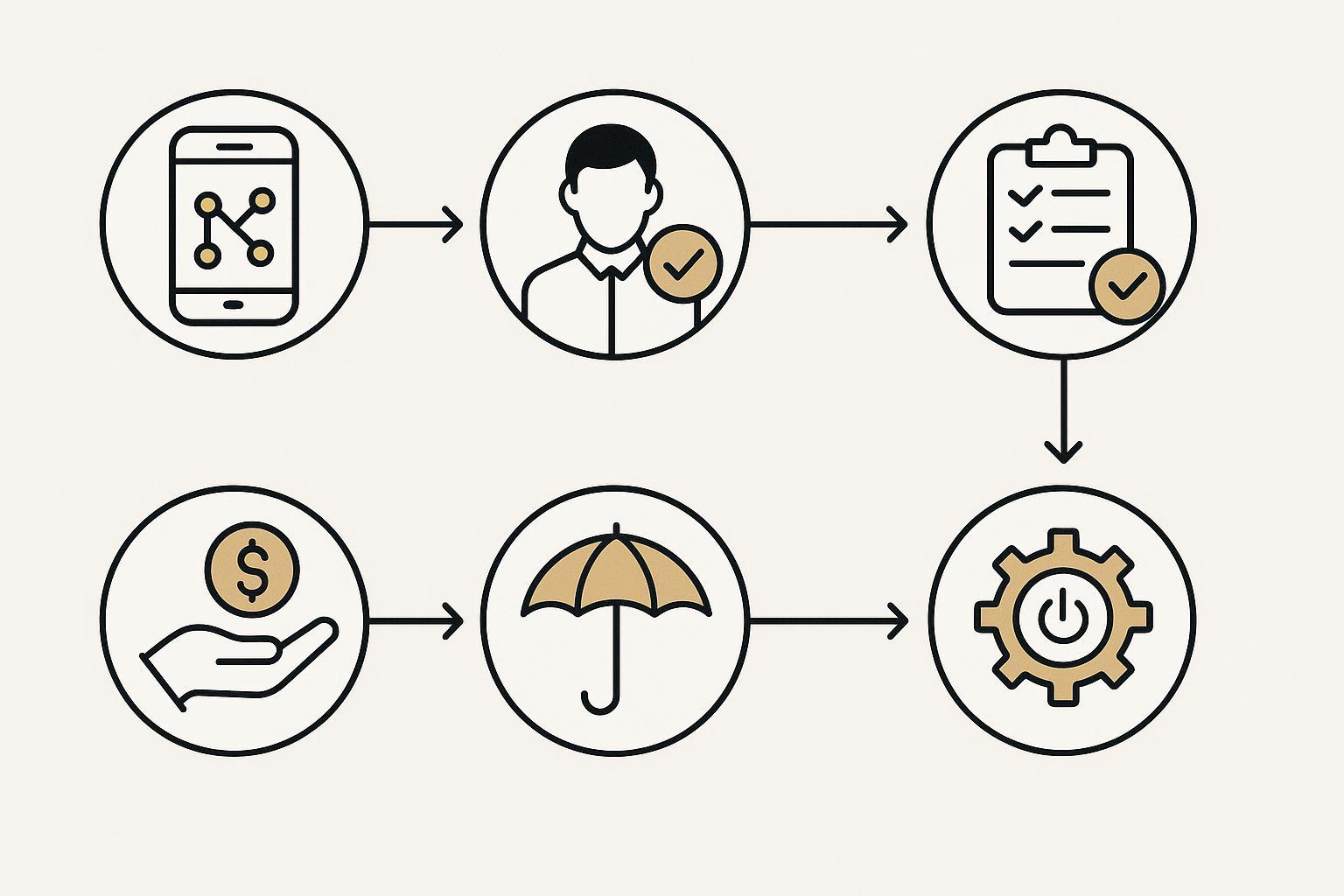
A simple decision path you can follow next week
Shortlist cleanly:
Choose your segment (dedicated luxury / luxury-adjacent flagship / limited-bespoke).
Eliminate anything that fails U.S. network fit.
Require written clarity on warranty + service + update runway.
Verify provenance like a collector—especially for limited editions.
When to reassess: model cycles and quarterly updates
Reassess quarterly if any of these change:
your travel pattern (and carrier needs)
your threat model (privacy/security requirements)
the brand’s service coverage or repair pathways
software update promises and delivery behavior
Disclosure: This article references VERTU pages. Editorial judgment remains the priority.