Executive privacy isn’t a vibe. It’s a set of decisions you make before the pressure hits: which device holds sensitive material, which accounts touch it, and what happens when it’s lost, inspected, or compromised.
If you’re searching for a privacy phone for executives, you’re probably already past awareness. You’re looking for an executive privacy phone you can live with, travel with, and trust.
Key takeaways
A privacy phone for executives is a stack (device + communications + identity + travel mode), not a single feature.
Your top decision criteria should be: security update support, hardware-backed protection, verified boot and app isolation, and repeatable separation between contexts.
If your phone can be managed by an employer’s MDM, your “privacy” goals need to be explicit and documented.
The biggest practical risks for most executives are phishing/account takeover and device loss, not Hollywood-grade exploits.
What a “privacy phone for executives” should mean
Most phones can be made more private. Few can be made predictably private under real executive conditions: assistants handling logistics, nonstop travel, constant attachments, and accounts that would be expensive to lose.
A useful definition is simple:
A privacy-focused smartphone for business should reduce (1) unnecessary data collection, (2) untrusted app access, and (3) the blast radius when something goes wrong.
That last part matters. The best privacy phone is the one that fails gracefully.
The executive threat model (the short version)
If you want to pick the right device, don’t start with brands. Start with the risks you actually face.
The threats that usually matter most
Account takeover (email, iCloud/Google, messaging apps, password manager)
Phishing and social engineering (including “voice” and calendar-based scams)
Device loss or opportunistic theft (hotel, airport, car service)
App leakage (an app that quietly pulls contacts, location, photos, microphone)
The threats that matter sometimes
Targeted surveillance (a real possibility for certain roles, regions, and disputes)
Cross-border exposure (inspection requests, confiscation, hostile networks)
Your goal is to make the common failures boring, and the rare failures contained.
The 7 criteria that separate a privacy phone from a marketing claim
1) Security update support you can count on
This is what turns a nice-looking device into a secure phone for executives.
A privacy phone is a long-term relationship with a vendor. If security updates are short-lived, unpredictable, or undocumented, you’re buying a story.
Privacy Guides’ device guidance is unusually blunt here: it prioritizes hardware security and long support windows, and it favors devices with strong verified boot support and modern security features (not “privacy apps”) as the foundation for private use; see Privacy Guides’ “Mobile Phones” recommendations.
2) Hardware-backed security (secure element)
Look for hardware that keeps critical keys and authentication material isolated. If a phone treats your most sensitive secrets as just another app’s data, you’re relying on software alone.
3) Verified boot, integrity checks, and app isolation
This is where “secure phone for executives” stops being a headline and becomes an engineering question.
Verified boot and integrity checks help you detect tampering.
Strong app sandboxing limits lateral movement if one app is compromised.
4) True separation between contexts (work, personal, travel)
Executives rarely have a single “identity.” You have work identities, family identities, and public identities.
A practical standard to borrow from privacy risk thinking: collect and carry only what’s necessary for a specific purpose. NIST positions the Privacy Framework as a voluntary, risk-based approach to managing privacy risk, emphasizing principles such as data minimization; see the NIST Privacy Framework.
In practice:
Keep a clean travel setup that doesn’t carry your whole life.
Don’t let your board pack live in the same device context as casual apps.
5) Secure communications (and knowing what “secure” covers)
If you’re comparing an encrypted phone for executives, confirm what’s encrypted (and what is not) across calls, messages, attachments, and backups.
End-to-end encryption matters, but it isn’t the whole story. You also care about:
how accounts are recovered
what gets backed up to cloud services
what metadata is created and stored
6) Governance: MDM, access controls, and remote wipe
If you use corporate email and apps, there’s a strong chance you’re in an MDM world.
TechTarget’s guidance on mobile device management best practices highlights enforceable controls like encryption requirements, strong authentication/MFA, app allow/block lists, data-loss prevention policies, conditional access, monitoring, and remote lock/wipe; see TechTarget’s mobile device management best practices.
If you want privacy and MDM, put the rules in writing: what IT can see, what they cannot, and which profile is managed.
7) Support and incident response that doesn’t fail when you travel
Executives don’t need more “features.” They need fast recovery when something breaks: a lost device, a compromised account, a phone that needs hardening before a high-risk trip.
Red flags (and false comforts)
“Unhackable” language. Privacy is risk reduction, not a guarantee.
Privacy features with no update story. If patching is weak, privacy claims don’t matter.
A bloated app set. Every extra app is a permission surface.
Cloud convenience by default. Automatic backups, shared photo libraries, and contact syncing can quietly defeat your intent.
Pro Tip: The best way to improve privacy quickly is to remove apps, not add them.
Build your executive privacy stack (a simple blueprint)
You can pick a privacy phone and still lose privacy through habits. A better approach is to build a stack you can repeat.
Device baseline
Strong passcode + biometrics, with lock-screen previews disabled
Automatic updates enabled
Minimal installed apps
Communications baseline
Separate “routine” from “sensitive” communication channels
Use MFA everywhere possible
Use a password manager and protect account recovery pathways
Identity baseline
Compartment your accounts (work vs personal vs travel)
Use aliases when appropriate; don’t reuse phone numbers for every service
Travel baseline
Before travel: remove what you don’t need
During travel: assume untrusted networks; limit exposure
After travel: rotate critical credentials if anything felt off
Where luxury can add real privacy value (when it’s done properly)
Luxury doesn’t automatically equal privacy. But it can add something executives care about: a curated, supported workflow.
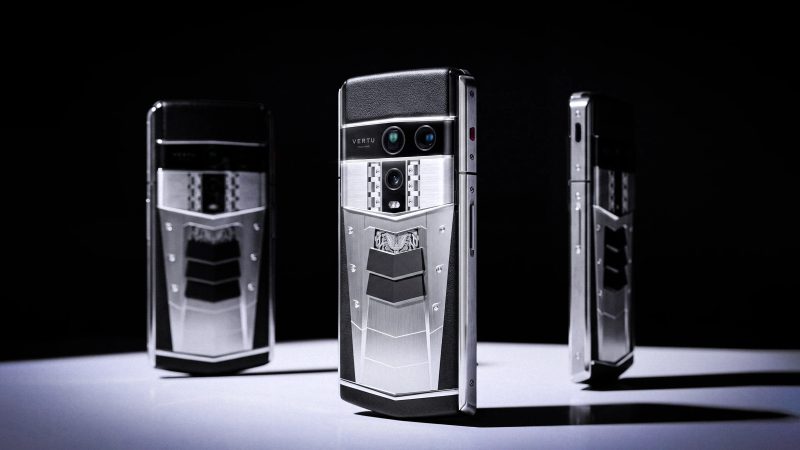
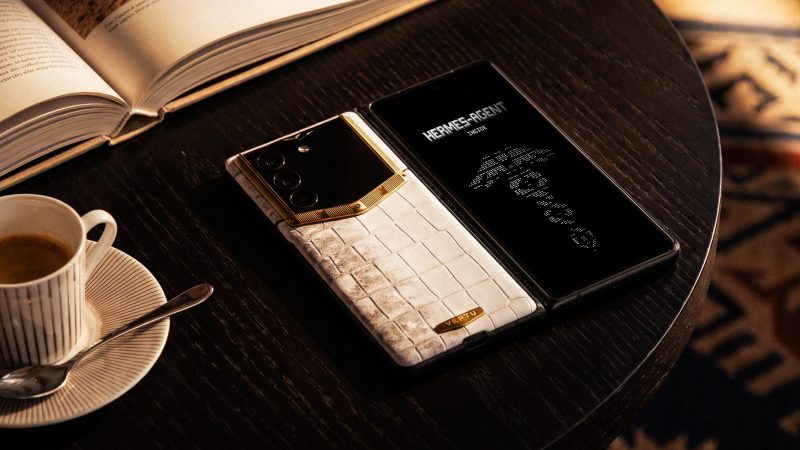
If you’re evaluating a privacy phone category that blends materials, service, and security-oriented options, start at the category level and read the positioning carefully. In VERTU’s case, the Signature S+ line is framed as luxury and innovation with satellite connectivity, an AI personal assistant, and an exclusive concierge service.
For security-specific services, Vertu describes offerings such as encrypted calls and texts (via Silent Circle), secure Wi‑Fi access via iPass, Kaspersky antivirus, and lost-phone controls such as remote lock and wipe on its Vertu Information Security Protection Services page.
If you want a concrete checklist for your shortlist, use this question:
Does this option reduce both digital risk and operational friction when you’re moving fast?
FAQ
Are “privacy phones” the same as “encrypted phones”?
Not necessarily. “Encrypted phone” often focuses on communications. A privacy phone for executives needs broader coverage: device integrity, app isolation, identity controls, and travel-mode discipline.
Should you use one phone or two?
If your travel risk is meaningfully different from your home risk, two setups are often cleaner: a primary device and a travel-restricted device or profile.
Can a company see what you do on a company phone?
Often, yes to some degree. With MDM, organizations can enforce policies and may collect device and app compliance signals. The boundary depends on policy and platform enrollment type. If this matters for you, get clarity in writing.
What’s the single biggest mistake executives make?
Treating privacy as a purchase instead of a practice. If your account recovery is weak, or your device is overloaded with apps, the rest doesn’t matter.
Next steps
If you’re ready to short-list, do this in order:
Choose the threat model you’re optimizing for (everyday risk vs targeted vs travel-heavy).
Score candidates against the 7 criteria above.
Decide what you’ll separate (work/personal/travel) and how you’ll enforce it.
If you want to explore a luxury category designed for executives who value discretion, materials, and supported workflows, start with the Signature S+ phones and treat it as a category evaluation, not an impulse buy.
Disclosure: This article references VERTU pages. Editorial judgment remains the priority.