When you search vertu phone specs, you’re usually not looking for the same thing you’d look for in a mainstream flagship review.
Yes—chipset, battery, display, and cameras matter. But on a true luxury phone, the specs that change the decision tend to sit in three places people overlook: privacy posture, service, and materials + aftercare.
Key TakeawayEvaluate a luxury phone on two tracks—hardware value (it must be modern and reliable) and ownership value (privacy, materials, service). Most spec sheets only tell you one of those stories.
Key takeaways (for consideration-stage buyers)
Treat “specs” as decision criteria, not a list of numbers.
Confirm the technical basics (performance, battery, connectivity) then focus on what you’re actually paying for: privacy habits, craftsmanship, and a service layer that reduces friction.
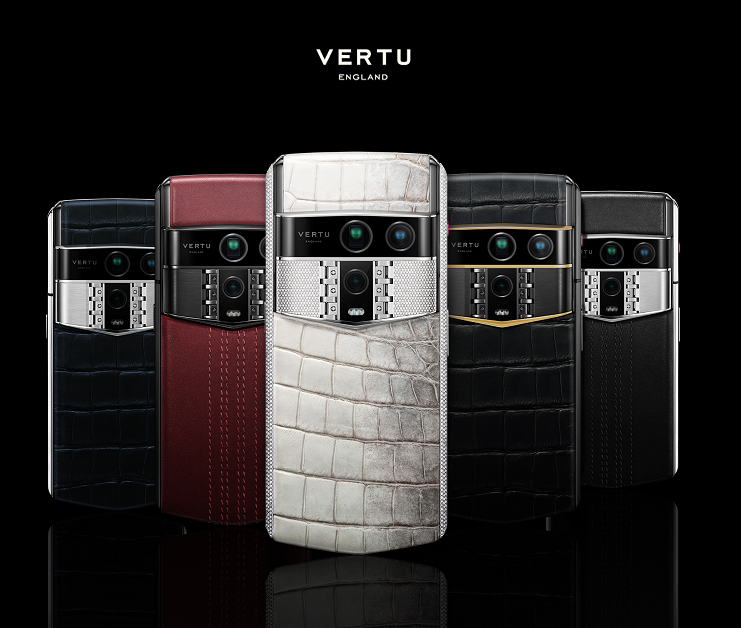
Compare like-for-like: the same model name can exist in different material tiers, configurations, and service bundles.
Stop reading spec sheets like a mainstream flagship
Mainstream flagships reward a simple game: best camera score, biggest battery, brightest display.
A luxury phone plays a different game: discretion, longevity, tactile satisfaction, and support that still works when you’re crossing time zones.
A useful mental model comes from VERTU’s own framing of luxury ownership: separate hardware value from the ownership experience (materials, personalization, and support). That’s the only way the category makes sense (see “What is a VERTU phone”).
Start with your use case (a 60-second needs assessment)
Before you compare any vertu phone spec sheet, decide which scenario you’re optimizing for:
- You travel constantlyairports, hotels, unfamiliar networks, and last-minute changes.
- You handle sensitive calls and databusiness, family, security, high-profile social circles.
- You delegateyou want a device that helps you act—not just consume.
- You collectthe phone is also an object—materials, provenance, rarity, and finish matter.
How to verifyWrite down three real moments from a typical month where a phone either protects you (privacy), saves you time (service), or feels worth owning (materials). If you can’t name three, you may be shopping for status rather than fit.
The luxury-spec checklist: what actually matters
Below is the framework to evaluate vertu mobile features and specs in a way that maps to real ownership value.
1) Privacy & security posture (not “security theater”)
On a luxury phone, privacy isn’t a feature; it’s a posture—how the device supports clean boundaries.
Look for:
Hardware-backed security (e.g., dedicated encryption hardware, secure vault concepts).
Clear control over what apps can access and when.
A credible model for sensitive storage (documents, keys, credentials).
A simple baseline: even neutral consumer evaluators emphasize security, OS updates, and safe habits as buying criteria (see Consumer Reports’ cell phone buying guide, 2025). Luxury just raises the stakes and the expectations.
2) Service layer: response, scope, and escalation
This is where luxury phones can genuinely outperform mainstream alternatives.
Evaluate:
- Availabilitytruly 24/7.
- Scopewhat the service will do (and won’t).
- Escalationwhen a request is complex, do you reach a human who can finish it?
VERTU is explicit that its experience is built around a service layer accessible via a dedicated key—see how it describes craftsmanship and the Ruby Key concierge in what makes VERTU phones special.
3) Materials & craftsmanship (plus provenance and aftercare)
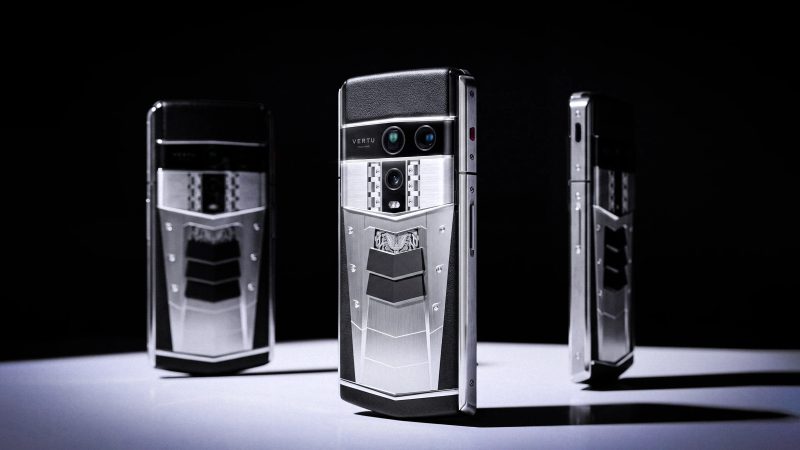
Luxury materials aren’t decoration. They change daily interaction: weight, grip, temperature, wear, even the confidence to carry it without hiding it in a case.
What to check:
Sapphire (where used and what it protects).
Titanium / precious metals (structural vs cosmetic).
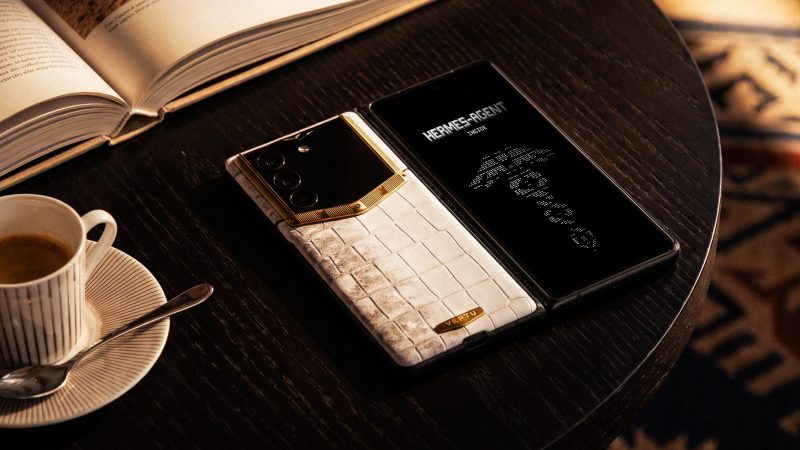
Leatherwork (stitching quality, seam placement, long-term maintenance).
- Provenancecertificates, serials, documentation.
- Aftercarerepair pathways and warranty clarity.
Collector’s noteIn luxury, “authentic” is a specification. If a seller can’t show provenance documentation or the ownership trail, treat the deal like a counterfeit risk—regardless of how perfect the spec sheet looks.
4) Display & form factor: what it enables
In luxury phones, form factor isn’t about novelty; it’s about how you live.
- Foldable (book-style)best if you read contracts, review decks, or live in calendars.
- Flipbest if you want a more deliberate relationship with attention and pocketability.
- Classic slabbest for reliability and accessory compatibility.
If you are considering VERTU models specifically, their official comparison content is a useful way to map form factor to intent (see VERTU’s “Luxury phone comparison 2025” guide).
5) Performance & storage: the luxury baseline
This is the “don’t get embarrassed later” category.
You don’t need to chase benchmarks, but you do need:
A modern chipset appropriate for multi-year ownership.
Enough RAM for smooth multitasking.
Storage that matches how you travel and work (offline files, media, secure archives).
6) Battery & charging: travel resilience
Battery matters less as a number and more as a guarantee: Can you get through the day—even on a chaotic schedule?
Evaluate:
Realistic endurance for your routine.
Charging speed that fits your travel patterns.
Whether the phone stays comfortable and stable under heavy use.
7) Connectivity: global practicality
Luxury owners are global owners.
Confirm:
Robust cellular band support for where you actually spend time.
Strong Wi‑Fi and Bluetooth standards.
NFC if you rely on contactless access or payments.
8) Camera system: consistency + discretion
A luxury phone doesn’t have to win a camera shootout to be worth owning. But it should be consistent.
Look for:
Reliable focus and stabilization.
Natural color (not over-processed).
Fast capture for candid, low-friction moments.
A quick decision matrix (choose what to prioritize)
Use this to keep your decision clean:
If you want privacy-first habits + a secure daily driver → prioritize privacy posture + performance baseline.
If you want time saved (travel, reservations, logistics) → prioritize service layer and escalation.
If you want a tactile object you enjoy handling → prioritize materials, finishing, and aftercare.
If you want mobile office leverage → prioritize form factor (especially large displays/foldables).
How these specifications show up in VERTU’s current lineup (examples)
This is where vertu phone features become concrete. The right way to read model pages is to map them to the framework above.
Example: Agent-first workflow (VERTU Agent Q)
If you care about delegation and proactive assistance, start by reading the AI workflow claims and the privacy posture—not just the cameras.
On VERTU’s official product page, VERTU Agent Q is positioned around AI agents and data sovereignty, alongside detailed hardware specs and materials. See the official listing for VERTU Agent Q.
Example: Foldable practicality with security emphasis (Quantum Flip)
If you prefer a foldable form factor, evaluate durability claims, privacy features, and travel practicality (battery + connectivity) before you get distracted by numbers.
For an official overview of where Quantum Flip sits in the lineup, use Luxury phone comparison (VERTU).
Example: Large-screen executive use (AlphaFold)
If your goal is reading, reviewing, and acting from the phone—documents, calendars, approvals—treat the large-screen experience as a core spec.
If you’re deciding between foldable types, focus on what work becomes easier (reading, split-screen, note-taking) rather than assuming the newest hinge or highest refresh rate will matter to your week.
How to verify before you buy (the due-diligence checklist)
Luxury phones reward due diligence.
- Verify what’s includedservice scope, regions covered, languages supported, and response channels.
- Ask for provenancedocumentation for materials and edition claims.
- Confirm aftercarewarranty length, repair route, and what happens when you travel.
- Compare like-for-likesame model, same material tier, same service bundle.
Pro TipDon’t accept “it’s luxury” as an answer. Ask for the exact checklist: what’s included, what’s optional, and what proof comes with the materials.
Video: a quick perspective on luxury phones and specs
Next steps
If you’re in the consideration stage, your best move is to shortlist 2–3 devices and score them against the checklist above (privacy posture, service, materials/aftercare, form factor, then performance baseline).
Explore the current lineup in one place: VERTU phone collection
If you’re still unsure whether a luxury phone is the right category, start with the framing in What is a VERTU phone.
Disclosure: This article references VERTU pages. Editorial judgment remains the priority.