Introduction
If you’re shopping for a smartwatch in 2026, you’re not just picking a screen for your wrist. You’re choosing an ecosystem, a health sensor suite, a safety tool, and—if you train—your most consistent source of performance feedback.
In this guide, you’ll learn:
Which watch to buy if you use an iPhone (and why Apple’s integration still matters)
Which watch makes the most sense on Android (especially if you live inside Google services)
Which budget models under $250 are worth considering without creating daily friction
Our picks focus on what actually changes ownership in the U.S. market: real platform compatibility, credible battery/endurance claims, and features you’ll use weekly—not once.
You’ll also see our primary keyword up front—the best smart watch 2026—because the goal here is simple: help you choose with confidence.
Update policy (last updated: 2026-06-30): Models, firmware, and pricing move quickly. Availability and street prices can change by retailer and promotions.
How to use this guide:
Jump to Top picks if you want the fast answer.
Go to Fitness and battery leaders if you care about GPS endurance and training tools.
Use Buying factors that matter in 2026 if you’re trying to avoid regret (and returns).
Top picks for 2026
Key TakeawaysIf you want the best smart watch 2026 experience, start with compatibility (iPhone vs Android), then battery reality (GPS vs daily use), then health/safety features you’ll actually use.
Best for iPhone users
Pick: Apple Watch Series (latest generation) — for the cleanest iPhone life.
If you’re searching for the best smartwatch for iPhone, don’t overthink it: Apple Watch is still the lowest-friction choice in 2026. Apple Watch wins less by “one killer feature” and more by a thousand quiet conveniences: notification handling that feels native, app behavior that’s consistent, and health data that flows into Apple’s platform with minimal effort.
What to look for in 2026 if you’re buying an Apple Watch:
Health + safety depth (ECG, fall detection, Emergency SOS) if you want the watch to do more than count steps
Cellular option if you want true phone-free walking, running, or travel days
Comfort and screen readability because you’ll wear it for years, not weeks
A practical rule: if you use Apple services (iMessage, Apple Pay, Apple Health) daily, this is the least risky choice.
Key TakeawayFor iPhone owners, the “best” watch is usually the one that disappears into your routine—fast pairing, dependable notifications, and health data you’ll actually review.
Best for Android users
Pick: Google Pixel Watch 3 — for the most cohesive Google-first experience.
For many buyers, Pixel Watch 3 is the best smartwatch for Android when you want a polished daily watch that feels native to Google services. If your day runs through Google services, Pixel Watch 3 is an elegant, coherent choice—particularly for people who want fitness insights without turning the watch into a full-time project.
Two reasons Pixel Watch 3 stands out for many Android users:
Safety and readiness features are easy to access. Google highlights safety features and daily readiness signals on its Pixel Watch 3 page.
Screen and usability feel modern. If you glance at your wrist in bright sun, display brightness and responsiveness matter more than you’d think.
Battery expectations should be realistic. Officially, Pixel Watch 3 is positioned around 24 hours with always-on display and up to 36 hours with Battery Saver (per Google’s Pixel Watch 3 page).
If you want a rugged, multi-day outdoor tool, Pixel isn’t trying to be that. It’s trying to be the watch you’ll actually wear.
Best budget under $250
Pick: Amazfit Bip series / similar budget-first models — for battery and basics, not ecosystem depth.
If your priority is price discipline, this is the lane for a best budget smartwatch under $250—as long as you accept the tradeoffs. That trade can be smart—as long as you’re honest about what you’re giving up.
The budget approach makes sense if you:
want multi-day battery and don’t want to charge daily
need reliable fitness tracking more than third‑party watch apps
are comfortable with a more limited voice assistant and fewer “deep” phone integrations
What you should not expect under $250:
the smoothest messaging experience
a rich app store comparable to WatchOS/Wear OS
top-tier sensor packages across every health category
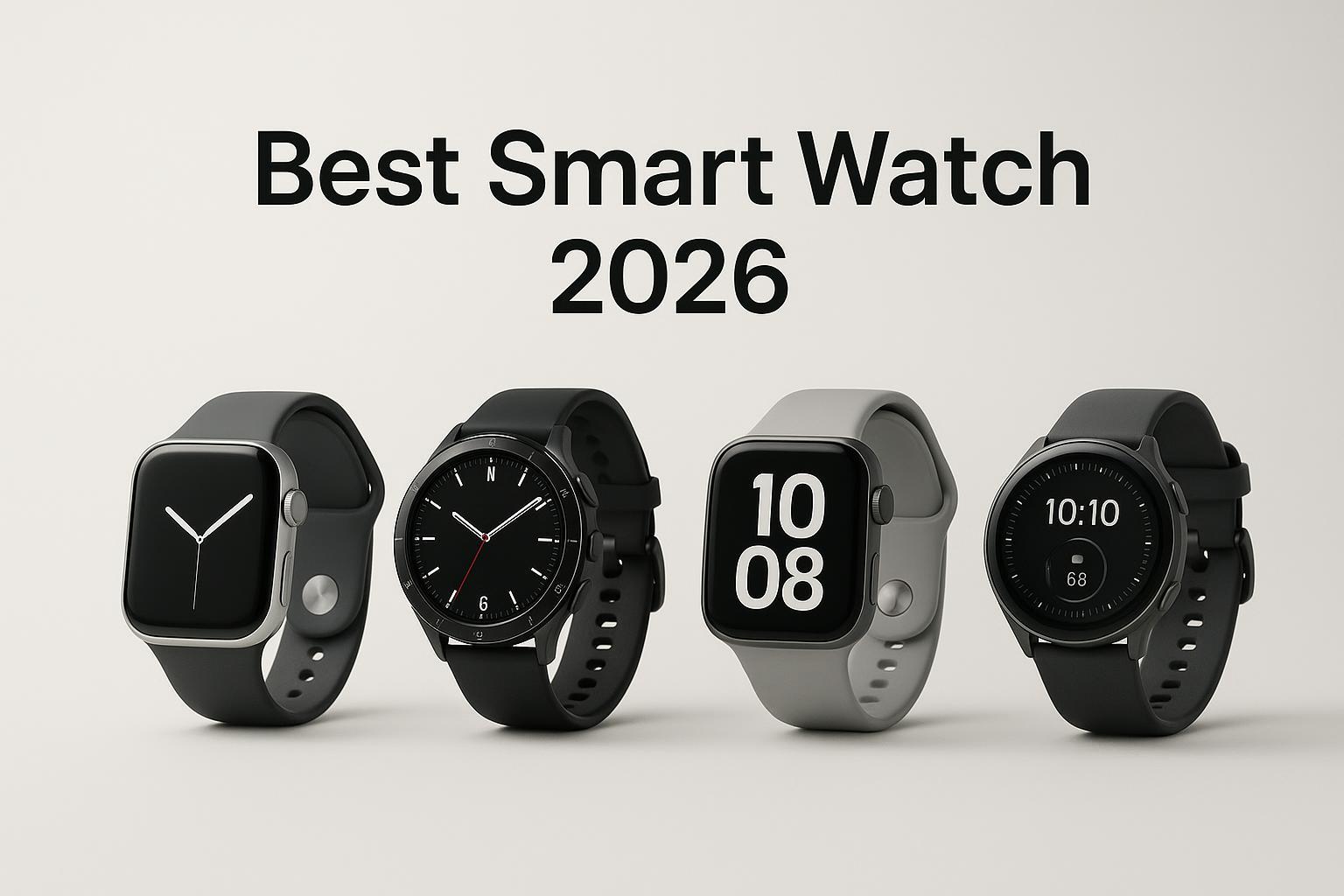
Best smart watch 2026: Fitness and battery leaders
For many shoppers, the best smart watch 2026 decision comes down to endurance. This section is where you compare the watches that win on training tools and battery reality.
Outdoor and performance picks
If you hike, run, cycle, or travel constantly, the watch you’ll keep isn’t the one with the prettiest app grid. It’s the one that still has battery on day three—and GPS that doesn’t quietly fail when the route gets complex.
Two names dominate this lane:
Garmin fēnix line for training depth, navigation, and serious endurance. Garmin publishes detailed battery tables by size and display mode in its own documentation.
Apple Watch Ultra line if you want Apple’s ecosystem but need more outdoor resilience and longer runtime during workouts.
If your calendar includes airports and trailheads in the same week, prioritize:
dual-frequency/multiband GPS where available
physical controls you can use with gloves or wet hands
a battery plan that doesn’t depend on perfect settings discipline
Longest battery life picks
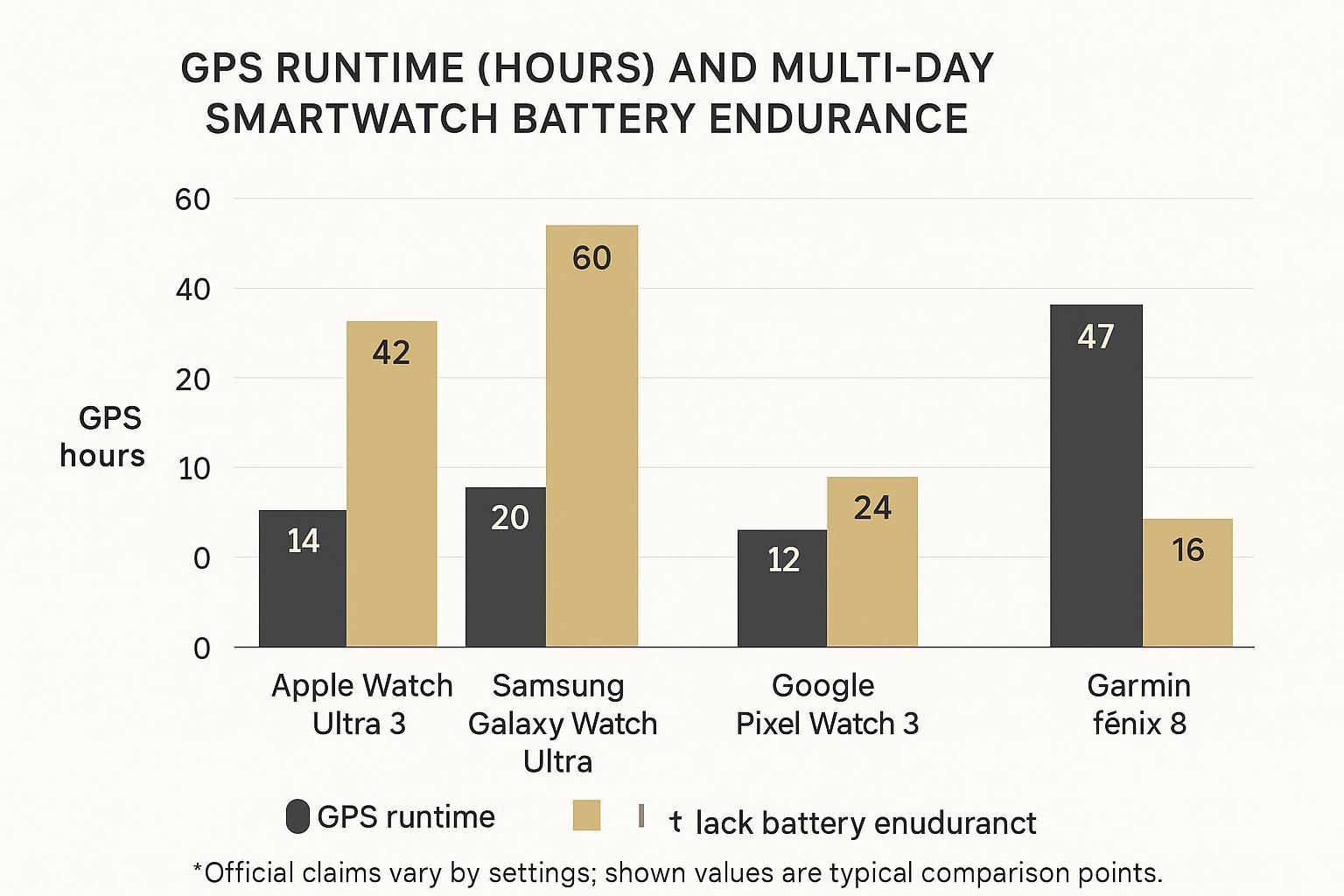
Battery is not one number. It’s two:
Smartwatch mode (the “normal life” number)
GPS workout runtime (the “training reality” number)
Manufacturers don’t always headline both equally, but the difference is the difference between “weekend trip” and “battery anxiety.”
From official manufacturer claims:
Apple Watch Ultra 3 is positioned up to 42 hours of normal use, with outdoor workout runtimes that vary by power mode (see Apple’s Apple Watch battery life details).
Samsung positions Galaxy Watch Ultra up to 60 hours typical use (AOD on), and up to 100 hours in power saving mode (per Samsung’s Galaxy Watch Ultra page).
Google positions Pixel Watch 3 at 24 hours with always-on display and up to 36 hours with Battery Saver (per Google’s Pixel Watch 3 page).
Garmin’s fēnix 8 line publishes detailed tables that stretch from days to weeks depending on size, display behavior, and GPS profile.
Spec and features comparison table
Category | Best for iPhone users | Best for Android users | Best budget under $250 |
|---|---|---|---|
Ecosystem fit | Tight iPhone integration | Google-first Android cohesion | Cross-platform basics (varies) |
App depth | Strong | Strong | Limited |
Battery expectations | Daily to ~2 days (model-dependent) | ~1–2 days typical | Often multi-day |
Health features | Excellent breadth | Strong (depends on model) | Basics, fewer advanced sensors |
Safety | Strong ecosystem tools | Strong (model-dependent) | Varies widely |
Who it’s for | iPhone owners who want “it just works” | Android users who want a polished daily watch | Battery-first buyers who accept tradeoffs |
Buying factors that matter in 2026
A strong smartwatch buying guide 2026 is less about specs and more about avoiding mismatches you can’t “update away.”
Ecosystem, apps, and payments
Start here, because it’s the most expensive mistake to undo.
Apple Watch requires iPhone. That isn’t a “minor compatibility note.” It’s the whole decision.
Wear OS is best when your phone is Android-first, and it’s often best when your phone and watch brand are aligned.
- Payments and transitconfirm your bank’s support and your region’s transit compatibility before you buy. It’s one of those features you only notice after it fails.
A quiet tell: if you care about replying to messages, voice dictation, or managing calendar changes from your wrist, you’re not buying a “fitness band.” You’re buying an ecosystem extension.
Health and safety features
In 2026, health tracking isn’t novelty—it's baseline. The differences are in reliability and scope.
Decide what you actually want the watch to do:
- Health insightsheart rate trends, sleep, recovery, and (for some watches) advanced metrics.
- Safety toolsfall detection, emergency alerts, location sharing.
If a feature matters because it might be used once in a critical moment, treat it like you would a safety system in a car: verify how it works, whether it requires a subscription or cellular plan, and how it behaves when your phone isn’t nearby.
Battery, durability, and display
Battery is strategy.
A few reality checks:
Always-on display and bright faces cost real power.
GPS tracking is a different energy profile than “smartwatch mode.”
Ruggedness isn’t just titanium—it’s water resistance rating, buttons, and how readable the screen is in harsh light.
If you’re buying for travel or training, official battery pages are worth reading before you purchase. Apple, Samsung, Google, and Garmin all publish battery expectations and conditions—start with Apple’s Apple Watch battery page and Samsung’s Galaxy Watch Ultra page.
Premium and luxury segment
Ultra-premium choices
In the ultra-premium tier, you’re paying for durability, finish, and the kind of polish that reduces friction. The best examples are the “Ultra” class watches—built for bright outdoor use, longer battery, stronger materials, and more confident GPS behavior.
This is also where long-term ownership begins to matter:
service and support quality
repairability and parts availability
update window and platform longevity
Concierge and AI experiences
A smartwatch can track your heart rate. The more interesting question in 2026 is what it does with your time.
We’re seeing a shift from “notifications on your wrist” to assistants that prepare decisions: reminders with context, travel-day coordination, and proactive suggestions based on your schedule and patterns. But there’s a limit: when the stakes are high—privacy, access, or last-minute changes—automation alone often isn’t enough.
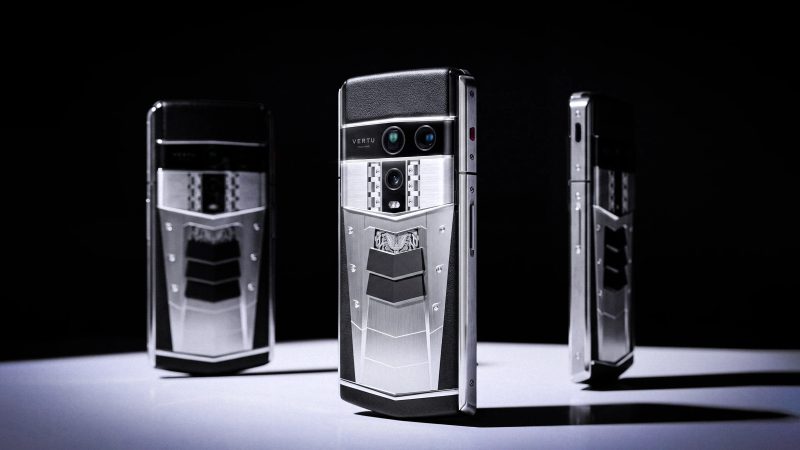
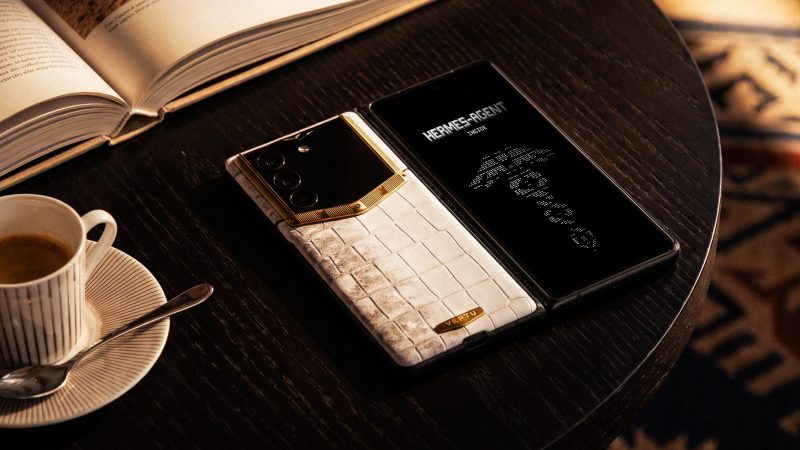
That’s where the idea of hybrid intelligence becomes relevant: AI for preparation, and a capable human team for judgment and escalation. VERTU has written directly about this split—where AI can compress the search space, and a human concierge handles discretion, access, and exceptions (see AI travel agent vs human concierge).
If you’re evaluating premium devices as a lifestyle system—not just hardware—VERTU’s perspective is useful context. Their ownership model historically treats private service as part of the product itself, including around-the-clock concierge support (see 24/7 concierge service for luxury tech buyers).
Price, materials, and long‑term value
In mainstream tech, “premium” can mean a higher MSRP for one extra feature.
In true luxury, value is usually measured differently:
materials you can feel (and that age well)
a support experience that respects your time
privacy and discretion as defaults, not settings
If you want a concise background on how VERTU ties craftsmanship and service together as an ownership philosophy, start with the VERTU mobile company story.
Conclusion
You don’t need the most expensive watch. You need the right relationship between your phone, your routine, and your tolerance for charging.
Quick recap:
If you live on iPhone, choose an Apple Watch for the lowest-friction experience.
If you’re on Android and want a cohesive daily watch, Pixel Watch 3 is a clean default.
If you want under $250, buy for battery and basics—and accept that app depth and messaging polish will be thinner.
Final checklist before you buy:
Compatibility: iPhone vs Android lock-in, and which features require your phone nearby
Health and safety: which sensors matter to you, and whether any features are paywalled
Battery reality: smartwatch mode vs GPS runtime
Budget: device cost plus any subscription/cellular add-ons
Support window: updates, repairs, and warranty options
Next steps:
Compare prices across major U.S. retailers (and check return windows).
Consider an extended warranty if you’re buying an Ultra-tier watch for travel or training.
Buy with confidence—and with a battery plan you won’t resent.
Disclosure: This article references VERTU pages. Editorial judgment remains the priority.