Introduction
In 2026, “the best and most expensive phone in the world” is really three different conversations that get tangled together:
- Record-price collectiblesobjects sold (or marketed) like jewelry and art.
- Purchasable ultra‑luxury phonesdevices you can actually commission or buy, where materials, craftsmanship, and service are the point.
- Mainstream premium flagshipsexpensive, high-performing phones that are still fundamentally consumer electronics.
Why it matters: if you’re spending five figures—or simply trying to understand why someone would—you need to know what you’re paying for. Is it function, status, rarity, service, privacy/security posture, or a future resale story?
This guide ranks each category on its own terms, then gives you pricing context and a due‑diligence playbook so you can buy with your eyes open. If you came here for the headline answer, this is also your map to what people mean when they search “most expensive phone in the world 2026.”
Methodology
Scope and definitions
This article uses “most expensive” to mean the highest reported valuations and transaction narratives in the luxury-phone space, and “best” to mean the best within a category’s intent:
For collectibles, “best” means the strongest combination of headline valuation, materials, and provenance narrative.
For purchasable ultra‑luxury, “best” means real-world ownership value: craftsmanship, aftercare, security posture, and provenance support.
For mainstream flagships, “best” means the top end of widely available premium pricing—especially in the U.S.—with clear caveats when 2026 models are anticipated rather than confirmed.
Ranking criteria and weights
Because the categories are different, the weights are different:
- Collectibles (ranking)reported valuation + materials/jewelry work + provenance narrative clarity.
- Purchasable ultra‑luxury (ranking)craftsmanship + ownership experience (service, aftercare) + security posture + provenance support.
- Mainstream premium (context)typical top-tier pricing, storage tiers, and availability constraints.
Record-Price Collectibles (Ranking)
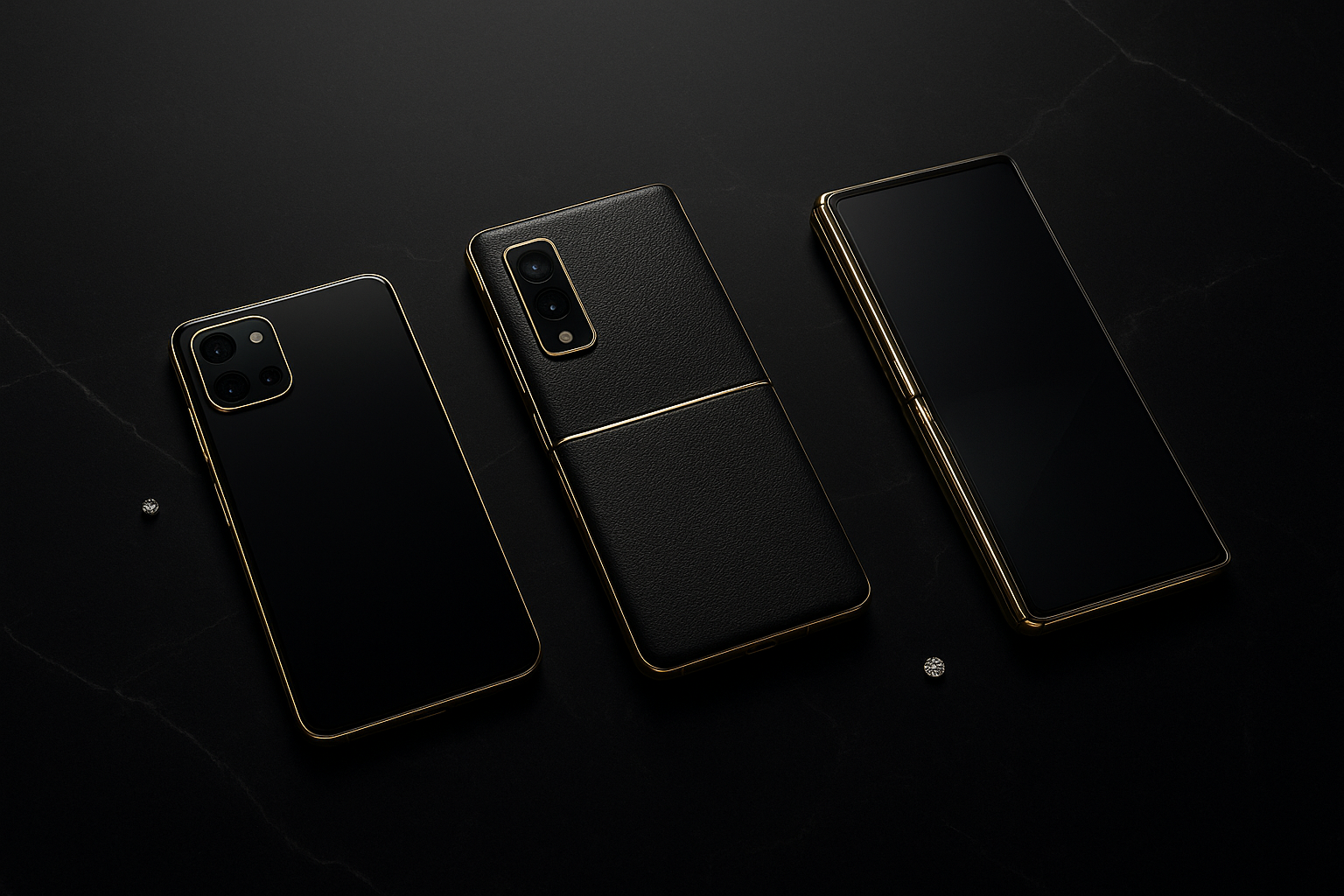
A necessary caveat: many “most expensive phone” lists cite reported or marketed valuations rather than transparent, independently documented auction results. Treat the numbers below as commonly cited price narratives, and insist on documentation if you encounter a real transaction.
#1 Falcon Supernova iPhone 6 Pink Diamond
Often cited as the top of the category, the Falcon Supernova iPhone 6 Pink Diamond is the archetype of the “jewel-first phone”: a familiar consumer chassis elevated by precious metals and a signature stone.
Multiple sources repeat a valuation of $48.5 million, including VERTU’s 2026 overview of the “most expensive phone in the world” and mainstream reporting such as The Economic Times report on the Falcon Supernova iPhone 6 valuation (2023). Still, public documentation is often thin.
If you ever see one offered, treat it like acquiring a museum object: you’re not buying an iPhone—you’re buying provenance.
#2 Stuart Hughes iPhone 4S Elite Gold / Diamond Rose
Stuart Hughes’ jeweled iPhones are frequently listed just below the Falcon Supernova tier, with reported prices in the high single-digit millions.
You’ll see two names recur:
iPhone 4S “Elite Gold” (commonly cited around $9.4M)
iPhone 4 “Diamond Rose” (commonly cited around $8M)
The practical takeaway isn’t the exact number. It’s the pattern: the value story is driven by diamonds, precious metalwork, and scarcity claims—so the legitimacy of the paperwork matters as much as the handset.
#3 Goldvish Le Million, Gresso Luxor Las Vegas Jackpot
This tier is where the conversation shifts from “mythic headline” to “recognizable luxury-product behavior.” Names like Goldvish and Gresso are repeatedly cited around the seven-figure mark, often anchored in distinctive design, gold casing, diamond settings, and limited-edition storytelling.
If your goal is collectible ownership rather than a conversation piece, focus less on the name and more on:
who can authenticate it,
whether the edition details are consistent,
and whether resale buyers will recognize the story.
Purchasable Ultra‑Luxury in 2026 (Ranking)
This is the category where “best” starts to matter more than “most expensive.” You’re no longer chasing a headline—you’re buying an object you can live with.
#1 Contemporary jeweled commissions (gold, platinum, diamonds)
The most expensive purchasable phones tend to be bespoke commissions: mainstream flagships or specialty handsets rebuilt with precious metals, gem settings, engraving, and one-off finishing.
What separates a serious commission from expensive decoration is system-level thinking:
Material integrity (what exactly is the gold? what’s the stone grading?)
Workmanship (tolerances, sealing, durability under daily handling)
Aftercare (who services it, where, and how long it takes)
Provenance support (how the commission is documented for resale)
A phone can be expensive and still be a poor purchase if it can’t be serviced, insured, or resold with a coherent paper trail.
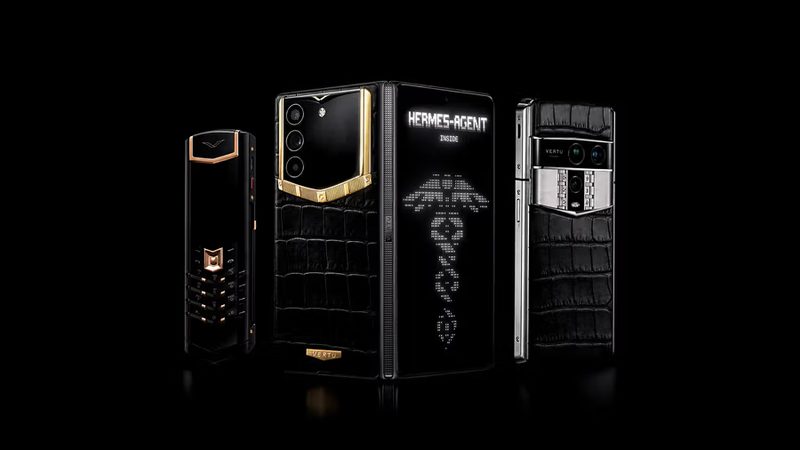
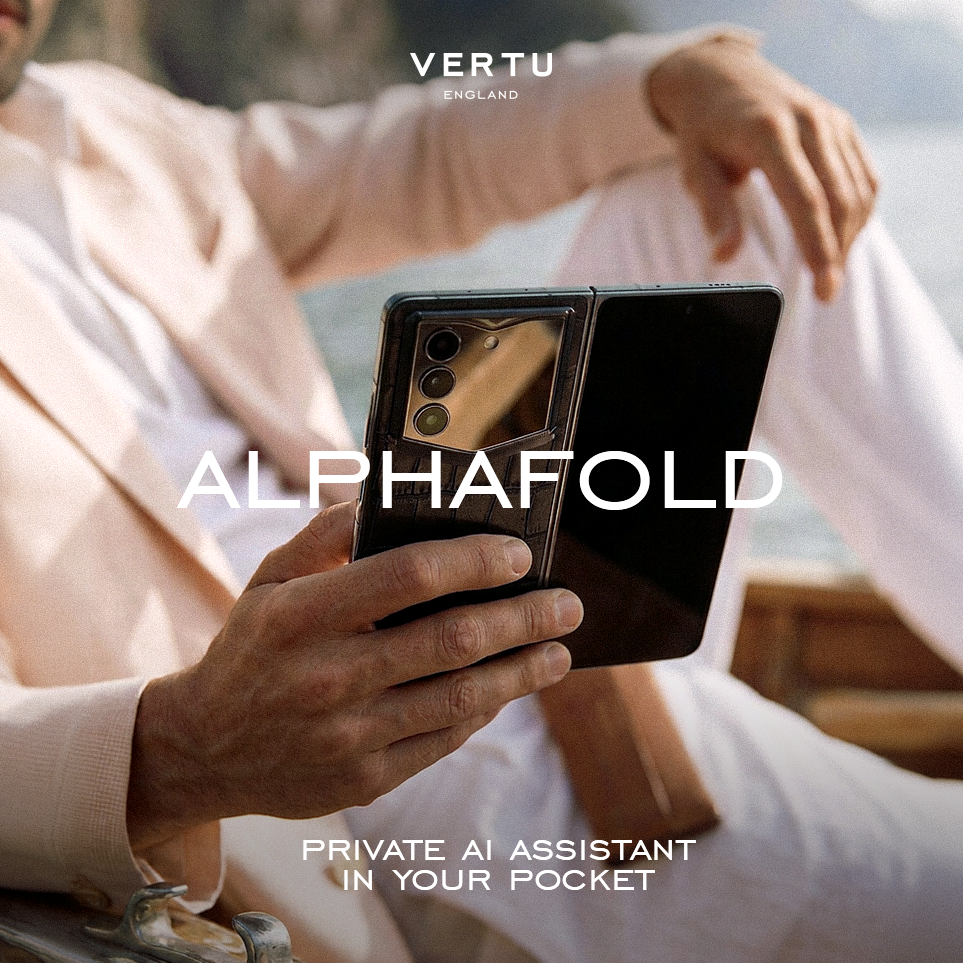
#2 VERTU contemporary lines and heritage limiteds
VERTU sits in a different lane than pure jewel mods: the luxury proposition is not only materials, but the ownership experience—craftsmanship, service infrastructure, and a security posture designed for clients who care about privacy.
In practical terms, VERTU’s own buyer guidance emphasizes things luxury buyers often underestimate:
network fit and U.S. activation realities,
written clarity on warranty/service/update runway,
and an acquisition mindset that treats high-trust deals like high-value assets.
You’ll also see the “VERTU luxury phone concierge” idea show up as a practical differentiator: not marketing copy, but a support workflow that reduces friction when you’re traveling, switching devices, or navigating aftercare.
If you want a modern luxury phone that’s meant to be used—not just displayed—this is the category where concierge-style support and provenance-minded documentation can matter as much as the handset itself. See VERTU’s 2026 bespoke luxury smartphone buying guide for the verification questions worth asking before you wire funds.
#3 Caviar bespoke iPhone/Samsung limited drops
Caviar’s limited drops and bespoke editions occupy a recognizable position between “collectible” and “daily driver.” The appeal is clear: a familiar flagship experience wrapped in aggressive materials and scarcity branding.
The buyer risk is also clear: scarcity marketing is not the same as provenance.
If you’re considering a limited drop, decide up front whether your priority is:
the daily usability of the underlying phone,
the durability of the exterior work,
or the resale story.
Those three priorities rarely align perfectly in the same piece.
Most Expensive Mainstream Flagships 2026
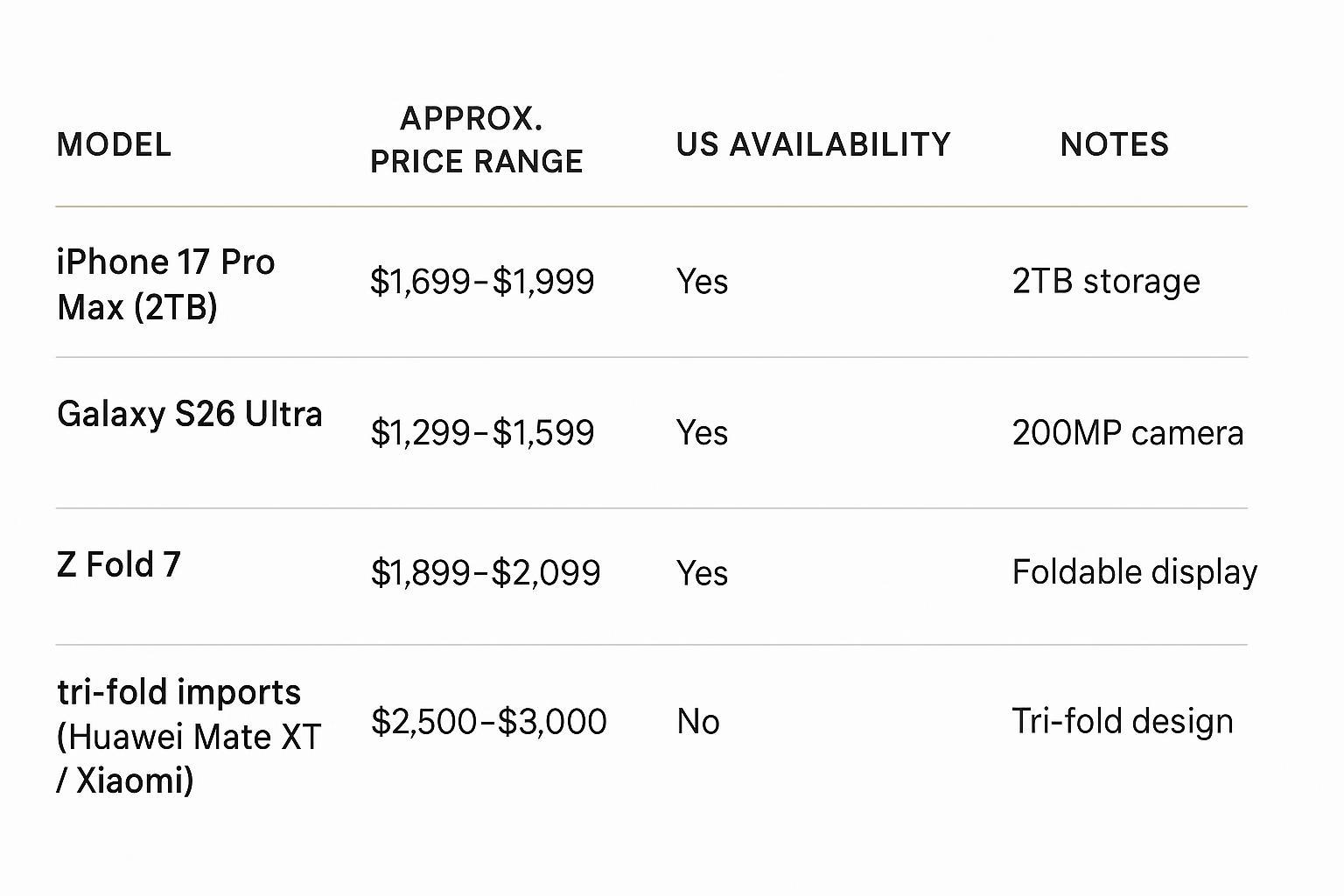
This section uses 2026 model names as anticipated/rumored examples for orientation. Treat them as placeholders for “the top storage tier of the latest flagship” until final U.S. pricing and SKUs are confirmed.
The point is simple: mainstream phones can be expensive—but they rarely behave like luxury assets. Depreciation is typically faster, and scarcity is usually temporary.
iPhone 17 Pro Max (2TB)
As an anticipated top-tier example, a maxed storage iPhone variant (here labeled “iPhone 17 Pro Max (2TB)”) represents the highest end of mainstream pricing for a broadly supported U.S. ecosystem.
When you’re comparing it to ultra‑luxury, ask the right question: Are you paying for performance and convenience, or for materials and provenance? A mainstream flagship usually wins on the first—and loses on the second.
Samsung Galaxy S26 Ultra and Z Fold 7
Similarly, “Galaxy S26 Ultra” and “Z Fold 7” are used here as anticipated 2026 examples of two premium lanes:
- Ultrathe spec-forward slab phone.
- Foldthe expensive hinge-and-screen engineering bet.
From a buyer standpoint, the foldable premium is partly about experience—and partly about the cost of complex hardware with a different repair and durability profile.
Tri‑fold class: Huawei Mate XT / Xiaomi
Tri‑fold devices (often associated with non‑U.S. imports, here labeled “Huawei Mate XT / Xiaomi” as examples) can sit at the far edge of premium pricing while still creating real buyer friction:
limited band support,
carrier whitelisting issues,
warranty and repair logistics,
and software/service compatibility.
If you’re U.S.-based, treat tri‑fold imports as an “ownership logistics” purchase, not just a spec purchase.
How Prices Reach The Stratosphere
Materials and gemology
Luxury-phone pricing often starts with materials, but it doesn’t end there.
Gold is not just “gold.” Diamonds are not just “diamonds.” If a brand or seller can’t specify grade, certification, and workmanship details, you’re looking at ornamentation—not investment-grade material value.
Collector’s note: The stone’s documentation (and whether it’s verifiable) can matter more than the stone’s size in a resale conversation.
Scarcity, provenance, and documentation
Scarcity only becomes valuable when it’s legible.
In collectible markets, provenance is the spine of value: acquisition records, ownership history, and supporting documentation that travels with the object. In other words: luxury smartphone provenance and authentication isn’t a buzzword—it’s the mechanism that protects value.
For a solid provenance documentation checklist, see CatalogIt’s guidance on recording provenance (2026).
And don’t confuse an appraisal with provenance. Provenance must be corroborated—see Artwork Archive’s guidance on corroborating provenance.
Services, security, and ownership experience
The biggest difference between “expensive” and “luxury” is often what happens after the purchase.
Is support responsive and human?
Are repairs realistic, insured, and time-bounded?
Is the device’s security posture described clearly, without fantasy claims?
VERTU’s buyer guidance is explicit about asking for commitments in writing—warranty coverage, service timelines, and update runway—before you commit funds; see VERTU’s 2026 HNWI buyer guide checklist.
Your 2026 Buyer’s Checklist
If you’re comparing expensive phones 2026 buyer checklist pages, this is the version worth saving: it’s designed to reduce the two failure modes that cost real money—counterfeits and service/import surprises.
Authentication and paperwork
Treat this like acquiring a collectible, even if you plan to use it daily.
Start with proof of purchase (invoice / bill of sale), identifiers that match the paperwork (model/SKU/serial/IMEI where applicable), edition documentation for limited runs, and any material certifications available.
If provenance is the value story, require a clean documentation spine: acquisition records, ownership history, import/export documentation, and appraisals/authentication records.
How to verify: Cross-check identifiers across the device, packaging, invoice, and any certificate. If anything doesn’t match, stop the transaction and resolve it before funds move.
US availability and import caveats
For U.S. buyers, the fastest way to regret a luxury phone purchase is to discover that it’s hard to activate—or hard to service.
Confirm before you pay:
LTE/5G band compatibility for your carrier,
eSIM support and activation method,
warranty geography (global vs regional),
where repairs happen (U.S. vs overseas),
and who carries shipping/customs risk.
A useful framing is the “escrow mindset” described in VERTU’s luxury mobile phones buyer’s guide: validate provenance and service eligibility before money becomes irreversible.
Resale strategy and insurance
If resale matters, plan for it on day one.
Keep every document digitized and backed up.
Photograph condition on receipt (packaging, identifiers, inclusions).
Understand how insurers will appraise it (and what storage requirements exist).
The goal is not to “flip.” The goal is to keep the object’s story intact so future buyers can trust it.
Conclusion
The 2026 answer depends on what you mean:
If you mean the most expensive phone in the world as a headline, you’re usually looking at record-price collectible narratives.
If you mean the best in the real world, you’re comparing purchasable ultra‑luxury ownership experiences (craftsmanship, aftercare, security posture, documentation) against what mainstream flagships deliver.
The practical advice is simple: buy the category you actually want.
If you want a collectible, buy provenance. If you want functional luxury, buy aftercare and service reality. If you want the best mainstream phone experience, buy ecosystem fit—and accept the depreciation curve.
Disclosure: This article references VERTU pages. Editorial judgment remains the priority.