


Introduction
An expensive phone can look irrational if you evaluate it like a spreadsheet: processor, camera, battery, resale. The luxury segment survives anyway—because the true purchase is rarely the spec sheet.
For the right owner, expensive cell phones deliver three forms of value that don’t show up in benchmarks:
- Durability you can feelmaterials that age with dignity instead of collecting micro-scratches and loose tolerances.
- Discretion by designa security posture that reduces the blast radius of loss, travel, and everyday exposure.
- Service that removes frictionthe ability to hand off coordination and last-minute disruptions when time is the scarce asset.
This guide walks through the three pillars that make a luxury phone make sense—craft, security posture, and concierge ownership—and shows you how to evaluate them without falling for the usual signals.
Key TakeawayThe best luxury phones aren’t “better phones.” They’re better ownership systems—built to preserve your time, privacy, and composure.
Craftsmanship and materials
Materials are not just aesthetics. In a phone you touch hundreds of times a day, materials determine how the device survives real life—keys in pockets, travel bags, temperature swings, drops, and daily abrasion.
Sapphire, ceramics, leathers
A premium device earns its place when the “high-end” materials are doing real work.
Sapphire crystal is chosen for scratch resistance and optical clarity. The practical payoff is not bragging rights; it’s that your screen stays legible and clean-looking over years of use. VERTU’s materials overview describes sapphire’s hardness and its everyday scratch resistance in a way that’s easy to sanity-check when you’re evaluating what you’re actually buying.
Ceramics can add wear resistance in high-contact areas, and they’re also useful as protective elements (for example, guarding edges and bezels that take impact before the display does). In other words: ceramic isn’t there to look expensive; it can be there to make brittle things survivable.
Leathers—when they’re real, properly treated, and correctly stitched—solve two problems at once: grip and aging. A good leather back makes a phone feel stable in the hand (less drop risk), and it develops patina rather than looking “tired.”
Collector logic applies here: the best materials don’t scream. They simply refuse to degrade the way ordinary finishes do.
Titanium Grade 5 frames
Titanium isn’t a synonym for luxury. It’s a set of tradeoffs.
A Grade 5 titanium frame is valued for its combination of strength, corrosion resistance, and low weight—a mix that suits an object carried daily and exposed to sweat, humidity, and travel environments. VERTU frames this material choice as a durability-first decision rather than a fashion choice.
What matters in practice is not the material name, but execution:
Edge finishing that doesn’t feel sharp
Tight tolerances (no flex, no creaks)
A surface treatment that resists fingerprints and micro-abrasion
If the frame looks pristine after a year of use, you’ve bought time. If it looks aged after a month, you’ve bought a problem.
Build, repairability, value
Luxury phones often sell the idea of permanence. Your job is to test whether that permanence is structural or just narrative.
Look for ownership signals:
- Serviceable designCan the device be repaired by an authorized network without becoming a long, public “case”? What is the process when something breaks?
- Parts continuityAre key exterior components replaceable without degrading the fit/finish?
- Provenance and authenticityIn the luxury segment, counterfeits and “parts-swapped” devices are real risks. A meaningful purchase includes documentation and a clear route for verification.
Value retention is rarely just resale. It’s also the quiet benefit of not having to change your behavior (babying, over-casing, replacing) to keep the device presentable.
Security and privacy posture
Discretion is not a single feature. It’s a posture: layered decisions that reduce the chance of compromise and reduce the cost of failure.
In 2026, this matters for a simple reason: your phone isn’t just a phone. It’s identity, authentication, financial access, location history, private conversations, and an index of relationships.
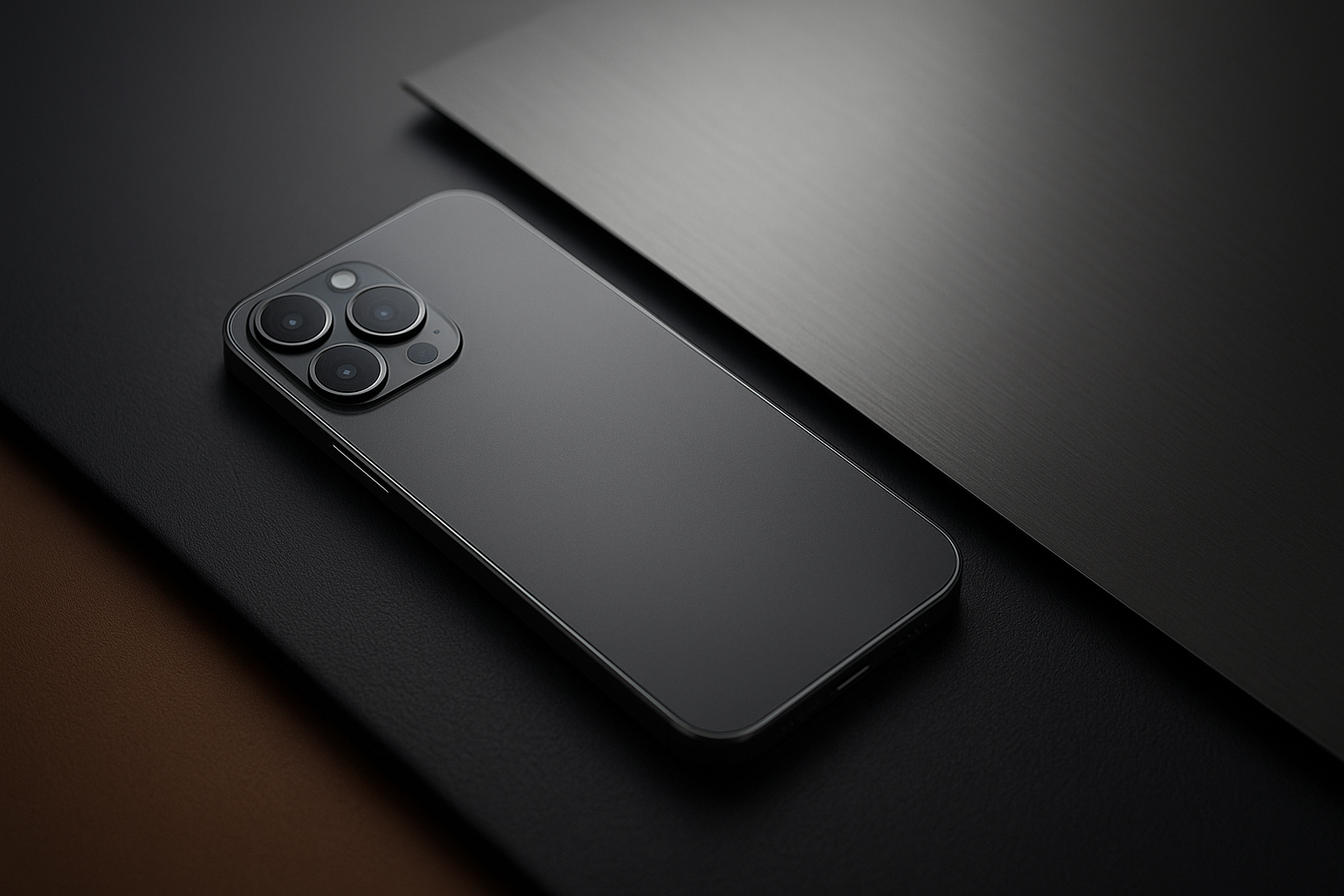
Hardware isolation, secure boot
If you want a usable definition of a “security-forward phone,” start here: can the device keep critical keys and decisions away from the main operating system?
On iOS, Apple explains the Secure Enclave as an isolated secure subsystem designed to protect sensitive data even if the main processor’s kernel is compromised (Apple Platform Security: The Secure Enclave).
On Android, the Android Open Source Project documents a hardware-backed Keystore architecture where key material is protected inside secure hardware (a TEE/KeyMint environment) rather than exposed to the main OS and apps (Android AOSP hardware-backed Keystore).
Why this matters in human terms:
Your device can be “mostly fine” and still be unsafe if keys live in the wrong place.
Hardware isolation makes it harder for attackers (or malicious apps) to extract secrets that unlock your accounts.
Secure boot is the other half of the foundation: a chain of trust from power-on to OS. You don’t need to memorize the details; you need the principle. If the boot process verifies what is allowed to run, you reduce the odds of persistent compromise that hides below the surface.
Encrypted comms, PQC readiness
“Encrypted” is one of the most abused words in consumer technology. In a discreet ownership context, you’re looking for two realities:
Your messages and calls are end-to-end encrypted when it counts.
Your security choices age well—including the long-term direction toward post-quantum hardening.
For encrypted messaging, Signal’s documentation is unusually direct and technical about how modern secure messaging works—particularly the idea that keys change over time so a compromise doesn’t retroactively unlock everything. Signal documents the Double Ratchet approach, where parties derive new keys frequently to protect past and future messages (Signal’s Double Ratchet specification).
On post-quantum readiness: Signal’s docs also describe PQXDH and ML-KEM Braid as mechanisms aimed at post-quantum forward secrecy and post-compromise security (Signal Protocol documentation). You don’t need to become a cryptographer to benefit from this. The buyer takeaway is simple: a discreet setup is one where your security strategy has a credible path forward, not a dead end.
Loss, travel, rapid-wipe
If you travel frequently—or if you simply care about minimizing risk—the question is not “Can I recover my photos?” It’s “Can I neutralize the device quickly if the situation turns?”
You want a practiced response plan:
- Pre-loss hardeningstrong passcode, minimal lock-screen exposure, sensible notification settings.
- Remote wipe readinessknow exactly how you will erase the device.
- Carrier actionssuspend service fast to prevent SIM abuse.
Apple’s guidance for lost devices makes the key point plain: you can erase a device remotely using Find My, but you should treat it as irreversible and operationally serious (Apple Support: If your iPhone or iPad is lost). Apple also documents how to erase a device directly within Find My on iPhone (Erase a device in Find My (Apple Support)).
For everyday privacy hygiene, VERTU’s encryption guide lays out a practical distinction many people miss: lock screens deter casual access; encryption protects the data itself—especially if storage is removed or the device is otherwise bypassed (how to encrypt your phone (VERTU guide, 2026)).
How to verify: Before you carry a premium device into high-trust contexts, do one “dry run” of your loss workflow: confirm remote access works, confirm you can sign in from a trusted device, and confirm the steps are written down somewhere secure.
Concierge and ownership services
A luxury phone is one of the few categories where the service layer can matter more than hardware—because service is what converts a tool into an advantage.
In practice, the question is whether you’re buying a true phone concierge service (execution and follow-through), or just a branded list of perks.
24/7 scope and response
A real 24/7 concierge is not a list of perks. It’s an operating model:
You can reach a capable team at the moment friction appears.
The team can coordinate across time zones, vendors, and language contexts.
The output is not “advice.” It is execution—booked, confirmed, followed up, and managed when something changes.
In practice, the scope tends to include travel coordination, dining, events, and last-minute problem-solving—the kinds of tasks that drain attention disproportionate to their objective difficulty.
Time saved and access
Time is not scarce because you don’t know what to do. It’s scarce because every decision has drag: comparisons, coordination, follow-ups, contingencies, confirmations.
This is the discreet efficiency argument for concierge ownership. And it’s the place where mentioning a brand is useful only if it clarifies the mechanism.
VERTU frames its concierge as “private service” with 24/7 assistance and bespoke coordination (VERTU Concierge). Its overview of the 24/7 concierge experience also emphasizes global access and a device-level trigger (the Ruby Key) as a way to shorten the path from intent to action (VERTU’s 24/7 concierge service overview (2025)).
The neutral takeaway isn’t that one service is always “better.” It’s that the best concierge models reduce risk in two ways:
They reduce the number of moving parts you personally coordinate.
They reduce information sprawl by keeping sensitive requests contained to a trusted service channel.
In other words: done well, concierge is not indulgence. It’s the operational choice to protect your attention.
Due diligence before buying
Service is where expensive mistakes hide, because it’s hard to evaluate in a showroom.
Before you buy, ask questions that reveal the reality:
What is the response path? Phone, app, device button, or all three?
What is the coverage guarantee? 24/7 is a claim; verify how it’s staffed.
What counts as “in scope”? Travel disruptions, reservations, business coordination, last-minute changes.
What is the privacy posture? What information is retained, and how is it protected?
What happens when something breaks? Repair logistics can become a public inconvenience if poorly handled.
If the seller can’t answer these questions crisply, you are not buying discretion—you’re buying a future support ticket.
How to evaluate the value of expensive cell phones
“Value” in this category is not the cheapest path to a good camera. It’s the lowest-friction path to a life where your phone is dependable, discreet, and supported.
Total cost of ownership
A useful TCO lens for expensive cell phones is to separate three categories:
- Device longevity costsrepairs, finish wear, battery replacement, and the time you spend managing fragility.
- Risk costsexposure from loss/theft, account takeover, travel compromise, and the cleanup work afterward.
- Service costswhat you pay (in money or time) to get outcomes—bookings, changes, problem resolution.
The premium is justified when it reduces one of these costs materially.
U.S. carrier and travel fit
In the U.S., carrier compatibility is not glamorous, but it’s foundational. A luxury device that doesn’t fit your network and travel pattern becomes an elegant inconvenience.
Evaluate:
- Primary carrier supportconfirm the device is fully compatible with your U.S. carrier’s network bands and provisioning requirements.
- eSIM / dual-SIM behaviorif you run multiple numbers or travel often, confirm the setup and switching workflow is straightforward.
- Roaming realityask what the experience is in the regions you actually visit.
- Support under disruptionwhen a device fails abroad, what is the recovery plan?
This is where concierge ownership can matter again: the travel problem is rarely “I don’t know which plan to buy.” It’s “I don’t have time to solve this while everything else is moving.”
Quiet luxury and longevity
Quiet luxury is not minimalism for its own sake. It’s the ability to carry something exceptional without turning it into a spectacle.
Longevity supports that. If the phone still looks composed after years, if it still feels tight and precise, and if it still fits your security posture and service expectations, you’ve bought more than a seasonal object.
That is the real distinction: a luxury phone that ages well becomes part of your daily uniform. A premium phone that ages poorly becomes something you replace quickly—and that is the opposite of investment.
Conclusion
Premium phones make the most sense when you treat them as ownership systems—the intersection of craft, security posture, and service.
Use a simple checklist as you decide:
Materials you can verify (not just names you can repeat)
A layered security model you understand (hardware isolation, secure boot, encrypted comms)
A loss/travel plan you’ve actually tested
Concierge and after-sales support that protect your time and discretion
Carrier fit that won’t betray you in the most inconvenient moment
Choose what preserves time, privacy, and lasting elegance.
Disclosure: This article references VERTU pages. Editorial judgment remains the priority.
![Top 10 Tourbillon Watches for Men [2026 Latest]](https://cdn.sanity.io/images/e0gp1l2g/production/8cb6bc45133cf9453382fc7d074465af588bb610-1800x1080.webp?w=180&h=180&q=78&auto=format&fit=crop)
![Top 10 Tourbillon Watches for Men [2026 Latest]](https://cdn.sanity.io/images/e0gp1l2g/production/8cb6bc45133cf9453382fc7d074465af588bb610-1800x1080.webp?w=800&h=450&q=82&auto=format&fit=crop)
![Top 10 Anniversary Gift Watches for Men [Full Guide]](https://cdn.sanity.io/images/e0gp1l2g/production/00dfa030a876edbe6ea7b146f6b1d8197c7656b0-3840x1860.webp?w=800&h=450&q=82&auto=format&fit=crop)