Introduction
You want a phone that blends handcrafted prestige with cutting-edge tech.
This guide distills 2026 trends, price tiers, and what to verify before you buy—without reducing the decision to a spec sheet.
Primary focus: bespoke luxury smartphones 2026 for U.S.-based discerning buyers.
In 2026, the “luxury” part is easy to see. The smarter purchase is the one you can operate securely and support for years.
2026 trends & innovations in bespoke luxury smartphones 2026
AI-native and on-device intelligence
The headline shift isn’t “more AI features.” It’s where the intelligence runs.
On-device processing reduces latency and limits what has to leave your phone—an important distinction if your device holds travel itineraries, deal notes, family office threads, and identity credentials. The broader category trend is moving from “smart” to “intelligent,” with devices built to interpret context and assist more proactively, as described in IDC’s “intelligent devices” commentary (2026).
What to look for in practice
A clear, user-controllable model for what stays on-device vs what may be sent to the cloud.
Strong isolation for the AI feature set (permissions, private spaces, separate work profiles).
Ask the brand (in writing) which AI tasks are processed locally, which can be offloaded, and how you disable cloud processing.
Foldables and multi-screen formats
Foldables are no longer “conceptual luxury.” They’re becoming a mature productivity format—especially for U.S. buyers who want one device that can handle triage, reading, and document review without reaching for a tablet.
In bespoke builds, the question is less “does it fold?” and more “does the hinge-and-screen system have an update and repair runway?” A beautiful chassis doesn’t compensate for an unserviceable display stack.
What matters most
Screen durability guarantees and realistic expectations around visible wear.
A service path for hinge maintenance and inner-screen replacement.
Sustainability signals and longevity
In 2026, “sustainable” in the luxury smartphone world shows up less as marketing copy—and more as ownership math:
How long the device receives security updates.
Whether batteries and inner screens can be serviced.
Whether materials sourcing is documented and auditable.
A small but meaningful signal: brands that publish repair pathways and parts availability tend to be easier to live with long-term.
Materials & craftsmanship
Titanium frames and sapphire crystal
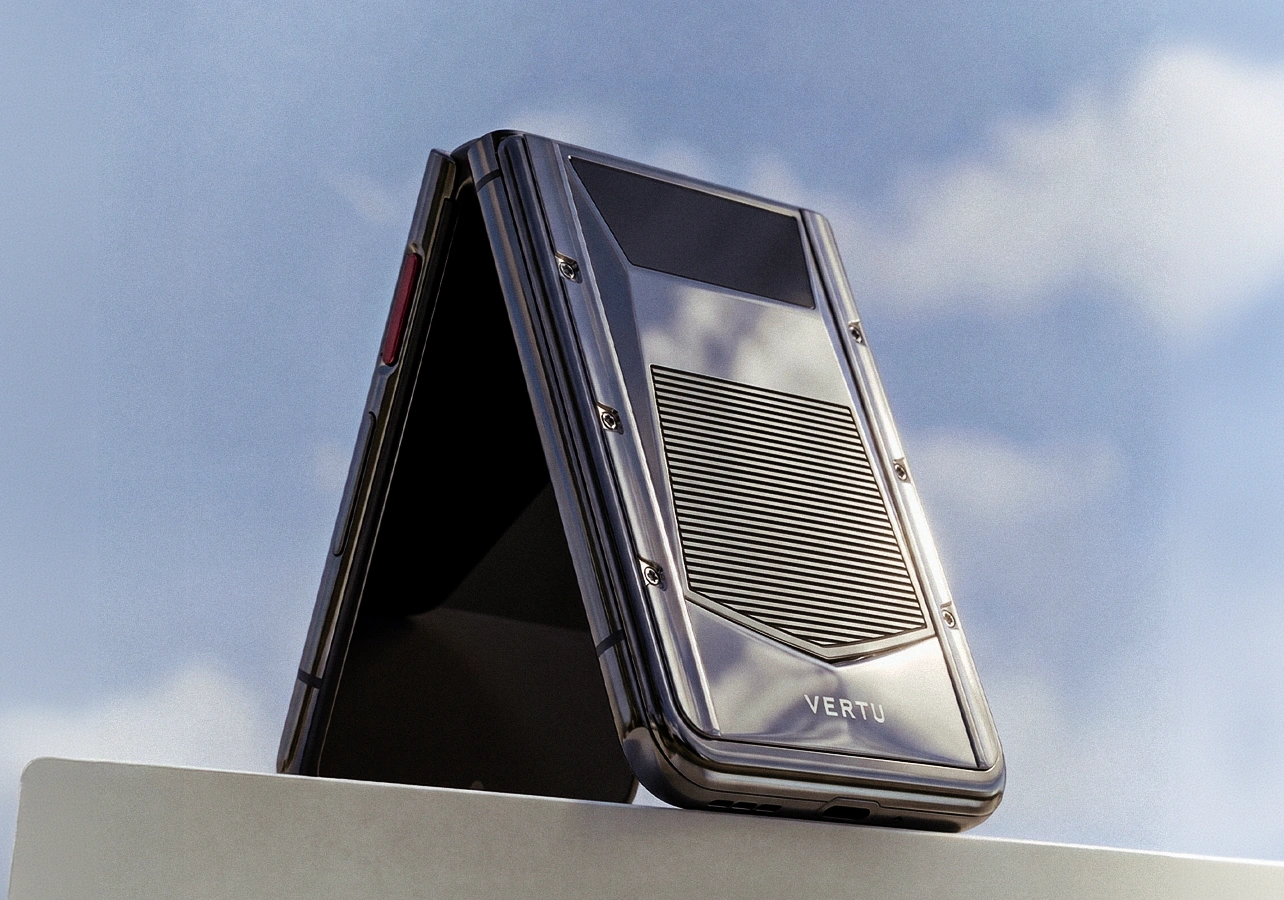
Titanium frames and sapphire crystal sit at the center of modern bespoke builds because they solve two different problems:
Titanium is a structural material that can take daily handling without feeling delicate.
Sapphire is a “wear surface” choice—valued for scratch resistance and optical clarity.
But premium materials still need practical engineering. A thick sapphire layer can add weight; metal-heavy construction can complicate antenna design if it’s not carefully tuned.
Ask whether the model is certified for the specific U.S. carrier bands you rely on, and whether material choices affect RF performance.
Precious metals, gemstones, and exotic leathers
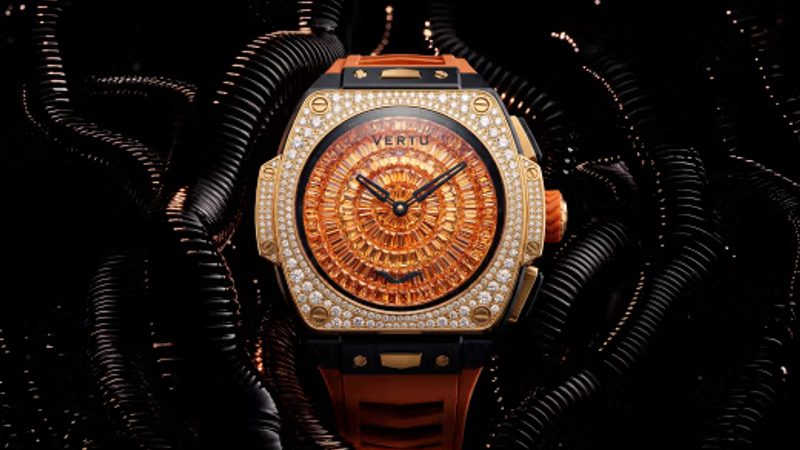
Precious metals and gemstones are about rarity and artistry. Exotic leathers are about tactile identity—how the phone feels when you pick it up hundreds of times a week.
The buyer risk is provenance.
Focus on documentation that answers:
What exactly is the material (species/type, finish, origin)?
Who handled it (atelier, craft standards, traceability)?
How will it age (patina, color transfer, water sensitivity)?
Durability claims and final QC
In bespoke luxury, “durable” should mean “survives real ownership”—not just a headline rating.
Look for a final QC process that treats the phone as a system:
Hardware: fit and finish, hinge tolerance (if foldable), glass alignment.
Software: update policy, security posture, restore process.
Service: repair turnaround expectations and parts sourcing.
Request the warranty terms in writing and ask what repairs are handled domestically vs shipped internationally.
Security, connectivity & services
Security architecture and data sovereignty
A luxury smartphone becomes a liability the moment it can’t prove its own integrity.
In 2026, a credible baseline typically includes:
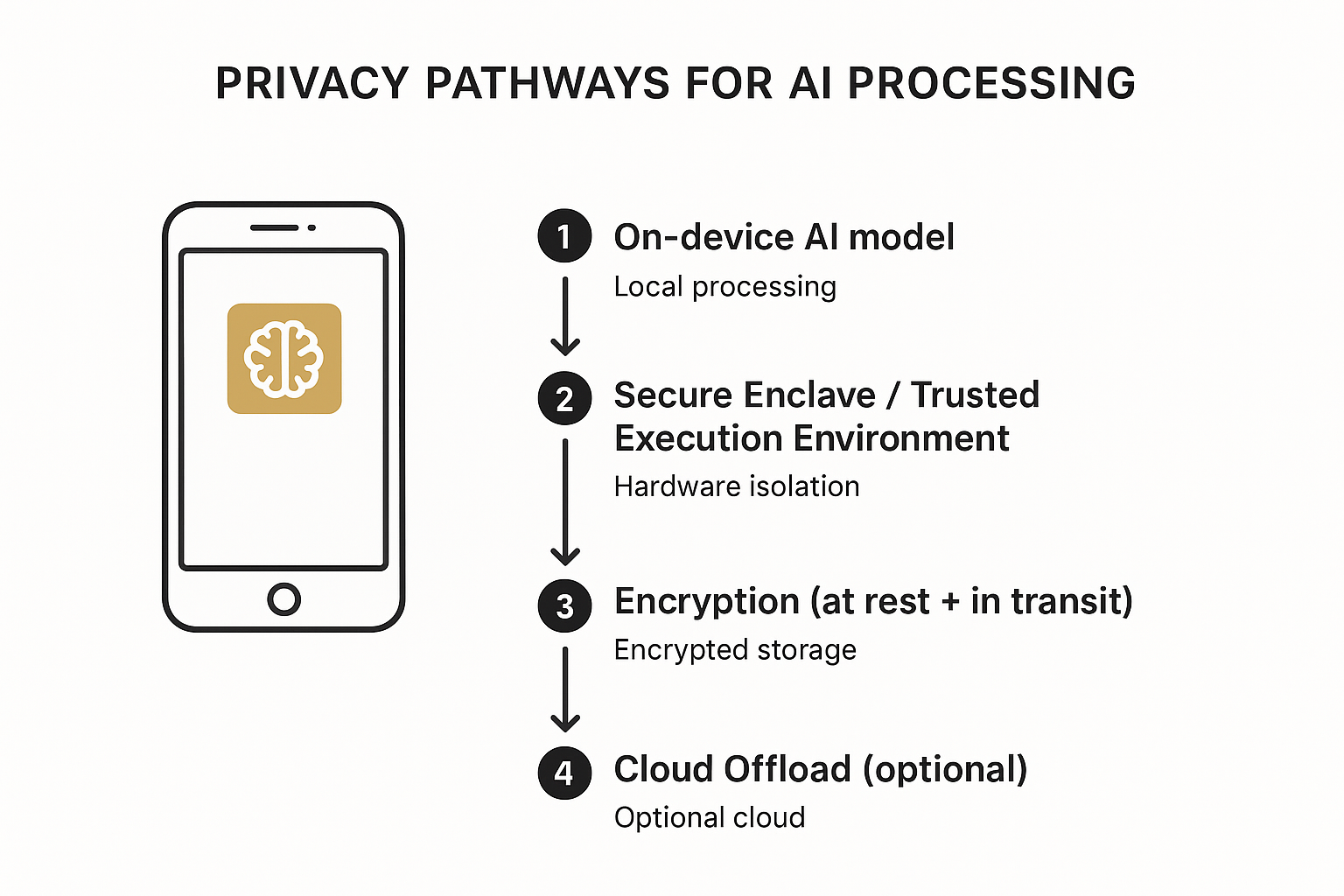
A hardware-isolated security component (often called a secure enclave or trusted execution environment) to protect keys and sensitive operations.
Verified boot / secure boot, so the device can detect tampering at startup.
Encryption for data at rest and in transit.
Apple’s security documentation explains the Secure Enclave’s role in protecting sensitive operations in Apple Platform Security: The Secure Enclave (2024). On Android, Google documents the broader platform security model—including verified boot concepts—in Android Open Source Project security documentation.
For a neutral, vendor-agnostic definition of firmware integrity expectations, NIST’s guidance on platform resiliency is a useful reference point in NIST SP 800-193 on platform firmware resiliency.
A practical way to think about data sovereignty
On-device AI is the default you want for anything sensitive.
Cloud offload is acceptable only when it’s explicit, optional, and controllable.
Ask for a plain-language explanation of the device’s trust chain (secure enclave/TEE + verified boot) and its security update policy.
Connectivity resilience: eSIM/iSIM and satellite SOS
In the U.S., connectivity “resilience” is rarely about peak speed. It’s about continuity:
eSIM makes it easier to keep a primary U.S. number while adding travel lines.
iSIM (where available) aims to reduce hardware complexity, though the buyer-facing benefit depends on carrier support.
Satellite SOS can be valuable, but it’s highly model- and region-specific—don’t assume it’s present just because the category is “premium.”
If you buy unlocked or import a bespoke device, verify compatibility beyond “5G supported.” U.S. performance depends on model-specific bands and carrier acceptance, a practical point echoed in Consumer Reports’ cell phone buying guide (2025).
Concierge and human support
Bespoke ownership often lives or dies on support: setup, secure migration, urgent travel changes, device loss, and repairs.
The best concierge-style support behaves like an extension of your operating rhythm—fast triage, clear identity checks, and discreet handling of sensitive requests; historically, brands such as VERTU have treated concierge as part of the product category’s heritage rather than an add-on.
Price tiers & editions
Premium mainstream baselines
This tier is where you get the strongest software update runway and the most mature security architecture, typically with better U.S. carrier compatibility.
For many buyers, this becomes the “control group”: it sets expectations for security patches, ecosystem fit, and resale liquidity.
Entry-to-high bespoke ranges
This is the range where craftsmanship and personalization become central—materials, engraving, limited runs, and bespoke finishing.
Your main diligence questions here:
What’s the update policy?
Where are repairs performed?
Is the device optimized for U.S. networks?
Ultra-collectibles and provenance
Ultra-collectibles are closer to horology than consumer electronics.
If provenance is the point, ask for:
Edition documentation and chain-of-custody clarity.
Authentication support and resale paperwork.
Service continuity plans (what happens if a part is no longer produced?).
Buying guide for U.S. buyers
U.S. compatibility and activation
Treat “unlocked” as necessary but not sufficient.
Before you commit:
Confirm the exact model number and supported LTE/5G bands for your carrier.
Confirm eSIM support and activation method (QR vs carrier app vs in-store).
Ask whether the phone is already whitelisted/recognized by major U.S. carriers.
Ask the seller to confirm U.S. activation on your carrier in writing—and to specify the exact model/SKU being sold.
Verify services, security, and support
A bespoke phone should come with a clear ownership framework.
Verify:
Security architecture: secure enclave/TEE, verified boot, encryption.
Update runway: how long security patches are guaranteed.
Support scope: migration help, loss/theft process, travel support.
Red flags
“Unhackable” claims with no published security documentation.
No stated security patch policy.
Vague warranty language (“handled case by case”) with no service timeline.
Warranty, repairs, and import logistics
This is where many luxury purchases quietly fail.
Ask upfront:
Is warranty coverage global or regional?
Where do repairs happen (U.S. vs overseas)?
Who covers shipping, insurance, customs, and turnaround time?
Are replacement parts stocked, or made to order?
Conclusion
Prioritize security architecture, network readiness, and concierge scope over mere specs.
Match materials, edition size, and budget to how you actually use your phone.
If you want a discreet starting point for the category’s craftsmanship-and-service model, you can browse Bespoke luxury smartphone craftsmanship and Vertu Concierge Service to calibrate what “bespoke” can include.
Disclosure: This article references VERTU pages. Editorial judgment remains the priority.
![Top 10 Tourbillon Watches for Men [2026 Latest]](https://cdn.sanity.io/images/e0gp1l2g/production/8cb6bc45133cf9453382fc7d074465af588bb610-1800x1080.webp?w=800&h=450&q=82&auto=format&fit=crop)