

Introduction
The phrase “the world’s most expensive cell phone” gets used in two very different ways.
Sometimes it means a jewelry one-off: a mainstream phone turned into a wearable vault of precious stones—priced like a painting, owned like a trophy, and rarely intended for daily use.
Other times it means something you can actually order in 2026: a modern luxury phone 2026 buyers can purchase new—an ultra-luxury smartphone where the price reflects not only rare materials, but also aftercare, privacy engineering, and service ecosystems.
This guide answers the primary query—what is the world’s most expensive cell phone?—and then goes further. You’ll get a clear framework for evaluating value beyond shock pricing, real examples (historic and orderable), and practical buyer guidance for U.S. purchasers.
If you’ve been skimming lists of expensive cell phones and wondering which claims are legend versus which options are actually purchasable, this is designed to be the clean reset.
Key TakeawayThe “most expensive phone” is usually a one-off jewel piece. The “best ultra‑luxury phone to buy in 2026” is a different question—and deserves a different framework.
What “Ultra‑Luxury” Means in 2026
Ultra‑luxury isn’t a single attribute. In 2026 it’s a bundle: materials + craft + scarcity + security + service. Miss one and you’re often paying for theater rather than value.
Materials and finishes
The obvious signals are the precious ones: 18K/24K gold, diamonds, exotic skins, sapphire crystal, titanium.
But the real question isn’t what materials are present—it’s how they’re used:
- Structural vs decorativeA precious metal chassis that carries load is different from plating.
- Touchpointssapphire crystal, ceramic, and hand-finished metal change how a phone wears over time.
- Repair realitythe more exotic the material stack, the more you should ask about repair pathways and replacement parts.
If you’re buying for daily carry, durability and serviceability matter as much as jewelry value.
Handcraft and edition size
In mainstream electronics, rarity is a marketing campaign.
In ultra-luxury, rarity has two dimensions:
How much handwork is in the object (and whether it’s consistent across units)
Edition size (and whether it’s verifiable)
When you see “limited,” ask for what that means in paperwork: numbering, certificates, and how those are validated later.
Tech, security, and services
This is where 2026 looks different from 2016.
A decade ago, the most expensive phones were mostly expensive cases.
Now, the price may also reflect:
multi-layer privacy modes (separated spaces, approval loops)
on-device security elements (hardware-backed encryption)
concierge/service ecosystems (human plus digital workflows)
You’re not only buying a phone; you’re buying an operating model—how work and life get handled when privacy, travel, and attention are scarce.
Historical Record‑Setters
The names below are widely cited as price-record examples. Treat the numbers as claimed prices tied to extreme customization rather than “market prices” you can verify like a retail SKU.
The world’s most expensive cell phone: what holds the record
If you mean the single highest headline number that’s been widely reported, the Falcon Supernova iPhone 6 Pink Diamond is often cited as the record-setter.
Falcon Supernova iPhone 6 Pink Diamond
The most frequently cited headline holder is the Falcon Supernova iPhone 6 with a pink diamond, reported by CNET in 2014 as a $48.5 million customized iPhone 6 offering (CNET, “Preorder an iPhone 6 with a pink diamond for $48.5 million” (2014)).
CNET’s report frames it as a luxury preorder with a pricing ladder inside Falcon’s “SuperNova” line and a 50% deposit requirement—useful context because it underscores the nature of these pieces: commissioned jewelry, not consumer electronics retail.
Stuart Hughes iPhone 5 Black Diamond
Another famous record-setter is the Stuart Hughes iPhone 5 Black Diamond, covered by PCMag in 2013 at £10 million (about $15.3 million), featuring a rare 26‑carat black diamond and extensive diamond setting on a solid gold body (PCMag, “$15M iPhone 5 Includes Rare Black Diamond” (2013)).
PCMag also reports it was commissioned for a specific buyer and took nine weeks to create—again reinforcing the category: bespoke jewelry work attached to a consumer device.
Goldvish and Gresso million‑class icons
Before the “blinged iPhone” era fully took over the headlines, Swiss luxury house Goldvish became synonymous with the million‑class phone.
Spear’s notes Goldvish’s “Le Million” at €1,000,000, made from solid 18K white gold and set with 120 carats of VVS‑1 diamonds, with only three produced and a Guinness recognition claim (Spear’s, “Most Expensive Phone in the World” (2013)).
On the Gresso side, ZDNet reported the Gresso Luxor Las Vegas Jackpot at $1,000,000, built with materials including 18K gold, black diamonds, sapphires, and African Blackwood, and limited to three units (ZDNet, “Gresso unveils Luxor Las Vegas Jackpot phone worth $1 million” (2010)).
Contemporary Exemplars (Orderable)
If you want something that can be ordered in 2026, the landscape shifts.
Instead of “the rarest stone on a phone,” the differentiators become:
materials you can verify and service
edition logic (how scarcity is defined)
security posture (how privacy is engineered)
service model (what happens after purchase)
Vertu Agent Q tiers and limited editions
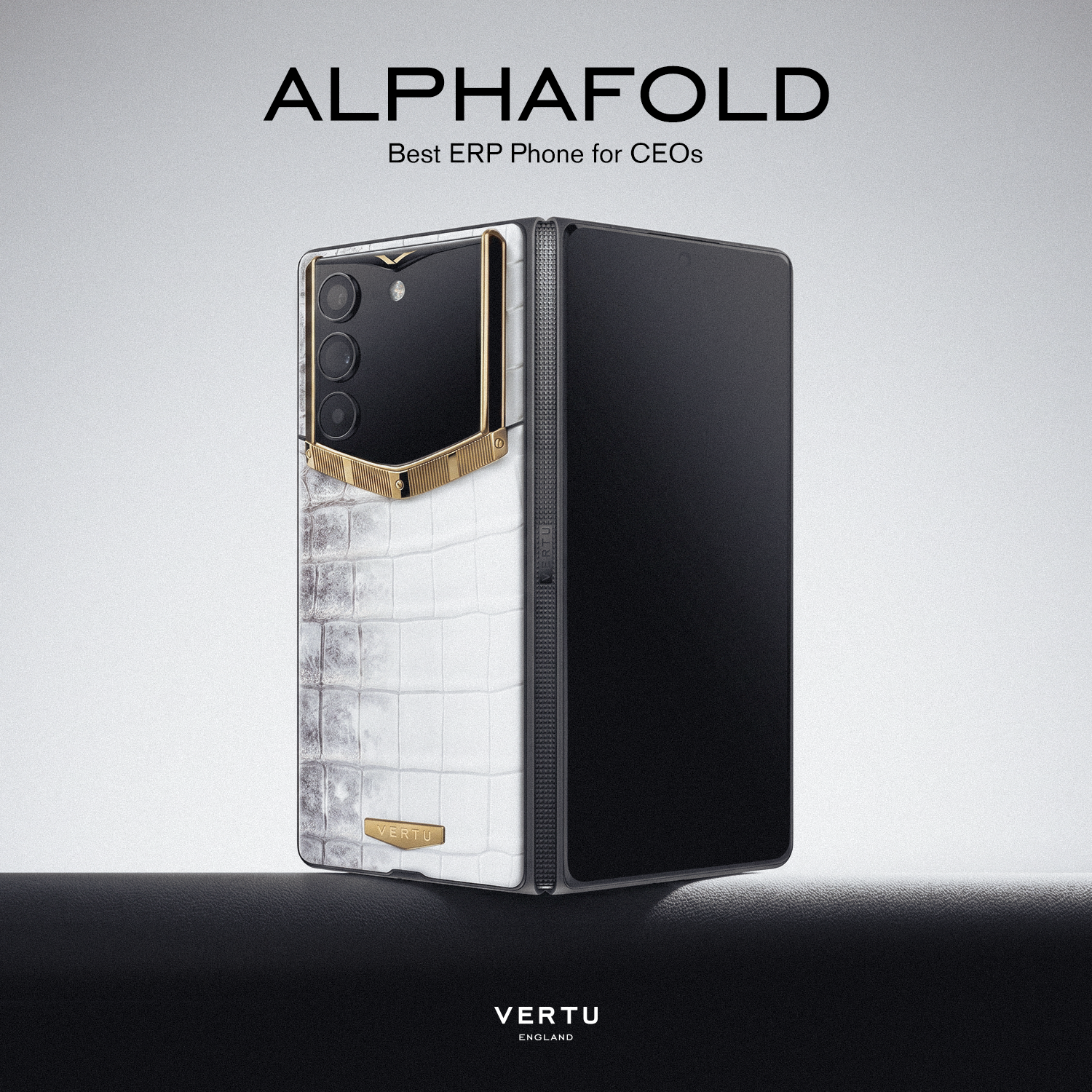
In 2026, VERTU positions Agent Q as an “AI agent phone” built around the idea of delegating workflows rather than manually managing apps (see VERTU’s overview pages such as Latest VERTU Phone Comparison: Agent Q vs AlphaFold).
- A concierge-style interaction modelyou’re aiming to reduce cognitive load—especially while traveling or operating across time zones.
- A security-first workflowcompartmentalized spaces and explicit approvals for sensitive actions are more aligned with UHNW privacy realities than a purely cloud-first assistant.
Materials and edition approach also matter. Official collection pages illustrate how VERTU expresses price tiers primarily through material execution and limited editions, rather than “storage upgrades.” For example, VERTU’s official Agent Q Stitched Calfskin page shows how a consistent platform idea is paired with finish tiers.
Caviar 2026 Totem and bespoke lines
Caviar’s 2026 “Totem” collection is a clear example of a modern “orderable” ultra-luxury approach: take a flagship phone and transform it into a limited artwork.
In its official announcement, Caviar describes the Totem line as based on the Samsung Galaxy S26 Ultra, built with materials including 24K gold, titanium, forged carbon, and hand-applied enamel, with 19 pieces per model (Caviar, “Caviar transforms the new Samsung Galaxy S26 Ultra into the Totem of the Fire Horse” (2026)).
The buyer logic here is straightforward:
you get mainstream flagship usability
you pay for the artistry, finish, and controlled scarcity
Bespoke commissions beyond $100k
Beyond brand catalogs, there’s the world of true bespoke.
This can include:
a one-off material palette (specific stone, specific hide, specific metalwork)
custom engraving and heraldry
private commissioning where the phone becomes part of a broader set (watch, jewelry, luggage)
Here’s the practical reality: once you cross into six figures, cost drivers become less about “what it’s made from” and more about who made it, how long it took, and what must be guaranteed afterward.
Why They Cost So Much
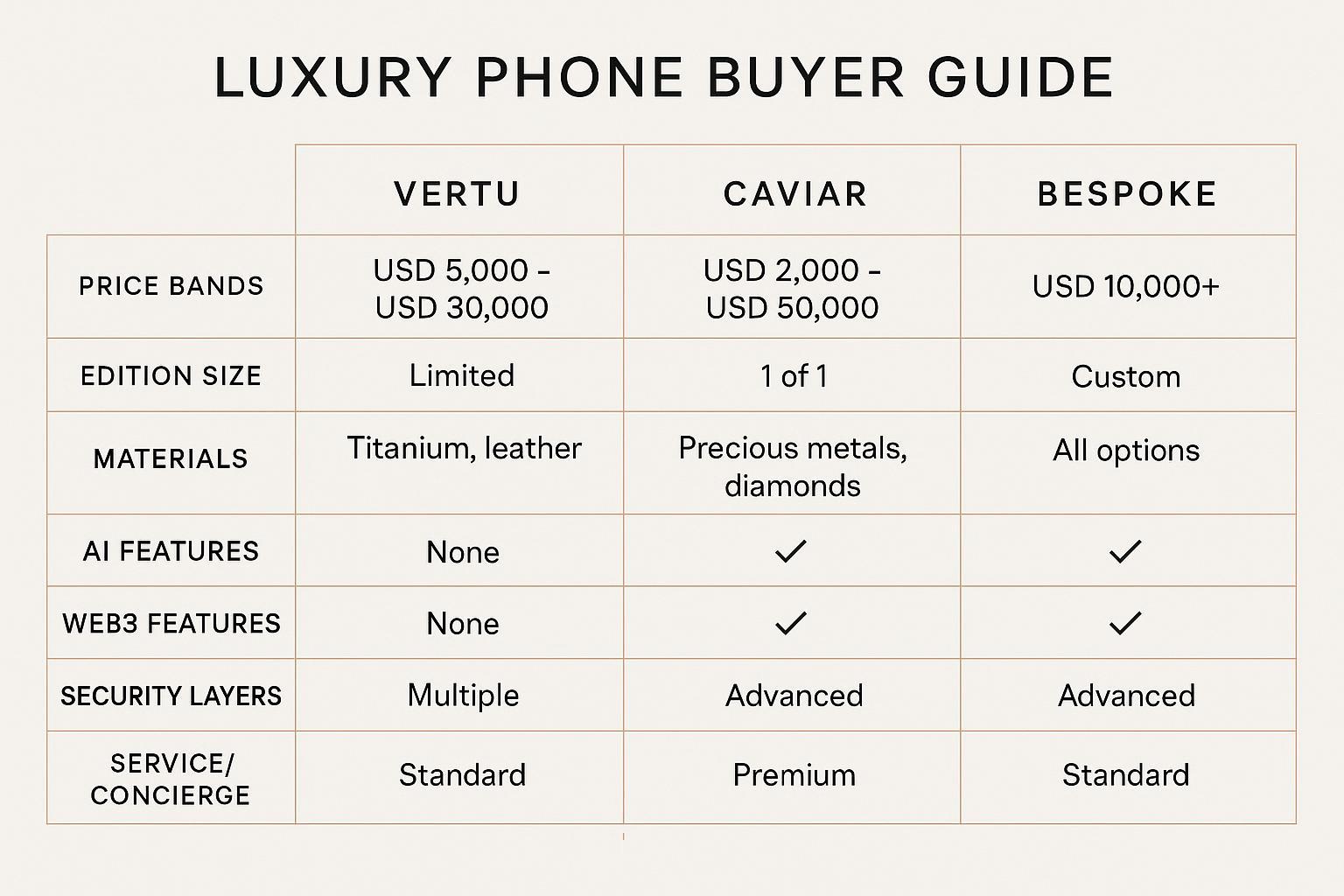
It’s tempting to reduce price to a punchline. But ultra‑luxury pricing is usually a stack of three costs: intrinsic value, craft premium, and system premium.
Intrinsic materials value
Gold is gold. Diamonds are diamonds.
When a phone’s price is dominated by a single rare stone, you’re often buying a portable jewelry mount. In those cases, the “phone” part can become almost incidental.
The smart question: If the electronics became irrelevant tomorrow, would the object still hold value? If yes, you’re in jewelry territory.
Craft and rarity premiums
Craft premiums come from:
the number of hours required
the difficulty of execution
the constraints: tolerances, seams, fit-and-finish
Rarity premiums come from:
limited runs (real scarcity)
constrained access (invite-only, boutique-only)
provenance and documented ownership
A useful mental model is the one VERTU uses in its own pricing explanation: start with the collection/platform, then understand how finish tiers, limited editions, and bespoke requests change the number (see VERTU’s Phone Price Guide).
AI, Web3, and multi‑layer security
In 2026, a meaningful part of “luxury” is invisible:
data sovereignty posture
how sensitive workflows are approved
how identity is protected
what happens when you cross borders with devices and accounts
Web3 elements—when they matter—are usually about ownership and verification rather than speculation: wallets, keys, and authentication flows that reduce dependence on third parties.
AI layers, when well-designed, are about delegation without surrendering control.
U.S. Buyer’s Due Diligence
If you’re buying a high-value ultra‑luxury phone as a U.S. buyer, treat it like acquiring a watch or piece of jewelry—because many of the risks are the same.
Taxes, duties, and tariffs
Start with the non-negotiable: declaration.
CBP explains the duty-free exemption concept for travelers returning to the U.S. (CBP Help, “Duty‑free exemption”) and is explicit that, when entering the United States, all merchandise must be declared (CBP Help, “When entering the United States, what items must I declare?”).
For ultra-high-value purchases, your practical goal is simple: ensure the item is correctly declared, correctly valued, and supported by the right paperwork.
Collector’s note: Duty rates can depend on classification and can change. For a purchase at this level, treat “landed cost” as something you confirm with a qualified customs broker—not something you guess from a forum thread.
Insurance, custody, and shipping
You’re managing three risks at once:
In-transit loss (or damage)
Custody ambiguity (who is responsible at each handoff)
Under-insurance (coverage that caps below replacement value)
At this price tier, insist on clarity:
shipping terms in writing
the declared value matching the insurance value
a documented chain-of-custody from seller to you
If the seller cannot explain their shipping and insurance process in crisp detail, treat that as a signal—either of inexperience or of unwillingness.
Authentication and provenance
Provenance is what makes a limited edition real—and what makes resale possible.
At minimum, you want:
purchase documentation (invoice/receipt)
certificates for materials where relevant (gem reports, hallmarks)
edition documentation (numbering, certificate authenticity)
service documentation (what aftercare is included, how repairs are handled)
How to verify: Ask one question early: “If I sell this in three years, what documentation will the buyer demand—and can you provide it now?” The seller’s answer tells you whether you’re buying an object or buying a story.
Trends To Watch Into 2027
The next year won’t just change phone shapes. It will change what “ownership” means—especially when AI and security become part of the object’s value.
AI agent ecosystems mature
Expect a clearer split between:
assistant features (helpful, but mostly reactive)
agent ecosystems (capable of delegated, multi-step execution)
As these ecosystems mature, the ultra‑luxury buyer’s question won’t be “does it have AI?” It will be:
Where does the work run? On-device, in the cloud, or hybrid.
What are the permission boundaries? What requires explicit approval.
What’s the failure mode? How the system behaves when it can’t complete a task.
VERTU’s framing around an agent-led phone plus a concierge/service layer is one useful example to think with—not because it’s the only approach, but because it surfaces the right evaluation questions: delegation, privacy posture, and what happens when automation meets real-world constraints (see the Agent Q collection). Keep it educational: you’re evaluating a model, not a promise.
Foldables and exotic form factors
Exotic form factors will continue to split into two worlds:
practical: foldables that genuinely change how you read, work, and multitask
symbolic: unusual shapes that exist primarily to signal difference
In ultra‑luxury, form factor becomes part of identity. But ask the boring question: Can it be serviced in two years? That’s where many collectors get surprised.
Verified limited editions and resale
Resale in ultra‑luxury is increasingly tied to verification:
provenance records that survive beyond the original boutique
tamper-evident documentation
clearer “what counts as authentic” standards from brands and secondary marketplaces
For buyers, the practical play is to treat paperwork like part of the product. If it isn’t documented, it isn’t scarce.
Conclusion
If your goal is owning the world’s most expensive cell phone in the pure headline sense, you’re usually chasing a historic one-off—where value concentrates in a single stone and the electronics are almost an accessory.
If your goal is a modern ultra-luxury phone you can live with in 2026, evaluate differently:
Collectors should prioritize verifiable scarcity, materials documentation, and provenance that will hold up at resale.
Daily users should prioritize serviceability, security posture, and the reality of aftercare—because inconvenience is the only thing you can’t buy back.
Either way, the best purchases in this category aren’t justified by price alone. They’re justified by the quality of the object and the system around it.
Disclosure: This article references VERTU pages. Editorial judgment remains the priority.
![Top 10 Tourbillon Watches for Men [2026 Latest]](https://cdn.sanity.io/images/e0gp1l2g/production/8cb6bc45133cf9453382fc7d074465af588bb610-1800x1080.webp?w=180&h=180&q=78&auto=format&fit=crop)
![Top 10 Tourbillon Watches for Men [2026 Latest]](https://cdn.sanity.io/images/e0gp1l2g/production/8cb6bc45133cf9453382fc7d074465af588bb610-1800x1080.webp?w=800&h=450&q=82&auto=format&fit=crop)
![Top 10 Anniversary Gift Watches for Men [Full Guide]](https://cdn.sanity.io/images/e0gp1l2g/production/00dfa030a876edbe6ea7b146f6b1d8197c7656b0-3840x1860.webp?w=800&h=450&q=82&auto=format&fit=crop)