Key TakeawaysA Web3 phone is a smartphone designed to handle modern digital ownership—wallets, keys, and decentralized apps—with security that goes beyond installing another app.
Digital ownership in Web3 usually means verifiable control of an on-chain asset (a token/NFT)—not automatically the copyright to the underlying content.
The tradeoff is responsibility: when you self-custody, the private key is your “master key.” Lose it (or sign the wrong thing) and recovery may be impossible.
What is a Web3 phone?
A Web3 Phone is a smartphone built for a world where value, identity, and access increasingly live outside your device.
Not just in your camera roll. Not just in your banking app.
But in wallets, token-gated memberships, on-chain credentials, and the kind of digital assets that can move across borders as easily as you do.
In practical terms, a Web3 Phone is designed to make three things safer and more usable:
Key management (the cryptographic keys that control your assets and permissions)
Wallet and dApp interaction (signing transactions, connecting to decentralized applications)
Segregation of risk (keeping high-risk actions isolated from everyday browsing, messaging, and downloads)
You can do some of this on any modern smartphone by downloading a wallet app. The difference is intent: Web3 phones aim to treat wallets and keys as first-class citizens—closer to how a passport or a safe is treated—rather than as just another icon on a screen.
What “digital ownership” really means (and what it doesn’t)
“Ownership” is an overloaded word.
In the physical world, it’s simple: you can hold something, lock it away, lend it, sell it, pass it down.
In the digital world, most of what we “buy” is really access. The U.S. Federal Trade Commission has warned that some digital purchases are often licenses—and those rights can be limited by platform rules and contracts, even after you’ve paid.FTC: Do you really own the digital items you paid for? (2024)
Web3 tries to restore a version of ownership by making control verifiable and transferable without needing permission from a single platform.
A concise definition
In Web3, digital ownership typically means:
You control an on-chain asset (a token or NFT)
That control can be verified publicly on a blockchain
That control can be transferred to another wallet under the network’s rules
NIST describes blockchains as distributed ledgers of cryptographically signed transactions grouped into blocks, linked together in a way that is tamper-evident and tamper-resistant over time.NIST IR 8202 Blockchain Technology Overview (2018)
In plain terms: a blockchain is the record-keeper.
What digital ownership does not automatically mean
Digital ownership in Web3 does not automatically grant:
Copyright or IP rights to the underlying artwork/media
A guarantee that a project will be maintained or retain value
Protection from scams, phishing, or bad approvals
A useful mental model is: you often own the token, not the entire universe around it.
Collector’s note: The most expensive mistakes in Web3 are rarely technical. They are semantic—misunderstanding what exactly you own, what you’re signing, and what is actually reversible.
How digital ownership works on a phone: keys, wallets, and signatures
To understand why a Web3 Phone matters, you only need one concept:
The private key is the master key.
Private keys and addresses (the “identity layer”)
On networks like Ethereum, an account is associated with a pair of cryptographic keys—public and private.Ethereum Foundation documentation on accounts and keys
Your address is the public-facing identifier (you can share it).
Your private key is what lets you authorize actions.
If an address is your “account number,” the private key is the signature stamp that proves you are allowed to move what the address controls.
Transaction signing (the “approval layer”)
When you send crypto, approve a token transfer, or sign a message to log in, you’re authorizing something cryptographically.
Ethereum’s documentation describes that transaction objects must be signed using the sender’s private key, proving the action could only have come from the sender.Ethereum documentation on transaction signing
This is the moment where digital ownership becomes real:
Ownership is not a username.
Ownership is the ability to sign.
Custody vs self-custody (the “control tradeoff”)
At an awareness stage, you don’t need to pick sides. You just need to understand the tradeoff.
Custodial setups (an exchange or platform holds keys) can be convenient and may offer recovery options.
- Self-custody walletyou control the keys yourself—more autonomy, less dependency, more responsibility.
Self-custody is what people usually mean by “true” Web3 ownership. It’s also where the operational risk lives.
The non‑negotiable risks: what can go wrong
If your lifestyle includes high-value assets, frequent travel, and sensitive communications, you don’t need scare tactics—you need clarity.
1) Phishing and fake prompts
Web3 phishing often looks like a legitimate wallet prompt, a “security alert,” or a token-gated invitation.
The FTC’s consumer guidance on crypto scams emphasizes basic rules that remain brutally effective: don’t click links in unexpected messages, be suspicious of pressure tactics, and treat unusual payment requests as red flags. The FTC notes that crypto scam losses can be substantial.FTC guidance on cryptocurrency scams
In Web3 language: the scam is not always stealing your password. It’s getting you to sign the wrong thing.
2) Seed phrase and recovery failure
Many wallets use a seed phrase as a recovery mechanism. If you lose it, you may lose access permanently. If someone else gets it, they can drain assets.
This is why “digital ownership” can feel both empowering and unforgiving.
3) Mixing daily life with high‑risk actions
Most people do risky things on their phone every day:
scanning QR codes
opening links
installing apps
connecting to hotel Wi‑Fi
If the same environment is used to manage serious assets, a single mistake can become expensive.
How to verify: If you’re evaluating a Web3 Phone for real asset custody, prioritize hardware isolation (secure element / TEE) and workflow separation over buzzwords. A secure system is designed to fail safely when you’re tired, rushed, or distracted.
What changes when a phone is built for Web3 security
A Web3 Phone can’t eliminate risk. But it can change where risk lives.
A strong security posture in a Web3 phone is typically built around:
Hardware isolation for keys
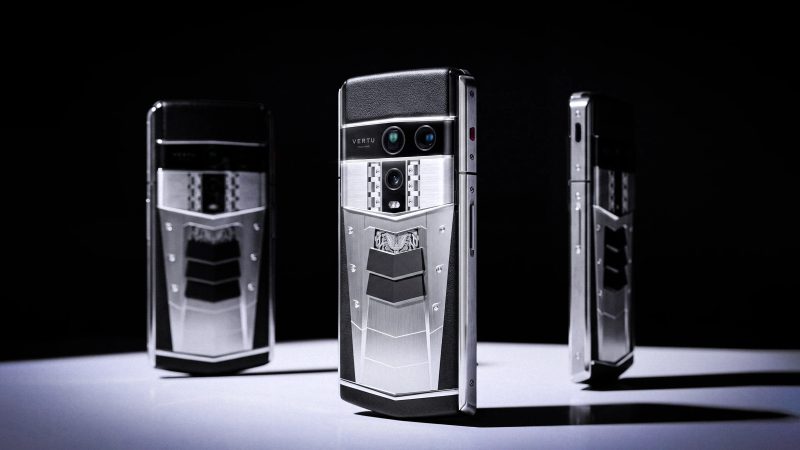
A secure design isolates cryptographic keys away from the general-purpose operating system. VERTU’s own secure Web3 phone buying guide emphasizes the importance of a dedicated secure element (SE) and a Trusted Execution Environment (TEE) as evaluation criteria.
If you only remember one thing: keys that never touch the “normal” environment are harder to steal.how to buy a secure Web3 phone
Separation between “daily” and “Web3” modes
Some Web3-centric devices aim to separate everyday app life from higher-risk signing and custody activity.
This doesn’t have to be complicated. It can look like:
an isolated mode for wallet use
a hardened approval flow for signing
a clear boundary between browsing and custody
The point is not convenience. The point is composure under pressure.
Encrypted communications as a baseline expectation
For UHNW users, security is not only about assets. It’s about negotiations, travel, and private plans.
VERTU positions the METAVERTU line around Web3 functionality and “blockchain-secure data” as part of an overall security narrative.METAVERTU 1 Curve announcement
(As always: treat marketing language as direction, then verify the operational reality—especially around your own custody habits and recovery planning.)
Why digital ownership matters more on a luxury smartphone
If you live globally, you already understand that ownership is not a philosophical question. It’s operational.
Portability without fragility
Your digital life shouldn’t become more fragile as it becomes more valuable.
In Web3, digital ownership—done right—depends on how you use a Web3 wallet, and whether you choose custody or self-custody.
countries
devices
carriers
platforms
But only if you pair it with serious security routines.
Provenance, authenticity, and trust
Luxury is built on provenance.
Digital ownership brings that concept into the digital realm—especially for:
limited digital editions
token-gated access to events or communities
collectible digital assets tied to real-world privileges
The most useful lens here isn’t “crypto.” It’s “verifiable authenticity.”
The role of concierge-level support
Even sophisticated owners don’t want to spend their time thinking about:
key backups
device replacement routines
travel-safe setup
verification workflows
This is where luxury differs from premium.
In a luxury ecosystem, support is part of the product—especially when mistakes are irreversible. VERTU’s concierge positioning (for example, its Ruby Key service) reflects that expectation of always-on assistance.VERTU Ruby Key concierge service
FAQ
Is a Web3 phone only for crypto traders?
No. The broader idea is managing digital identity, access, and ownership with stronger security assumptions—crypto is just one use case.
If I own an NFT, do I own the underlying artwork?
Not automatically. NFT ownership usually means control of the token; IP rights depend on the project’s terms.
What’s the biggest beginner mistake with digital ownership?
Treating approvals casually—clicking “sign” because something looks familiar.
What matters more: a Web3 phone or a hardware wallet?
For higher-value custody, hardware isolation matters. Some users pair a phone workflow with a dedicated hardware wallet; the best setup is the one you can execute reliably.
What’s one security rule that never changes?
Don’t click links in unexpected messages. Navigate to official sites directly and verify what you are approving.
Next steps
If you’re exploring Web3 phones from a luxury buyer’s perspective, start with clarity:
Define what you want to own (assets, identity, access)
Decide what level of responsibility you’re willing to take (custody vs self-custody)
Evaluate whether the device’s security architecture and support model match the value at stake
For further reading, you may find these useful:
VERTU’s guide to the Web3 smartphone
A practical checklist on how to buy a secure Web3 phone
Browse the current VERTU phones
Disclosure: This article references VERTU pages. Editorial judgment remains the priority.