MetaVertu is easy to misunderstand because most “Web3 phone” conversations start in the wrong place.
They start with specs.
VERTU starts with ownership.
Not the abstract kind. The kind that shows up in your calendar, your travel rhythm, your privacy posture, and the doors that open (or don’t) when you arrive.
This is an explainer for the consideration stage: you’re not trying to be persuaded that Web3 is real. You’re deciding whether MetaVertu is a meaningful form of digital luxury ownership—or just an expensive way to hold a wallet.
Key takeaways
MetaVertu isn’t positioned as “a phone with crypto features.” It’s positioned as an ownership object: device + identity + privileges.
In Web3, digital ownership is mostly about control (self-custody) and proof (verifiable access and provenance). That control comes with responsibility.
Token-gated membership can be real—when benefits are defined, verifiable, and operationally deliverable.
A Web3 phone must reduce your risk in the places you actually lose money: phishing, unsafe approvals, and device-loss scenarios.
With VERTU, the service layer matters. If you’ll use concierge as part of the product, the value equation changes.
What Vertu MetaVertu is really selling
If you want the cleanest way to think about MetaVertu, use this three-layer model:
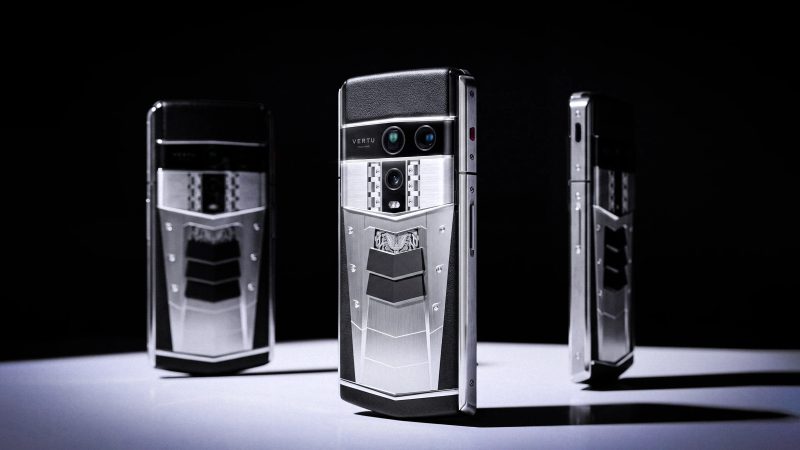
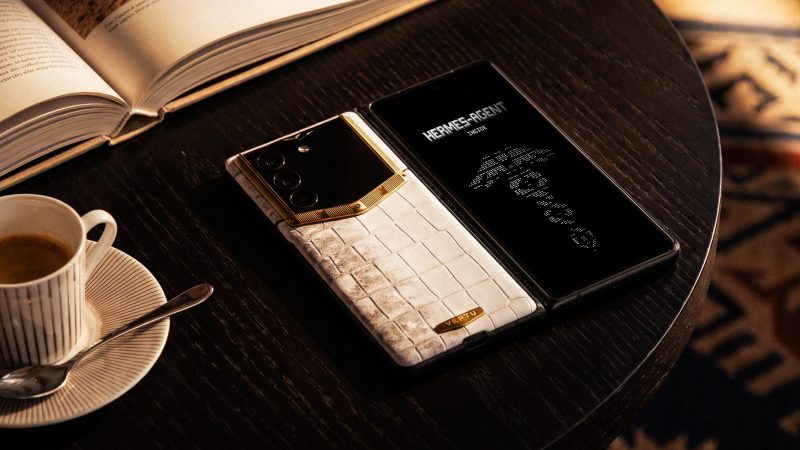
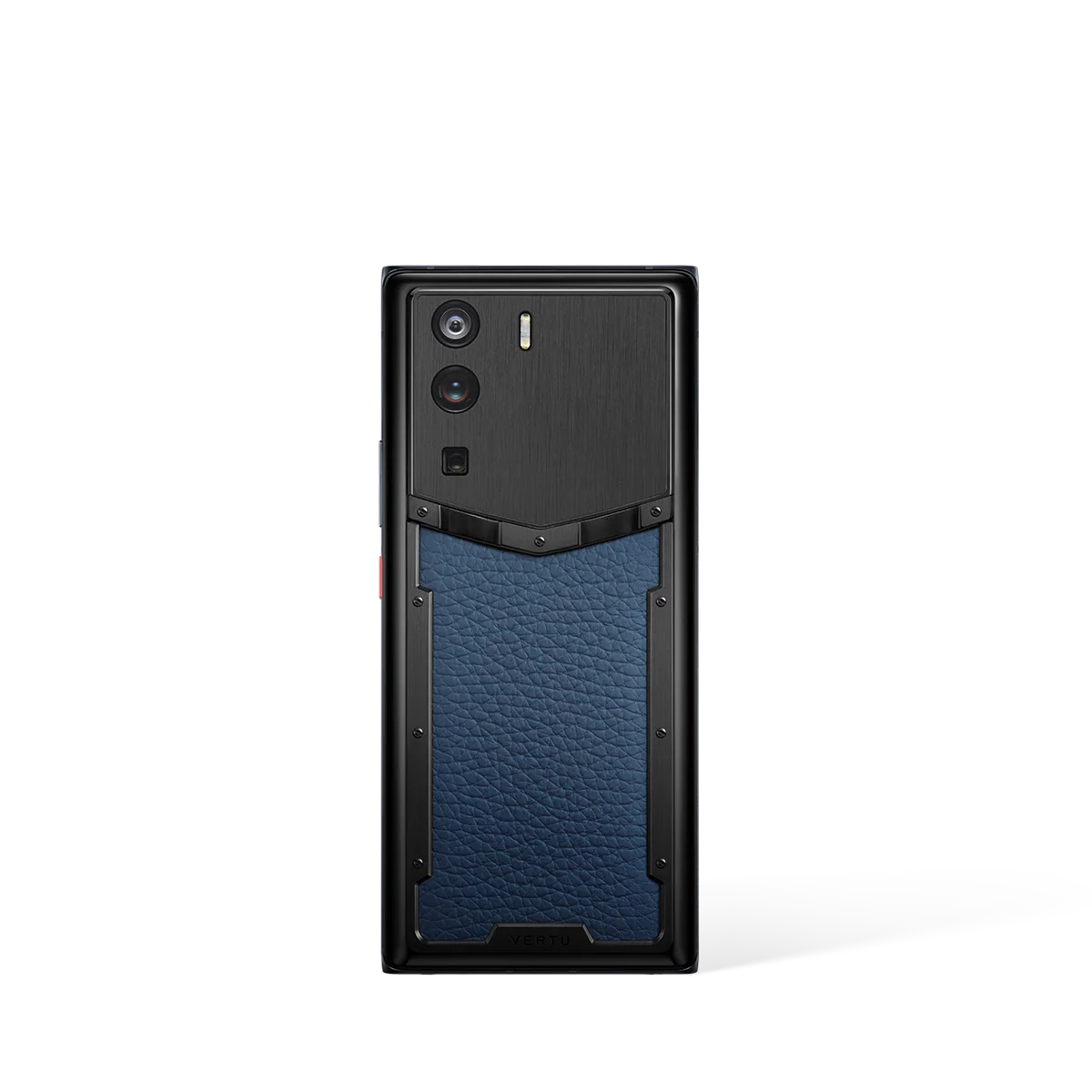
- The device layera luxury smartphone built as an object (materials, finish, presence).
- The identity layera way to anchor your digital identity and assets to something you control.
- The privileges layermembership benefits that travel with ownership.
Most phones are disposable tools. In VERTU’s positioning, the MetaVertu Web3 phone is meant to be a secure terminal and a membership object—two roles most devices never attempt to reconcile.
MetaVertu is positioned closer to a watch, a bag, or a private club card—except it also has to behave like a secure terminal.
Third-party coverage captures this “passport” framing. In a 2023 interview with Decrypt, VERTU’s CEO described the phone as a “passport to the Web3 world,” and discussed identity and secure hardware as central design choices (while also acknowledging the current Web3 UX gap).Decrypt’s 2023 interview on MetaVertu as a “passport to the Web3 world”
That caveat matters. A serious buyer doesn’t purchase a thesis. You purchase a lived experience.
Digital ownership, in plain English
“Digital ownership” is one of those phrases that attracts both hype and cynicism.
A useful, non-theatrical definition is this:
Digital ownership is the ability to control, prove, and use digital property under your own authority—often via a self-custody wallet and public blockchain records.
A self-custody wallet is a simple concept with sharp edges: you hold the private keys that prove control. As Trust Wallet puts it, self-custody means you possess the keys that prove ownership independent of any platform.Trust Wallet on self-custody and private keys
Self-custody: control comes with responsibility
Self-custody is the point—and the price.
It can remove a middleman. It can also remove the safety net.
If you’re used to the recovery rituals of mainstream platforms (“reset password,” “call support,” “confirm identity”), Web3 can feel brutally honest: the system is designed so that no one else can move your assets—which also means no one else can easily rescue you if you lose your access.
Token-gated access: when ownership becomes entry
Token-gating is simply ownership-as-admission.
Hold a specific token, and you unlock something: a community, an experience, a service tier, a private channel.
Luxury brands have used token-gated models to formalize exclusivity: token ownership becomes a way to grant access to private events, reserved drops, or member-only spaces.Luxe Digital’s overview of token gating for luxury brands
In other words: the token is not the luxury. The access is.
Provenance: why a ledger matters in luxury
In traditional luxury, provenance is the quiet architecture behind value: authenticity, chain-of-custody, repair history, ownership history.
Web3 tries to make parts of that provenance legible and verifiable—at least for digital assets and credentials.
If you’re considering MetaVertu, the question isn’t “Do I want NFTs?”
The question is: Do I value verifiable access and provenance enough to carry the responsibility of self-custody?
The membership layer: NFT Pass membership and the idea of “ownership = access”
This is where MetaVertu becomes uniquely VERTU.
VERTU’s framing is explicit: ownership is designed to unlock membership.
In its own explainer on Web3 phones, VERTU states: “The Vertu NFT Pass gives you exclusive membership, concierge services, and on-chain data analysis.”VERTU’s explainer on Web3 phones vs traditional smartphones
That sentence is doing a lot of work. Treat it as a set of evaluable claims, not a slogan.
What VERTU says the NFT Pass includes
From VERTU’s own language, the NFT Pass is positioned as:
Exclusive membership (status + access)
Concierge services (service delivery)
On-chain data analysis (utility)
VERTU also uses the “Web3 shield” framing in MetaVertu content, tying the phone to privacy and asset protection language, and describing features like secure key backup and Web3 mode switching.VERTU’s “Metavertu 1 phone is your Web3 shield in 2025”
Collector’s note: In luxury, “membership” is only credible when it’s operational. The more specific the benefits, the more real the value.
What to verify before you treat an NFT as “membership”
If you’ve ever owned private-club memberships, you already know what matters:
- Benefits clarityWhat exactly is included, and what is merely “possible”?
- EligibilityIs the benefit attached to a specific device/series, region, or period?
- Redemption realityWho fulfills the benefit, how fast, and under what constraints?
- Transfer logicIf you sell the device, does membership travel with it? If yes, what happens to your identity and data?
If you want a high-signal question that cuts through most Web3 marketing, ask this:
What privileges remain valuable if you never open a wallet app?
If the answer is “none,” then you’re not buying luxury ownership. You’re buying a crypto accessory.
The security layer: what a Web3 phone must do well
Consideration-stage buyers don’t need fear. They need a realistic threat model.
A Web3 phone has one job: reduce the probability that a moment of distraction becomes a permanent loss.
The threats that matter
Three risks dominate real-world losses:
Phishing and social engineering (fake apps, fake support, fake links)
Unsafe approvals (signing something you don’t understand)
Device loss / access loss (theft, damage, travel chaos)
Cloudflare’s overview of Web3 security risks is a useful high-level reminder that Web3 systems introduce new attack surfaces and that patching issues can be harder in decentralized contexts.Cloudflare overview: Web3 security risks
Brave’s practical security guide emphasizes the basic rule that still catches sophisticated people: do not share private keys or seed phrases, and treat them as the credential.Brave guide: Web3 security risks and staying safe
What secure hardware can and can’t guarantee
Secure elements and isolated execution environments can meaningfully reduce risk.
They can’t eliminate the two failures that matter most:
You signed the wrong thing.
You gave away the secret.
Even specialized Web3-targeted devices can have real-world weaknesses. CertiK’s analysis of mobile security challenges in Web3 highlights risks like device tampering and the difficulty of guaranteeing integrity end-to-end.CertiK: mobile security challenges in Web3
The takeaway is not paranoia.
It’s discipline: you’re buying a system, and you still need habits.
A buyer’s checklist for safe daily use
If you want a clean, high-signal evaluation, use this checklist:
Do I have a plan for recovery that doesn’t involve “hoping support can help”?
Do I understand what I am approving when I sign a transaction?
Will I keep my most sensitive assets isolated from daily browsing?
Do I need separate profiles or modes for travel, high-risk regions, and public Wi‑Fi?
VERTU’s own terms matter here because they signal what the brand thinks the buyer needs. For example, VERTU describes “KEYBOX technology” as a way to back up private keys safely—think of it as KEYBOX private key backup framed for daily carry, not just for power users.VERTU’s Web3 phone explainer mentioning KEYBOX
How to verify: Ask what “backup” means in practice—where it lives, what the recovery steps are, and what happens if your phone is lost during travel.
The service layer: why concierge changes the value equation
Most Web3 phones are transactional. They give you tools.
VERTU is different because it claims a service outcome: you are not alone with the tools.
VERTU’s concierge guide describes its concierge as a 24/7 lifestyle management service available to owners, and notes how newer devices evolve the experience via Ruby Talk (AI triage with escalation to humans).VERTU’s guide to the Concierge Service in 2025
Ruby Key / Ruby Talk as access design
The luxury move isn’t that help exists.
It’s that access is designed into the object.
VERTU frames Ruby Talk as a modern evolution of the Ruby Key idea—an always-available portal into assistance, not a customer support ticket.VERTU: Ruby Talk and one-touch access
In a membership-led interpretation of MetaVertu, this matters: the service layer is what makes “ownership = access” real.
When concierge is the point—and when it isn’t
Concierge value tends to concentrate in a specific lifestyle profile:
you travel frequently and change plans often
you have high opportunity cost for coordination
you value discretion and speed more than bargain hunting
If that is you, concierge is not a perk.
It’s the product.
If it’s not you—if you want the fastest camera pipeline, the broadest app ecosystem, or the best price-to-performance—MetaVertu’s proposition will feel misaligned.
Who MetaVertu is for (and who should walk away)
Consider this the honest fit section.
MetaVertu is likely for you if:
you treat your phone as a personal command center, not a disposable screen
you want Web3 ownership without turning your life into a security hobby
you value privileges and human service as much as hardware
your risk tolerance is low, but your curiosity is high
You should walk away if:
you want Web3 primarily as speculation, not utility
you don’t want the responsibility of self-custody
you expect a Web3 phone to feel as frictionless as a mainstream consumer wallet
you measure value purely as specs-per-dollar
How to evaluate MetaVertu in 15 minutes
If you’re in the consideration stage, you want an evaluation you can do quickly—without reading a whitepaper.
Questions to ask your concierge or advisor
What does the NFT Pass unlock today (not “in the future”), and how is eligibility verified?
What is the recovery path if the device is lost in transit?
Which actions are designed to be one-touch, and which require deliberate confirmation?
Which features are “nice to have” versus core to the ownership experience?
Red flags
Benefits described in vague language with no operational detail.
Any “security” story that ignores phishing and approval risk.
Any setup process that encourages storing secrets in screenshots or note apps.
Next steps
If you want to keep this evaluation grounded in VERTU’s own terminology and membership framing, start with two references and read them like a buyer:
VERTU’s definition of the membership concept: Web3 phone vs traditional smartphones (vertu.com/lifestyle/web3-phone-vs-traditional-smartphones-differences)
VERTU’s explanation of the concierge layer: the Vertu Concierge Service guide (vertu.com/guides/the-ultimate-guide-to-the-vertu-concierge-service-in-2025)
When you’re ready to explore the current MetaVertu line and availability, use the official store as the canonical starting point: VERTU shop
Disclosure: This article references VERTU pages. Editorial judgment remains the priority.