-esc33r5w.webp)
If you’re an executive, your phone isn’t a device. It’s your control surface.
For the last decade, mobile productivity has meant faster apps: better email, a cleaner calendar, a sharper camera for scanning contracts on the fly. Now a different shift is underway: from apps to agents—systems that don’t just respond, but act.
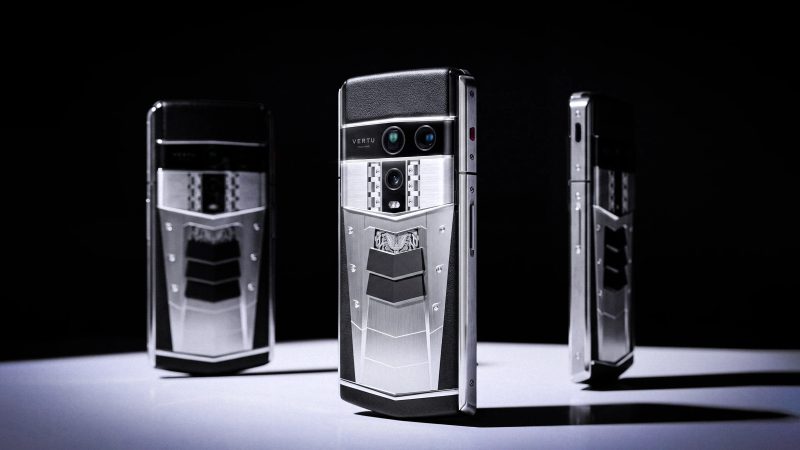
That’s the premise behind VERTU Agent Q: an AI agent phone positioned as a step-change in how entrepreneurs handle decisions, coordination, and privacy—especially when work happens in airports, cars, and between time zones.
This article isn’t a spec sheet. It’s a consideration-stage briefing: what to look for in an AI agent phone, where the risks really sit, and what “executive productivity” means when the assistant can take actions on your behalf.
Key TakeawayThe productivity upside of agentic AI comes from reducing the coordination tax—but only if permissions, approvals, and auditability are designed in from the start.
What an “AI agent phone” actually changes (and what it doesn’t)
Most people still picture AI as a chatbot: ask a question, get an answer. Useful, but limited.
An AI agent is different. In common industry definitions, an agent is designed to pursue a goal through multiple steps—planning, choosing tools, and taking actions—rather than stopping at a single response (see IBM’s explainer on AI agents and McKinsey’s “what is an AI agent” explainer).
The new default: outcomes, not interfaces
The promise isn’t “a smarter keyboard.” It’s fewer handoffs:
Turn a call into a follow-up plan.
Turn a meeting into decisions, tasks, and drafts.
Turn travel friction into a single instruction—and a verified result.
But the moment an agent can act, productivity becomes inseparable from control.
The executive evaluation framework: 7 criteria that matter more than specs
If you’re comparing approaches, stop asking whether the AI is “powerful.” Ask whether it’s governable.
Below is a compact framework you can use across the category—whether you end up choosing a mainstream ecosystem, an enterprise-managed device, or an AI agent phone.
1) Action boundaries (what the agent is allowed to do)
An agent without boundaries is a liability. The best systems define:
which apps and services the agent can touch
what counts as a “high-impact” action
what is never delegated (wire transfers, sensitive disclosures, irreversible approvals)
2) Permission design (least privilege, by default)
Agentic systems expand the attack surface because they often need broad access to be useful.
A practical standard is least privilege and “least action”: start with minimal permissions and grant capabilities intentionally (see Microsoft guidance on securing agentic systems).
3) Approval gates (where you want a human “yes”)
For an executive, speed is valuable—but not at the expense of control.
Look for approval patterns like:
“draft, but don’t send”
“book options, but don’t confirm”
“prepare a recommendation, then ask for approval”
4) Auditability (can you reconstruct what happened)
When something goes wrong, you need more than an apology.
You need a record of:
what the agent saw as input
what it decided
what it did (and in what order)
Auditability is the difference between “helpful automation” and “mysterious behavior.” It’s also why security teams treat agents like privileged identities (see Palo Alto Networks Unit 42 on agentic AI threats).
5) Privacy posture (where the intelligence runs)
Executives don’t just handle sensitive data—they create it continuously: voice notes, deal terms, board questions, personal itineraries.
The key question is simple:
What data leaves the device?
Under what conditions?
What is stored, and for how long?
6) Reliability under travel conditions
Most productivity systems fail at the same moment you need them most: when you’re moving.
Look for resilience across:
inconsistent connectivity
time-zone compression
last-minute changes
If you want a broader lens on what “business-phone reliability” includes—security, performance, battery, and travel readiness—use VERTU’s business-phone productivity criteria as a quick reference.
7) Human escalation (when the agent shouldn’t act alone)
Some outcomes require human judgment: a tight restaurant booking before a client dinner, a sensitive travel re-route, a private event request.
An executive-grade system should handle escalation gracefully—without forcing you into a new app labyrinth.
The scenarios that reveal whether an agent phone is truly “executive-grade”
Most demos look impressive. Real life is less polite.
Use these scenarios as stress tests when you evaluate any AI agent workflow.
Scenario 1: The meeting-to-decision pipeline
The moment: You step out of a board meeting. You have four decisions, two follow-ups, one sensitive message, and a flight in three hours.
What a useful agent does
turns discussion into a structured summary
extracts action items with owners and deadlines
drafts follow-up messages in your tone
asks for approval before sending
What to watch for
Does it separate drafting from sending?
Does it keep the sensitive parts private?
Pro TipThe fastest workflow is the one that defaults to “draft, then approve.” It protects you from misfires without slowing you down.
Scenario 2: Travel disruption without decision fatigue
The moment: A connection is at risk. Your assistant is asleep. A client meeting moves earlier.
A good agent workflow
proposes two viable itineraries
pre-fills preferences and constraints
prepares the message you need to send
A premium workflow
escalates to a human team when the situation requires reach and negotiation—without making you repeat context.
This is where service architecture matters.
Scenario 3: Sensitive communications on a noisy device
The moment: You’re sending a confidential document, then you open a “harmless” link in a message thread.
Agentic systems are exposed to modern manipulation risks, including “instruction hijacking” (prompt injection) where untrusted text tries to steer the assistant’s actions.
A high-level mitigation model—again, category-wide—is:
treat external content as untrusted
limit agent permissions
require approvals for high-impact steps
keep logs
If you’re evaluating any agentic system, prioritize boundaries and approvals over “autonomy for autonomy’s sake.”
Scenario 4: Delegation with discretion
The moment: You need something handled, but you don’t want to broadcast it across apps or group chats.
The ideal interaction is quiet:
one instruction
one confirmation
one deliverable
Not a week of notifications.
Where VERTU Agent Q fits: a luxury approach to agentic work
VERTU frames Agent Q as a shift from “apps to agents”—a phone that “thinks, plans, delivers, and protects your privacy.”
The differentiator worth understanding isn’t a component list. It’s the control model.
Ruby Talk and the Ruby Key: one-touch delegation, with intent
In VERTU’s language, Ruby Talk on Agent Q turns the Ruby Key from concierge access into an agent gateway—designed to reduce the friction of “finding the right app” when what you really need is an outcome.
Instead of navigating interfaces, the premise is:
press once
state intent
review what the system is about to do
approve where appropriate
That physical trigger matters in executive life. It’s discreet. It’s unambiguous. And it creates a ritual of intention—useful when you want to delegate without broadcasting.
Hybrid intelligence: when AI should hand off to humans
No AI should pretend it can negotiate a sold-out seat on a tight schedule or handle sensitive, human-to-human nuance perfectly.
VERTU’s Ruby Key ecosystem is positioned to support high-end, real-world requests—especially travel and lifestyle coordination—through concierge-style escalation (see the scenario examples in Ruby Key concierge service).
The value isn’t “more AI.” It’s better judgment about when AI should stop.
Key TakeawayExecutive productivity isn’t just automation. It’s the ability to delegate without losing control—or discretion.
A practical checklist: questions to ask before you trust an agent with actions
Use this as a short due diligence list.
Control and accountability
What actions can the agent take today?
Can I set “draft-only” defaults for messages, bookings, and approvals?
Can I see a clear record of what it did and why?
Privacy and safety
What data leaves the device, and under what conditions?
Can the system operate usefully when connectivity is limited?
How does it reduce risk from untrusted content (links, emails, documents)?
Workflow fit
Does it reduce app switching and follow-ups?
Does it help with the moments that actually cost me time: meetings, travel, approvals, coordination?
Next steps
If you’re evaluating what an AI agent phone could do for your day—not in theory, but under real executive constraints—start by exploring VERTU Agent Q.
For deeper reading within the broader privacy cluster, VERTU’s security lens begins with threat modeling and layered controls in Beyond encryption: finding the most secure phone for your needs.
Disclosure: This article references VERTU pages. Editorial judgment remains the priority.