

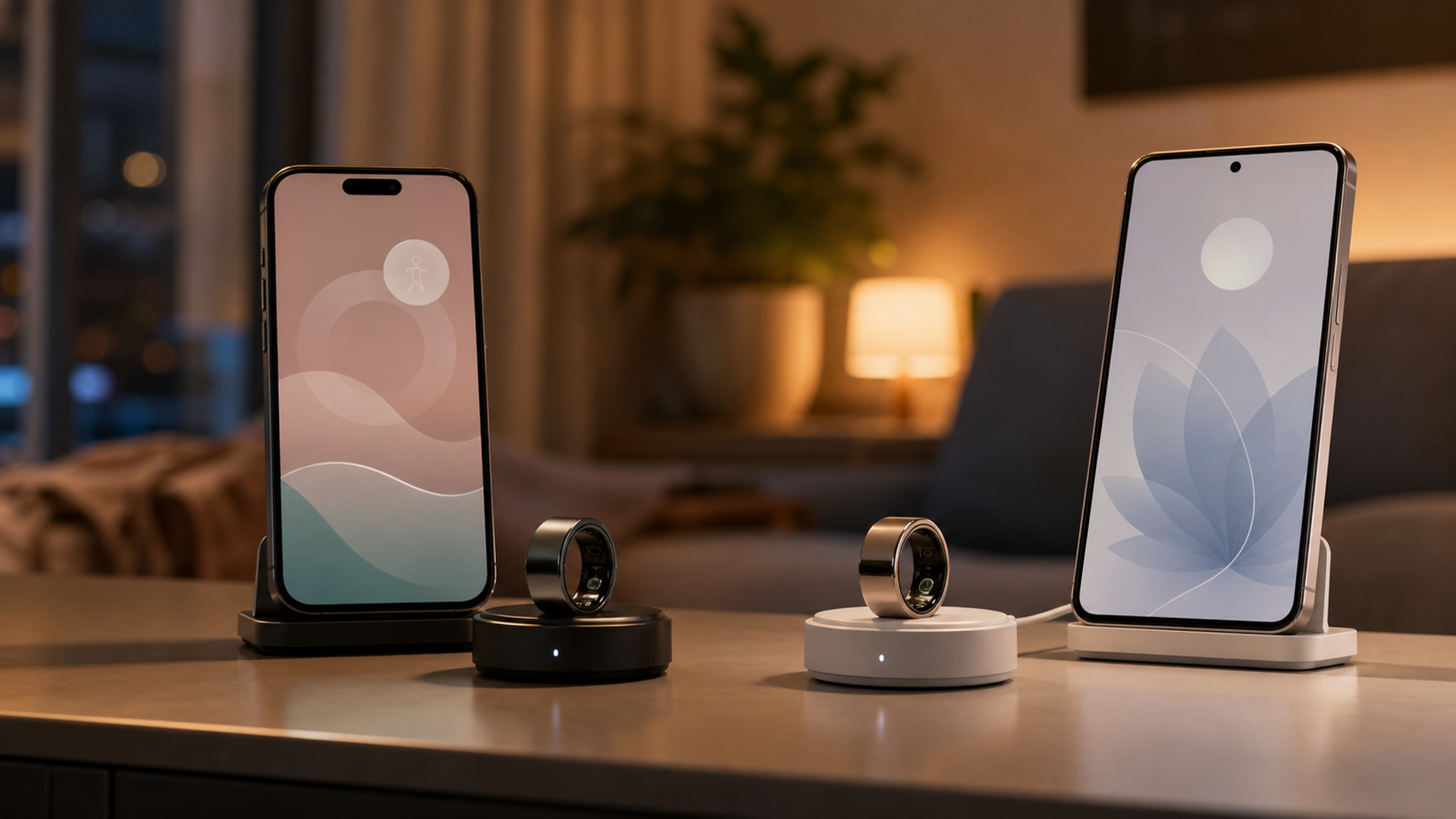
A pair of smart rings can support shared routines, but buying matching hardware does not automatically create a useful couples experience. The real decision sits in account separation, consent, compatible sharing, subscription cost and whether both people will wear the device consistently.
The short answer: Choose individual accounts and explicit sharing; never make access to one partner's intimate health data the price of using the product.
The question is more useful when it is converted into checks a reader can repeat. The matrix below separates what can be verified now from what still depends on a seller, service provider, venue or changing software policy. Details that vary by model, market, condition or account should be confirmed on the current source before money, access or irreplaceable evidence changes hands.
Decision matrix
| Decision point | Why it matters | Practical action |
|---|---|---|
| Define the shared goal | A shared purchase works only when each person gets independent value | Write one personal goal and one optional shared habit for each partner |
| Keep accounts separate | Shared credentials blur ownership and make deletion difficult | Use separate logins, unique recovery methods and opt-in sharing |
| Inspect sharing granularity | The safest default is the smallest useful view | Prefer revocable summary sharing with clear timestamps and audience controls |
| Calculate the pair cost | The relevant price is a two- or three-year household total | Compare hardware, recurring fees and expected replacement separately |
| Respect different fit cycles | A ring that fits one test hour may fail overnight or on a flight | Use each brand's sizing kit and run a full-day wear test independently |
| Plan an exit | A considerate setup includes export and deletion before the relationship needs it | Confirm each user can export data, revoke sharing and close an account alone |
Use the table as a sequence rather than a scorecard. A strong result in one row does not cancel a serious failure elsewhere: excellent hardware cannot repair a missing return route, a convincing story cannot replace provenance, and a convenient service does not justify unlimited data access.
For a buyer, the order of checks matters. Start with eligibility, condition or authorisation; then test the feature under realistic conditions; only then compare price. This prevents a low price or impressive specification from anchoring the decision before the largest downside is understood. Where the seller cannot support a material claim, treat that as information about the offer rather than an invitation to fill the gap with optimism.
Specifications still have a role, but only after the disqualifying checks. Compare the exact configuration, software state and service region rather than a product-family headline. Where performance is subjective, define the task in advance and save a result you can compare. Where condition or authorisation is involved, use official diagnostics or regulator records. The aim is not to remove every uncertainty; it is to discover whether the remaining uncertainty is small enough for the price and the intended use.
1. Define the shared goal
Couples often buy the same device while pursuing different outcomes. That matters because a shared purchase works only when each person gets independent value.
Write one personal goal and one optional shared habit for each partner. Record the result while the evidence is visible and repeat the check under the conditions in which the device, object or service will actually be used.
Do not use a leaderboard when it turns recovery or illness into competition. If uncertainty remains, protect the decision with a return right, service allowance or a lower price rather than assuming the best case.
2. Keep accounts separate
Shared credentials blur ownership and make deletion difficult. The useful evidence is observable: individual accounts preserve consent, history and recovery when relationships or devices change.
The practical move is to use separate logins, unique recovery methods and opt-in sharing. Keep the answer with its date and source, especially where a model, account, venue or regional policy can change.
A family plan should not require one partner to become the other's administrator. If uncertainty remains, protect the decision with a return right, service allowance or a lower price rather than assuming the best case.
3. Inspect sharing granularity
Start with the behaviour, not the label. Products differ in whether they share summaries, scores, workouts or raw readings, so the safest default is the smallest useful view.
Prefer revocable summary sharing with clear timestamps and audience controls. The test should be clear enough for a partner, support adviser, specialist or future buyer to repeat without relying on your memory.
A screenshot in chat is a permanent copy outside the wearable's privacy controls. If uncertainty remains, protect the decision with a return right, service allowance or a lower price rather than assuming the best case.
4. Calculate the pair cost
Two devices can also mean two subscriptions, chargers, replacement plans and resizing risks. Read that alongside the practical consequence: the relevant price is a two- or three-year household total.
A defensible response is to compare hardware, recurring fees and expected replacement separately. If the seller or provider supplies the evidence, verify both its origin and its relevance to the exact item or account.
A free first year can hide the cost of keeping history or advanced insights. If uncertainty remains, protect the decision with a return right, service allowance or a lower price rather than assuming the best case.
5. Respect different fit cycles
The decision turns on a simple fact: finger size changes with temperature, travel, exercise and time of day. As a result, a ring that fits one test hour may fail overnight or on a flight.
Use each brand's sizing kit and run a full-day wear test independently. Then test the result once outside the ideal demonstration: different light, a longer session, an interrupted connection or another ordinary use condition.
Matching sizes or swapping rings can corrupt personal baselines. If uncertainty remains, protect the decision with a return right, service allowance or a lower price rather than assuming the best case.
6. Plan an exit
A considerate setup includes export and deletion before the relationship needs it. A buyer can test the premise because people change phones, services and sharing preferences.
Use this as the next action: confirm each user can export data, revoke sharing and close an account alone. Preserve the controlling page, result and date without saving secrets or publishing personal identifiers.
Do not assume cancelling payment deletes health history. If uncertainty remains, protect the decision with a return right, service allowance or a lower price rather than assuming the best case.
A realistic scenario
One partner wants recovery trends and sleep consistency; the other mainly wants a discreet activity tracker. They travel frequently, use different phone platforms and do not want raw health metrics automatically visible to each other. A two-year cost matters more than matching colours.
Apply the matrix to the actual situation, not an ideal showroom version of it. Identify the exact item, account, venue or service; preserve the current evidence; run the least destructive test first; and calculate the downside if the claim fails. A lower offer, narrower permission, service appointment, different product or decision to wait can all be successful outcomes.
The pre-decision checklist
Before proceeding, make sure you can do each of the following:
Write one personal goal and one optional shared habit for each partner.
Use separate logins, unique recovery methods and opt-in sharing.
Prefer revocable summary sharing with clear timestamps and audience controls.
Compare hardware, recurring fees and expected replacement separately.
Use each brand's sizing kit and run a full-day wear test independently.
Confirm each user can export data, revoke sharing and close an account alone.
This list is deliberately practical. It should be possible to complete it without handing a seller unnecessary personal data or accepting a verbal promise that cannot be checked later. If one missing answer controls safety, privacy, repair cost or authenticity, resolve that answer before optimising secondary features.
Build a record you can use later
Create a compact evidence folder for this decision. Save the controlling official page, receipt or reference, non-secret screenshots, the result and the date. Add software versions where behaviour can change, or condition photographs where physical value matters. Keep serials, identity data and account-recovery details private.
The record should let a support team, specialist, insurer or future buyer understand why the decision was reasonable at the time. A short, labelled chain is more credible than a large folder of unexplained screenshots. It also gives you a baseline if a hinge changes, an algorithm is updated, a ticket account closes, a service entitlement differs or a collector later questions provenance.
For adjacent decisions, see the VERTU guides on smart ring sizing after flights and smart ring versus smartwatch for sleep. These links answer the next practical question; they do not replace the primary evidence for this topic.
Sources and verification
The cited pages control the key rule, product context or official claim and may change after publication. Recheck availability, regulatory status, event controls, service entitlement and regional terms before acting. Where health, safety, legal or financial consequences are involved, this article offers general decision support rather than professional advice.
Final decision
Choose individual accounts and explicit sharing; never make access to one partner's intimate health data the price of using the product. Revisit the conclusion when the source, physical condition, permission boundary or support route changes. A decision remains strong when another person can understand the evidence, reproduce the important check and see what would make you stop.
![How to Scan Receipts and Documents with Your Phone [Full Guide]](https://cdn.sanity.io/images/e0gp1l2g/production/0db13feec1d5e72b8a8a5f976d1f3e86619c9228-3840x1860.webp?w=180&h=180&q=78&auto=format&fit=crop)
![How to Scan Receipts and Documents with Your Phone [Full Guide]](https://cdn.sanity.io/images/e0gp1l2g/production/0db13feec1d5e72b8a8a5f976d1f3e86619c9228-3840x1860.webp?w=800&h=450&q=82&auto=format&fit=crop)
![Top 10 Two-Tone Carbon-Fibre Watches for Men [2026 List]](https://cdn.sanity.io/images/e0gp1l2g/production/18870799ba33fab0e038968359cd5772d7d7db30-1024x576.webp?w=800&h=450&q=82&auto=format&fit=crop)
![Top 10 Luxury Watches with Digital Complication Displays for Men [Latest]](https://cdn.sanity.io/images/e0gp1l2g/production/c4f6bf8c080f291c39f7cc85c7344ecff2fd3799-1024x553.webp?w=800&h=450&q=82&auto=format&fit=crop)