“Most expensive phone” usually conjures a certain image: gold plating, jewel settings, a price tag that’s essentially a punchline.
But there’s a quieter category that’s easier to defend—and, for some buyers, more interesting: the most expensive phone in the world without diamonds and gold.
You can think of it as a luxury phone without diamonds: expensive because of materials, manufacturing difficulty, scarcity, and services. The phone is treated less like jewelry—and more like a high-grade instrument you carry into private rooms.
Key takeaways
A non-jewelry “most expensive phone” is expensive because of hard-to-make materials, hand finishing, limited production, and sometimes concierge-grade service—not gemstones.
Titanium, sapphire, and ceramic can raise cost because they’re harder to machine at scale and impose real manufacturing tradeoffs.
The smartest way to evaluate price is not by specs alone, but by what’s hard to replicate: finish quality, durability, privacy posture, service layer, and provenance.
What “most expensive phone in the world without diamonds and gold” actually means
Let’s define the phrase in a way that’s useful.
A phone qualifies for this category when the price premium comes primarily from engineering and ownership experience, such as:
Exotic, non-jewelry materials (e.g., titanium, ceramic, sapphire crystal, high-grade leather)
Manufacturing complexity (tight tolerances, polishing/finishing, low-yield processes)
Low-volume production (scarcity isn’t a marketing trick; it’s a cost structure)
Service layer (concierge, priority support, bespoke configuration)
Privacy and security posture (secure design choices and support that reduce operational risk)
What it doesn’t mean: a standard phone with a luxury case glued on, or a jewel-encrusted edition where precious metals and stones are the headline.
Collector’s note: If the story of the phone is “how it was made” and “who can maintain it,” you’re usually in the right category.
Why titanium, sapphire, and ceramic can command real premiums in a titanium smartphone
If you strip away gems and gold, materials start to do the heavy lifting.
Not because they look expensive (though they often do), but because they’re difficult to manufacture well at smartphone scale.
According to OnePlus COO and Head of R&D Kinder Liu, titanium takes longer to machine—processing times can be two to three times longer than aluminum alloys—which naturally raises cost and limits throughput. In the same discussion, Liu notes that using sapphire at phone scale is expensive and constrained, which helps explain why a true sapphire screen phone is rarely a mass-market object (OnePlus’ smartphone materials Q&A).
That’s the heart of the category: not “rare” as in marketing copy, but rare as in hard to produce, hard to finish, and hard to service.
A practical framework: what’s hard to copy?
When you’re evaluating a non-jewelry luxury phone, ask:
Is the material structural or cosmetic? Titanium as a core frame is different from titanium-colored trim.
Does the finish hold up under daily use? Many “premium” surfaces look perfect on day one.
Are tolerances and joints clean? Luxury is often the absence of small imperfections.
The hidden price driver most lists ignore: a concierge service phone
In mainstream phones, the “ownership experience” ends at the warranty.
In the luxury segment, the phone can be a doorway into a broader workflow: travel coordination, reservations, last-minute problem solving, and priority support when things go wrong.
This is part of the logic behind concierge-oriented devices: you’re paying for availability and human judgment, not a feature.
If you’re curious how brands frame this kind of ownership experience, VERTU’s own brand context emphasizes an always-available concierge and a luxury lifestyle layer built around it (VERTU’s luxury lifestyle guide on concierge and craftsmanship).
Privacy and security: a privacy focused luxury phone is priced for risk reduction
For UHNW individuals, “privacy” is rarely abstract.
It’s operational. It shows up in travel, deal flow, family security, and the simple desire to keep private life private.
In this category, security isn’t a bullet list; it’s part of the value proposition. Brands may bundle secure communications, device integrity checks, and support processes designed for high-sensitivity users.
For a brand-specific example, VERTU describes luxury-phone value through a mix of craftsmanship and built-in privacy/security features—positioned as a core pillar rather than an add-on (VERTU’s explanation of why its phones are expensive (2026)).
How to verify: Ask what security features are default-on, what requires setup, what can be audited, and what happens when the phone is lost.
Scarcity and provenance: legitimate, but easy to fake
Limited production can be a real cost driver. Tooling, finishing, and support get spread across fewer units.
But “limited edition” is also one of the easiest claims to manufacture.
So treat scarcity as a hypothesis that needs evidence.
What evidence looks like
Clear model lineage and naming
Consistent documentation (not just reseller listings)
Serviceability (parts, support pathway, and repair expectations)
If the only proof is a social post or a marketplace listing, you’re not looking at provenance—you’re looking at storytelling.
So what is the “most expensive phone” without diamonds or gold?
Here’s the honest answer: the phrase doesn’t reliably point to one universally accepted model.
Without jewelry as the primary driver, prices are often shaped by bespoke configuration, materials, and service bundles—and those vary by region, availability, and edition.
A better way to use the keyword (and get a better outcome) is to treat it as a category question:
Which phones are expensive for engineered materials and finishing?
Which are expensive because of services and privacy posture?
Which are expensive because of scarcity with verifiable provenance?
If you follow that framework, you’ll avoid the trap of clickbait “rankings” and end up with something closer to a collector’s logic.
Where VERTU fits (without turning this into a pitch)
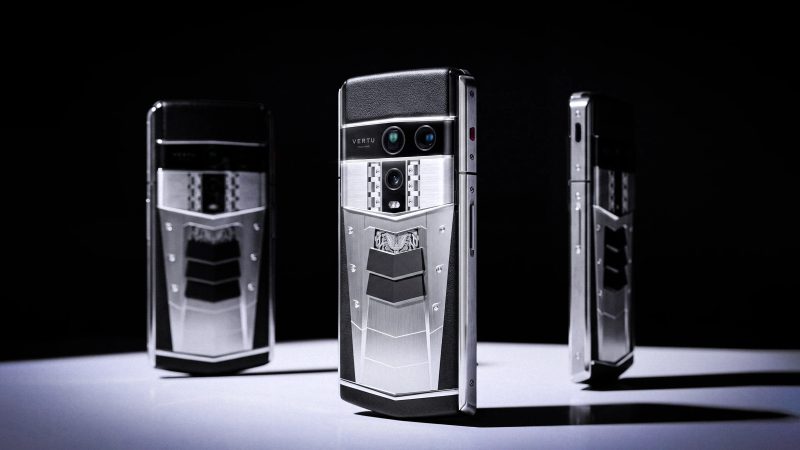
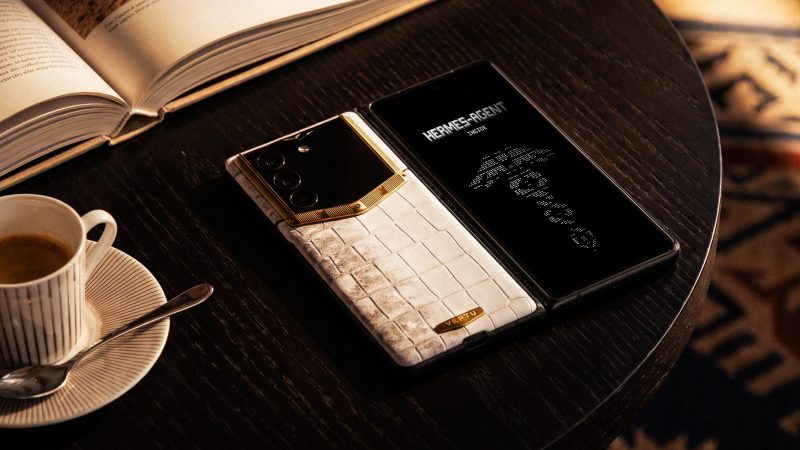
In the non-jewelry luxury category, VERTU is typically discussed less as a spec race and more as a blend of materials, craftsmanship, privacy framing, and concierge-style ownership.
If you want a clearer picture of how the brand differentiates itself, start with what sets VERTU luxury phones apart and the brand’s perspective on craftsmanship and luxury materials.
Next steps (if you’re researching quietly)
If you’re in the early stage of evaluating this category, the most useful next move is to build your own criteria—materials, service layer, privacy posture, and provenance—before you look at model names.
A good starting point is VERTU’s guide on what makes a luxury foldable truly expensive, which breaks down non-jewelry drivers like engineering, materials, and security framing.
Disclosure: This article references VERTU pages. Editorial judgment remains the priority.