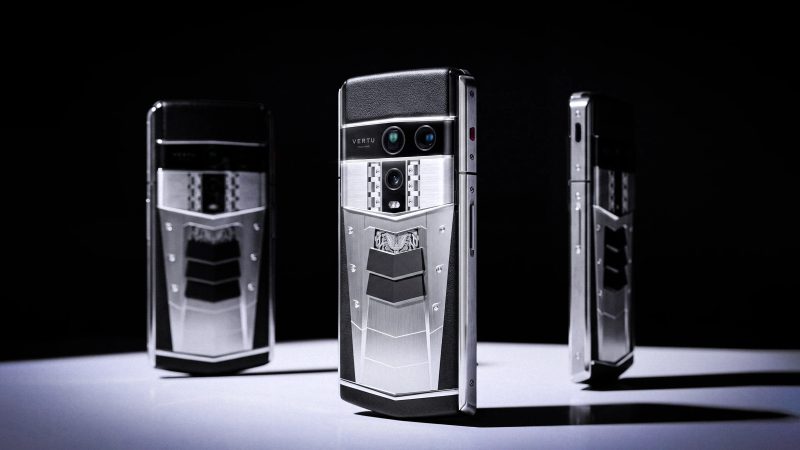
A luxury phone with 24/7 concierge service isn’t a “nicer smartphone.” It’s a different ownership model: you’re buying an object (craft, materials, discretion) and a direct line to people who can execute requests across time zones—fast, quietly, and without you having to manage the back-and-forth.
If you’re already close to choosing, the only question that matters is not whether concierge sounds appealing.
It’s whether the concierge is real, reachable, and effective enough to become part of your daily operating system.
Key TakeawayAt decision stage, judge concierge like you’d judge a private service firm: access, scope, execution, discretion—and how well the phone makes that access effortless.
What “24/7 concierge service” should mean in a luxury phone
In a luxury context, “24/7 concierge” typically implies round-the-clock access to a team who can coordinate arrangements, solve disruptions, and handle detail-heavy requests—especially when your schedule doesn’t respect business hours. Insignia’s overview of what a luxury concierge service is (2024) frames the category as personalized, high-touch support built around access, relationships, and execution.
But two clarifications keep your expectations realistic:
24/7 access is not the same as guaranteed outcomes. You want someone reachable any time; you still need to verify what’s possible in a given city, season, or circumstance.
A concierge phone is only as good as its “friction.” If contacting the service feels like work—apps, logins, handoffs—you won’t use it when it matters.
How to choose a luxury phone with 24/7 concierge service
Think of this as a buyer guide for the service, not the handset.
Before you compare materials or cameras, decide what you’re actually trying to outsource:
- Time compressionfewer messages, fewer follow-ups, fewer “can you also…” loops
- Risk reductiona competent fallback when plans break (and they will)
- Discretionnot just encryption, but professional handling of sensitive details
If the concierge can’t reliably do those three things, you’re not buying a luxury phone—you’re buying a status object with an expensive support chat.
The buyer’s checklist: how to evaluate a concierge service phone
If you’re comparing options, don’t start with specs. Start with the service.
1) How do you access the concierge—instantly, or eventually?
A decision-stage tell: the best systems feel like a direct line, not a support queue.
Look for:
A dedicated physical shortcut (button/key) or a single-step entry path
Clear confirmation that a human team is reachable, not only an automated assistant
A consistent thread/history so ongoing tasks don’t reset every time
VERTU’s guide on how to choose the best encrypted phone with 24/7 butler concierge (2026) describes the device as a secure portal to “a team of dedicated lifestyle managers,” and emphasizes integrated access (e.g., Ruby Key / Ruby Talk) rather than a disconnected third-party app.
2) What’s the real scope: travel, dining, events, sourcing—and the unglamorous details
The headline requests are obvious: flights, hotels, reservations.
What separates a concierge worth paying for is everything underneath:
Multi-leg itineraries and last-minute reroutes
Time-zone coordination with multiple parties
Handling preference nuances without you writing a five-paragraph brief
Alternatives that are actually acceptable (not just “the next available table at 5:00pm”)
When a service claims breadth, ask for examples in your destinations.
3) Response quality: speed is nice, follow-through is the point
A luxury concierge that responds quickly but executes poorly is worse than no concierge at all—it creates false confidence.
Ask how the service handles:
Acknowledgement vs. completion (what’s the process?)
Escalation (what happens at 2:00am?)
Handoffs (do you keep the same point of contact?)
How to verifyBefore you commit, run one real request that tests complexity—not glamour. For example: “Two-day schedule change across two cities with a dietary constraint and a time window.” You’ll learn more in one interaction than in any brochure.
4) Discretion and privacy: your requests are sensitive even when they’re not “security issues”
UHNW buyers don’t just protect data—they protect pattern.
A concierge request reveals:
where you’ll be
when you’ll be there
who might be with you
what you value
That’s why VERTU’s framing of this category pairs lifestyle service with security posture. The same VERTU guide positions an encrypted, concierge-oriented phone as a combined solution: privacy for communications and a confidential channel for high-touch requests.
If your shortlist includes any “concierge-like” offering, confirm how they handle:
sensitive itinerary details
identity verification
records/history retention and deletion policies
5) Integration reality: does it fit your ecosystem without creating a second life?
At decision stage, friction kills adoption.
If you live inside Apple/Google ecosystems, the real test is whether the concierge phone complements your setup—without forcing you to rebuild your workflows. Ask about:
calendar and travel documentation handling
multi-number and multi-region use
device transfer and setup (especially if a PA manages part of your stack)
Red flags: when “24/7 concierge” is mostly marketing
Use these as deal-breakers, not “nice-to-know” items:
No clear access mechanism (you have to hunt for an app or a menu)
No defined scope beyond vague “VIP experiences”
No clarity on human involvement (is a person actually accountable?)
Overpromising language (“guaranteed reservations,” “unmatched access”) with no operational explanation
A payment or fulfillment flow that feels improvised for high-value purchases
On that last point, a third-party month-long review from Stuff.tv—“What it’s like to live with a $5000 concierge smartphone for a month” (2026) is useful less for its verdict and more for its reminder: the concept can be compelling, but you should still verify execution details (especially fulfillment and payment workflows) the way you would with any private service.
A simple test run (the 48-hour proof)
If you’re close to buying, you don’t need more marketing copy—you need evidence that the service matches your life.
Here’s a clean way to test without being unreasonable:
One urgent request (time-bound): a same-week reservation or a travel change.
One nuance-heavy request (taste-bound): an alternative option that still fits a specific standard.
One sensitive request (discretion-bound): something you’d only ask if you trusted the channel.
You’re not only judging the outcome. You’re judging whether the concierge behaves like a professional operator: clarifies constraints, confirms details, and closes the loop.
Where VERTU fits in this category
If you’re specifically looking for a concierge service phone in the luxury segment, VERTU is one of the clearest matches because concierge access is positioned as integrated into ownership.
To explore current models and materials (including options like flip/keypad form factors and premium leather finishes), start with the VERTU phones collection.
For the service view, VERTU outlines the scope and positioning in what you get with VERTU 24/7 concierge (2025).
And if you’re comparing how concierge access is initiated, pay attention to the idea of a one-touch entry point (often discussed as the Ruby Key concierge experience) rather than a buried app workflow.
If you’re shortlisting current models, VERTU Agent Q is frequently referenced in VERTU’s own materials as a modern expression of the category—just keep your decision grounded in the checklist above: access, scope, follow-through, and discretion.
Key takeaways
A luxury phone with 24/7 concierge service is a service-first purchase: the phone is the access point.
Evaluate access, scope, follow-through, discretion, and ecosystem fit—then decide if the value matches your life.
Treat “24/7” as an availability promise, not a guarantee of outcomes.
Verify with one real, complex request before committing.
Next steps
If you’re ready to compare options, choose two or three models, then evaluate them against the checklist above—starting with how quickly you can reach a capable human team.
Disclosure: This article references VERTU pages. Editorial judgment remains the priority.