If you’re searching for an AI business agent phone, you’re probably not looking for a clever chatbot. You want a device that can take real work off your plate, without turning your calendar, contacts, and confidential conversations into training data.
This guide is written for consideration-stage buyers: you already want the category. Now you need a way to judge it.
Key takeaways
“AI phone agent” can mean a phone that runs an agent or a phone service agent. Evaluate the right category first.
In business use, the real differentiator isn’t novelty. It’s boundaries: what the agent can access, what it can do, and what it cannot do.
Treat privacy as an architecture question, not a marketing claim. Start with what’s processed on-device versus in the cloud.
Ask for proof: permission model, audit logs, approval flows, and how the agent is protected from prompt-injection style attacks.
Start with a needs assessment (before you compare devices)
The phrase “business agent” is doing a lot of work. Before you look at any product page, write down what you actually want delegated.
Here are three useful buckets. You don’t need all of them.
1) Information work
Summarize meetings and turn notes into next steps
Draft replies that match your tone
Pull context across documents, messages, and schedules
2) Decision support
Surface what changed since last time (a client thread, a contract version, a travel plan)
Highlight risks or missing information
Prepare briefings before calls
3) Action-taking (the high-risk tier)
Send messages on your behalf
Move meetings
Approve purchases, bookings, or workflows
Trigger actions inside business tools
Pro TipIf you want the agent to take actions, your evaluation should be 80% about permissions, approvals, and logs. Capability comes second.
The two meanings of “AI phone agent” (and how buyers get misled)
Search results for “AI phone agent” often skew toward software voice agents for businesses: virtual receptionists, lead-qualification callers, appointment setters.
That’s a different category from what many executives mean by “agent phone.”
Category A: an AI agent phone (device-first)
You’re evaluating a phone that runs an assistant/agent designed to help you work: drafting, summarizing, planning, and sometimes taking actions across apps.
Your criteria: privacy boundaries, reliability, on-device processing, secure data handling, battery, and how the agent is constrained.
Category B: an AI phone agent for your business (service-first)
You’re evaluating an AI system that answers calls for your company.
Your criteria: voice quality, call routing, CRM integration, compliance, and handoff to humans.
This post focuses on Category A. If you’re actually buying Category B, your checklist should start with call recordings, consent, and contact-center controls.
Evaluation criteria that matter for an AI business agent phone
A buyer’s mistake is to compare “AI features” like they’re camera specs. Agents are different. The risk comes from access.
Use these criteria as a framework. You can score each on a 1–5 scale if you want, but the goal is clarity.
1) Where does your data get processed (on-device vs cloud)?
Marketing teams will talk about privacy in vague ways. Ask a simpler question: what runs locally, and what gets sent out?
The European Data Protection Supervisor defines on-device AI as AI that is executed directly on end devices such as smartphones and wearables (as opposed to purely remote processing) in its TechSonar note on on-device AI.
In practice, “on-device” can mean several things:
Some tasks are local (simple summarization, transcription, classification)
Some tasks are cloud (larger model queries, web research, tool calls)
Some tasks are hybrid (local pre-processing, encrypted upload)
What you want is not a slogan. You want a map.
2) The permission model: what can the agent access?
A serious agent needs access to:
calendar
contacts
messages and mail
files and notes
sometimes: business systems (CRM, ERP, travel tools)
That’s also your attack surface.
Ask for a permission model that answers, in plain language:
Can you grant access per app, per folder, per contact group?
Can you create separate work/personal spaces?
Can you run the agent with “read-only” access by default?
Can you revoke access instantly and see what was accessed?
If a vendor can’t explain permissions without hand-waving, treat that as a decision signal.
3) Boundaries and approvals: can you set guardrails that hold up in real life?
Here’s the operational truth: an agent will eventually be asked to do something it shouldn’t.
Good systems make it hard for mistakes to become incidents.
Look for:
approval gates for high-risk actions (sending messages, moving money, changing bookings)
confirmations that show the full payload before you approve (not just “Approve?”)
rate limits and “cooldowns” on repetitive actions
a clear escalation path to a human assistant or concierge when the task crosses into judgment
This matters even if you’re personally careful. The whole point of an agent is to reduce your cognitive load. That’s when you’re most likely to accept a suggestion too quickly.
4) Audit logs: if something goes wrong, can you reconstruct it?
For business use, logs are not optional. You don’t want a black box.
Ask whether the system can show:
what data the agent looked at
what tools it invoked
what it proposed
what you approved
what it executed
when and from which device state
If the answer is “we don’t log for privacy,” be skeptical. Privacy and auditability are not opposites. Mature systems can log actions and metadata without storing private content unnecessarily.
5) Threat resistance: can it handle untrusted instructions?
When an agent reads email, messages, and documents, it’s exposed to text written by other people. That text can contain instructions.
Security practitioners commonly describe this risk as prompt injection: untrusted content manipulating model behavior, especially when the model is connected to tools.
A practical way to sanity-check the risk is to ask whether the vendor aligns with the kinds of issues highlighted in the OWASP Top 10 for Large Language Model Applications.
You don’t need the vendor to say “yes, we comply with OWASP.” You need them to demonstrate they’ve thought through:
untrusted content in email and web pages
tool access that can be exploited (“send this file,” “share this contact list”)
data leakage into logs or prompts
jailbreak-style attempts to bypass your stated rules
⚠️ WarningIf the agent can take actions and the vendor cannot explain how untrusted content is separated from instructions, you’re buying risk.
6) Reliability on the road: connectivity, battery, and failure modes
Executives don’t fail because they picked the wrong model size. They fail because the system isn’t there when needed.
Evaluate:
battery size and real-world endurance
how the agent behaves offline or in low-connectivity environments
whether the device can keep work context consistent across time zones and SIM changes
This is also where foldables can matter. A bigger screen can reduce the “app pinball” that drains attention.
7) Interface design: can you verify quickly?
Agent UX should be designed for verification.
You want:
clear diffs (what changed)
source links (where the agent got a fact)
editable outputs (not take-it-or-leave-it)
the ability to lock certain facts (“never send from this number,” “don’t contact these people”)
If the UI pushes you toward blind trust, it’s not for business.
Red flags (what to treat as a hard stop)
These aren’t nitpicks. They’re the patterns that turn “helpful assistant” into “expensive liability.”
“Trust us” privacy
If you can’t get a clear answer on on-device vs cloud processing, data retention, and who can access your data, walk away.
A useful governance lens is the NIST AI Risk Management Framework, which emphasizes structured risk management rather than vague trust messaging.
No meaningful permissions
If everything is “all or nothing,” you’ll end up granting too much access.
No logs, no controls
If the system can take actions but you can’t audit them, you’re operating blind.
A feature list that avoids the hard questions
If the product page is long on “intelligence” and short on boundaries, that’s a tell.
A practical evaluation script (questions to ask, and what good looks like)
You can use this as a short memo when your assistant, IT lead, or security advisor screens options.
Privacy and data handling
What runs on-device, and what runs in the cloud?
What data is retained, for how long, and can it be deleted on demand?
Is user data used for training? If yes, can it be disabled?
Access and permissions
Can the agent be limited to read-only by default?
Can permissions be granted per app, per folder, per contact group?
Can you run separate work/personal spaces?
Action safety
Which actions require explicit approval?
What does the approval screen show (full payload vs a vague confirmation)?
Is there a “safe mode” that stops actions while still allowing drafting and summarization?
Security posture
How do you prevent untrusted content (email/web) from issuing instructions to the agent?
How do you restrict tool access to least privilege?
What is your process for security updates and vulnerability disclosure?
Operational reality
How does it behave offline?
What happens when it fails? Can you fall back to manual workflows quickly?
Where VERTU AlphaFold can fit (one example category)
Most buyers don’t need “the best AI.” They need a controlled, private workflow surface.
That’s the lens where a luxury, privacy-forward foldable can make sense.
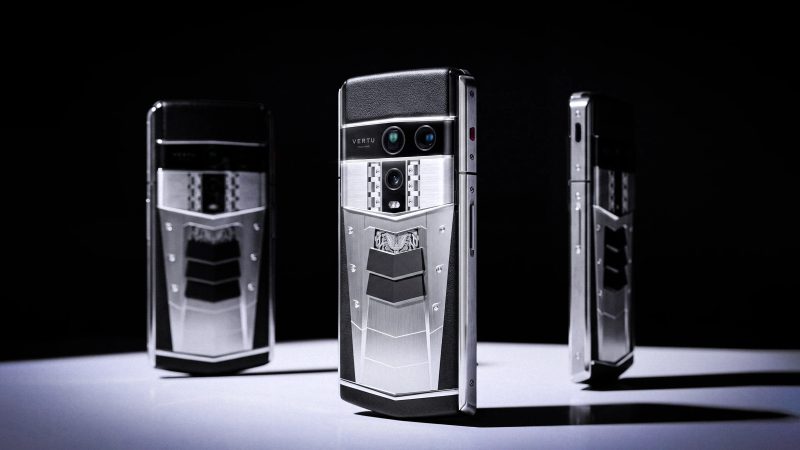
VERTU positions VERTU AlphaFold as a luxury AI foldable phone with Hermes Agent and an emphasis on on-device AI privacy, and highlights business-oriented tooling such as executive ERP tools.
If you’re evaluating devices in this category, use the same framework above:
Ask what “on-device” means in the specific implementation
Ask how Hermes Agent is permissioned and constrained
Ask what the ERP tools can access, and what they cannot
Ask what’s logged, and what approvals exist
What you’re really buying is a working style: fewer context switches, clearer boundaries, and a phone that is designed to be used for confidential work.
Next steps
If you want to turn this into a decision in a week, not a quarter:
Pick your top three criteria (privacy boundaries, approvals, auditability).
Eliminate anything that can’t answer those questions cleanly.
Shortlist two devices and test them with one real workflow (board pack review, travel rebooking, or deal prep).
To explore one example of the category, you can start with the VERTU AlphaFold product page.
Disclosure: This article references VERTU pages. Editorial judgment remains the priority.