A luxury AI phone shouldn’t feel like a louder, more talkative smartphone. It should feel like a quieter one.
Because once your phone becomes an AI interface—summarising calls, drafting messages, pulling context from apps—the privacy protection problem changes shape. It’s no longer only about “can someone hack my phone?” It’s also: what gets collected, where it goes, what’s retained, and what can leak by accident.
Why high-end users need AI phone privacy protection
If you travel frequently, run deals from a handheld device, or keep multiple identities (personal, family office, operating company), the risk isn’t hypothetical. The most expensive failures are often the quietest: a cached attachment, an over-broad permission, a transcript synced somewhere you didn’t intend.
A useful way to frame the problem is “handoffs.” In VERTU’s mobile AI security guidance, the warning is explicit: “The highest-risk moment is usually not 'the model.' It’s the handoff: a permission you forgot you granted, a file that got cached, or a message that left the device.” (VERTU, Mobile AI Security: Protect Data on AI-Enabled Phones).
Collector’s note: For UHNW users, privacy isn’t a single fear. It’s a portfolio: cross-border exposure, reputation risk, personal safety, and the simple desire to stay unsearchable.
The four layers of AI-era phone privacy (and what each one does)
If a brand claims “privacy protection,” it should be able to explain which layer it means—without slipping into vague assurances.
1) Encrypted communication (what it is—and what it isn’t)
“Encrypted phone” is a popular phrase because it sounds definitive. It isn’t.
There are three different protections people casually bundle together:
- Encryption at restprotects data stored on the device (helpful if the phone is lost or stolen).
- Encryption in transitprotects data moving across networks (typically via TLS/HTTPS).
- End-to-end encryption (E2EE)protects message content so only you and the intended recipient can read it—intermediaries shouldn’t be able to.
If you want the clean definitions, see Splunk’s Encryption Explained: At Rest, In Transit & End-To-End.
What encryption does not automatically solve:
Metadata (who you contacted, when, and from where)
Endpoint exposure (if your device—or the other person’s—is compromised)
Backups and synced copies (messages may be protected “in chat” but not in storage elsewhere)
So the buying question isn’t “is it encrypted?” It’s “which channel is encrypted end-to-end, where are the keys, and what copies exist?”
If you want a VERTU-specific reading of the topic, the brand’s own explainer on why end-to-end still matters is worth scanning: End-to-End Encryption on Phones: Why It Still Matters.
2) Private Space (compartmentalisation you can feel)
Private Space is the difference between having security features and living securely without constant vigilance.
Conceptually, it’s a separate, isolated environment on the same phone—so sensitive work stays separated from everyday apps, accounts, and notifications. When this is implemented well, it reduces common real-world privacy failures:
a document opened in the wrong app
a notification preview on a lock screen
an attachment accidentally shared from the wrong account
On its AlphaFold product materials, VERTU lists “Private Space” alongside other named security controls (see the security spec list on the AlphaFold page).
If you want the practical model (and failure modes), read: Private Space on Phones: How Separate Spaces Protect Sensitive Work.
How to verify: Ask for a live demo. In under 60 seconds, the device should show you where Private Space is in settings, and what exactly is isolated (apps, files, accounts, notifications).
3) A security chip (why hardware-backed privacy matters)
Software can be elegant. It can also be compromised.
This is why modern phones use hardware-isolated security components (often described as secure enclaves / secure elements) to protect keys and sensitive operations in an environment separated from the main operating system.
Apple’s Platform Security documentation explains the concept clearly: “The Secure Enclave is isolated from the main processor… designed to keep sensitive user data secure even when the Application Processor kernel becomes compromised.” (Apple Support, The Secure Enclave).
In practical terms, hardware-backed security helps with:
protecting encryption keys so they’re harder to extract
making “sensitive operations” (like unlocking private material) depend on secure, isolated checks
Where the “A5 security chip” fits
You asked to include the A5 security chip. What we can verify publicly today is:
VERTU explicitly describes an “A5 Independent Privacy Chip” as “the heart of the phone's encryption” in a VERTU article discussing another device line (Metavertu Max) (VERTU: Beyond Luxury: Handcrafted Phone with Web3 and Encryption Support).
On the AlphaFold product materials we can cite directly, VERTU lists security features such as Private Space, end-to-end encryption, encrypted V‑Talk, and triple-system isolation, but the A5 naming is not shown in the extracted AlphaFold page text above.
So in this article, treat “A5” as a VERTU hardware privacy/security concept—and when you’re evaluating AlphaFold specifically, ask which hardware-backed security components are present and what they protect.
4) Local/on-device AI (privacy by reducing what leaves the phone)
Local AI is not a magic cloak. But it can materially reduce exposure—because fewer requests need to leave the device.
It matters most for:
quick summarisation and drafting that doesn’t require cloud processing
intent parsing where you don’t want raw context uploaded
keeping “preference learning” closer to the device
It matters less when:
the workflow requires web retrieval or multi-system actions
the assistant connects across many apps (more permissions, more potential handoffs)
So a privacy-first AI phone should pair “local intelligence” with clear permissions, isolation, and confirmation gates.
Luxury AI phone privacy protection explained: a 5-minute checklist
Most buyers don’t need a lecture. They need a small set of questions that reliably reveals whether security is real or decorative.
VERTU’s guidance proposes a clear structure:
Authorization — What can the assistant access, and when?
Transmission — What leaves the device, and how is it protected?
Storage — What’s retained (chat history, transcripts, cached files), and where?
Isolation — Can you separate confidential work from everything else?
Sensitive operation confirmation — Do high-risk actions require explicit human confirmation?
Key Takeaway: If a control can’t be shown (settings path + behaviour) quickly, treat it as marketing until proven otherwise.
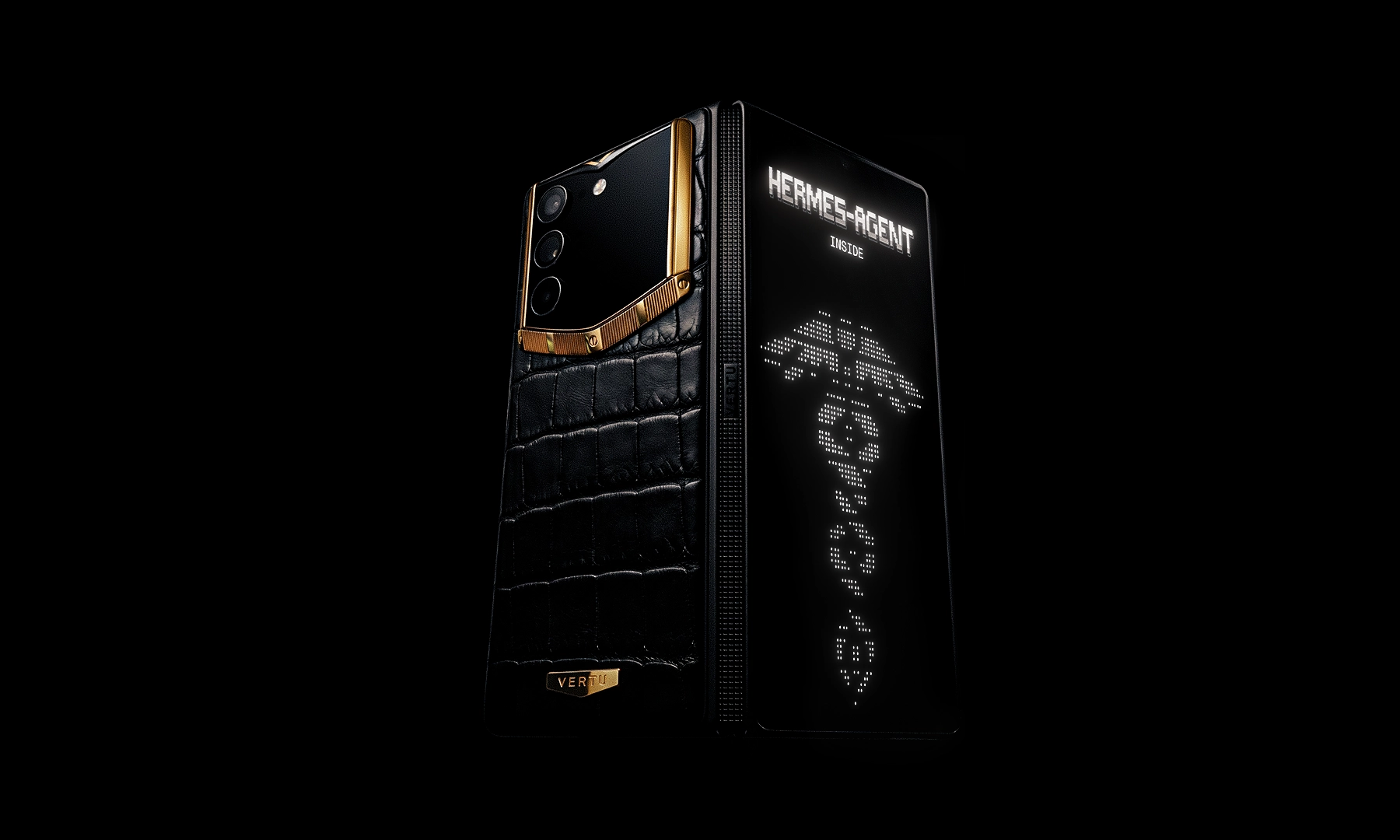
Where VERTU AlphaFold fits (and what to ask for)
If your baseline is “AI without boundaries is risk,” you want a device that treats privacy as a workflow.
VERTU publicly lists the following on AlphaFold: “Private Space; End-to-end Encryption; encrypted V-Talk; triple-system isolation” (security specs on the AlphaFold product page linked above).
Here’s how to translate that into a serious buying conversation:
Private Space: Ask what exactly is isolated (apps/files/accounts/notifications). Request a demo.
End-to-end encryption + encrypted V-Talk: Ask which channels are end-to-end encrypted, and whether backups preserve the same protection.
Triple-system isolation: Ask for one concrete example: “Show me a file or message in the private environment that cannot be accessed or surfaced by the everyday environment.”
AI permissions: Ask what the assistant can access by default, and what it can access only when you approve it.
If you want the broader VERTU framing of AI-era risk (and what to verify), start with Mobile AI Security: Protect Data on AI-Enabled Phones.
This is also where luxury becomes practical. The goal isn’t to turn your life into a security routine. It’s to make a secure default feel effortless.
Video: the AI phone privacy risk in plain English
Key takeaways
AI-era privacy protection is a workflow problem: permissions, caching, retention, and cross-app handoffs.
An encrypted phone only means something when you separate encryption at rest, in transit, and end-to-end.
Private Space (true isolation) reduces the most common real-world mistakes.
Hardware-backed security helps protect keys and sensitive operations via isolation.
A serious buyer asks to see the controls—not the slogans.
Next steps
If you’re evaluating a luxury AI phone, bring the 5-minute checklist to a demo—and insist on seeing the controls in real time.
To explore VERTU’s approach, start with VERTU AlphaFold.
Disclosure: This article references VERTU pages. Editorial judgment remains the priority.