Most productivity systems fail for a simple reason: they assume you have time.
Executives don’t. Your day is a moving target—flights shift, meetings compress, decisions stack up, and the context you need is scattered across calendars, messages, documents, and private notes.
That’s the promise behind an AI second brain: not “better note-taking”, but a practical system that helps you remember what matters, surface it at the moment of decision, and move the next action forward—with guardrails.
Key TakeawayA useful AI second brain doesn’t replace judgment. It reduces context-switching, prepares decisions, and keeps execution under your control.
What an “AI second brain” actually means (in business)
A classic “second brain” is a personal knowledge system: you capture what you learn, organize it so it’s retrievable, and reuse it to produce real output.
An AI second brain adds a layer of intelligence to that system. Instead of manually searching for the right note, thread, or file, you can ask for a briefing, a summary, a set of next actions, or a draft—and get something usable quickly.
Tiago Forte, whose work popularized the modern “second brain” approach, frames the second brain as a practical external system for thinking and acting—and more recently extends it into the idea of an “AI second brain” that can collaborate with you using the context you’ve already captured (see “Introducing the AI Second Brain” (Forte Labs, 2026)). If you want the organizational backbone, Forte’s classic PARA method (Projects, Areas, Resources, Archive) is a solid starting point.
Why executives need a second brain now (not another app)
Most leadership work isn’t hard because the tasks are complex. It’s hard because the inputs are fragmented.
Your calendar has the “what” and “when”, but not the “why”.
Your messaging apps have the latest request, but not the full history.
Your documents have the details, but not the decision context.
Your brain has the priorities—until it doesn’t.
A second brain becomes valuable when it does three things well:
Captures the raw signals of your day.
Turns them into organized context you can trust.
Surfaces that context on demand—especially when you’re under time pressure.
And the “AI” part becomes valuable when it can compress context into a short, accurate brief and prepare the next move without you having to manually stitch everything together.
The 4-layer model: Capture → Organize → Retrieve → Act
Think of an AI second brain as four layers. If any layer is missing, the system becomes either a messy archive or an unreliable autopilot.
1) Capture: collect the day while it’s happening
Capture is not “journaling”. It’s lightweight evidence.
For executives, the highest-leverage capture formats are:
meeting notes and action items
voice memos (especially between meetings)
quick screenshots (an approval, a metric, a term sheet clause)
short decision notes: what you decided and why
The point isn’t volume. The point is future clarity.
2) Organize: make information retrievable under pressure
A second brain should organize information in a way that mirrors how work actually moves.
A pragmatic default is PARA—Projects, Areas, Resources, Archive—because it’s organized by actionability, not topic (see Forte Labs’ “The PARA Method” (updated 2023)).
- Projectsoutcomes with a finish line (raise a round, close an acquisition, ship a launch)
- Areasongoing responsibilities (governance, recruiting, investor relations)
- Resourcesreference material you may reuse
- Archivewhat’s no longer active, but still worth keeping
This structure is especially executive-friendly because it stays stable even when priorities change.
3) Retrieve: get the right context in seconds
Retrieval is where most “second brains” break. If finding context takes longer than doing the work, you stop using the system.
A good AI second brain retrieves context as briefs, not search results. For example:
“Brief me for the 3pm board call: last decision, open risks, and what I should ask.”
“What did we decide about the supplier change, and what was the rationale?”
“Summarize last week’s customer escalation thread and extract next actions.”
The best systems are consistent about what gets remembered (your projects, your preferences, your recurring decision patterns) and what stays ephemeral.
4) Act: drafts + controlled execution
This is the line between “AI that’s helpful” and “AI that’s dangerous”.
The safe, useful model is:
AI prepares the action: drafts the email, proposes meeting options, assembles a travel plan, turns notes into tasks.
You approve what matters.
That human-in-the-loop stance isn’t conservative. It’s professional.
What an AI second brain is not
The term gets abused. Here are the most common confusions.
Not a note app with a chatbot attached. If it can’t reliably retrieve your context, it’s not a second brain.
Not a fully autonomous agent. If it can act without your permission in sensitive areas, it’s not a productivity tool—it’s a risk.
Not “one prompt solves everything.” A second brain is a system: capture habits, organization, review, and guardrails.
Not a replacement for thinking. The aim is to reduce cognitive load, not outsource accountability.
The guardrails that make it trustworthy (permissions + approvals)
If your second brain can touch your calendar, messages, travel, documents, or payments, it needs discipline.
Human-in-the-loop isn’t friction. It’s governance.
A practical rule:
AI can suggest and draft.
You confirm and commit.
That pattern aligns with common trustworthy-AI guidance such as the NIST AI Risk Management Framework, which frames AI risk as something to govern and manage across the lifecycle (see NIST’s AI Risk Management Framework (AI RMF) and the formal NIST AI RMF 1.0 publication (2023)).
Know the failure modes: the “excessive agency” trap
When assistants gain tools, the risk changes.
OWASP’s security community calls out risks specific to LLM-based systems—especially when an LLM can invoke actions—such as prompt injection, sensitive information disclosure, insecure output handling, and excessive agency (see OWASP Top 10 for Large Language Model Applications).
In plain terms: if a model can be talked into doing the wrong thing, it needs boundaries.
⚠️ WarningThe fastest way to make an AI assistant unsafe is to let it “just do it” across apps. The safest systems make important actions explicit, reversible, and approval-based.
A minimal “executive-grade” control model
You don’t need a compliance binder to benefit from guardrails. You need clarity.
- Permissionswhat can the system see?
- Toolswhat can it do?
- Approval gateswhich actions require confirmation?
- Clear memorywhat is stored long-term vs cleared?
The point is not paranoia. It’s confidence.
Why an AI phone changes the second brain equation
“Second brain” systems started as desktop-first knowledge management. But business doesn’t wait for your laptop.
An AI phone earns its place when it can do three things at once:
stay with you during travel, transitions, and in-between moments
handle real-time signals (messages, calendar changes) without friction
keep sensitive context protected through permissions and approval gates
That’s the practical difference between “AI that answers” and “AI that helps you run the day.”
Hermes Agent as a phone-native example of the model
In the abstract, an AI second brain sounds like yet another concept. What matters is whether it’s integrated into the reality of a business day.
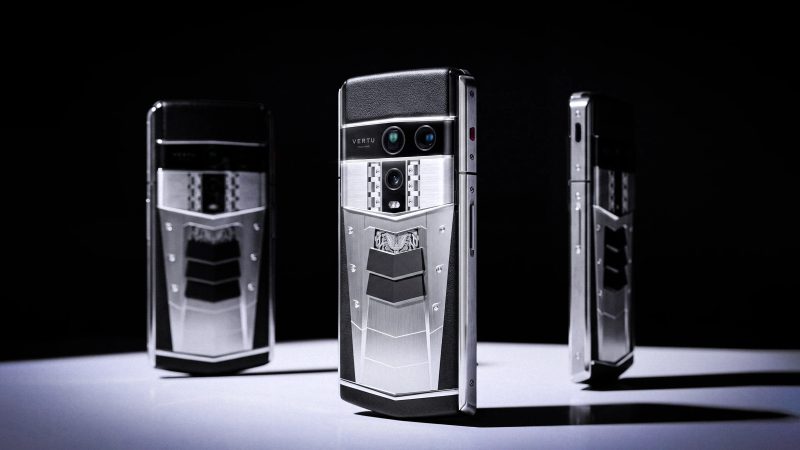
VERTU positions Hermes Agent as “your AI second brain… built into your phone”—a private AI agent designed around remembering context, preparing actions, and stopping for your approval.
If you map Hermes Agent’s framing to the 4-layer model, it looks like this:
“Remember / Act / Evolve” mapped to the four layers
Remember (Retrieve + context): a curated memory that can carry useful context forward—preferences, routines, and what matters.
Act (Act, with control): preparing steps across phone functions and supported apps, while significant actions remain approval-based.
Evolve (system improvement): learning from repeated use and feedback so the system fits your workflow more closely over time.
This is a different proposition than a generic chat assistant. It treats the phone as the interface to the work—calendar, travel, documents, and decisions—rather than a separate app you have to remember to open.
Why “built into your phone” matters
Most “AI second brains” live in a desktop-first world: notes, docs, browser tabs.
But many executive moments happen away from a laptop:
a text that changes a meeting location
a last-minute flight delay
a request that needs an immediate, measured response
a decision you need to make between doors
Phone-native systems are judged on a harsh standard: they must be fast, accurate, and discreet.
Hermes Agent’s public positioning emphasizes voice activation and phone-level control, along with scoped access and approval patterns—“AI can assist. It cannot overstep.”
ALPHAFOLD as the executive canvas (high level)
VERTU frames ALPHAFOLD as the “world’s first Hermes Agent phone” designed to make this model practical at a higher bandwidth—an “executive cockpit” pairing a larger foldable workspace with a system-level agent layer (see VERTU’s ALPHAFOLD launch announcement).
And importantly for TOFU readers: the point isn’t the form factor. It’s what the form factor enables—more context visible at once, fewer app switches, and a cleaner path from intent to controlled action.
<div data-type="node-video" data-provider="youtube" data-url="https://www.youtube.com/watch?v=4673nnLapS8" data-embed-url="https://www.youtube.com/embed/4673nnLapS8"></div>
A day-in-the-life: three executive scenarios
To make the concept concrete, here are three scenarios where an AI second brain earns its place.
Scenario 1: The meeting that matters—and the context you can’t afford to miss
You walk into a meeting with five minutes’ notice. The risk isn’t lack of intelligence. It’s missing the one thread that changes the decision.
A second brain helps by producing a briefing that is:
short enough to read
anchored in your prior decisions
explicit about open risks and unresolved questions
And if it creates follow-ups—tasks, reminders, drafts—it should do so as proposals, not silent commitments.
Scenario 2: Travel disruption without decision fatigue
Frequent travel creates a predictable form of stress: a disruption forces dozens of micro-decisions.
A second brain is useful when it can:
identify which meetings are impacted
propose rescheduling options
draft the messages you need to send
maintain a clear approval gate before anything is committed externally
The aim is not automation for its own sake. It’s to keep you in control when time and attention are limited.
Scenario 3: A decision log that prevents “false certainty”
Executives rarely fail because they lack options. They fail because they forget why a prior decision was made.
A second brain becomes quietly powerful when it keeps a lightweight decision record:
what was decided
why
what assumptions were in play
what to revisit if conditions change
Then, when a similar question returns months later, you’re not arguing from memory. You’re operating from documented rationale.
FAQ
Is an AI second brain the same as an AI assistant?
Not necessarily. An assistant can be helpful without having a durable system for capture, organization, retrieval, and memory. A second brain is a system first; AI is an amplifier.
What should I keep in an AI second brain—and what should I keep out?
Keep durable context: projects, routines, decision rationales, and reusable reference material.
Keep highly sensitive material only when you have strong boundaries, clear permissions, and the ability to review and revoke access.
How do I evaluate a “Hermes Agent AI second brain phone review” without getting distracted by specs?
Use workflow criteria:
Can it brief you for a meeting using your own context?
Can it turn notes into tasks and drafts reliably?
Does it have explicit approvals for meaningful actions?
Can you review, revoke, and clear permissions and memories?
The best product is the one that reduces friction without reducing control.
Next steps
If you want to explore what a phone-native AI second brain looks like in practice, start with VERTU Hermes Agent, then see how it’s positioned inside ALPHAFOLD in the Hermes Agent inside ALPHAFOLD guide. For the device context, VERTU’s ALPHAFOLD launch announcement is a useful high-level overview.
Disclosure: This article references VERTU pages. Editorial judgment remains the priority.