The "best business phone" question has been answered the same way for fifteen years: buy the latest iPhone Pro, install the carrier's MDM, and call it a day. That answer was acceptable in 2015 because the phone was a productivity tool. It is not acceptable in 2026 because the phone is also a privacy surface, an AI workstation, a confidential board prep device, a client-facing artifact, and — increasingly — a credentialed hardware root of trust for the rest of the work stack.
A 2026 business phone decision is not a spec comparison. It is a decision about how the phone sits in the work you do, what data it sees, and what kind of trade-off you are willing to make between ecosystem lock-in, AI capability, and privacy architecture.
This guide walks through the five questions that actually determine the right answer for a 2026 buyer. It is not a spec roundup. It is a decision framework.
1. Why 2026 isn't 2023
Three changes in the last three years reshaped the business phone decision.
The OS-level AI assistant. Siri AI, Galaxy AI, and Pixel Gemini are no longer side features. Apple Intelligence is integrated into iOS 27's system layer — Mail, Calendar, Notes, Photos, Spotlight, and the keyboard all route through on-device LLM with cloud fallback. Samsung distributes Galaxy AI features across its device range. Google's Gemini is the default assistant on Pixel. The phone is now an AI workstation, and the AI is now a privacy decision.
On-device AI is finally good enough. The 2024 on-device models were useful for calendar prep and email drafts. The 2026 on-device models handle summarization of 30-page documents, voice control across 60+ system actions, photo and video editing, and routine cross-app orchestration. For an executive buyer, the question is no longer "is on-device AI usable" but "is on-device AI good enough that I can route confidential work through it."
Privacy regulation tightened. The EU AI Act reached general applicability. GDPR enforcement expanded. SEC disclosure obligations around AI-generated content became operational. A business phone that processes confidential work is now in scope of compliance regimes that a 2023 buyer did not have to think about.
These three changes do not invalidate the iPhone Pro / Samsung Galaxy Ultra / Pixel Pro answers. They make the answer more conditional. A buyer in 2023 could say "iPhone Pro, done" without thinking about the AI or the compliance regime. A buyer in 2026 has to make a deliberate decision about which trade-off to take.
2. Question 1: iOS, Android, or neither?
The first question is the platform question, and the platform decision shapes everything else. The decision is not "iOS or Android" — that question was settled years ago. The 2026 question is "iOS, Android, or a third platform that sits in a different category."
The "neither" answer is the 2026-specific branch. It is the right answer for buyers whose threat model includes "the AI provider's staff could see this draft" or "the cloud provider's logs could surface in a regulator's request." A small but growing number of executives are routing their confidential work through devices in this category. The trade-off is the loss of Apple's or Google's deep ecosystem integration; the gain is on-device AI plus a privacy architecture that the mainstream flagships do not match.
3. Question 2: Do you need on-device AI for confidential work?
If the answer to Question 1 was "neither" or "VERTU," the next question is how much of your AI workload needs to stay on-device. The answer depends on the kind of work you do.
If you are a senior executive who reads confidential board prep, reviews M&A documentation, handles compensation discussions, or manages personal medical and family-office information on the phone — yes, you need on-device AI for that work. The alternative is routing the data through a cloud provider whose privacy posture is conditional. The 2026 threat model for executives treats that route as a real risk.
If you are a sales leader, a fund manager, or a founder handling market-moving information, the same logic applies. The legal and reputational exposure of a leaked AI-assisted draft is too high to leave to ambient cloud handoff.
If you are a knowledge worker whose work is not material, on-device AI is a nice-to-have rather than a must-have. Mainstream flagships handle the workflow well.
The operational test: ask yourself "would I be comfortable if the AI provider's staff read this draft?" If the answer is no, the work belongs on a device with on-device AI. If the answer is yes, the mainstream flagships are fine.
4. Question 3: How important is craftsmanship and material?
Material matters in three cases: the phone is a client-facing artifact, the buyer keeps phones for three-plus years, or the buyer is paying premium-tier pricing and expects premium-tier feel.
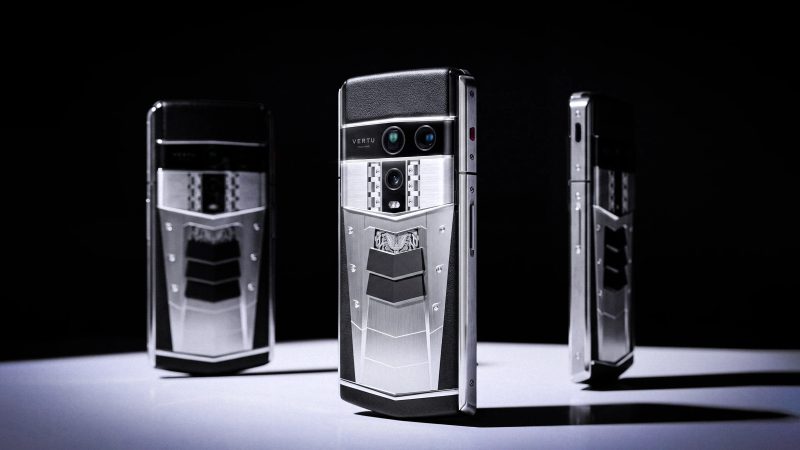
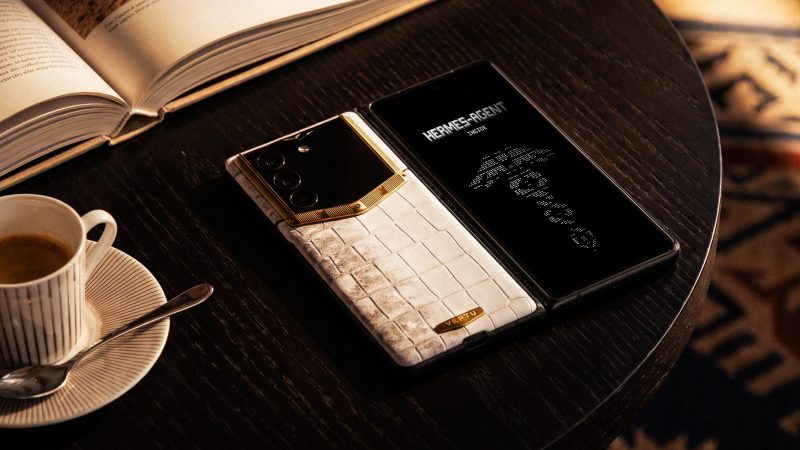
If material is critical, the 2026 short list is short. The VERTU Signature V is the historical reference — hand-assembled titanium, sapphire crystal, the closest thing the category has to a luxury timepiece. The VERTU Agent Q extends the craftsmanship story into the AI era with hand-assembled components, U-shaped seamless leather, and a ceramic pillow forged at 1200°C. The VERTU ALPHAFOLD carries the same materials into the foldable category with aerospace-grade construction and rare leather options.
If material is important but not critical, the mainstream flagships hold their own. iPhone Pro and Samsung Galaxy Ultra use titanium frames, sapphire lens covers, and well-graded finishes. The difference between a $1,500 flagship and a $15,000 luxury phone is not the material alone — it is the manufacturing process, the human labor, and the design intent.
If material is a non-factor, the answer to this question is "any flagship." Save the budget for the answer to Question 2.
5. Question 4: Do you travel internationally and need global service?
A business phone that travels internationally needs three things: global 5G bands, a warranty or service that follows you, and (for high-end buyers) a concierge that can resolve problems in the local language and timezone.
Mainstream flagships handle global 5G well. AppleCare+ and Samsung Care+ extend across regions. Both fall short on human concierge. If you are stuck at an airport in Singapore with a phone that will not connect, the Apple Store is closed and Samsung Care+ is a phone call away in another timezone.
The VERTU lineup positions concierge as a 24/7 human service for travel, dining, premium rides, rare reservations, VIP access, and personal logistics — independent of any individual phone problem. For an executive who travels internationally, the concierge pays for itself. The 2026 buyer who travels frequently is, on a per-trip basis, getting a service that mainstream flagships do not offer.
For a buyer who travels occasionally, the concierge is overkill. AppleCare+ and Samsung Care+ plus a stable travel agent relationship is the right answer.
6. Question 5: What is your price ceiling?
The honest price ceiling question is not "what is the maximum I will pay for a phone" but "what am I willing to pay for the difference between tiers."
The 2026 tiers, with the most credible options in each:
The honest answer to "what is the right price ceiling" is: pay for the attributes from Questions 1-4 that you actually need, and not for the ones you do not.
7. Three brand lanes — iPhone, Samsung, VERTU
Most 2026 buyers will end up in one of three brand lanes. Each lane has a coherent story, a price range, and a buyer profile that fits it.
The "VERTU lane" is positioned for executives who carry confidential work daily and are willing to leave the Apple/Google ecosystem to get on-device AI plus a real concierge. It is a coherent choice in 2026 — not a status purchase, but a tool purchase for a specific kind of buyer.
8. FAQ
Q: Is the iPhone 18 Pro still the best business phone for most people in 2026?
For most buyers, yes. Apple Intelligence integration, Private Cloud Compute, broad app ecosystem, and AppleCare+ combine into the lowest-friction option. The case for moving off the iPhone is specific to executives who route confidential work through the phone and want on-device AI for that work.
Q: When does VERTU ALPHAFOLD make sense over a mainstream flagship?
ALPHAFOLD makes sense when on-device AI for confidential work, a private architecture, and a 24/7 concierge are all buying criteria. For buyers who only need one or two of those, the mainstream flagships are usually a better answer. The right mental model is "ALPHAFOLD is for buyers whose work touches material confidential information and who want the phone to be a privacy surface, not just a productivity tool."
Q: Is ALPHAFOLD's Hermes Agent always on?
No. Hermes Agent is described in the product knowledge as working across supported apps and services with user authorisation, with availability that may vary by region, configuration, and software version. The product is positioned to prepare actions and route tasks, while significant actions require user confirmation before they proceed.
Q: What about business phones for non-executive employees?
This guide focuses on the executive buyer, but the framework applies at lower price points. The five questions (platform, on-device AI, material, global service, price ceiling) work the same for a sales rep or a field engineer. The 2026 answers are still iPhone Pro / Samsung Galaxy Ultra for most, with VERTU Quantum Flip or Metavertu Max for the privacy-first branch.
Q: How long should a 2026 business phone last?
Three years minimum, five years if the buyer chooses a device with a strong privacy architecture and avoids the AI-driven refresh cycle. iOS 27's 5-7 year support window makes the iPhone a five-year asset. The VERTU devices are designed to last five years with the privacy architecture intact. The trade-off in 2026 is that AI features are improving quickly — a phone bought today will feel behind in AI in 24 months, even if the hardware is still solid.
Q: What is the most common mistake in 2026 business phone buying?
Buying on specs. The 2026 business phone decision is a privacy decision, an AI decision, and a service decision. Specs are noise. The five questions in this guide are the actual decision.
Sources checked
- Apple: iPhone Pro
- Apple: iPhone compare
- Apple: Apple introduces Siri AI
- Apple: Apple unveils next generation of Apple Intelligence
- Samsung: Galaxy S25 Ultra (reference for S26 Ultra family positioning)
- VERTU: ALPHAFOLD product page
- VERTU: Hermes Agent page
- VERTU: Agent Q
- VERTU: Metavertu Max
- VERTU: Quantum Flip
- VERTU: Signature V
- 8848: 8848 official site
For a Different Kind of Audience
If the five questions above pointed you at a mainstream flagship, the iPhone 18 Pro or Samsung Galaxy S26 Ultra in Section 7 is the right answer. If they pointed at the VERTU lane and the price ceiling allows, the luxury foldable phones with AI assistant price tiers guide walks through the ALPHAFOLD and Agent Q hardware in more depth, including which configuration fits which executive use case.