Introduction
In 2026, choosing a luxury foldable phone with AI assistant capabilities isn’t just about a bigger screen and a sharper camera. It’s a pocketable command center—one that can summarize, translate, and draft on demand—while still meeting the expectations that define luxury: discreet materials, dependable engineering, and a clear philosophy around privacy.
This guide is written to help you compare what matters in the US market: how foldables feel and last, where “AI” is actually running (on your phone vs in the cloud), and how foldable phone price tiers map to real value. Most devices are hybrid by design; understanding that hybrid line is how you make a purchase you won’t regret.
What’s included: model examples (Galaxy Z Fold7, Pixel 10 Pro Fold), price tiers, and a foldable phone buying checklist you can use in-store or on a carrier call.
What Defines Luxury
Luxury in foldables is less about a spec sheet and more about how the device behaves over years: how it opens, how it resists wear, how it holds its shape and finish, and whether it stays trustworthy when you rely on it for sensitive work.
Materials & Craft
A luxury foldable should feel engineered, not assembled.
Frame and exterior materials should resist micro-scratches and “polish drift” (the slow, uneven wear that makes a phone look older than it is).
Tactile consistency matters: buttons that don’t wobble, edges that don’t bite, and a hinge that moves with deliberate resistance.
Finishing discipline is the hidden tell—tight seam alignment, no adhesive shadows, and no creaks when you twist the device gently.
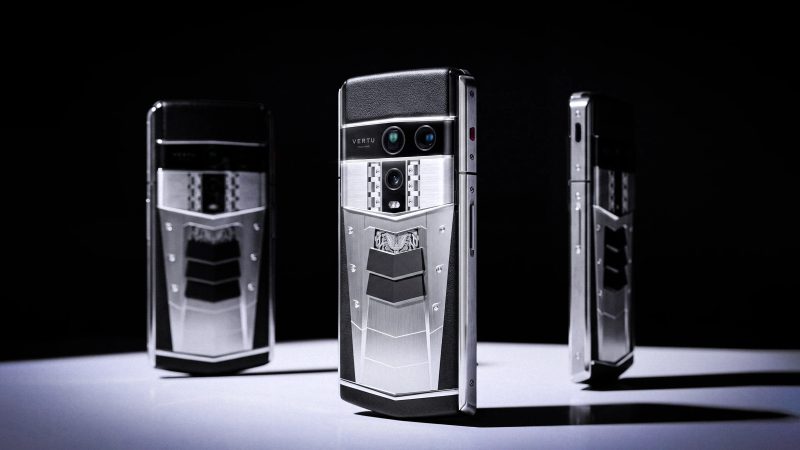
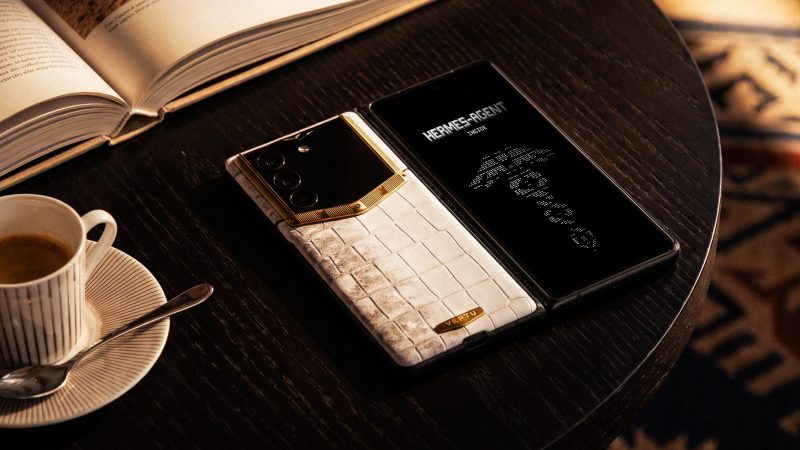
If you’re evaluating an ultra-luxury model, craftsmanship also includes provenance: what you can verify about sourcing, aftercare, and authentication.
Hinge & Durability
Foldables have matured, but they’re still mechanically complex—meaning durability is a buying criterion, not an afterthought.
What to look for:
- Hinge confidenceit should open smoothly, stop where you leave it, and avoid gritty sound or uneven resistance.
- Dust and water resistancefoldables historically lagged slab phones here. Many models are improving, but you should treat the hinge as the risk point and ask specifically about dust protection.
- Crease tolerancethe crease may become “background,” but it shouldn’t distract you while scrolling. Your eyes—not a reviewer—decide.
For a broader consumer-facing view of how foldables are tested (hinge action, crease, and durability concerns), TechRadar’s buyer coverage is a useful baseline reference in Best foldable phones.
Display & Cameras
Luxury foldables earn their price when the inside screen changes what you can do.
Priorities that matter in daily use:
- Inner display readabilitynot only brightness, but glare control and color stability at angles.
- Touch and pen behavior (if supported)latency, palm rejection, and whether the screen feels “soft.”
- Camera consistencyfoldables often trade camera module thickness for slimness. Don’t chase megapixels—look for reliable exposure and skin tones across lenses.
In a foldable, the camera experience is also about ergonomics: whether the device is stable in half-open mode and whether you can comfortably shoot one-handed on the cover display.
AI & Privacy Essentials
If you care about discretion, “AI features” should trigger a different question:
When does your phone process data locally—and when does it send content to the cloud?
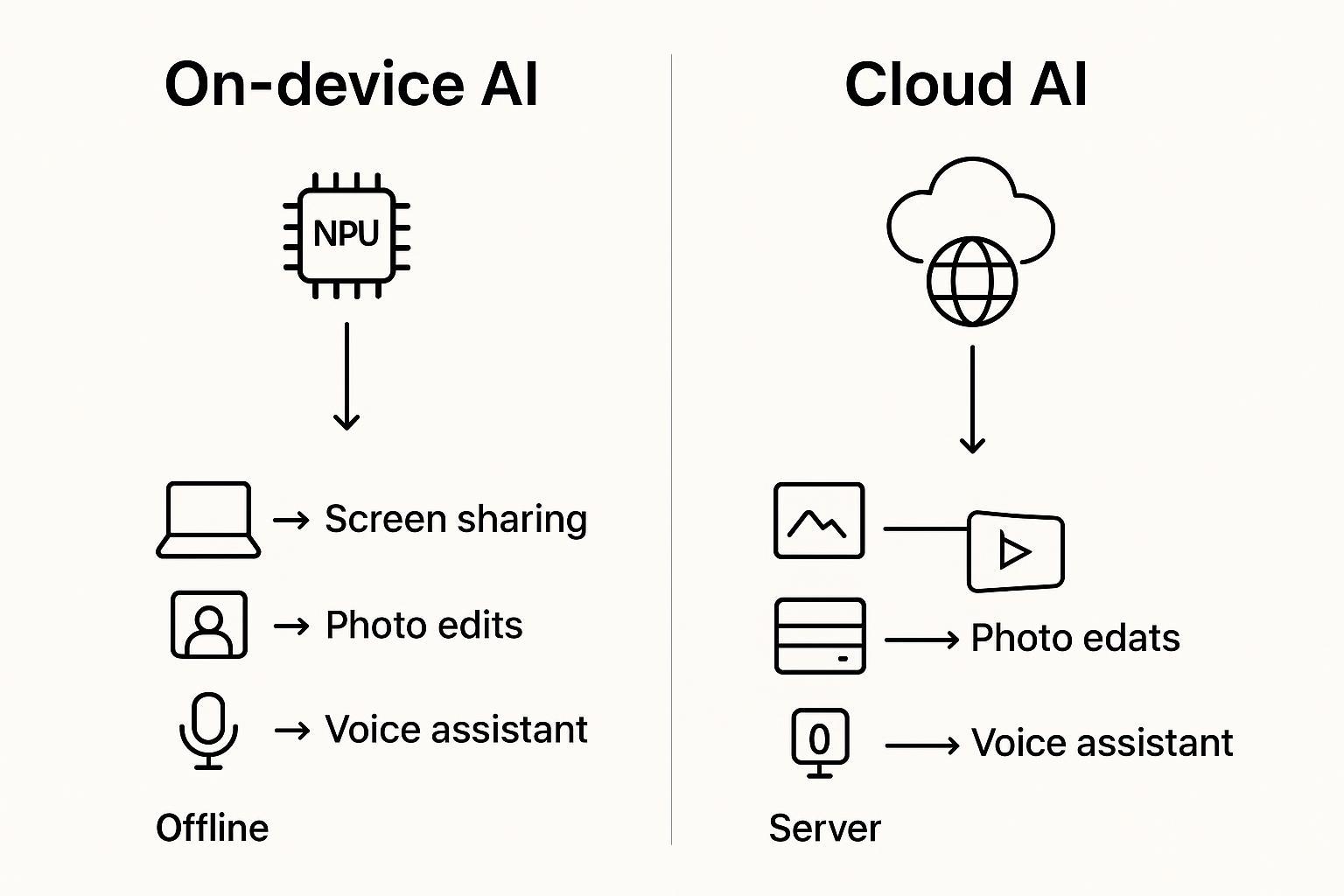
In 2026, most AI phones are hybrid. On-device AI tends to be faster, more private, and usable in low-connectivity moments. Cloud AI is often more capable for heavy generative tasks—but it increases the surface area for data exposure.
A practical explainer on this hybrid reality is PhoneArena’s 2024 guide, The Ultimate Guide to Smartphone AI: On-device AI vs Cloud AI vs Hybrid. For why the industry keeps pushing processing “to the edge,” see The Conversation’s 2024 piece on the shift in compute location, How AI features in smartphones are reducing their dependence on the cloud.
On-Device vs Cloud AI
Here’s the buyer-grade version:
On-device AI is where your phone’s neural processing unit (NPU) handles tasks locally—useful for quick summaries, transcription, smart replies, and certain accessibility features.
Cloud AI is where heavier processing happens on remote servers—often invoked for advanced generative editing, broader search, and some cross-app reasoning.
Neither is “good” or “bad.” What matters is whether you can see and control the boundary.
Multimodal Use Cases
The most valuable AI use cases in a foldable are often multimodal—mixing text, images, and screen context:
- Meeting-to-action workflowstranscribe, summarize, extract next steps, and draft follow-ups.
- Document handlingsummarize a contract, compare versions, translate a paragraph while preserving formatting.
- Visual search and comprehensionidentify what’s on screen, name what’s in an image, or convert a photo into structured notes.
Foldables make these workflows feel less cramped: your source stays visible while the assistant works.
Data Controls & Security
A privacy-first AI experience depends on controls you can actually verify:
- Permission scopingdoes the assistant have blanket access to everything, or per-task permissions?
- Approval loopsfor high-risk actions (sending messages, sharing files, payments), does the system pause and confirm?
- Compartmentalizationcan you isolate “personal,” “business,” and “high-sensitivity” contexts so an assistant doesn’t blur boundaries?
One useful way to think about this is to treat AI like a chief of staff: helpful precisely because it follows rules.
VERTU is one example of this privacy-first framing in the foldable category, particularly in how it talks about agent governance—least-privilege access, explicit approvals for high-risk actions, and compartmentalized private spaces. If you want to see how that mindset is described without reducing it to a marketing checklist, start with Hermes Agent inside AlphaFold and VERTU’s overview of what an AI agent phone means for your digital life.
Market & Price Tiers (US 2026)
Price is not just the device. It’s also warranty behavior, repair access, and whether the phone stays pleasant—hinge feel, screen coating, and software support—two years in.
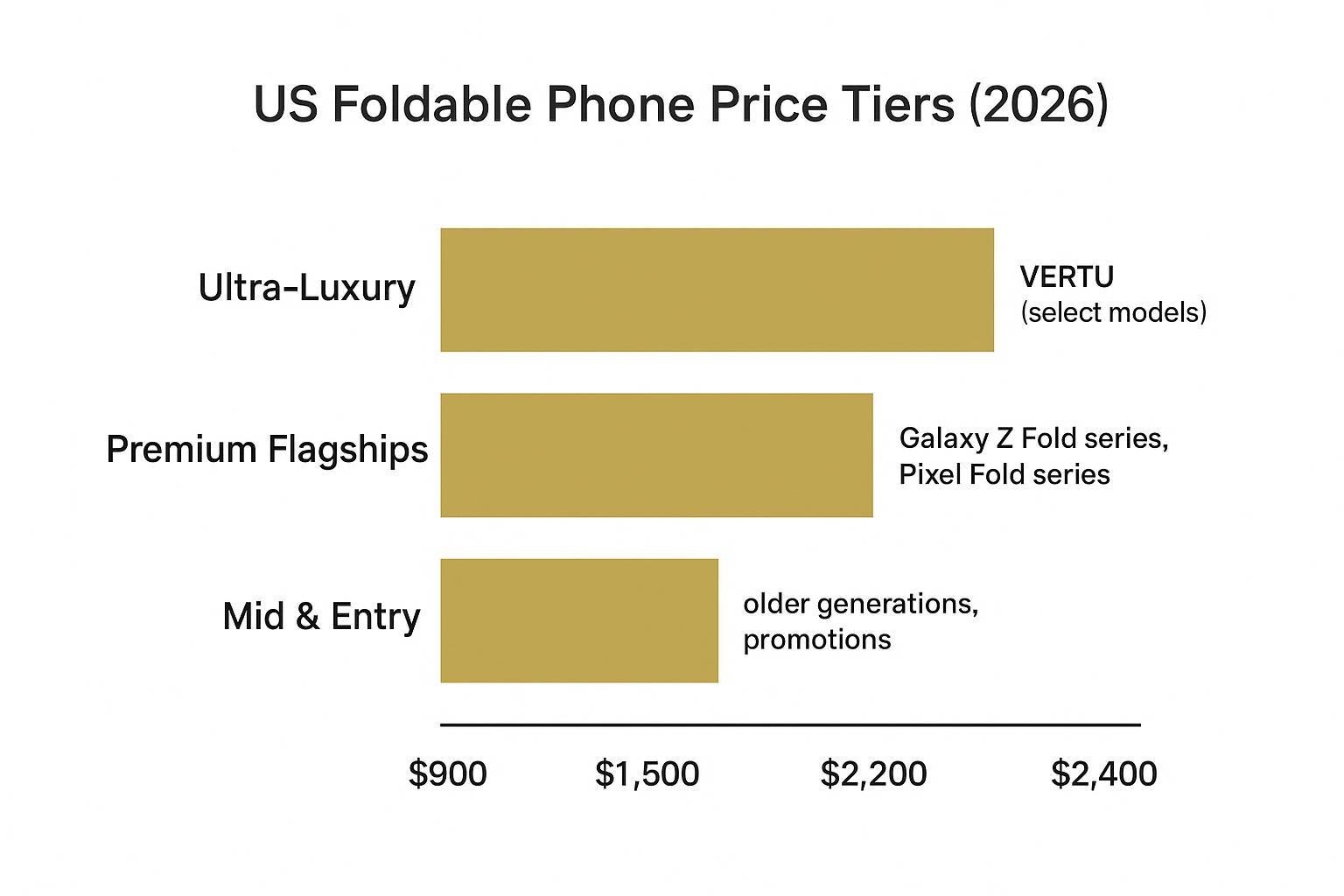
Ultra-Luxury ($2,200–$3,660+)
This tier is for buyers who treat the phone like a personal object: craft, materials, and private service matter as much as the technical stack.
What you’re paying for (when it’s done properly):
premium materials and finishing discipline
controlled privacy posture (clear boundaries, isolation modes, approvals)
white-glove aftercare and authentication confidence
Trade-off to watch: spec parity versus mainstream flagships. In this tier, you’re buying a different definition of “value.”
Premium Flagships ($1,800–$2,400)
This is the “best balance” tier for most foldable buyers who want top-tier screens, mature software, and reliable carrier compatibility.
Model examples here often include big ecosystem players (e.g., Galaxy Z Fold7, Pixel 10 Pro Fold). Your decision tends to come down to:
foldable software maturity (multitasking, continuity, app optimization)
camera reliability versus thinness
AI features: what’s on-device by default versus cloud-dependent
Trade-off to watch: privacy ambiguity. Many assistants are powerful, but the line between on-device and cloud can be hard to see unless you actively check settings and permissions.
Mid & Entry Options ($900–$1,500)
This tier is where foldables become accessible—often via older generations, promotions, or smaller brands.
When it’s a good choice:
you want the form factor for reading, messaging, and travel
you don’t need the most advanced AI features
you’re comfortable with slightly thicker devices or older camera systems
Trade-off to watch: support horizon. Updates and parts availability can matter more than the initial discount.
Your Buying Checklist
Use this as a calm, practical filter. The goal isn’t to “pick the best phone.” It’s to pick the one that’s safest and most satisfying for the way you live.
AI & Privacy Priorities
- On-device first, cloud when you chooseAsk which AI features work offline—and which require a server connection.
- Identify your triggersDo you use screen sharing, live translation, or generative photo edits? Those are common moments where cloud processing is invoked.
- Permission disciplineConfirm whether the assistant can be limited per app, per account, or per workspace.
How to verify: Turn off cellular data/Wi‑Fi briefly and test a few “daily” AI features (summaries, transcription, smart replies). If everything dies, the device may be cloud-dependent in ways the marketing didn’t make obvious.
Key Takeaway: The best foldable phone privacy posture is the one you can audit: clear cloud triggers, explicit approvals, and least-privilege access—rather than a vague promise of “secure AI.”
Durability & Displays
- Hinge feel testOpen and close slowly; any grit, clicking, or uneven resistance is a red flag.
- Crease reality checkScroll a dense page in bright light. If your eyes keep returning to the crease, don’t rationalize it away.
- ProtectionAsk specifically about dust protection and warranty coverage for inner display issues.
Collector’s note: In foldables, what ruins the experience is rarely the benchmark score. It’s the daily friction: a hinge that feels “loose,” a screen that looks tired, or a repair process that’s opaque.
Ecosystem, Carriers, Support
- Carrier bands and eSIMConfirm your exact carrier and travel needs (especially if you carry multiple numbers).
- Repair realityAsk how inner display repairs are handled, typical turnaround time, and whether parts are stocked in the US.
- Software supportGet the update commitment in writing (major OS updates and security patches).
Conclusion
A luxury foldable phone with an AI assistant in 2026 is ultimately a question of boundaries: between craft and utility, between on-device privacy and cloud capability, and between a delightful daily workflow and an expensive compromise.
Key takeaways for choosing well:
Treat hinge, dust protection, and support as first-class criteria.
Assume AI is hybrid until proven otherwise—and learn your cloud triggers.
Use price tiers as a reality check, not a status marker: the right value is the one that matches your risk tolerance and your day-to-day.
As for timing: if you’re targeting the premium flagship tier and your current phone still works, it can be sensible to wait for the next release cycle—foldables iterate meaningfully year over year. If you’re buying for travel, work, or a specific season, buy when you can properly verify the essentials (durability, privacy controls, support) rather than chasing a rumored launch.
Disclosure: This article references VERTU pages. Editorial judgment remains the priority.