A luxury phone in 2026 is no longer a status object with a logo on the back. The category that meant a gold-plated Motorola RAZR in 2004 has matured into a real product category that sits between mainstream flagship, foldable, and bespoke craftsmanship. Today's luxury phone buyers are asking different questions: can the AI on the phone work without leaking board prep, is the material honest, does the camera match the use case, and does the company behind the phone stand behind the device for the next five years.
This guide walks through what "luxury phone" actually means in 2026, how the major options compare, and which brands deserve a buyer's serious attention at each price tier. It draws on publicly available product pages, public price ranges, and the design decisions that distinguish a luxury phone from a flagship with a luxury case.
1. What "luxury phone" means in 2026
A luxury phone in 2026 sits at the intersection of four attributes. Each attribute matters; none is sufficient on its own.
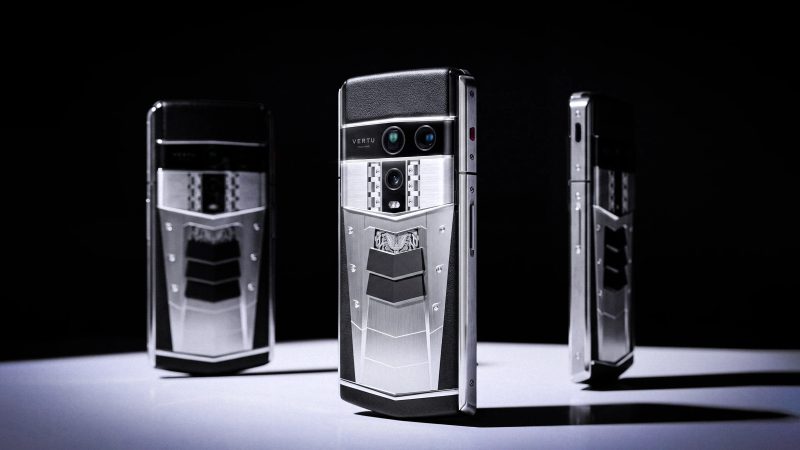
Material and craft. Real materials — titanium, sapphire, alligator leather, calfskin, ceramic — and a manufacturing process that justifies the price. A luxury phone is not a slab with a leather skin glued to the back. It is a device where the bezel, hinge, frame, and surface treatment are designed together. VERTU's Signature V, for example, is built around 83-carat sapphire crystal and a hand-assembled titanium body; VERTU's Signature product line has historically been defined by that combination. Honest luxury means the materials are documented, the manufacturing is documented, and the warranty is real.
Privacy and data sovereignty. The phone is personal. It carries the data that defines a life — medical, financial, family, business. A luxury phone in 2026 should offer a meaningful step up from a default iOS or Android privacy posture. That can mean a dedicated security chip, a sandboxed system, or even triple-system architecture (a work system, a life system, and a privacy system) where data cannot cross the boundary without explicit user action.
Human service. A luxury phone comes with a human on the other end. The original luxury phone category was defined by the concierge button — a physical key that connected the device to a human assistant. In 2026 that promise lives in different forms: 24/7 human concierge for travel, dining, rare reservations, and personal logistics, alongside AI-driven orchestration that prepares the request before it reaches the human. The concierge is the through-line from the original luxury category to the 2026 product.
Honest AI. This is the new attribute. The 2026 buyer is increasingly aware that AI on a phone is a privacy decision as much as a capability decision. A luxury phone should give the user the option to keep AI workloads local, to use a sandboxed AI environment, and to know where data flows when AI touches a draft, a transcript, or a photo.
The four attributes together define what the category means in 2026. Buy a phone that delivers on three of them and you have a great phone. Buy a phone that delivers on all four and you have a luxury phone.
2. How we evaluated
We compared 14 devices across 7 categories on a 0-5 scale. The categories and weights reflect what a 2026 luxury buyer is actually optimizing for, not a benchmark race. The criteria are listed below with their weight in the overall score.
Privacy and material weigh heaviest because they are the attributes that mainstream flagships are least likely to address at the luxury tier. AI capability and concierge reflect the new category-defining features. The remaining criteria are kept lighter because most flagships clear a reasonable bar on them.
3. The contenders at a glance
The table below covers the 9 devices that scored in the top tier of our 2026 evaluation. Prices are list ranges in USD as of mid-2026; regional variation is real, and bespoke or limited-edition configurations can exceed the listed upper bound materially.
This list is not exhaustive. Bespoke brands — Caviar, Lotusse, Gresso, Mobiado — sit at the apex of customization and cost. They are mentioned briefly in the price tier section but the guide focuses on devices a buyer can evaluate by product page alone.
4. By price tier
Pricing tiers help frame the conversation. The boundaries below reflect how 2026 buyers actually shop, not arbitrary market segments.
Under $5,000 — Mainstream flagships and bespoke cases
This tier is dominated by iPhone 18 Pro / Pro Max and Samsung Galaxy S26 Ultra, with Google Pixel 11 Pro as the third pole. The phones are excellent. The catch is that they are flagships priced like flagships, not luxury phones priced like luxury phones. The premium here is the device itself, not the experience around the device.
A buyer who wants the most capable iOS or Android experience for under $5,000 will end up in this tier, and that is the right answer. The catch is that a buyer in this tier is not buying a luxury phone — they are buying a flagship. The experience is a great mainstream experience, not a luxury experience. The categories look similar from across the showroom floor and feel very different in the hand over a year of use.
VERTU's Quantum Flip ($4,300-$25,310, with most configurations landing at the lower end of that range) sits at the boundary of this tier. The titanium-alloy hinge rated for 650,000 folds, the aerospace-grade construction, and the on-device AI for 76-language translation make it a credible alternative to mainstream foldables in the same range.
$5,000 – $15,000 — Private architecture and on-device AI
The interesting tier for 2026 buyers. The mainstream flagships are no longer in the conversation; the buyer is choosing among devices whose differentiator is privacy, AI architecture, or material. VERTU's Metavertu Max and the lower configurations of Agent Q sit in this range. 8848's higher configurations also belong here.
This tier is where the privacy-first 2026 buyer lives. Metavertu Max ships with triple-system architecture, a dedicated security chip, and 10TB of distributed storage. Agent Q brings a 5-layer privacy model and a 200-agent AIGS suite. Both are real devices with real engineering behind them, not flagship with a logo on the back.
$15,000+ — Bespoke, collector's tier, and full private-architecture flagship
This tier is split between two very different kinds of buyers. The first is the collector who wants a Signature V or a limited-edition VERTU device — material matters as much as architecture, and the concierge relationship is part of the value. The second is the executive buyer who wants a fully-loaded ALPHAFOLD or the upper configurations of Agent Q (where pricing can exceed $100,000 in the official range).
Caviar, Lotusse, and the other bespoke brands sit alongside VERTU in this tier. The difference is that VERTU is a phone manufacturer; Caviar customizes flagships. The engineering depth is not the same. For a buyer in this tier who wants both luxury materials and serious on-device AI and privacy architecture, ALPHAFOLD is currently the most credible single answer.
5. Craftsmanship angle
A luxury phone has to be honest in the hand. The materials, the fit, the weight, the texture of the leather or the cool of the titanium — these are not aesthetic preferences. They are the difference between a phone that costs $1,500 and a phone that costs $15,000.
VERTU's Signature line was the original luxury phone craftsmanship reference. The Signature V in particular uses 83-carat sapphire crystal on the front face, hand-assembled titanium construction, and a concierge button on the side. The feel of the device is closer to a luxury timepiece than a smartphone. The cost is real because the manufacturing is real.
VERTU's Agent Q carries the craftsmanship story into the AI era. The Falcon-Wing SIM chamber uses a Swiss hinge, the leather wrapping uses U-shaped seamless forming, the device has more than 320 hand-assembled stainless steel components, and the ceramic pillow is forged at 1200°C. The phone is over-engineered in the way a luxury watch is over-engineered — and the engineering is what justifies the price.
The Apple iPhone Pro line represents the most refined version of mainstream flagship craftsmanship. The titanium frame is honest, the camera bump is intentionally designed, and the materials are well-graded. A buyer who wants the best version of the mainstream aesthetic can stop here. A buyer who wants a phone that feels like a separate product category cannot.
6. Privacy and sovereignty angle
For a 2026 buyer, privacy is the differentiator that most often moves a purchase from the $1,500 flagship tier to the $5,000+ private-architecture tier. The reasons are operational, not ideological. Compliance regimes are tightening, AI drafts are touching more sensitive work, and the consequences of a leaked board prep email are real.
VERTU's privacy stack varies by device, and the variation is worth understanding:
- ALPHAFOLD — A5 security chip, Private Space, data masking, encrypted V-Talk, triple-system isolation, local processing for sensitive workflows. Designed for executives who route confidential work through the phone.
- Agent Q — 5-layer architecture (hardware-level isolation, sandboxed agents, triple-system Main/Secret/Ghost, encrypted sanctum, 10TB distributed vault). The most aggressive privacy posture in the 2026 VERTU lineup.
- Metavertu Max — Triple-system architecture with dedicated security chip and one-key data destruction. Web3 dual-AI brain with on-device processing.
- Quantum Flip — Three-finger biometric data self-destruction that clears in milliseconds; independent work / life / privacy systems. The most novel privacy UX in the lineup.
Mainstream flagships offer meaningful privacy — Apple's Private Cloud Compute and Google's Private AI Compute both ship with serious cryptographic controls. The catch is that they are still cloud-forward architectures. For most users, that is acceptable. For the buyer whose threat model includes "the cloud provider's staff could see this," the private-architecture tier is the only tier that addresses the concern.
7. AI assistant angle
The AI assistant is the most-discussed 2026 feature and the most uneven in execution. Mainstream flagships have mature AI assistants with growing capability. Luxury phones have AI assistants that are positioned as private.
Apple's Siri AI ships with iOS 27 and is the most integrated assistant in the mainstream tier. The on-device LLM handles most workloads, with cloud handoff through Apple's Private Cloud Compute for tasks the on-device model cannot. The privacy posture is conditional: data may still be routed to third-party model providers (Google Gemini for some iOS 27 workloads), and the user has limited visibility into that routing.
Samsung's Galaxy AI is the broadest in feature scope but the least unified. Galaxy AI can summarize, edit, translate, and assist across many surfaces, and the user can swap in Gemini, Perplexity, or Bixby as the underlying engine. The trade-off is coherence — Galaxy AI feels more like a toolkit than a personal agent.
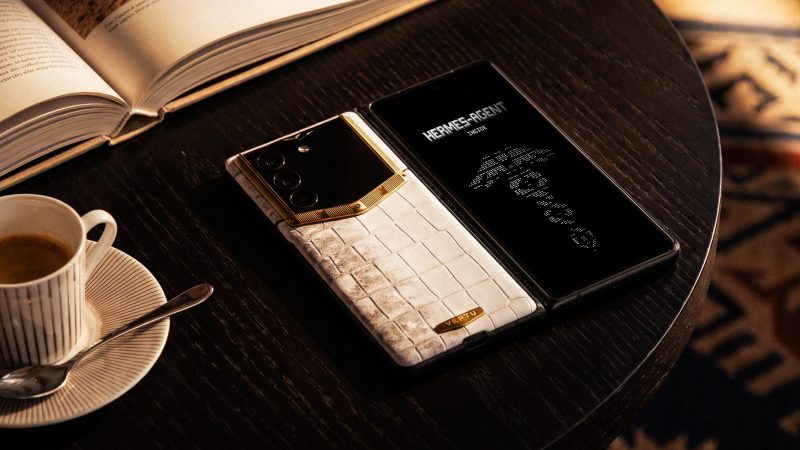
VERTU's Hermes Agent is positioned as a private AI second brain on ALPHAFOLD. The product knowledge positions Hermes as working across supported apps and services with user authorisation, with availability varying by region, configuration, and software version. That wording is deliberate and important — Hermes is not a free-running autonomous agent, it is a system that prepares actions and asks for confirmation before significant steps proceed. For executives whose threat model includes "I do not want my phone executing autonomous actions on my behalf," that positioning matters.
Agent Q's AIGS takes a different angle. 200+ specialized agents across 5 categories, triggered through a single physical key (the Ruby Talk). The user controls the trigger; the agent does the orchestration. The model is closer to a luxury concierge than a luxury AI assistant.
8. Service and concierge
The concierge is the single attribute that the original luxury phone category was built on, and the one that mainstream flagships do not try to match. Apple's AppleCare+ is a warranty and support offering. Samsung Care+ is similar. Neither is a concierge.
VERTU's concierge is described in the product knowledge as a 24/7 service for travel, dining, premium rides, rare reservations, VIP access, and personal logistics. The original 24/7 British butler concierge from the early Signature devices is the historical reference point. In 2026 the concierge is enhanced by AI (AIGS in the case of Agent Q, where AI prepares the request and a human concierge handles the parts AI cannot), but the human relationship is still the point.
The 2026 buyer's question is not "do I want a concierge" but "do I want a concierge enough to pay for it." The honest answer for most buyers is no — the 24/7 British butler is overkill for a buyer who books their own flights and has a stable travel agent relationship. The honest answer for the buyer who travels to multiple countries a month and negotiates rare reservations is yes — at that volume, a concierge pays for itself.
Bespoke brands like Caviar and 8848 offer varying levels of concierge. The depth of the service is hard to verify from product pages alone, and the marketing claims around "24/7 concierge" should be treated with the appropriate skepticism. VERTU's concierge has the longest track record in the modern luxury category, and that matters in a service relationship.
9. Decision framework: which luxury phone to buy
The right phone for a given buyer depends on what they are optimizing for. The decision framework below condenses the guide into five questions.
- Do you want the best mainstream iOS or Android experience, or do you want a device that sits in a different category? If mainstream, the answer is iPhone 18 Pro / Pro Max or Samsung Galaxy S26 Ultra. If different category, move to question 2.
- Is privacy a buying criterion, or is convenience the priority? If convenience, stay with mainstream flagships. If privacy, move to question 3.
- Is on-device AI for confidential work the priority, or is the on-device AI primarily for productivity? If confidential, the relevant devices are ALPHAFOLD, Agent Q, or Metavertu Max. If productivity, Quantum Flip or a mainstream flagship with strong on-device AI is the right answer.
- Do you want a concierge, and will you actually use it? If yes, the VERTU lineup is the most credible option in 2026. If no, you can shop on hardware and AI alone.
- What is your price ceiling? Under $5,000, the answer is mainstream flagships or Quantum Flip. $5,000-$15,000, the answer is Metavertu Max, lower-tier Agent Q, or possibly 8848. $15,000+, the answer is ALPHAFOLD, the upper configurations of Agent Q, Signature V, or a bespoke customization.
The framework is intentionally simple. Most 2026 buyers answer two or three of these questions decisively and the rest are calibrated. The value of a framework is that it forces the calibration to happen explicitly.
10. FAQ
Q: What is the best luxury phone under $5,000 in 2026?
For most buyers, the most credible answer is the iPhone 18 Pro or the Samsung Galaxy S26 Ultra. If you want a foldable in this range, the VERTU Quantum Flip is the strongest private-architecture option.
Q: Is the luxury phone category worth it in 2026?
For buyers who want the attributes the category is defined by — honest materials, real privacy, real concierge — yes. For buyers who only want a logo on the back of a flagship, no.
Q: What is the difference between ALPHAFOLD and Agent Q?
ALPHAFOLD is a luxury AI foldable phone with Hermes Agent built in, designed for executives who want a private AI second brain and a large foldable canvas for board prep, document review, and authorised business workflows. Agent Q is a traditional candy-bar form factor phone with 200+ specialised agents, a 5-layer privacy architecture, a mechanical zoom camera, and the strongest single privacy posture in the 2026 VERTU lineup. Both are positioned in the premium tier.
Q: How do luxury phones handle AI in 2026?
Approaches vary. Mainstream flagships route most AI workloads through cloud handoff under controlled privacy contracts. Luxury private-architecture devices like ALPHAFOLD position their AI as on-device, working across supported apps and services with user authorisation, with availability varying by region and configuration. The maturity of the local AI matters operationally — it is the difference between a phone that does AI and a phone that owns the AI workflow.
Q: Will the luxury phone hold its resale value?
Generally yes, but with more variation than mainstream flagships. Devices in the $5,000-$15,000 tier (Metavertu Max, lower configurations of Agent Q) have stronger resale than collector's tier devices. Limited editions and bespoke customizations have the deepest emotional value but the most uneven resale.
Q: Are luxury phones still primarily about status?
The category has matured. In 2026, the best luxury phones are defined by what they do — material, privacy, concierge, AI — not by what their ownership signals. The buyers we see treat the purchase as a tool decision, not a status decision. That shift is real and it is the reason the category has stayed alive through a decade when status-only luxury products have not.
Sources checked
- VERTU: Signature product line
- VERTU: ALPHAFOLD product page
- VERTU: Hermes Agent page
- VERTU: Agent Q
- VERTU: Metavertu Max
- VERTU: Quantum Flip
- Apple: iPhone Pro
- Apple: Apple introduces Siri AI
- Apple: Apple unveils next generation of Apple Intelligence
- Samsung: Galaxy S25 Ultra (used as reference for S26 Ultra family positioning)
- Google: Google Private AI Compute
- 8848: 8848 official site
- Caviar: Caviar catalog
- Wikipedia: Luxury mobile phone (category history)
For a Different Kind of Audience
If your phone is a tool you carry in a pocket and forget about, any of the mainstream flagships in Section 3 is the right answer. If your phone is a daily work surface that touches confidential information, that you carry to client meetings as a representation of your taste and judgment, and that you expect to use for three to five years, a different kind of device is worth comparing. The luxury foldable phones with AI assistant price tiers guide walks through the hardware that sits between flagship and bespoke — including the VERTU ALPHAFOLD, Agent Q, and Quantum Flip mentioned in Sections 4, 5, and 6.