A foldable phone’s inner display is a small miracle of materials: layers thin enough to bend, strong enough to survive daily use, and precise enough to look like a single continuous plane when opened.
And yet, almost every first-time buyer notices the same thing: a line down the middle.
That line is the foldable phone crease. It’s rarely “damage.” It’s usually a visible signature of how the device was engineered.
Key TakeawayIn 2026, the most realistic expectation isn’t a “no crease foldable phone.” It’s a foldable whose crease is least visible in the lighting and angles that matter to you.
What the foldable phone crease actually is
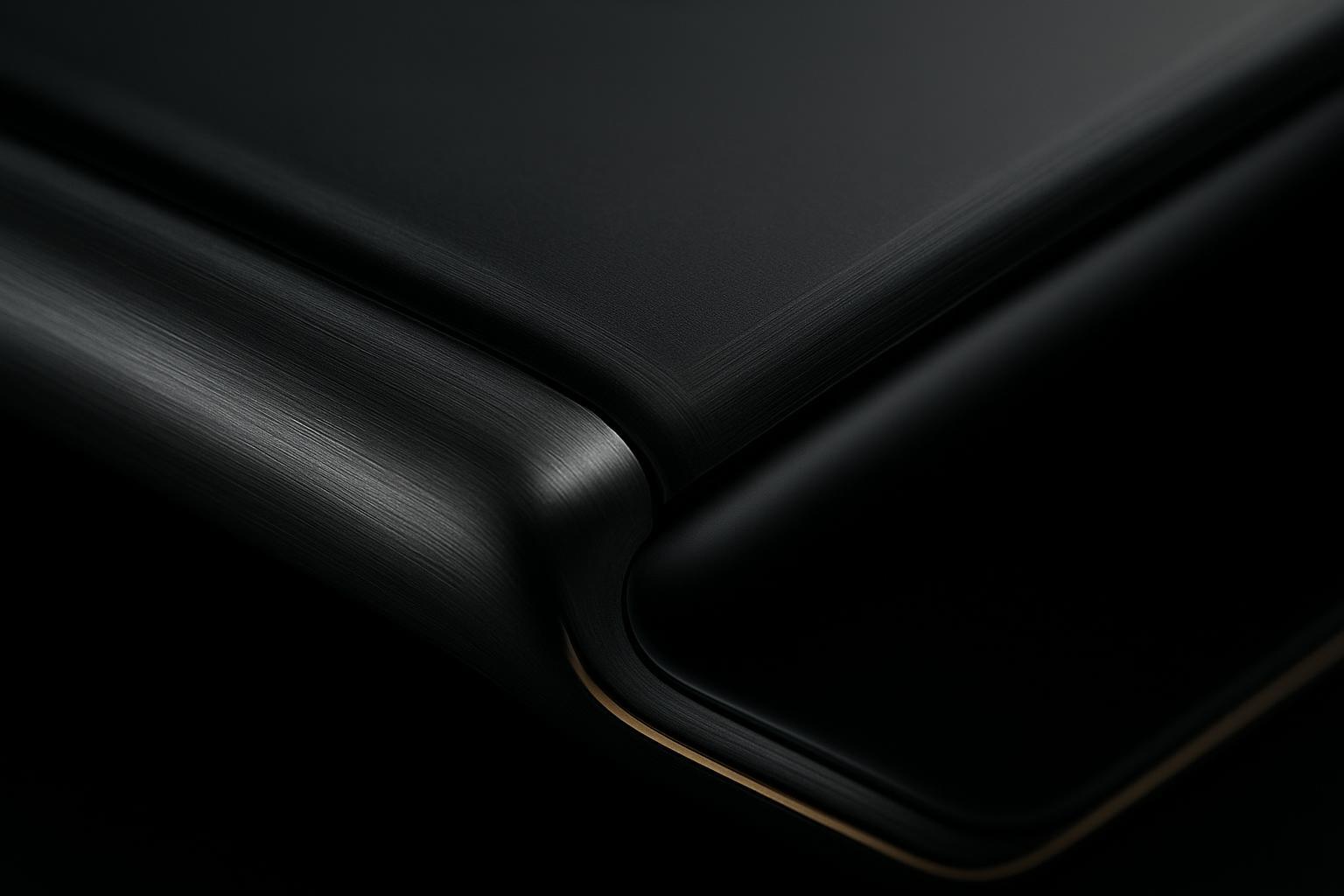
The crease is a shallow change in the screen’s surface contour along the hinge line. On most foldables, you’ll notice it in two ways:
- Visuallyit appears when light hits the display at an angle (think: overhead store lighting, a bright window behind you, a white webpage).
- Tactilelyyou may feel a slight ridge or valley when your finger crosses the center.
A useful mental model is “material memory.” When the same area bends thousands of times, the stack learns that shape.
Why a crease happens: it’s not one layer, it’s the whole display stack
Foldable displays aren’t a single sheet. They’re a laminated system: a top protective layer, touch layers, the OLED itself, adhesives, and structural support underneath. During every open–close cycle, the fold line is asked to do something a normal phone screen never does: bend repeatedly in a very tight space.
That bending creates stress — compression on one side, tension on the other — concentrated at the same line.
This is why crease visibility is often more about the system than any single part: the hinge geometry, the glass (or polymer) cover layer, the support plate, and the adhesive choices all contribute to how the center line looks over time.
UTG explained: what it improves (and what it can’t promise)
UTG stands for ultra-thin glass — real glass engineered thin enough to flex. Its purpose is not magic. It’s practical:
a more glass-like feel compared with soft polymers
improved resistance to small everyday abrasions (in many designs)
better structural behavior when the display stack is tuned correctly
The tradeoff is that bending glass repeatedly is demanding. As Corning notes in its 2024 overview of bendable glass, tighter bend radii increase stress, and the engineering challenge is balancing “a durable device that folds easily.” (See Corning’s “Bending toward a foldable future” (2024).)
So UTG can help the crease become less distracting — but UTG alone doesn’t guarantee a creaseless foldable phone.
Hinge curvature and crease visibility: why bend radius matters
If you want to understand crease visibility, focus on one concept: bend radius.
A tighter bend concentrates stress in a smaller region.
A wider curve spreads stress over more area.
This is why modern hinge designs often aim to let the screen fold into a gentler “teardrop” or “waterdrop” curve rather than pinching into a sharp U-shape.
Engineering sources describe this as a move toward double-curvature geometries — designs where the folded screen can “nest” into a smoother curve. SIMULIA’s 2023 analysis explains that teardrop-style shapes can reduce wasted space, but also introduce more complex stresses between layers that must be engineered carefully. (See SIMULIA’s 2023 note on teardrop ‘double curvature’ hinge shapes.)
For buyers, the important takeaway is simple: when a brand claims a “flatter” inner display, you’re usually looking at hinge geometry + display stack tuning, not a single breakthrough material.
If you want to go deeper on how hinges are built and why they matter, VERTU’s overview of hinge engineering is a good starting point.
“No crease foldable phone”: what that claim usually means
You’ll see phrases like:
no crease foldable phone
foldable phone no crease
creaseless foldable phone
In practice, those claims often mean one of three things:
Less visible under typical viewing angles (but still detectable under harsh overhead light).
Less visible on darker content (black UI themes hide shallow contour changes better).
Less noticeable to touch (a shallower valley, even if you can still see it).
Collector’s note: “No crease” is often a marketing shorthand for “not distracting in normal use.” Your eyes are a stricter judge than your fingers — and store lighting is stricter than your living room.
If a model truly looks nearly flat, the right question is not “How did they remove the crease?” It’s “What did they trade to reduce it?” That trade can be hinge complexity, internal volume, repairability, or even overall thickness.
Are foldable phone creases permanent? Do they get worse?
A crease is usually a stable cosmetic characteristic, not a countdown timer.
That said, it’s reasonable to expect some change over time. The fold region experiences repeated stress and may settle into its final shape after weeks or months of use.
What matters more than “worse” is whether anything else changes:
If the crease suddenly becomes a sharp ridge
If you see new lines, flicker, or a dark spot along the fold
If touch response becomes inconsistent near the center
If the inner protective film lifts or bubbles
Those are service-worthy signs.
If your goal is longevity — and avoiding problems that look like crease issues but aren’t — read this practical guide on how long do foldable phones really last.
Visual flatness vs real experience: what you actually feel day to day
Buyers often over-index on a single showroom moment: a white screen, bright lights, and the crease catching a reflection.
In daily use, the experience is more nuanced:
- Reading and scrollingyour focus is typically on content, not the fold line.
- Typingmost keyboards sit lower on the screen; your thumbs rarely “live” on the crease.
- Videoletterboxing, darker frames, and motion make the crease less obvious.
The crease matters most when you use:
bright, flat backgrounds
high-reflection environments (airport lighting, strong sun)
precise drawing or stylus work that crosses the center line repeatedly
Buyer checklist: how to evaluate crease visibility in a store
You don’t need a lab test. You need a repeatable method.
1) Check it under three lighting conditions
Overhead store lights (worst case)
Near a window (angled highlights)
In your hand’s shadow (normal indoor)
2) Tilt the phone slowly, then stop at the “annoying angle”
The crease is an optics problem as much as a materials problem. Find the angle where it becomes visible. Then ask yourself: is that angle common in your real life?
3) Run a finger across the center — lightly
You’re not testing strength. You’re testing feel.
If it feels like a shallow transition, it will fade into the background. If it feels like a sharp ridge, it will stay in your awareness.
4) Look for uniformity, not perfection
A consistent, symmetrical crease is usually normal.
A crease that looks uneven, paired with a local bright spot, can suggest pressure or debris issues.
How to verify: Before you close a foldable, wipe the inner screen quickly with a clean microfiber cloth. A single grain of grit can create a pressure point that feels like “crease damage” later.
For more practical durability expectations (hinge, screen layers, and daily handling), see VERTU’s guide to foldable phone durability.
Why premium foldables focus on “visual plane,” not “zero crease”
A mature approach to foldables is less about promising miracles and more about engineering priorities:
a hinge that closes and opens smoothly, without unwanted play
a display stack that resists stress concentration
a refined visual plane that looks calm in real lighting
Mainstream manufacturers openly talk about crease reduction as an engineering target. For example, Samsung’s own newsroom described a design move toward a “smoother, less-visible crease” through UTG changes (see Samsung Newsroom (2025) on thicker UTG for a smoother, less-visible crease).
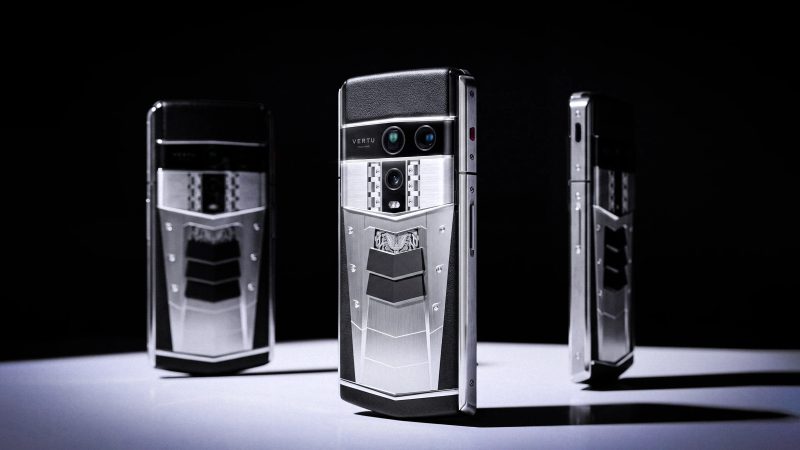
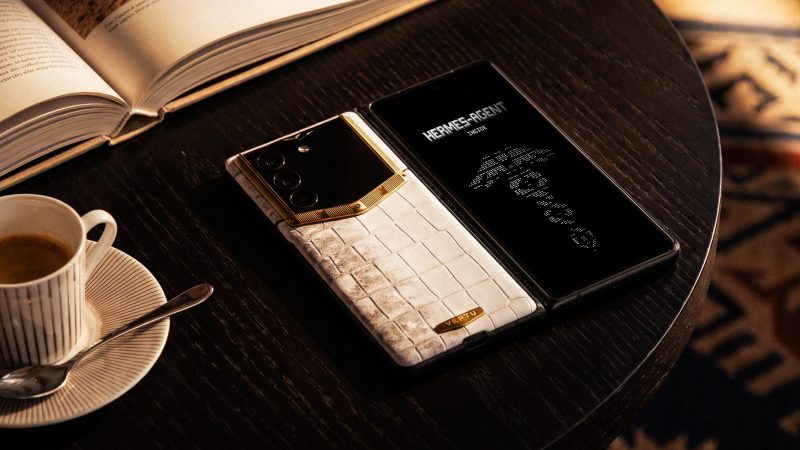
Within that frame, VERTU AlphaFold can be understood as a premium expression of the same philosophy: fold engineering treated as craftsmanship — not just a spec sheet — with the goal of a calmer, more continuous visual experience when opened.
(We’re intentionally keeping this example non-technical here; crease visibility is the outcome of the whole system, and claims should be grounded in verifiable testing.)
FAQ
Are foldable phone creases permanent?
They’re usually a normal, stable characteristic of the folding display rather than a defect. What you should watch for is not a crease’s existence, but sudden changes — lines, dead touch zones, or lifting protective film.
Which foldable phones have the least visible crease?
Newer foldables with hinge designs that allow a gentler fold curve (often described as teardrop/waterdrop) tend to reduce crease visibility. But “least visible” still depends on lighting, viewing angle, and your sensitivity.
What’s the relationship between a foldable phone hinge and the crease?
The hinge largely sets the bend radius. A wider, gentler curve generally reduces stress concentration along the fold line, which can reduce crease visibility — but it also introduces design tradeoffs in thickness and mechanical complexity.
How do I protect a foldable screen from damage?
Keep the inner screen clean before folding, avoid pressing hard on the center line, don’t close the device on grit, and treat any lifting protective film as a service issue rather than something to peel off yourself.
Next steps
If you’re deciding whether a crease should be a deal-breaker, focus less on marketing language and more on the engineering signals: hinge design, material choices, service support, and how the device behaves in the lighting you actually live in.
To go deeper, start with VERTU’s overview of next-generation foldable design.
Disclosure: This article references VERTU pages. Editorial judgment remains the priority.