

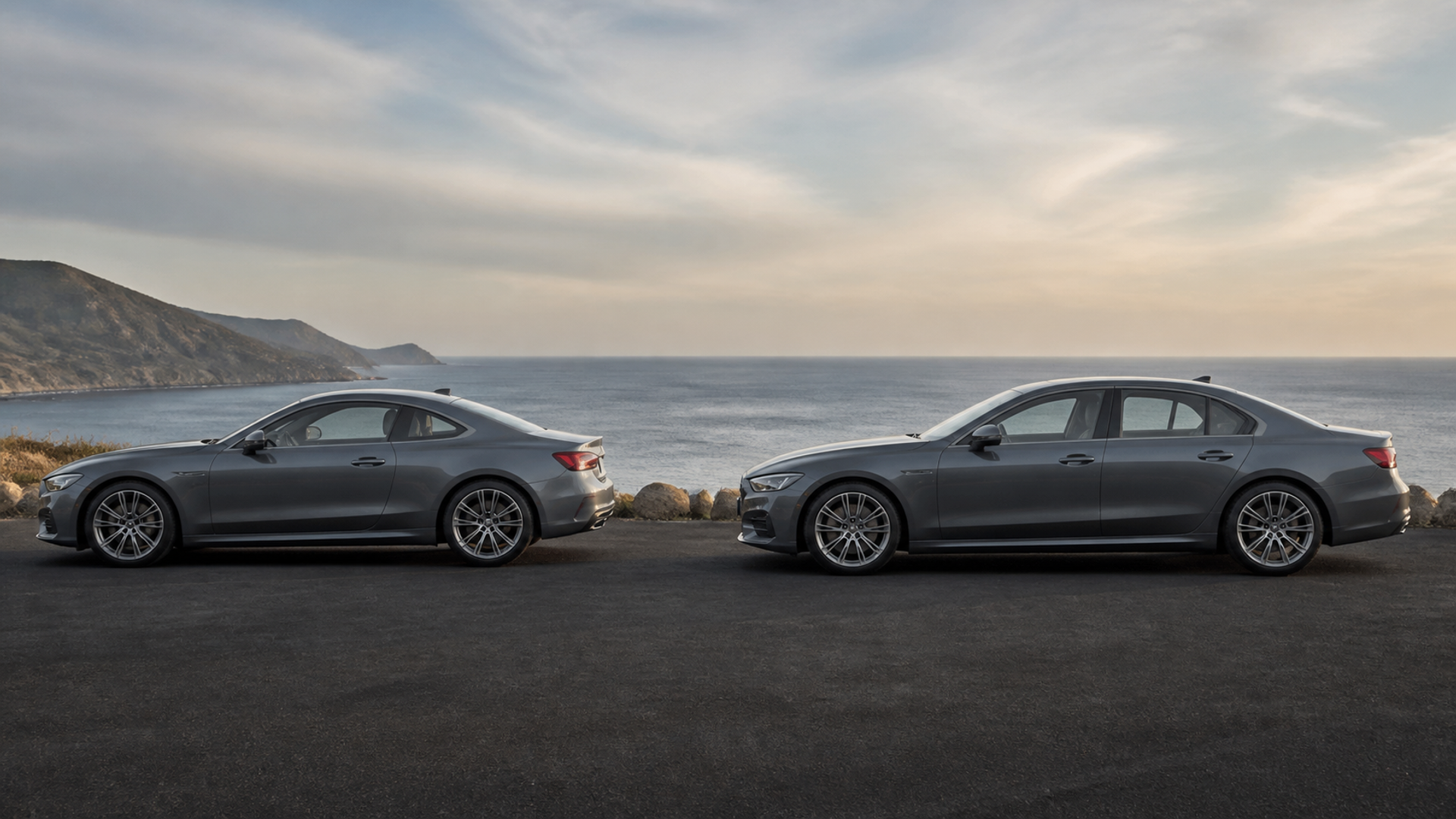
Coupe versus sedan looks simple until modern naming conventions blur the doors, rooflines and platforms. A traditional coupe prioritises two-door proportion and a more intimate cabin; a sedan normally provides four doors and easier access to a separate rear seating area. But exact wheelbase, roof shape, seat design, tyre package, powertrain and chassis tune matter more than the badge. The useful test compares real passengers, real luggage and the same route, then checks model-specific efficiency and safety evidence.
Start with doors, people and the weekly route
Choose a coupe when rear access is genuinely occasional, the driving position and proportions create value every trip and the luggage brief fits. Choose a sedan when regular passengers, child seats, client access or broader resale utility matter. Re-test a hatchback, grand tourer or smaller sedan when the apparent body-style conflict is really caused by poor packaging, oversized wheels or one particular model.
| Decision factor | Coupe | Sedan | Re-test a different vehicle class |
|---|---|---|---|
| Door access | Long front doors favour front-seat entry but need parking clearance | Four shorter doors simplify repeated access | Measure the actual garage and kerb |
| Rear seating | Roof and aperture may constrain adults | Dedicated rear doors improve usability | Test the tallest regular passenger |
| Cargo | Boot shape may suit two-person touring | Rear-seat access and split folding can broaden use | Load actual cases and equipment |
| Driving feel | Lower seating and focused packaging may appeal | Comparable platform can deliver similar dynamics | Drive equal tyres and powertrains |
| Efficiency and cost | Frontal area and mass vary by exact car | Model range may offer more efficient trims | Use official model-year data |
| Safety and insurance | Use exact ratings and quotes | Use exact ratings and quotes | Do not infer risk from door count |
This coupe vs sedan matrix is the article's working value object. Read the coupe vs sedan rows together: the decisive failure mode depends on this topic's evidence, operating context and reader objective.
Body style changes access before it changes performance
Evidence 1. FuelEconomy.gov enables model-year comparisons of fuel or energy use; body-style averages cannot replace exact configurations.
Evidence 2. IIHS publishes vehicle-specific crashworthiness and crash-avoidance evaluations rather than one safety result for all coupes or sedans.
Evidence 3. Two long coupe doors can make access easier in open space but harder in narrow bays because the door swing needs more clearance.
Evidence 4. Tyres, wheel size, seating package and suspension option can change comfort and ownership cost within the same body shell.
Reader-visible sources checked for this article:
fueleconomy.gov — reader-visible current or official evidence
iihs.org — reader-visible current or official evidence
For coupe vs sedan, these sources establish only the claims inside their documented scope. Recheck every changeable specification, availability condition, price, policy or service term in the relevant market before acting.
Compare exact cars on equal tyres and trim
On door access, popularity is not enough. The evidence for option one is that long front doors favour front-seat entry but need parking clearance. Option two means four shorter doors simplify repeated access. Option three is rational where measure the actual garage and kerb. Recheck any changeable term immediately before commitment.
The decision changes at rear seating. Choose the first path only if roof and aperture may constrain adults; move to the second when dedicated rear doors improve usability; use the third when test the tallest regular passenger. Save the downside that would make this row fail.
For cargo, the first route works when boot shape may suit two-person touring; the second requires rear-seat access and split folding can broaden use. The control for the third is load actual cases and equipment. Verify this row against the exact product, property, account or environment before it can reverse the decision.
The driving feel row exposes a practical boundary. Route one assumes lower seating and focused packaging may appeal, while route two is defensible only when comparable platform can deliver similar dynamics. Route three depends on drive equal tyres and powertrains. If that evidence is absent, keep the more reversible option.
Read efficiency and cost as a stop/go test: frontal area and mass vary by exact car supports the first option; model range may offer more efficient trims supports the second; and use official model-year data supports the third. Record which source proves the condition and when it was checked.
A buyer can resolve safety and insurance without starting from a brand preference. Ask whether use exact ratings and quotes; compare that with whether use exact ratings and quotes; then use do not infer risk from door count as the third route's safeguard. An unknown condition stays unknown.
Facts that would reverse the current choice
Reversal control 1 — Door access. Before choosing Coupe, write down how the decision changes if “Long front doors favour front-seat entry but need parking clearance” proves false. Do the same for Sedan and “Four shorter doors simplify repeated access”. Keep the Re-test a different vehicle class route available until “Measure the actual garage and kerb” is verified. This control belongs to coupe vs sedan; update it from the cited source or exact supplier rather than copying a generic checklist.
Reversal control 2 — Rear seating. Before choosing Coupe, write down how the decision changes if “Roof and aperture may constrain adults” proves false. Do the same for Sedan and “Dedicated rear doors improve usability”. Keep the Re-test a different vehicle class route available until “Test the tallest regular passenger” is verified. This control belongs to coupe vs sedan; update it from the cited source or exact supplier rather than copying a generic checklist.
Reversal control 3 — Cargo. Before choosing Coupe, write down how the decision changes if “Boot shape may suit two-person touring” proves false. Do the same for Sedan and “Rear-seat access and split folding can broaden use”. Keep the Re-test a different vehicle class route available until “Load actual cases and equipment” is verified. This control belongs to coupe vs sedan; update it from the cited source or exact supplier rather than copying a generic checklist.
Reversal control 4 — Driving feel. Before choosing Coupe, write down how the decision changes if “Lower seating and focused packaging may appeal” proves false. Do the same for Sedan and “Comparable platform can deliver similar dynamics”. Keep the Re-test a different vehicle class route available until “Drive equal tyres and powertrains” is verified. This control belongs to coupe vs sedan; update it from the cited source or exact supplier rather than copying a generic checklist.
Reversal control 5 — Efficiency and cost. Before choosing Coupe, write down how the decision changes if “Frontal area and mass vary by exact car” proves false. Do the same for Sedan and “Model range may offer more efficient trims”. Keep the Re-test a different vehicle class route available until “Use official model-year data” is verified. This control belongs to coupe vs sedan; update it from the cited source or exact supplier rather than copying a generic checklist.
Reversal control 6 — Safety and insurance. Before choosing Coupe, write down how the decision changes if “Use exact ratings and quotes” proves false. Do the same for Sedan and “Use exact ratings and quotes”. Keep the Re-test a different vehicle class route available until “Do not infer risk from door count” is verified. This control belongs to coupe vs sedan; update it from the cited source or exact supplier rather than copying a generic checklist.
Write the passenger calendar
Count how often adults, children, clients and mobility-limited passengers use each seating row. Record loading time and the number of times a front seat must move on a normal week. For this coupe versus sedan decision, record the exact room, garment, vehicle, drink, device or configuration and the time of the check. Separate measured behaviour from category shorthand, then repeat the comparison in the intended setting rather than an ideal demonstration. If rear access is frequent, the coupe's visual appeal must overcome a recurring penalty. Preserve the evidence that would reverse the choice: a material change in fit, specification, maintenance, safety, cost or environment must reopen the decision rather than inherit an old conclusion.
Measure the parking envelope
Record garage width, door opening angle, ramp breakover and the tightest public bay. Open each door with the driver's body and usual bag in place rather than measuring body width alone. For this coupe versus sedan decision, record the exact room, garment, vehicle, drink, device or configuration and the time of the check. Separate measured behaviour from category shorthand, then repeat the comparison in the intended setting rather than an ideal demonstration. If the long door cannot open safely at home, reverse the choice. Preserve the evidence that would reverse the choice: a material change in fit, specification, maintenance, safety, cost or environment must reopen the decision rather than inherit an old conclusion.
Run the same road loop
Drive urban streets, motorway, rough surfaces and one familiar bend in comparable weather. Score seat support, visibility, steering, braking, ride, noise and camera clarity separately. For this coupe versus sedan decision, record the exact room, garment, vehicle, drink, device or configuration and the time of the check. Separate measured behaviour from category shorthand, then repeat the comparison in the intended setting rather than an ideal demonstration. If the difference comes from tyres or adaptive settings, change trim before body style. Preserve the evidence that would reverse the choice: a material change in fit, specification, maintenance, safety, cost or environment must reopen the decision rather than inherit an old conclusion.
Load the touring brief
Place real cases, sports equipment and shopping into the boot and use the rear seats as intended. Measure aperture, sill, floor length and access with passengers installed. For this coupe versus sedan decision, record the exact room, garment, vehicle, drink, device or configuration and the time of the check. Separate measured behaviour from category shorthand, then repeat the comparison in the intended setting rather than an ideal demonstration. If luggage forces unsafe cabin storage, the romantic touring picture is wrong. Preserve the evidence that would reverse the choice: a material change in fit, specification, maintenance, safety, cost or environment must reopen the decision rather than inherit an old conclusion.
Model ownership and exit
Compare insurance, tyres, servicing, fuel or electricity and realistic resale audiences. Use written quotes for exact registration, mileage and driver profile. For this coupe versus sedan decision, record the exact room, garment, vehicle, drink, device or configuration and the time of the check. Separate measured behaviour from category shorthand, then repeat the comparison in the intended setting rather than an ideal demonstration. If the coupe premium is mostly depreciation rather than daily experience, reconsider it. Preserve the evidence that would reverse the choice: a material change in fit, specification, maintenance, safety, cost or environment must reopen the decision rather than inherit an old conclusion.
Four driving lives, four answers
Solo driver with weekend touring
A well-packaged coupe can make every route feel intentional. Define the fact that would reverse this recommendation before committing.
Professional carrying clients
A sedan's rear-door dignity and access can be decisive. Define the fact that would reverse this recommendation before committing.
Household with occasional rear passengers
Test the actual frequency rather than assuming either category wins. Define the fact that would reverse this recommendation before committing.
Dense city with a narrow garage
Door geometry may matter more than exterior length. Define the fact that would reverse this recommendation before committing.
Action checklist
Count rear-seat trips.
Measure garage.
Open doors in bay.
Test tallest passenger.
Load real luggage.
Drive same loop.
Compare exact ratings.
Price insurance.
Price tyres.
Check visibility.
Model resale.
Choose daily value.
Continue the decision
The linked VERTU articles expand adjacent parts of the coupe vs sedan decision. They do not substitute for the external evidence above.
The coupe-versus-sedan verdict
Choose a coupe when rear access is genuinely occasional, the driving position and proportions create value every trip and the luggage brief fits. Choose a sedan when regular passengers, child seats, client access or broader resale utility matter. Re-test a hatchback, grand tourer or smaller sedan when the apparent body-style conflict is really caused by poor packaging, oversized wheels or one particular model.
Keep the coupe vs sedan decision reversible until its material cost, safety, access, privacy and compatibility facts are verified. Unknown evidence stays unknown; it is never silently scored as favourable.
![How to Scan Receipts and Documents with Your Phone [Full Guide]](https://cdn.sanity.io/images/e0gp1l2g/production/0db13feec1d5e72b8a8a5f976d1f3e86619c9228-3840x1860.webp?w=180&h=180&q=78&auto=format&fit=crop)
![How to Scan Receipts and Documents with Your Phone [Full Guide]](https://cdn.sanity.io/images/e0gp1l2g/production/0db13feec1d5e72b8a8a5f976d1f3e86619c9228-3840x1860.webp?w=800&h=450&q=82&auto=format&fit=crop)
![Top 10 Two-Tone Carbon-Fibre Watches for Men [2026 List]](https://cdn.sanity.io/images/e0gp1l2g/production/18870799ba33fab0e038968359cd5772d7d7db30-1024x576.webp?w=800&h=450&q=82&auto=format&fit=crop)
![Top 10 Luxury Watches with Digital Complication Displays for Men [Latest]](https://cdn.sanity.io/images/e0gp1l2g/production/c4f6bf8c080f291c39f7cc85c7344ecff2fd3799-1024x553.webp?w=800&h=450&q=82&auto=format&fit=crop)