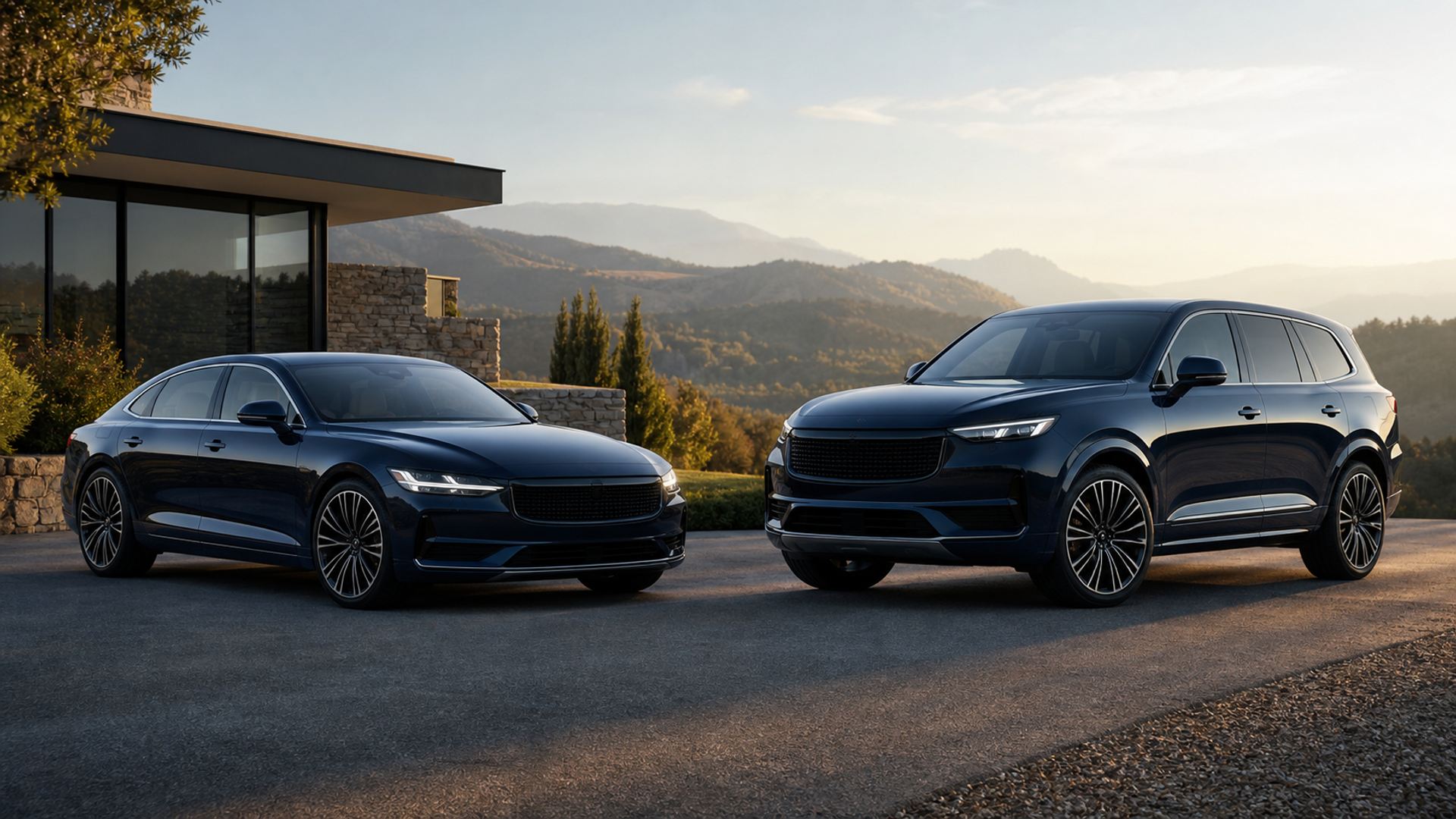
Sedan versus SUV is not a contest between one low car and one tall car. The categories span different footprints, masses, powertrains, seating packages and safety performance. A sedan can offer easier parking, lower aerodynamic drag and a separated boot; an SUV can offer a higher seating point, hatch access and more flexible cargo height. The useful comparison is between exact vehicles that meet the same passenger and route brief, not between category stereotypes.
Start with the weekly route
Choose a sedan when road efficiency, manoeuvrability, a composed low seating position and secure separated luggage fit the routine. Choose an SUV when vertical cargo, step-in access, rear-seat flexibility or poor-road clearance is genuinely used. Re-test a different size class when the apparent body-style problem is really width, wheelbase, seat design or an oversized wheel package.
| Decision factor | Sedan | SUV | Re-test a different size class |
|---|---|---|---|
| Passenger access | Lower sill and seat suit the users | Higher hip point eases entry for some users | Measure step-in and head clearance |
| Cargo pattern | Long enclosed boot fits cases | Tall hatch fits bulky or upright loads | Test the actual pram, cases or equipment |
| Urban footprint | Lower height and often smaller frontal area help | Shorter body may offset extra width | Measure garage, ramps and kerbs |
| Efficiency | Lower mass and drag can help | Efficient hybrid or EV powertrain may narrow the gap | Compare exact EPA data |
| Visibility | Lower sightline feels connected | Higher eye point changes near-field view | Test cameras, pillars and child visibility |
| Safety | Use exact crash and equipment ratings | Use exact crash and equipment ratings | Do not infer protection from size alone |
This sedan vs suv matrix is the article's working value object. Read the sedan vs suv rows together: the decisive failure mode depends on this topic's evidence, operating context and reader objective.
Body shape changes more than image
Evidence 1. NHTSA publishes vehicle-specific safety ratings rather than one rating for an entire body style.
Evidence 2. FuelEconomy.gov supports side-by-side comparison of exact model-year vehicles, including fuel or energy consumption.
Evidence 3. Tyre size, mass, roof load, towing package and powertrain can materially change cost and behaviour within either category.
Evidence 4. A higher driving position can improve some sightlines while larger bodywork and pillars can create different blind zones.
Reader-visible sources checked for this article:
nhtsa.gov — reader-visible current or official evidence
fueleconomy.gov — reader-visible current or official evidence
For sedan vs suv, these sources establish only the claims inside their documented scope. Recheck every changeable specification, availability condition, price, policy or service term in the relevant market before acting.
Compare exact vehicles on equal terms
Read passenger access as a stop/go test: lower sill and seat suit the users supports the first option; higher hip point eases entry for some users supports the second; and measure step-in and head clearance supports the third. Record which source proves the condition and when it was checked.
A buyer can resolve cargo pattern without starting from a brand preference. Ask whether long enclosed boot fits cases; compare that with whether tall hatch fits bulky or upright loads; then use test the actual pram, cases or equipment as the third route's safeguard. An unknown condition stays unknown.
On urban footprint, popularity is not enough. The evidence for option one is that lower height and often smaller frontal area help. Option two means shorter body may offset extra width. Option three is rational where measure garage, ramps and kerbs. Recheck any changeable term immediately before commitment.
The decision changes at efficiency. Choose the first path only if lower mass and drag can help; move to the second when efficient hybrid or EV powertrain may narrow the gap; use the third when compare exact EPA data. Save the downside that would make this row fail.
For visibility, the first route works when lower sightline feels connected; the second requires higher eye point changes near-field view. The control for the third is test cameras, pillars and child visibility. Verify this row against the exact product, property, account or environment before it can reverse the decision.
The safety row exposes a practical boundary. Route one assumes use exact crash and equipment ratings, while route two is defensible only when use exact crash and equipment ratings. Route three depends on do not infer protection from size alone. If that evidence is absent, keep the more reversible option.
Facts that would reverse the current choice
Reversal control 1 — Passenger access. Before choosing Sedan, write down how the decision changes if “Lower sill and seat suit the users” proves false. Do the same for SUV and “Higher hip point eases entry for some users”. Keep the Re-test a different size class route available until “Measure step-in and head clearance” is verified. This control belongs to sedan vs suv; update it from the cited source or exact supplier rather than copying a generic checklist.
Reversal control 2 — Cargo pattern. Before choosing Sedan, write down how the decision changes if “Long enclosed boot fits cases” proves false. Do the same for SUV and “Tall hatch fits bulky or upright loads”. Keep the Re-test a different size class route available until “Test the actual pram, cases or equipment” is verified. This control belongs to sedan vs suv; update it from the cited source or exact supplier rather than copying a generic checklist.
Reversal control 3 — Urban footprint. Before choosing Sedan, write down how the decision changes if “Lower height and often smaller frontal area help” proves false. Do the same for SUV and “Shorter body may offset extra width”. Keep the Re-test a different size class route available until “Measure garage, ramps and kerbs” is verified. This control belongs to sedan vs suv; update it from the cited source or exact supplier rather than copying a generic checklist.
Reversal control 4 — Efficiency. Before choosing Sedan, write down how the decision changes if “Lower mass and drag can help” proves false. Do the same for SUV and “Efficient hybrid or EV powertrain may narrow the gap”. Keep the Re-test a different size class route available until “Compare exact EPA data” is verified. This control belongs to sedan vs suv; update it from the cited source or exact supplier rather than copying a generic checklist.
Reversal control 5 — Visibility. Before choosing Sedan, write down how the decision changes if “Lower sightline feels connected” proves false. Do the same for SUV and “Higher eye point changes near-field view”. Keep the Re-test a different size class route available until “Test cameras, pillars and child visibility” is verified. This control belongs to sedan vs suv; update it from the cited source or exact supplier rather than copying a generic checklist.
Reversal control 6 — Safety. Before choosing Sedan, write down how the decision changes if “Use exact crash and equipment ratings” proves false. Do the same for SUV and “Use exact crash and equipment ratings”. Keep the Re-test a different size class route available until “Do not infer protection from size alone” is verified. This control belongs to sedan vs suv; update it from the cited source or exact supplier rather than copying a generic checklist.
Map the real route
Record passengers, child seats, luggage, garage dimensions, city width, motorway distance and poor-road exposure. Separate weekly needs from one annual trip and note which load cannot be rented or delivered. Record the exact product, material, room, garment, vehicle, water report or operating condition and the time of the check. Separate observed behaviour from marketing language, and repeat the comparison in the intended setting rather than an ideal demonstration. If the SUV advantage appears only once a year, a smaller daily car may still win. Preserve the evidence that would reverse the choice: a change in fit, specification, maintenance, safety, price or environment must reopen the decision rather than inherit an old conclusion.
Run an equal test drive
Use comparable powertrains, tyre condition and trim, then drive the same urban, motorway and parking route. Score ingress, seat support, steering, braking, ride, noise, visibility and camera clarity. Record the exact product, material, room, garment, vehicle, water report or operating condition and the time of the check. Separate observed behaviour from marketing language, and repeat the comparison in the intended setting rather than an ideal demonstration. If a wheel or seat option causes the problem, change trim before changing body style. Preserve the evidence that would reverse the choice: a change in fit, specification, maintenance, safety, price or environment must reopen the decision rather than inherit an old conclusion.
Load the actual cargo
Measure aperture width, sill height, floor length, underfloor space and seats-up volume. Load the cases, mobility aid, sports kit or pram instead of relying on litres alone. Record the exact product, material, room, garment, vehicle, water report or operating condition and the time of the check. Separate observed behaviour from marketing language, and repeat the comparison in the intended setting rather than an ideal demonstration. If the hatch shape wastes volume, a sedan with a long boot may carry the intended load better. Preserve the evidence that would reverse the choice: a change in fit, specification, maintenance, safety, price or environment must reopen the decision rather than inherit an old conclusion.
Model five-year ownership
Compare energy, tyres, insurance, servicing, depreciation and parking constraints for exact configurations. Include the replacement price of large wheels and any battery or hybrid warranty terms. Record the exact product, material, room, garment, vehicle, water report or operating condition and the time of the check. Separate observed behaviour from marketing language, and repeat the comparison in the intended setting rather than an ideal demonstration. If the body-style preference adds recurring cost without solving a recurring problem, reverse it. Preserve the evidence that would reverse the choice: a change in fit, specification, maintenance, safety, price or environment must reopen the decision rather than inherit an old conclusion.
Three routines, three answers
Dense city and two adults
A well-packaged sedan may be quieter and easier to place. Define the fact that would reverse this recommendation before committing.
Family with bulky equipment
An SUV hatch and split rear seat can deliver practical value. Define the fact that would reverse this recommendation before committing.
Long motorway commute with occasional snow
Tyres, drivetrain and exact safety equipment matter more than the badge category. Define the fact that would reverse this recommendation before committing.
Action checklist
Map routes.
Measure garage.
Test seat access.
Load real cargo.
Compare exact ratings.
Compare exact efficiency.
Check tyre cost.
Price insurance.
Drive same route.
Choose the smallest fit.
Continue the decision
The linked VERTU articles expand adjacent parts of the sedan vs suv decision. They do not substitute for the external evidence above.
The sedan-versus-SUV verdict
Choose a sedan when road efficiency, manoeuvrability, a composed low seating position and secure separated luggage fit the routine. Choose an SUV when vertical cargo, step-in access, rear-seat flexibility or poor-road clearance is genuinely used. Re-test a different size class when the apparent body-style problem is really width, wheelbase, seat design or an oversized wheel package.
Keep the sedan vs suv decision reversible until its material cost, safety, access, privacy and compatibility facts are verified. Unknown evidence stays unknown; it is never silently scored as favourable.