Your work doesn’t slow down just because you’re between time zones.
If you travel for business, you already know the pattern: a gate change mid-call, a contract PDF that arrives five minutes before a board discussion, a calendar reshuffle while you’re in a car transfer. A normal phone can do all of it, technically. The question is whether it can do it without friction.
Foldable phones changed that conversation. Not because they’re “cool,” but because the inner display gives you something you rarely get on mobile: space to think and act at the same time.
This guide is built for awareness-stage readers who are new to foldables for work. You’ll get clear buying criteria first, then a practical shortlist of notable foldables you can buy in 2026, organized around executive travel workflows (documents, meetings, multitasking, and privacy).
Disclosure: This article includes references to VERTU products and pages. Where VERTU is mentioned, we separate manufacturer-stated claims from practical buying guidance, and we also include non-VERTU options so you can compare.
Key TakeawayFor executive travel, the best foldable phone is the one that lets you review, decide, and communicate in parallel—without turning every task into app-switching.
Best foldable phones 2026: the executive scorecard
Use this scorecard to pressure-test any foldable—before you fall in love with a spec sheet.
Criteria | What “good” looks like for executives | Weight suggestion |
|---|---|---|
Screen strategy | Outer screen is fast one-handed; inner screen is bright enough to work in lounges/cars and feels usable for reading | 20% |
Multitasking depth | Split-screen is stable, app switching doesn’t reset layouts, and floating windows behave predictably | 20% |
Meeting readiness | Hands-free posture, reliable audio/video, quick capture of notes and follow-ups | 15% |
Travel readiness | Comfort in pocket/bag, hinge confidence, water/dust resistance where available, charging speed for tight turnarounds | 20% |
Document handling | PDFs are readable without constant zoom; markup/signature flows work; stylus support if you redline often | 15% |
Privacy-first work | Strong separation between contexts plus secure communications options you actually use | 10% |
How we picked the best foldable phones for executive travel
A “best foldable phones 2026” list can easily drift into cameras and benchmarks. That’s not the point here.
For business travel and executive productivity, we used six criteria:
- Screen strategythe cover screen for one-handed speed, the inner display for real work
- Multitasking depthsplit-screen that’s actually usable, plus stable window behavior
- Meeting readinesshands-free modes, note-taking flow, and quick follow-up
- Travel readinessdurability, battery confidence, charging speed, and carry comfort
- Document handlingPDF readability, side-by-side review, signature/markup options
- Privacy-first workseparation, encryption, and how AI features treat sensitive context
For a useful snapshot of how mainstream reviewers weigh durability and long-term ownership, see Wirecutter’s best foldable phones list (2026). For a broader market roundup with category picks, Digital Trends’ 2025 folding phone picks is a helpful reference point.
Foldable phones, explained in one minute (so the rest of this makes sense)
A “book-style” foldable opens like a small tablet. You get a normal outer display for quick tasks, and a larger inner screen for work.
A “flip” foldable folds vertically. It’s compact and elegant, but the inner display is still phone-shaped. For executive productivity, book-style foldables usually win when your day involves documents, side-by-side apps, and meeting notes.
If you’re also deciding whether you even want an AI-first device in 2026, this primer on AI phone vs. smartphone differences in 2025 clarifies what changes when software starts acting on intent, not just responding to taps.
Best foldable phones: the 2026 shortlist for business travel
These picks are organized by the way executives actually work on the road.
Here are the models we reference most often in 2026 discussions for executive travel. Availability varies by region, and model lines change quickly—use this as a shortlist to compare, not a definitive ranking.
Model | Best for | Why it’s on the shortlist |
|---|---|---|
VERTU ALPHAFOLD | Privacy-first executive workflows | Premium positioning with manufacturer-stated privacy/agent features and a work-canvas inner display concept |
Samsung Galaxy Z Fold series | Mainstream durability and ecosystem | Strong accessory/app ecosystem and mature multitasking software in many markets |
Google Pixel Fold line | Google-first software experience | Tight integration with Google services and clean UI behaviors for some workflows |
OnePlus Open | Multitasking-forward UI | Frequently highlighted for flexible multitasking UI in mainstream reviews |
HONOR Magic V series | Thin design for travel comfort | Often positioned around slim hardware that carries more like a slab phone |
Before you decide, run each option through the scorecard above and confirm the latest specs and support policy on the manufacturer site.
1) Best foldable phone 2026 for an executive “command screen”: ALPHAFOLD
If your friction comes from approvals, documents, and high-stakes communication, there’s a specific kind of foldable you want: one designed as a private, mobile workspace, not just a larger display.
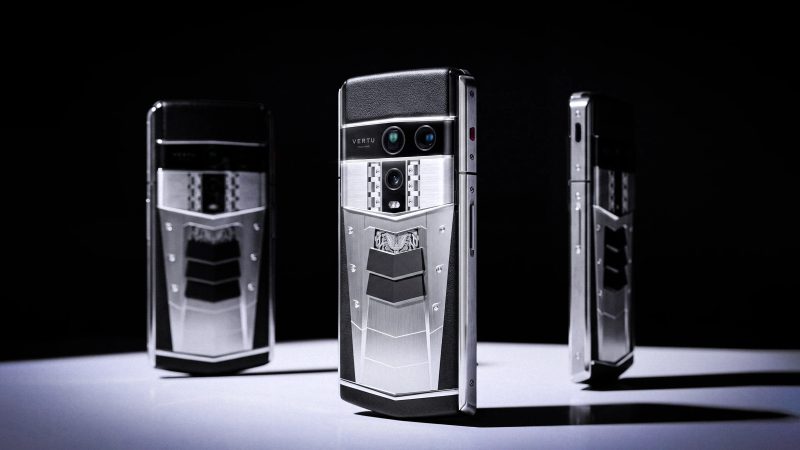
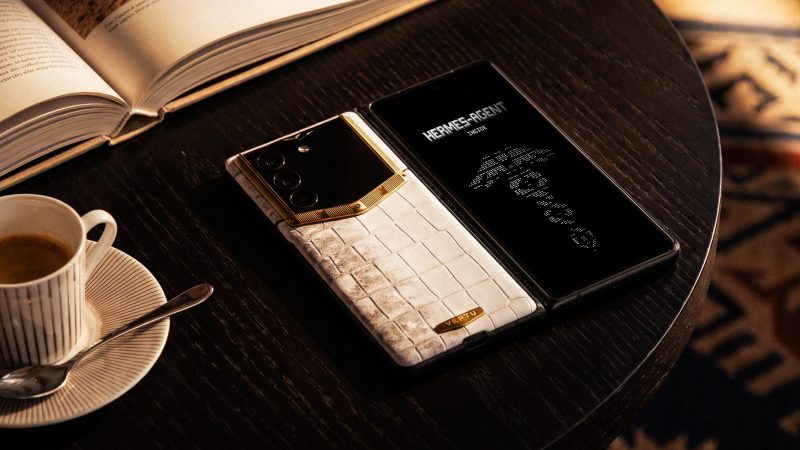
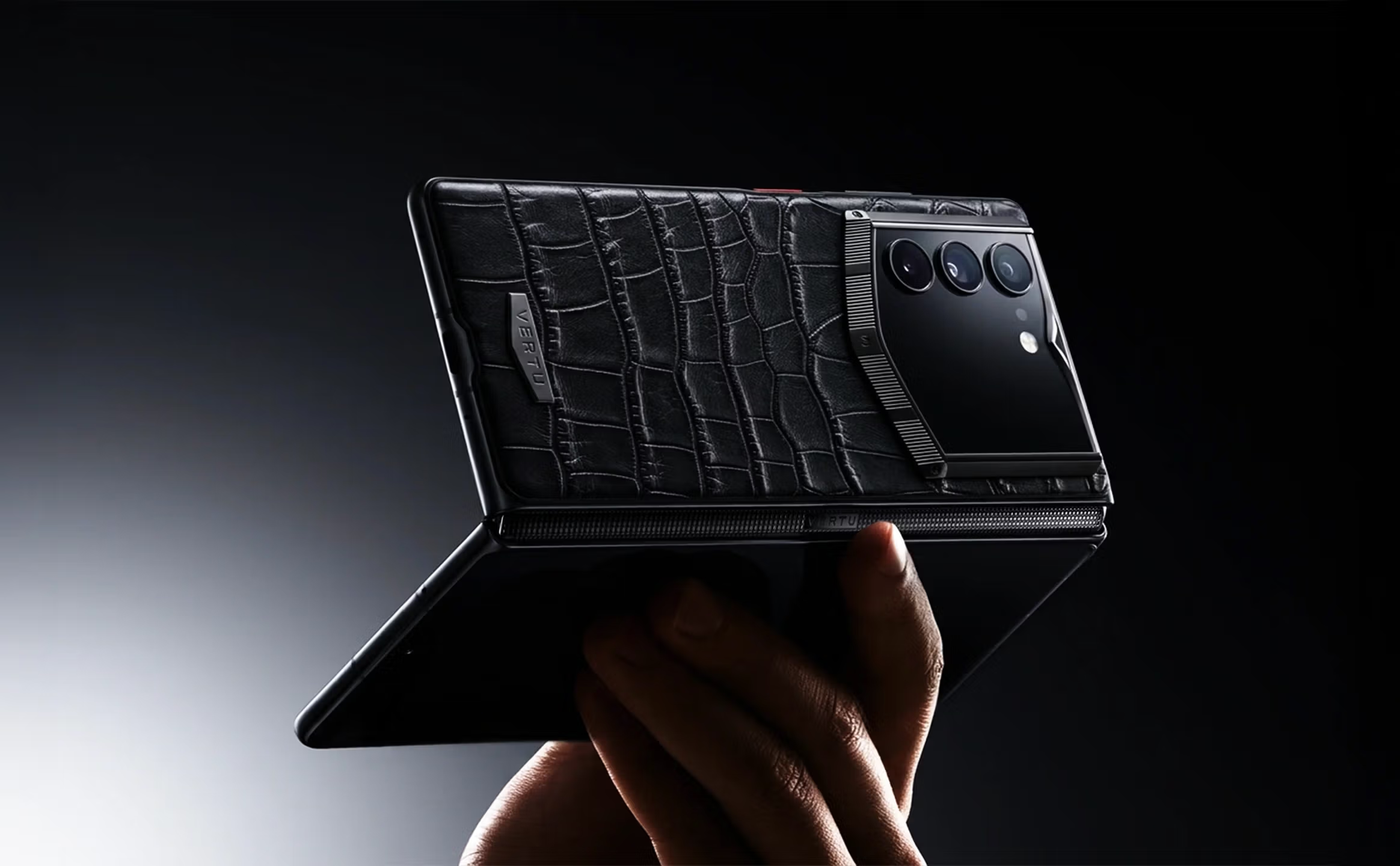
ALPHAFOLD is positioned around that executive use case. On VERTU’s product page, it’s framed as an ERP-style phone for dashboards, approvals, and contract workflows, with an inner display intended to behave like a working canvas, not a novelty screen.
Here are the details that matter for travel productivity, based on what VERTU states publicly:
- Dual-display workflowa 6.53-inch outer display and an 8.05-inch inner screen for a larger workspace.
- Meeting-to-action supportHermes Agent is described as connecting to 70+ apps and turning voice intent into actions.
- Privacy-first work controlsPrivate Space, end-to-end encryption, encrypted V-Talk, and triple-system isolation are positioned as built-in boundaries for sensitive work.
- Travel staminaa 6,500 mAh battery and 65W fast charging are explicitly listed.
If you want the canonical reference for those claims, start with ALPHAFOLD.
If you’re curious where VERTU’s broader AI-agent direction is heading beyond foldables, Agent Q is the closest adjacent category.
Where this fits best:
You handle sensitive conversations and documents while traveling.
You want the foldable screen for real work, but you don’t want a “specs-first” device identity.
You care about privacy boundaries and separation as a workflow feature, not a checkbox.
What to be honest about:
This is not the typical mass-market “best foldable smartphone” pick. It’s an executive positioning. If your day is mostly messaging and light email, you may not need this category at all.
2) Best foldable phones 2026 for software longevity and “low-drama” ownership
If you want the safest mainstream decision, optimize for two things: support windows and durability confidence.
Foldables are better than they used to be, but hinge wear, dust exposure, and repair logistics still matter more than on slab phones. Use a strict filter:
Clear OS/security update policy
Water resistance (when available) and practical protection options for travel
Reliable warranty/repair experience in the regions you travel
If you want a grounded view on durability and long-term ownership criteria, start with Wirecutter’s foldable phone guidance and cross-check any model’s stated support policy on the manufacturer’s site.
Where this fits best:
You travel heavily and want a predictable ownership story.
Your work is cloud-heavy and you don’t want OS support uncertainty.
3) Best foldable phones 2026 for multitasking when your day is three apps at once
For many executives, multitasking is the job: email next to calendar, chat next to a deck, notes beside a briefing.
When evaluating a foldable for multitasking, test the failure modes:
Does split-screen stay locked when you switch apps quickly?
Do your core apps reset layouts on the inner screen?
Can you drag-and-drop content between windows without friction?
For a quick market snapshot of which devices are consistently called out for multitasking software, see Digital Trends’ folding phone roundup—then validate against your own app stack.
Where this fits best:
You routinely work inside two or three apps simultaneously.
You want a foldable phone to replace some tablet moments.
4) Best foldable phones 2026 for meetings
A foldable earns its keep in meetings when it reduces follow-up time.
Look for three practical capabilities:
A stable hands-free posture for video calls
A layout that lets you keep notes visible while referencing an agenda or deck
A frictionless way to turn meeting output into action quickly
If an “AI phone” feature only produces summaries but doesn’t help you create reminders, tasks, or follow-up messages, it’s a nice-to-have—not a productivity lever.
5) Best foldable phones 2026 for document work in transit
Document work is where foldables stop being optional.
If you regularly review PDFs, redline terms, or compare versions, the inner screen changes the experience: fewer zoom gestures, less scrolling, and more side-by-side context.
Two checks before you buy:
Open the files you actually use (PDFs, slides, spreadsheets) and test readability
Test your real apps (DocuSign, Office, Slack/Teams, your preferred note app) on the inner screen
Pro TipIf you sign or mark up documents often, prioritize stylus support and palm rejection. It’s the difference between “possible” and “pleasant.”
6) Best foldable phones 2026: what stays true after the model year changes
If you’re reading this while thinking ahead to “best foldable phones 2026,” the criteria won’t change much. Model names will.
Here’s what remains durable:
Two-screen strategy beats “one big screen.” You want speed outside, work inside.
Multitasking software is more important than raw silicon for executive workflows.
Travel readiness is about IP rating, hinge confidence, and battery behavior on long days.
Privacy boundaries matter more as AI features become more capable.
If you want a simple way to pressure-test any “best foldable phone” list, use a business-phone lens like this guide on how to select business cell phones. It’s not foldable-specific, but the criteria mindset translates.
For executives who treat travel as a workflow, not a schedule, it can also help to align your phone with a quieter layer of timekeeping and alerts, such as Fusion Watch.
Privacy-first productivity: what executives should look for in 2026
The most important privacy question isn’t “does it have encryption?” It’s “does the phone help you separate contexts?”
When a device becomes your office, it becomes a record of your decisions.
Look for:
A protected space for sensitive documents and conversations.
Clear separation between personal and work accounts.
Strong biometric access and predictable lock behavior.
An AI layer that respects boundaries, rather than vacuuming everything into one global memory.
ALPHAFOLD’s positioning is explicit about private work boundaries (Private Space, encrypted communications, isolation). Whether you choose that or a mainstream foldable, treat privacy as a workflow requirement, not a settings-page afterthought.
A discreet executive setup: phone + time + travel rhythm
If you build your travel workflow around a foldable, it’s worth aligning the rest of your kit.
A watch isn’t just a notification mirror. For many executives, it’s the quiet layer that keeps time zones, calendars, and reminders from pulling you back into the phone every two minutes.
If you want to explore that category on VERTU, Fusion Watch is a relevant reference point.
FAQ: foldable phones for business travel
Are foldable phones durable enough for frequent travel?
They’re getting better, but you should still evaluate durability deliberately. Look for IP ratings, hinge confidence, and the brand’s update and support posture. Independent buyer guides like Wirecutter’s foldable coverage are useful here.
Do foldable phones really improve productivity?
They can, if your work involves documents, multitasking, or meeting follow-through. If your day is mostly calls and quick messages, you may not feel much difference.
What’s the best foldable smartphone for privacy?
There’s no single answer, because “privacy” includes separation, encryption, access controls, and the behavior of AI features. Choose a device that treats work boundaries as a core design point.
Is a flip foldable good for executive work?
It can be, especially if you want compactness. But for documents and side-by-side workflows, book-style foldables usually offer more usable space.
Next steps
If you’re new to foldable phones, don’t start by picking a model. Start by naming your friction: meetings, documents, multitasking, or privacy.
Then choose the device category that reduces that friction.
If your priority is a foldable that’s explicitly positioned as a private executive workspace, explore ALPHAFOLD and see whether its screen + agent + privacy framing matches the way you actually work.
If your priority is a foldable positioned as a private executive workspace, explore ALPHAFOLD and compare it against the shortlist above using the scorecard.
Disclosure: This article includes references to VERTU pages; editorial judgment remains the priority.