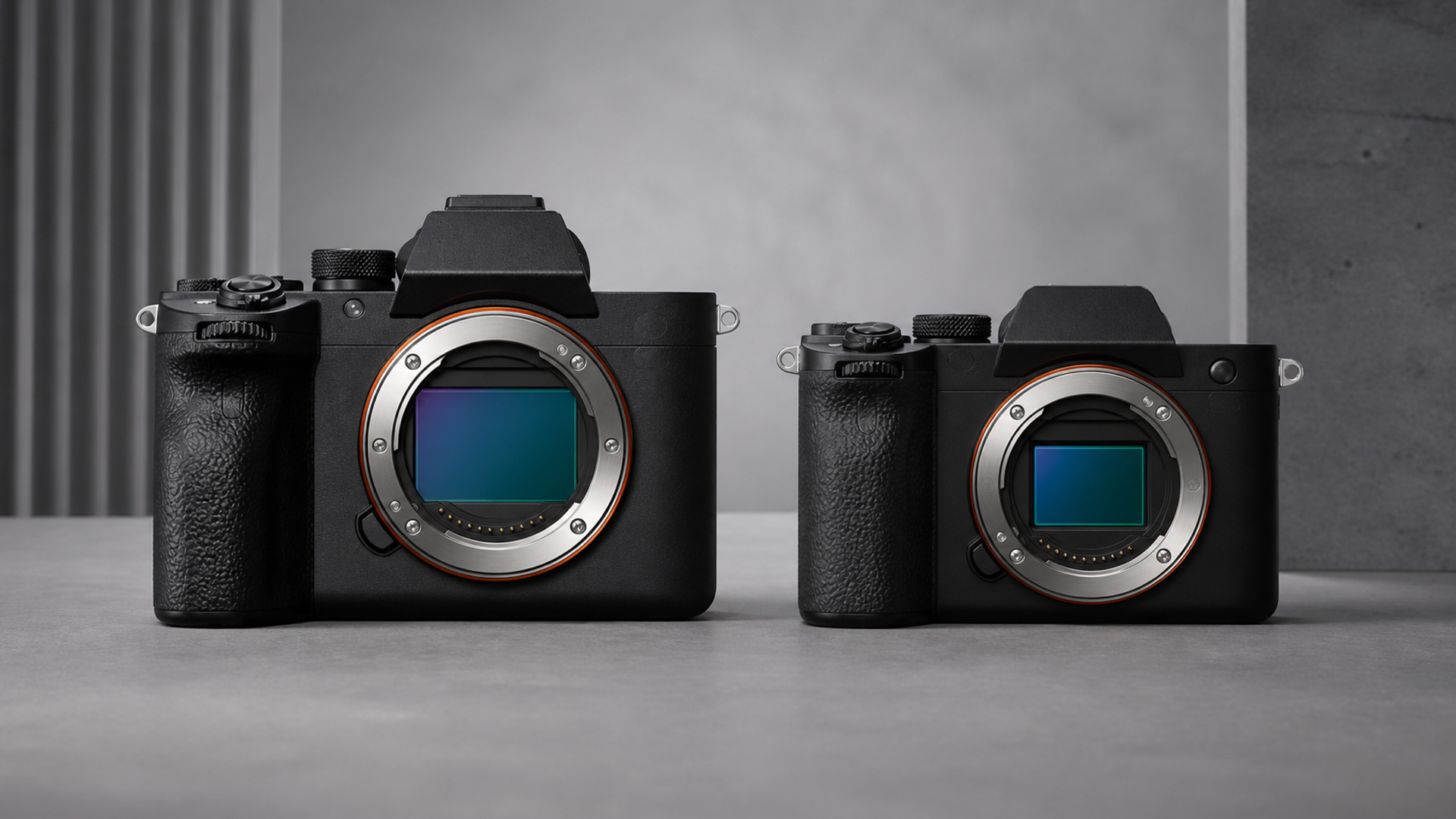
Full-frame and APS-C describe sensor formats, not complete image-quality rankings. A full-frame sensor is larger and can support shallower depth of field or lower noise under comparable output. APS-C applies a crop factor to lens angle of view and often enables a smaller or less expensive kit. Lens quality, autofocus, stabilisation and final output matter as much as sensor area.
Choose a system, not a badge
Choose full frame when low-light output, wide-angle options, subject isolation and a professional lens plan justify the larger system. Choose APS-C when reach, portability, price and deeper depth of field support the work. Keep the present body when a better lens, light, support or workflow addresses the limitation.
| Decision factor | Full-frame camera | APS-C camera | Keep the present system |
|---|---|---|---|
| Output | Large prints or low light use the sensor advantage | Web, travel and moderate prints fit current output | Improve capture first |
| Angle of view | Full-frame lenses deliver intended field | Crop factor supports telephoto framing | Select focal length from shot list |
| Depth of field | Shallow focus is an intentional need | More depth helps the subject | Change distance, light or lens |
| Lens kit | Required lenses exist within budget | Compact lenses keep system coherent | Avoid a body without a lens roadmap |
| Mobility | Weight is acceptable for assignment | Smaller kit will be carried | Rent larger system for exceptional jobs |
| Cost | Body, glass and support earn premium | Savings fund travel or lighting | Address the bottleneck |
This full frame vs aps c matrix is the article's working value object. Read the full frame vs aps c rows together: the decisive failure mode depends on this topic's evidence, operating context and reader objective.
What sensor size changes
Evidence 1. Canon and Nikon describe APS-C or DX as smaller than full frame or FX, producing a narrower angle of view from the same focal length and position.
Evidence 2. Equivalent framing requires different focal length or camera distance, which affects depth of field and perspective comparisons.
Evidence 3. A larger sensor does not rescue poor focus, insufficient shutter speed, weak light or unsuitable lenses.
Evidence 4. System weight and cost include lenses, batteries, storage, support and computing, not only the body.
Reader-visible sources checked for this article:
usa.canon.com — reader-visible current or official evidence
nikonusa.com — reader-visible current or official evidence
For full frame vs aps c, these sources establish only the claims inside their documented scope. Recheck every changeable specification, availability condition, price, policy or service term in the relevant market before acting.
Build the same-shot comparison
A buyer can resolve output without starting from a brand preference. Ask whether large prints or low light use the sensor advantage; compare that with whether web, travel and moderate prints fit current output; then use improve capture first as the third route's safeguard. An unknown condition stays unknown.
On angle of view, popularity is not enough. The evidence for option one is that full-frame lenses deliver intended field. Option two means crop factor supports telephoto framing. Option three is rational where select focal length from shot list. Recheck any changeable term immediately before commitment.
The decision changes at depth of field. Choose the first path only if shallow focus is an intentional need; move to the second when more depth helps the subject; use the third when change distance, light or lens. Save the downside that would make this row fail.
For lens kit, the first route works when required lenses exist within budget; the second requires compact lenses keep system coherent. The control for the third is avoid a body without a lens roadmap. Verify this row against the exact product, property, account or environment before it can reverse the decision.
The mobility row exposes a practical boundary. Route one assumes weight is acceptable for assignment, while route two is defensible only when smaller kit will be carried. Route three depends on rent larger system for exceptional jobs. If that evidence is absent, keep the more reversible option.
Read cost as a stop/go test: body, glass and support earn premium supports the first option; savings fund travel or lighting supports the second; and address the bottleneck supports the third. Record which source proves the condition and when it was checked.
Facts that would reverse the current choice
Reversal control 1 — Output. Before choosing Full-frame camera, write down how the decision changes if “Large prints or low light use the sensor advantage” proves false. Do the same for APS-C camera and “Web, travel and moderate prints fit current output”. Keep the Keep the present system route available until “Improve capture first” is verified. This control belongs to full frame vs aps c; update it from the cited source or exact supplier rather than copying a generic checklist.
Reversal control 2 — Angle of view. Before choosing Full-frame camera, write down how the decision changes if “Full-frame lenses deliver intended field” proves false. Do the same for APS-C camera and “Crop factor supports telephoto framing”. Keep the Keep the present system route available until “Select focal length from shot list” is verified. This control belongs to full frame vs aps c; update it from the cited source or exact supplier rather than copying a generic checklist.
Reversal control 3 — Depth of field. Before choosing Full-frame camera, write down how the decision changes if “Shallow focus is an intentional need” proves false. Do the same for APS-C camera and “More depth helps the subject”. Keep the Keep the present system route available until “Change distance, light or lens” is verified. This control belongs to full frame vs aps c; update it from the cited source or exact supplier rather than copying a generic checklist.
Reversal control 4 — Lens kit. Before choosing Full-frame camera, write down how the decision changes if “Required lenses exist within budget” proves false. Do the same for APS-C camera and “Compact lenses keep system coherent”. Keep the Keep the present system route available until “Avoid a body without a lens roadmap” is verified. This control belongs to full frame vs aps c; update it from the cited source or exact supplier rather than copying a generic checklist.
Reversal control 5 — Mobility. Before choosing Full-frame camera, write down how the decision changes if “Weight is acceptable for assignment” proves false. Do the same for APS-C camera and “Smaller kit will be carried”. Keep the Keep the present system route available until “Rent larger system for exceptional jobs” is verified. This control belongs to full frame vs aps c; update it from the cited source or exact supplier rather than copying a generic checklist.
Reversal control 6 — Cost. Before choosing Full-frame camera, write down how the decision changes if “Body, glass and support earn premium” proves false. Do the same for APS-C camera and “Savings fund travel or lighting”. Keep the Keep the present system route available until “Address the bottleneck” is verified. This control belongs to full frame vs aps c; update it from the cited source or exact supplier rather than copying a generic checklist.
Define the deliverable
List subject, light, motion, print size, crop allowance and turnaround. Inspect failures at final output rather than extreme magnification. Separate noise, missed focus, motion blur, lens softness and processing. Only one may be sensor-limited. Record the exact photographs the new format must make possible.
Compare equivalent photographs
Match angle of view, camera position, output size and exposure intent. If depth of field must match, adjust aperture while respecting diffraction and light. Use the same scene and final processing. Comparing a fast full-frame prime against a slow APS-C zoom proves a system difference, not sensor alone.
Build the lens roadmap first
Choose essential wide, normal, portrait and telephoto coverage, then price weight, filters and stabilisation. Check whether compact APS-C lenses exist or the smaller body will carry full-frame glass anyway. Include rentals and resale friction. A coherent kit is more useful than an aspirational body without glass.
Rent and carry the whole kit
Use each candidate for a real day, including bag, batteries, cards and support. Judge controls, autofocus, hand strain, transfer speed and availability when the photograph appears. Save raw files and process them on the current computer before purchasing a format with larger storage demands.
Three photographers, three answers
Low-light event professional
Full frame may justify itself when fast lenses and high-output delivery form one system. Define the fact that would reverse this recommendation before committing.
Wildlife traveller
APS-C can provide practical field of view and portability. Define the fact that would reverse this recommendation before committing.
Enthusiast with weak kit lens
Better glass, light and technique may improve photographs more than changing format. Define the fact that would reverse this recommendation before committing.
Action checklist
Define output.
Classify failures.
List focal lengths.
Compare equivalent framing.
Inspect raw files.
Price lens kit.
Weigh bag.
Test autofocus.
Process on current computer.
Rent before switching.
Continue the decision
The linked VERTU articles expand adjacent parts of the full frame vs aps c decision. They do not substitute for the external evidence above.
The full-frame-APS-C verdict
Choose full frame when low-light output, wide-angle options, subject isolation and a professional lens plan justify the larger system. Choose APS-C when reach, portability, price and deeper depth of field support the work. Keep the present body when a better lens, light, support or workflow addresses the limitation.
Keep the full frame vs aps c decision reversible until its material cost, safety, access, privacy and compatibility facts are verified. Unknown evidence stays unknown; it is never silently scored as favourable.