

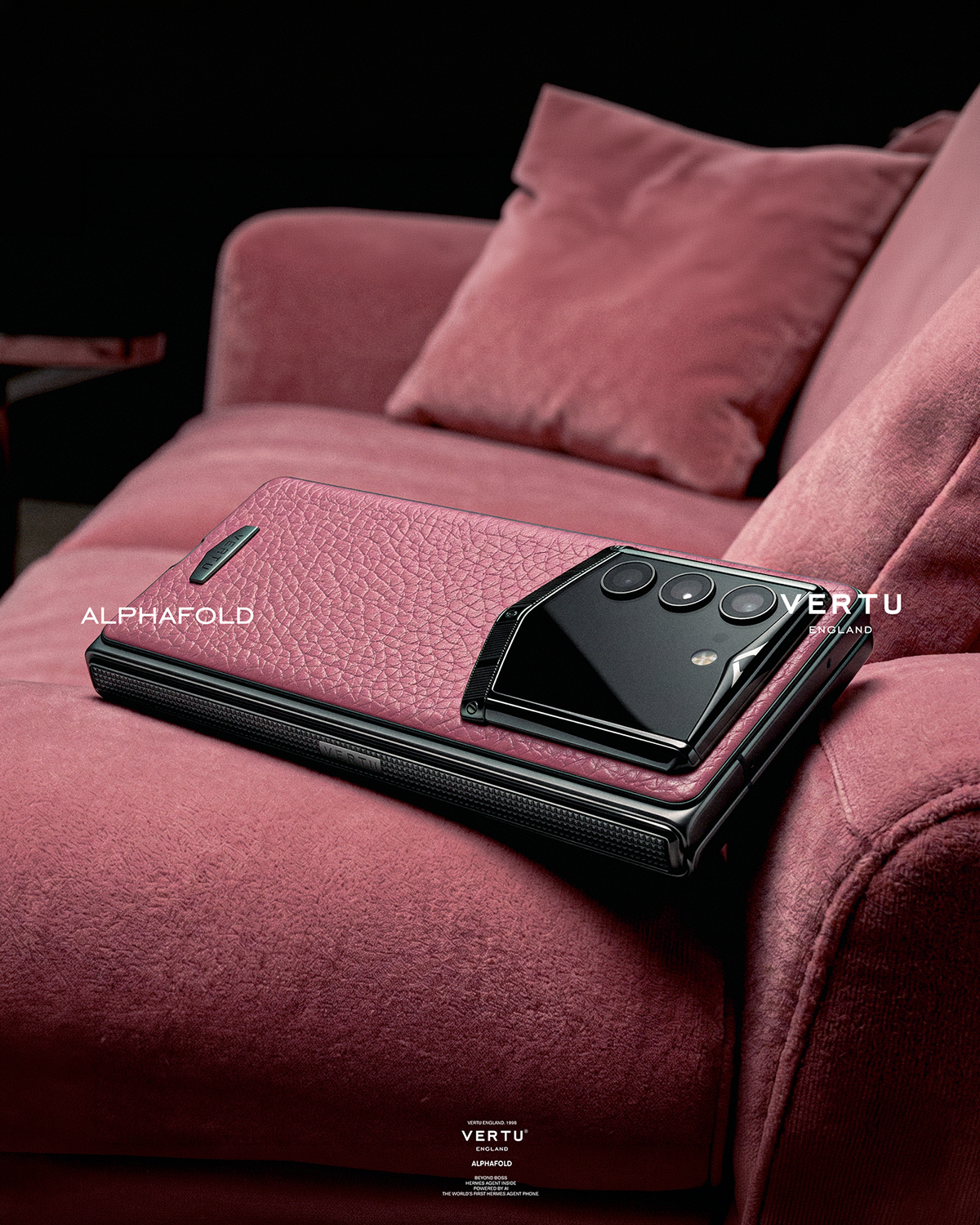
There are two different AlphaFolds you might mean.
AlphaFold (Google DeepMind) is the scientific AI system that predicts protein structures.
VERTU AlphaFold is a luxury foldable phone built around an on-device “agent” experience.
They’re not related beyond the name.
But using DeepMind’s AlphaFold as a reference point is useful for one reason: it shows what credible AI looks like when the stakes are real. Clear scope. Clear limits. Clear ways to measure uncertainty.
That mindset is exactly what you want when you’re deciding whether to shortlist a Hermes Agent phone in the luxury AI foldable phone category.
Why DeepMind’s AlphaFold is a good standard for “credible AI”
AlphaFold earned trust the hard way.
Google DeepMind describes AlphaFold as an AI system that predicts a protein’s 3D structure from its amino-acid sequence, and the work is anchored in peer-reviewed results and openly discussed limitations (Google DeepMind’s AlphaFold project page).
Two things matter for you as a buyer.
First, AlphaFold has defined scope. It predicts structure. It doesn’t pretend to solve every biology problem.
Second, it ships with explicit uncertainty.
If you’ve ever looked at an AlphaFold result, you’ll notice it’s not a glossy “trust me” output. It’s a prediction with confidence signals and known failure modes. That’s why scientific guidance repeatedly frames AlphaFold predictions as hypotheses that accelerate research, but don’t replace validation (Nature Methods (2023): “AlphaFold predictions are valuable hypotheses…”).
Key TakeawayCredible AI is not the AI that sounds confident. It’s the AI that tells you, in a usable way, when it might be wrong.
The AlphaFold-informed checklist for evaluating “agent” phones
You don’t need to understand protein folding to borrow the buyer logic.
Here are the evaluation questions that map cleanly from AlphaFold to any executive-grade AI device.
1) What is the system’s scope: does it predict, recommend, or execute?
AlphaFold predicts. It doesn’t take actions.
An “agent” phone is different because it often claims it can execute: send messages, schedule meetings, move files, trigger workflows. Execution is where risk lives.
Ask for scope in plain language:
What actions can it take?
What actions can it never take?
What actions require explicit approval every time?
If you can’t get a crisp boundary statement, you are not buying a system. You’re buying a demo.
2) What are the equivalent of confidence scores?
AlphaFold culture teaches one habit: never take output at face value without confidence context.
For an “agent,” you want equivalents:
When is it confident vs unsure?
What signals do you see when it’s guessing?
Can you force it into “draft-only” mode?
If the interface never admits uncertainty, assume uncertainty is being hidden, not solved.
3) Where does your data go, and what is retained?
This is non-negotiable for privacy-sensitive buyers.
You’re looking for operational answers, not slogans:
What stays on-device?
What goes to the cloud?
What goes to third parties?
What is stored, for how long, and can it be deleted?
If the vendor can’t explain retention and deletion in one page, treat the posture as unknown.
4) Can you audit and reverse actions?
In biology, reproducibility is part of trust.
In an agent device, trust comes from traceability:
Can you see exactly what changed?
Is there an action log you can export?
Can you undo actions or roll back?
You should never be in a position where the only proof is “the agent said it did it.”
5) What are the known failure modes, stated without defensiveness?
AlphaFold’s ecosystem is candid about where it can mislead you.
A serious agent device should be candid about:
wrong contact selection
time-zone/calendar errors
overconfident summaries
edge cases under weak connectivity
If the pitch uses words like “seamless” without naming failure modes, you’re being sold reassurance.
Collector’s note: In luxury, perfection is earned in materials and finishing. In software, credibility is earned through boundaries and honest limits.
What to test specifically when you evaluate VERTU AlphaFold
At the consideration stage, your goal is not to decide “yes or no” from a product page.
Your goal is to decide whether a live briefing is worth your time.
If you do evaluate VERTU AlphaFold, treat it like a controlled inspection.
Start with the privacy baseline
Before you look at features, write your own baseline:
what data must never leave your control
what actions must always require approval
what you need to see in an audit trail
Then use a framework like VERTU’s own discussion of boundaries in its guide on on‑device AI vs cloud AI privacy and its checklist for a privacy phone for executives to structure the questions.
Then test the service model, not just the interface
For many UHNW buyers, the difference isn’t the hinge. It’s what happens when something breaks, changes, or becomes urgent.
Ask what the escalation path looks like, and what confidentiality means in practice. A useful baseline is VERTU’s explanation of a luxury phone with 24/7 concierge service.
Red flags that should slow you down
The demo looks smooth, but boundaries are vague.
Privacy is treated as a tagline, not a retention and deletion policy.
There’s no action log you can inspect.
The device is framed as “AI + bigger screen,” with no workflow proof.
One video worth watching before any demo
If you want to hear what credible AI sounds like when it’s tied to real uncertainty and evaluation, watch this short explainer on how to interpret AlphaFold outputs:
You’re not watching for biology.
You’re watching for the standard: clear confidence signals, clear limits, and no attempt to hide uncertainty behind marketing.
Key takeaways
“Agent” value is execution, and execution needs boundaries.
Credible AI shows you uncertainty in a way you can act on.
Your minimum bar is: data flow clarity, retention rules, approval controls, and an auditable action trail.
For VERTU AlphaFold, evaluate the phone and the service relationship together.
If the vendor can’t describe failure modes, assume you’ll discover them the hard way.
Next steps
If you’re shortlisting devices in the “agent phone” category, ask for a boundary-first walkthrough.
Bring a single real scenario you run weekly, and test it end-to-end: what data is touched, what approvals appear, what logs you get, and what happens when the system is unsure.
If you’d like, you can explore VERTU’s current positioning for AlphaFold on the official site and request details from there.
Disclosure: This article references VERTU pages. Editorial judgment remains the priority.


![Top 10 Anniversary Gift Watches for Men [Full Guide]](https://cdn.sanity.io/images/e0gp1l2g/production/00dfa030a876edbe6ea7b146f6b1d8197c7656b0-3840x1860.webp?w=800&h=450&q=82&auto=format&fit=crop)
![VERTU COR RING or Inner Core: How to Choose [Full Guide]](https://cdn.sanity.io/images/e0gp1l2g/production/6a3c20e4adeaefedfb520be6d6b483f1cc846f8a-2560x1440.jpg?w=800&h=450&q=82&auto=format&fit=crop)