Key takeaways
The strongest use cases are the ones with a clear loop: intent → options → your approval → execution. The value is not “AI answers”—it’s turning decisions into controlled action.
Meeting follow-up is the highest-ROI starting point. If Agent Q reliably turns live discussion into a decision log, owners, and deadlines, it pays for itself in reduced leakage.
Travel coordination becomes a governance problem, not a booking problem. The executive advantage is calendar harmony, preferences, and exception handling—especially across time zones.
Contracts and compliance work best as first-pass triage. You want risk flags, obligation reminders, and clean summaries—then you decide what goes to counsel.
The right mindset is “delegation with boundaries.” Treat each use case as a policy: what can be done autonomously, what requires approval, and what is never delegated.
The executive shift: from apps to agents (and why it matters now)
Most smartphones make you manage the interface. Your day becomes a chain of small decisions: find the message, open the doc, copy the details, update the calendar, resend the summary, chase the owner.
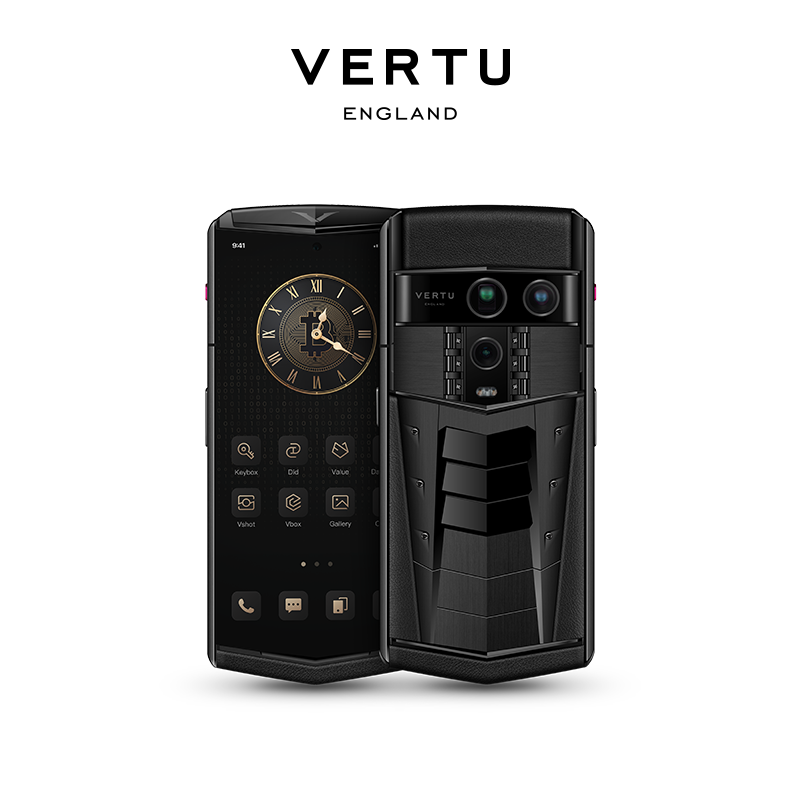
VERTU frames Agent Q as a move from “apps to agents”—you state the outcome, then approve what matters, while agents coordinate the steps behind the scenes. That’s the promise behind VERTU Agent Q.
For an executive, the difference is subtle but decisive: you’re not buying another tool for more information. You’re buying a workflow that tries to protect the two things your week consumes fastest—attention and discretion.
Collector’s note: Most “AI features” are still app-level tricks. The executive value of an agent model is coordination: fewer handoffs, fewer context switches, fewer loose ends.
A quick needs assessment (be honest)
Agent Q is a good fit if most of these are true:
Your calendar is not a schedule—it’s a battlefield (travel, board work, multiple time zones, constant inbound).
You operate with assistants, advisors, or counsel—and you need clean briefing packets and follow-up you can trust.
You care about privacy and control as much as speed.
You frequently turn conversations into decisions—and decisions into actions that must be tracked.
It’s a poor fit if:
You mainly want entertainment features, specs-first comparisons, or a phone that “does everything for everyone.”
You are comfortable living inside a single ecosystem and rarely delegate across tools.
You expect an agent to make final calls for you in high-stakes areas (legal, finance, people).
If you’re still reading, you’re likely in the right category: you want delegation, not novelty.
The use-case map: six executive scenarios that justify an agent phone
The easiest way to evaluate VERTU Agent Q is not by features—it’s by scenarios. Below are six executive moments where an agent model can change the outcome.
Each scenario includes four parts:
- Triggerthe moment it starts
- Delegatewhat’s safe to offload
- Approvewhere your decision is required
- Never delegatewhere risk is unacceptable
1) The meeting-to-decision pipeline (board, IC, leadership)
Trigger: You leave a board meeting with four decisions, two owners, and a flight in three hours.
Delegate
Convert the discussion into a structured summary.
Extract action items, assign owners, and propose deadlines.
Draft follow-up notes in your tone.
VERTU’s own executive productivity guidance focuses on this “discussion → summary → action items → follow-up” loop, including ownership and deadlines. See AI Agent Phone for Executive Productivity.
Approve
The final wording of sensitive follow-ups.
The deadline and owner assignment for items with political or budget impact.
The distribution list (who sees what).
Never delegate
Your final position on a decision.
High-stakes messaging that changes commitments (pricing, employment terms, M&A, litigation posture).
Why this use case wins: It reduces “decision leakage”—the quiet failure mode where meetings felt productive but outcomes evaporate.
How to verify: Run a simple test. After a real meeting, ask for: (1) a one-page summary, (2) a decision log, (3) action items with owners and deadlines, (4) a draft follow-up email. If any part is vague, the system isn’t ready for your core workflow.
2) Executive communications triage (the message that can’t wait)
Trigger: You have 70+ inbound threads across assistants, partners, family, advisors, and teams.
Delegate
Prioritize messages by urgency and relationship.
Summarize long threads into “what happened / what’s needed / what I should reply.”
Draft responses for your approval.
This is where the “intent to execution” framing matters: you don’t want a chatbot; you want a system that proposes actions and waits for approval. VERTU describes this model in How Vertu Agent Q Works: Intent to Execution (vertu.com/guides/how-vertu-agent-q-works).
Approve
Any reply that commits you (yes/no, approval, signature, schedule commitment).
Any message that reveals strategic intent.
Never delegate
Messaging that moves markets, governance, or reputations.
Communications where your personal voice is the asset (apology, negotiation, conflict).
The executive advantage: Less time in the inbox, more control over what breaks your focus.
3) Travel as an operating system (not a booking task)
Trigger: A meeting shifts from Tuesday to Monday. Your itinerary is now wrong.
Delegate
Assemble flight and hotel options that respect your constraints.
Build a travel pack: confirmations, time zone map, pickup windows, and meeting cadence.
Propose calendar changes that preserve priority meetings.
VERTU positions “Daily Coordination” and travel planning as a core workflow inside Agent Q’s coverage. That’s part of the product framing on VERTU Agent Q and appears in its broader usage guidance in How to Use Your AI Agent Phone: A Complete Guide to Vertu Agent Q.
Approve
The final itinerary (especially tight connections and red-eyes).
Any changes that displace a priority relationship.
Never delegate
Any booking that breaks security preference (unknown intermediaries, unclear cancellation, suspicious routing).
Why this matters for UHNW travel: A travel day is not “logistics.” It is time, privacy, and reliability under pressure.
4) Contracts and risk: first-pass triage before counsel
Trigger: You receive a contract on a deadline. Your counsel is not immediately available.
Delegate
Produce a clean summary: parties, scope, term, renewal, pricing structure (without inventing numbers), deliverables.
Highlight risk zones: liability, indemnity, IP ownership, confidentiality, governing law.
Extract obligations and dates into a checklist.
VERTU’s Agent Q positioning includes governance domains such as legal and contracts. See VERTU Agent Q.
Approve
What goes to counsel now vs later.
What risk is acceptable.
Never delegate
Signing.
Negotiating final language without qualified review.
The decision-stage value: You reduce delay without pretending automation replaces expertise.
5) Hiring and talent pipeline: speed without sloppiness
Trigger: You need a shortlist quickly—but your calendar is full.
Delegate
Screen resumes against a role brief.
Draft outreach emails.
Propose interview schedules.
VERTU’s Agent Q positioning explicitly includes HR recruitment and talent lifecycle coverage in its domain list. See VERTU Agent Q.
Approve
The shortlist.
The interview rubric.
Never delegate
Final hiring decisions.
Anything that introduces bias through lazy criteria.
Executive reality: Hiring is not a task; it’s a bet. Use an agent to accelerate throughput, not to outsource judgment.
6) The briefing loop: market, competitor, and board preparation
Trigger: Tomorrow’s meeting requires context you don’t have at hand.
Delegate
Create a one-page briefing pack: key facts, open questions, decision options.
Summarize recent updates on a company or topic.
VERTU’s product narrative repeatedly frames Agent Q as multi-domain support for entrepreneurs and executives. See The World’s First AI Agent Phone for Entrepreneurs.
Approve
The final conclusion.
What sources are trusted.
Never delegate
Treating an AI-generated brief as primary research.
Pro Tip: When you request a brief, require a “sources used” list and a “confidence / unknowns” line. If the system can’t surface its inputs cleanly, you should not trust its outputs for board work.
Guardrails that matter more than features
Executives do not fail because they lack tools. They fail because tools create unmanaged risk.
Here are the guardrails that make an “agent phone” usable in real life.
1) Approval checkpoints: the difference between help and liability
An agent should propose. You decide.
If the workflow skips approval, you get speed—but you also get unbounded risk. VERTU’s “approve what matters” framing is central to its explanation of how Agent Q operates in How Vertu Agent Q Works: Intent to Execution.
2) Privacy posture and discretion
For a privacy-sensitive buyer, the question is not whether an assistant is “smart.”
It’s where your context lives, who can access it, and what gets transmitted.
VERTU positions Agent Q with privacy-first language and a data-sovereignty posture in its product narrative on VERTU Agent Q. Evaluate these claims the way you evaluate any security promise: by understanding boundaries, not slogans.
3) Auditability: can you replay what happened?
In executive workflows, “What did we decide?” is not a philosophical question. It’s legal, operational, and reputational.
A useful agent workflow produces artifacts:
a decision log
action items with owners
messages that can be approved
obligations and dates that can be reviewed
If the system can’t create reviewable artifacts, you’re not buying execution. You’re buying a performance.
Why meeting intelligence is the best starting point
If you test only one use case first, make it meetings.
It’s measurable, repeatable, and high stakes. And it’s not speculative: meeting transcription, summaries, and action items are widely adopted productivity patterns.
Google Cloud’s 2026 roundup of enterprise GenAI deployments highlights examples like Equifax using “take notes for me” in Google Meet to generate transcripts, summaries, and action items (and reporting strong user adoption). See Google Cloud’s 2026 roundup of real-world generative AI use cases.
The point is not “Google says it works.” The point is that the category is real—so your evaluation can be ruthless and practical.
A 30-minute evaluation script (what to ask and what to look for)
You don’t need a week to decide if Agent Q fits your workflow. You need a controlled test.
Step 1: The meeting test (10 minutes)
Give a short meeting recording (or a real call, if appropriate).
Ask for:
one-page summary
decision log
action items (owner + due date)
follow-up draft
Pass condition: Outputs are crisp, not verbose. Owners and deadlines are plausible. Follow-up tone matches your voice.
Step 2: The travel test (10 minutes)
Give constraints: destination, timing, “do not break these meetings,” and preferences.
Ask for options + a proposed calendar adjustment.
Pass condition: It respects constraints first; it doesn’t optimize for irrelevant details.
Step 3: The contract triage test (10 minutes)
Provide a short contract or clause.
Ask for risks, obligations, and a plain-language summary.
Pass condition: It flags uncertainty instead of bluffing. It produces a clean checklist you can send to counsel.
Who should choose VERTU Agent Q—and who shouldn’t
Choose it if you want:
A phone that behaves like a private chief-of-staff workflow: capture → summarize → propose → approve.
Reduced leakage after meetings.
Travel coordination that respects calendar and preferences.
First-pass triage for documents and decisions.
Skip it if you want:
A specs-first flagship comparison.
A device that autonomously “handles everything” with no approvals.
A single-purpose tool (meeting notes only, travel only, etc.).
Next steps
If Agent Q fits your operating style, start with one workflow—meetings—and expand only after you’ve defined approval boundaries.
To explore the product positioning and domain coverage directly, start with VERTU Agent Q (vertu.com/agent-q), then read How Vertu Agent Q Works: Intent to Execution to evaluate the approval model.
Disclosure: This article references VERTU pages. Editorial judgment remains the priority.