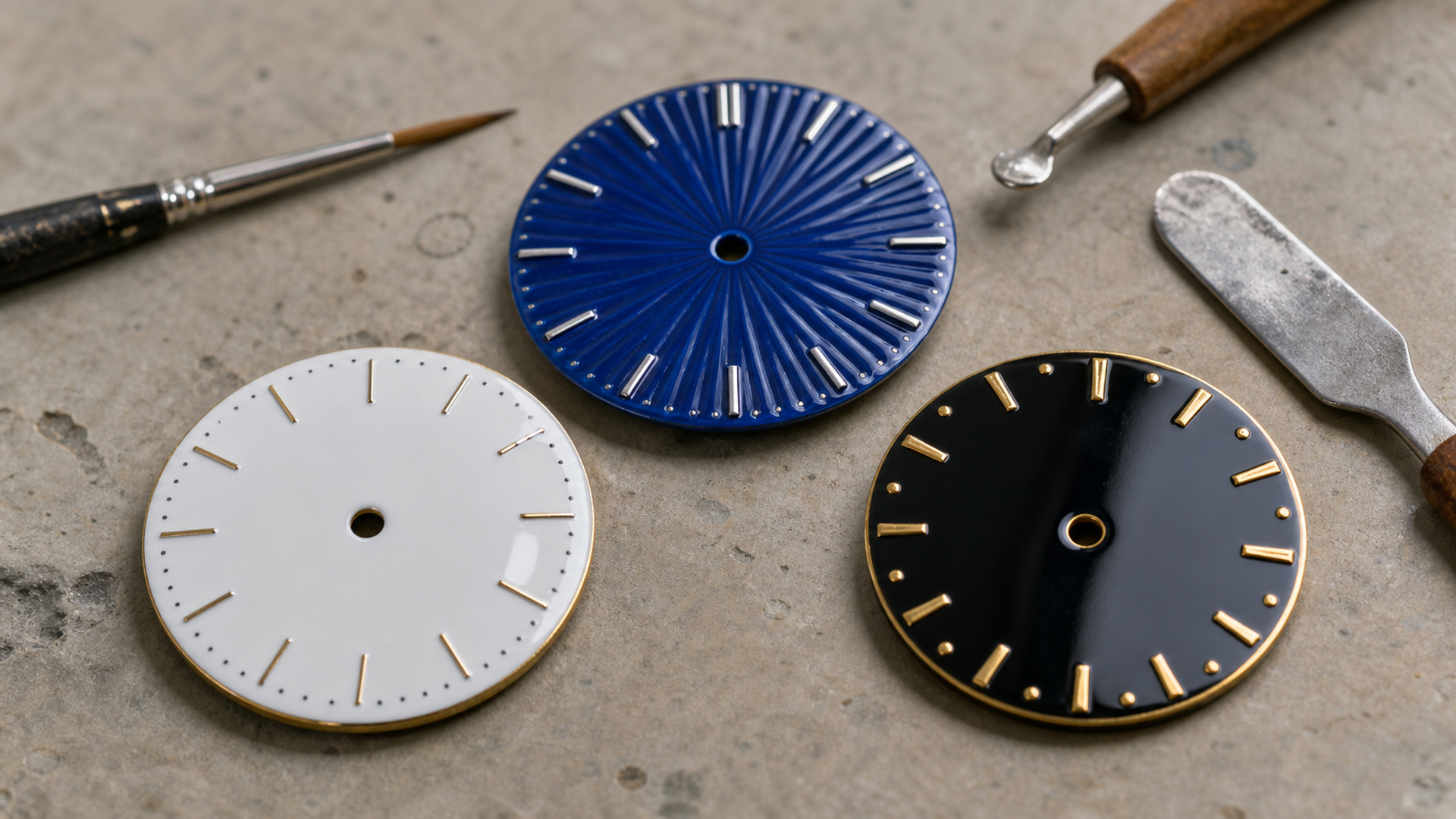
Porcelain, enamel and urushi dials should not be judged by a single idea of perfection. They are made through different processes, so a collector should inspect each one for process-appropriate variation, disclosed intervention and material-specific damage—without treating photographs as a diagnosis. Seiko’s official craftsmanship overview treats Arita porcelain, enamel and urushi as distinct dial-making traditions; the examples below use manufacturer and museum records to explain what a buyer can verify, without inventing a universal durability ranking.
That difference is newly visible in 2026. Seiko’s 145th-anniversary Presage, scheduled for July availability, uses a cobalt-blue Arita porcelain dial made through controlled moulding, firing and glazing. Meanwhile, Grand Seiko continues to show how urushi and raised maki-e can create depth through lacquer and hand-applied decoration. Vacheron Constantin’s new Louvre collaboration demonstrates a third point: the most ambitious artistic dials may combine enamel with engraving, micro-mosaic, marquetry, stone and other crafts, making the material label only the start of the inspection.
The practical conclusion is simple: do not rank these materials in the abstract. First identify the process, then establish which variations belong to it, which marks indicate damage, and what documentation is proportionate to the watch’s value.
Start with the process, not the marketing name
Porcelain: a shaped and glazed ceramic dial
Seiko describes its 2026 Arita dial as a specially formulated porcelain made through a multi-stage process of precise moulding and firing. The cobalt glaze had to settle over raised and recessed surfaces without hiding the radial pattern beneath. According to the official Seiko release, the porcelain formulation is more than four times stronger than traditional porcelain, and subtle variations may remain because of the production process. The watch is a 1,500-piece limited edition scheduled for July 2026.
For a collector, “handcrafted variation” should be specific. It might mean a small tonal shift, a slightly different expression of glaze depth or a minute surface nuance disclosed as part of manufacture. It should not be used to excuse documented loss or impact damage.
Enamel: glass fused to a supporting dial
“Enamel dial” covers several techniques, including grand feu, champlevé, cloisonné and miniature painting. Their structures differ, but they share the use of vitreous material fired onto a support. The result can retain intense colour and a distinctive surface, yet hard does not mean invulnerable. Impact, stress around an aperture or past handling can chip or fracture an enamel layer.
A useful reality check comes from outside contemporary product marketing. The British Museum records a circa-1785 white enamel watch dial on brass with damage around the winding aperture and chips near the rim. That object is not a prediction of how a modern wristwatch will age. It is evidence that condition language should identify the location and form of actual loss instead of describing every irregularity as “patina”.
Urushi: lacquer whose depth is built in layers
Urushi is not a ceramic. Grand Seiko’s SBGW262 description explains that its black dial uses lacquer sourced from Jōbōji and mixed with iron for a deep black colour, while the hour markers are decorated with raised maki-e by artisan Isshu Tamura. Light reveals depth and colour within the gloss rather than simply bouncing off a flat painted surface.
The construction makes inspection different. A buyer should compare the intended depth of lacquer, hand-applied decoration and curved dial with any scratches, cloudy areas or break in surface continuity, then seek specialist review rather than infer lifting, refinishing or later touch-up from one photograph. Grand Seiko has also described a special treatment intended to limit colour change over time on another urushi-dial model. That is a model-specific manufacturer claim, not permission to assume that every lacquer dial is immune to ageing.
Artisan dial inspection matrix
Use this matrix to organise a viewing or request photographs. It is not a substitute for a condition report.
| Inspection point | Porcelain | Enamel | Urushi | Action before purchase |
|---|---|---|---|---|
| Expected visual character | Glaze depth, moulded relief and possible subtle tonal variation | Glass-like colour, crisp boundaries or deliberately painted detail, depending on technique | Layered gloss, light-dependent depth and hand-applied maki-e where specified | Compare with official images of the exact reference, not a generic material sample |
| Potentially legitimate variation | Minute glaze or tone differences disclosed as part of manufacture | Small hand-execution differences in painted or partitioned work | Brushwork, depth and raised decoration consistent with the named technique | Ask the maker or seller to describe the variation in precise terms |
| Condition questions | Chips, cracks or edge loss should be documented and explained; photographs alone cannot establish whether a subtle surface variation began in manufacture or resulted from impact | Chips, hairline fractures or loss around apertures and edges should be located and documented; possible later infill requires specialist review | Scratches, cloudy patches or a break in surface continuity warrant specialist review; do not infer lifting, refinishing or poor touch-up from one photograph | Request raking-light macro images and an independent condition opinion when material |
| Critical photo angles | Straight-on, low raking light, dial edge and apertures | Straight-on, oblique reflection, every aperture and perimeter | Straight-on plus several light angles to reveal depth, surface continuity and decoration | Ask for unedited files under neutral light with reflections controlled, not erased |
| Documentation | Reference specification, craft attribution, limited-edition details and service history | Named enamel technique, artisan or workshop where disclosed, restoration history | Lacquer source or technique where stated, artisan attribution and any refinishing history | Separate manufacturer facts from retailer adjectives |
| Service question | Can the maker replace or repair the dial, and would replacement change collectability? | Is local repair possible, visible and documented, or is full replacement required? | Who is qualified to touch up or refinish the lacquer, and how would intervention be recorded? | Obtain the answer in writing before assuming future repairability |
The matrix deliberately avoids naming a winner. A pristine industrially repeated dial may be rarer in practice than a heavily restored “artisanal” one; a visibly handmade variation may add character but no market premium; and a documented replacement may be preferable for a daily-wear watch even if an originality-focused collector chooses differently.
How to inspect variation without romanticising defects
1. Establish the exact technique
Ask for more than “porcelain”, “enamel” or “lacquer”. Is the porcelain body moulded for the reference? What enamel technique is used? Is the urushi plain, maki-e decorated or combined with another surface treatment? If a dial combines crafts, list them.
Vacheron Constantin’s 2026 Métiers d’Art Tribute to Great Civilisations makes the problem clear. The maison says the four new dials combine engraving, micro-mosaic, enamel, marquetry and glyptics, with subtle variations in material and shade across editions of 15. Calling such a dial “enamel” would be true but incomplete; inspection has to account for interfaces between different materials and techniques.
2. Compare like with like
Use official images of the same reference and, where possible, several physical examples. A difference between two handmade dials can be normal. A difference between a listing and the documented reference configuration may be a replacement, restoration, photography issue or a rarer variation. It needs explanation before it gains a story—or a premium.
This is why a disciplined collector benefits from the same separation used in VERTU’s guide to AI watch valuation limits: identification, condition, originality and market value are related questions, not one automated answer. Material recognition alone cannot establish who made the dial or whether it remains as delivered.
3. Look at edges, apertures and attachment points
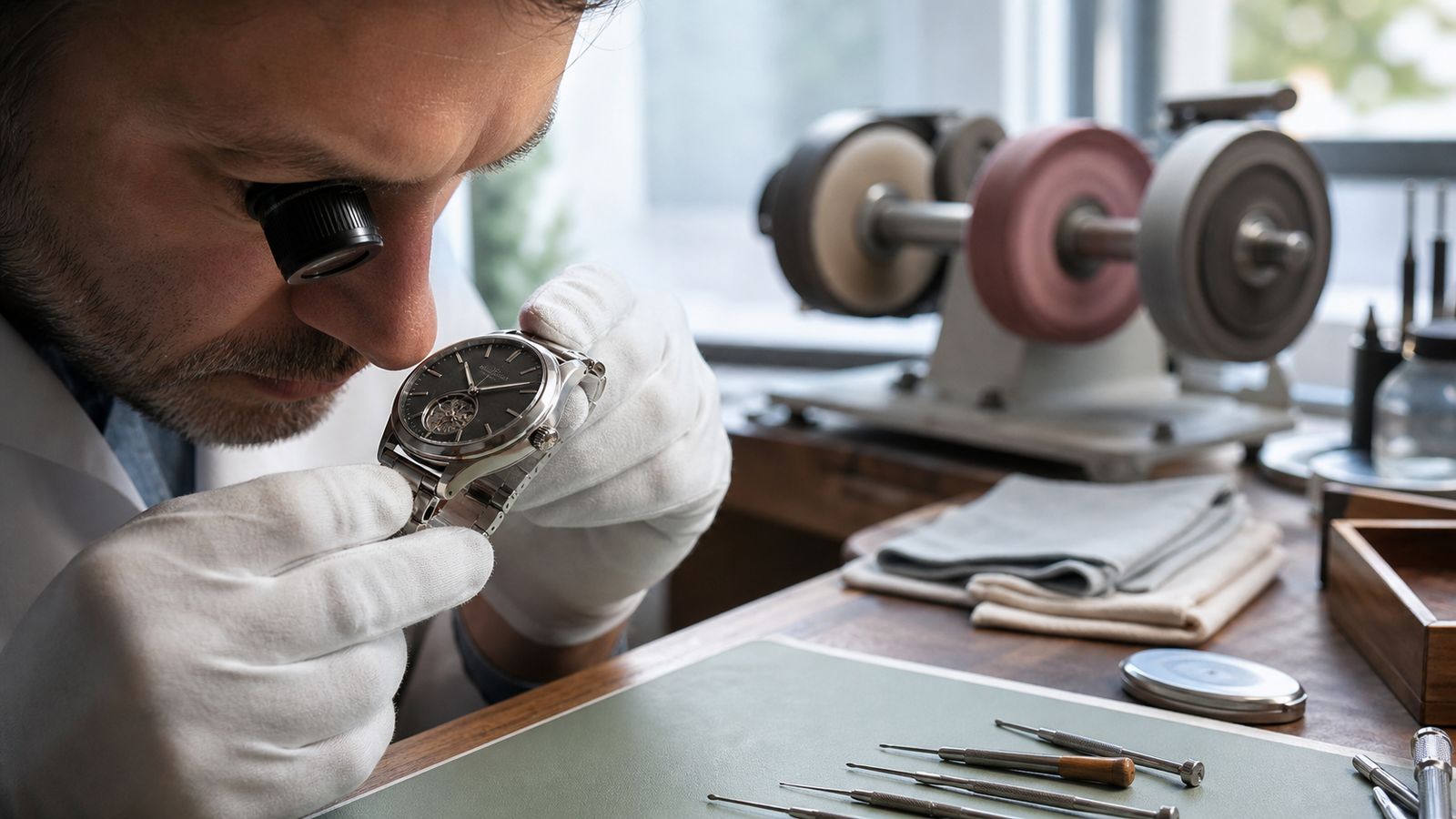
The most informative areas are often not the broad, beautiful centre. Request macro photographs around the hand stack, date or subdial apertures, dial perimeter, applied markers and dial feet where a professional inspection permits. Stress, impact and past removal can reveal themselves there.
The British Museum’s enamel dial is useful precisely because its record identifies chips around the rim and damage around the winding aperture. On a different construction, the warning signs will differ, but the method remains sound: name the defect, locate it and ask whether it is stable.
4. Use light as an inspection tool
One straight-on photograph favours marketing; several controlled angles favour understanding. Neutral diffuse light shows colour. Low raking light reveals chips, texture changes, lacquer scratches and surface discontinuity. Reflected light can reveal gloss and depth, but it can also conceal a defect behind glare.
Ask the seller not to remove every reflection digitally. For urushi in particular, changing light is part of the intended experience. For glazed porcelain and enamel, reflected highlights can help disclose surface continuity. If colour affects the decision, inspect in person or appoint someone who can compare the watch under neutral light.
5. Separate condition from repairability
Two flawless-looking dials can carry different ownership risks. A current-production porcelain dial may be replaceable only as a complete part. A historic enamel dial may require a specialist restoration that changes its originality. An urushi dial may need an artisan with the correct materials and technique rather than a conventional refinisher.
Ask who can perform the work, whether the manufacturer will accept the watch, whether a replacement dial would be identical, whether the original is returned, and how the intervention appears in service records. Do this before purchase, not after the first accident.
The protective system matters too. VERTU’s comparison of sapphire, mineral and Hesalite watch crystals explains why scratch resistance, shatter behaviour and replacement practice affect ownership. A remarkable dial is only one part of the risk envelope.
What current releases tell collectors—and what they do not
Seiko’s July 2026 Arita launch is useful because the maker discloses the material formulation, named craft supervision, production method, designed variation, edition size and release timing. Those facts make the dial more legible as an object. They do not predict secondary-market value, guarantee that every variation will appeal equally or make a chipped example “unique”.
Grand Seiko’s urushi descriptions are valuable because they name the lacquer source, colour treatment and maki-e execution. They do not prove the condition of a watch offered by a third party. Vacheron Constantin’s Louvre project demonstrates the amount of research and cross-disciplinary craft that can sit behind a dial. It also demonstrates why condition must be reference-specific when several materials meet.
For readers deciding between an independent specialist and an established maison, VERTU’s first collector’s decision framework helps place craft attribution alongside service access, documentation and long-term ownership. The best choice is not automatically the most complex dial. It is the one whose craft, condition and support structure you understand well enough to own.
The collector’s conclusion: inspect according to the craft
Porcelain, enamel and urushi are three different answers to the same horological problem: how to turn a small functional surface into an object with depth, colour and human presence. Their differences are the point.
Judge porcelain by the coherence of its body, glaze and fired surface. Judge enamel by the named technique, surface integrity and vulnerable edges or apertures. Judge urushi by the continuity of its layered finish, the execution of any decoration and the way it behaves under changing light. For all three, insist on exact-reference photographs, service history, restoration disclosure and a realistic repair path.
Craft should invite closer attention, not suspend it. A legitimate handmade variation becomes meaningful when the process explains it. Damage becomes manageable when it is named and priced. And a collector’s confidence comes not from declaring one material superior, but from knowing what evidence each material requires.