When a client expects a reply in minutes—not hours—your messaging channel has to be dependable. And on WhatsApp, “dependable” starts with something unglamorous: the phone number behind your business account.
If you’re searching for WhatsApp business approval phone, you’re likely trying to answer one practical question: Which phone number will actually be accepted—and how do we set it up so it doesn’t fail at the worst moment?
This guide is written for luxury retail and concierge teams: discreet tone, clear steps, and a consent-first posture that protects both client trust and account quality.
Key TakeawayTreat the WhatsApp Business phone number as an owned brand asset—not a staff member’s personal line.
Why an “approval phone” matters in luxury retail
For a luxury brand team, WhatsApp isn’t just a support inbox. It’s appointment coordination, last-mile reassurance, post-purchase care, and quiet relationship maintenance.
When the setup is rushed, you tend to see the same operational failures:
missed one-time codes at onboarding
“WhatsApp Business not approved” dead ends that stall a launch
fragile access when a staff member changes roles
inconsistent client experience across regions and time zones
Before you start: what “approval” usually means (in plain language)
Most people mean one of three things by “approval”:
The platform accepts your phone number and you can complete the setup.
You can reliably receive the code (SMS or voice call) during setup.
Your account stays in good standing once you begin messaging real clients.
This article focuses on (1) and (2), plus the minimum you should do for (3) to avoid avoidable restrictions.
Step-by-step: set up a WhatsApp business approval phone number that won’t fail
Step 1: Decide ownership and access (before you pick the number)
Input: Your clienteling workflow (who replies, when, and from where).
Action: Choose one of these models:
Brand-owned number controlled by the business (recommended).
Boutique/location number for local teams (only if you can govern access and handover).
Output: A written owner-of-record (department, not a person) and a short access list.
Done when: You can answer, in one sentence, “Who controls this number if a key staff member is traveling, leaves, or loses a device?”
Step 2: Choose the number type (and what to avoid)
Input: The number types available to your business.
Action: Prefer a standard mobile number or a landline that can reliably receive the setup call.
Avoid common failure types called out in provider documentation, including:
short codes
toll-free numbers
lines with IVR/automated call menus (unless you can temporarily disable them)
Bird’s documentation on picking a number for WhatsApp is a useful baseline for these constraints.
Output: A single dedicated number selected for WhatsApp Business use.
Done when: You can receive an inbound voice call without needing to “press 1,” dial an extension, or navigate a menu.
Step 3: Make one-time code delivery boring (reliable every time)
Input: Your selected number + the team members who will be present during setup.
Action: Before you attempt onboarding:
Ensure someone is physically available to receive the SMS or voice call.
Temporarily remove anything that blocks an immediate answer (IVR, after-hours routing, voicemail prompts that eat the code).
If you’re using a voice line, confirm it can receive the call reliably.
Output: A “setup window” with the right person, in the right place, with access.
Done when: You can receive a test call/SMS to that number in real conditions (not just in theory).
⚠️ WarningThe fastest way to burn time is to start onboarding before you’re certain the number can receive the code.
Step 4: Standardize the number format and document it internally
Input: Your phone number as it will be entered.
Action: Document the number in full international format: +country code + area code + local number.
Create a one-page internal record:
number in international format
where the SIM/line is held (or where the landline is routed)
who can access the code during setup
where to store recovery/admin access (if applicable)
Output: A single source of truth that prevents “someone typed it differently” failures.
Done when: Any team member can copy/paste the correct number format without guessing.
Step 5: Prepare the essentials that reduce friction later
Input: Your brand basics.
Action: Before you message clients, ensure your WhatsApp Business presence is consistent:
accurate business name and client-facing identity
up-to-date support contact details
a clear privacy posture for clients (what you will and won’t ask for in chat)
Output: A business profile that won’t create mistrust or policy friction.
Done when: Your profile reads like your boutique experience: clear, calm, and credible.
Step 6: Run a pre-submit checklist
Use this as a final pass before you start onboarding.
The number is brand-owned (not a personal line)
The number is dedicated for WhatsApp Business use
The line can receive SMS and/or voice codes reliably
There is no IVR or extension requirement blocking the call
The number is recorded in international format
You have an internal owner and a handover plan
Troubleshooting: 7 common failure patterns (and what to do next)
1) “This number is already registered”
This is one of the most common blockers.
Clickatell notes that a business generally can’t sign up with a phone number already registered with WhatsApp Messenger or the WhatsApp Business app; in many cases, the existing account must be removed first (see their guidance on number and display name sign-up).
What to do next: Decide whether the number is truly worth migrating. If not, use a new dedicated business number.
2) “WhatsApp Business verification code not received”
This is usually routing (IVR, after-hours rules, voicemail prompts) or a number type mismatch.
What to do next: Temporarily simplify call routing. If you can’t, switch to a number type that can receive a direct inbound call/SMS.
3) “The number works for calls, but the setup still fails”
This often points to formatting issues, inconsistent entries across tools, or internal access confusion.
What to do next: Standardize one canonical number format, and centralize who receives and records the one-time code.
4) A staff member set it up on their personal line
It “works” until it doesn’t: access becomes political, and continuity becomes fragile.
What to do next: Move to a brand-owned number and create a role-based access policy.
5) Your line has an IVR menu
If the setup call can’t reach a person or an accessible voicemail immediately, onboarding can stall.
What to do next: Disable IVR temporarily, or use a line without it.
6) Your outreach feels like marketing, not service
Even if setup succeeds, accounts can be limited if clients block or report messages.
What to do next: Tighten consent, reduce frequency, and make every business-initiated message expected.
7) You’re asking for sensitive information in chat
Policies generally prohibit requesting or sharing sensitive personal/financial information.
What to do next: Move payments and identity checks to secure, official channels. Use WhatsApp for coordination, not for collecting high-risk data.
Consent-first clienteling: the minimum policy that protects account quality
Luxury isn’t loud. It’s expected, and it’s controlled.
A practical baseline:
Get explicit opt-in before you initiate messages.
Tell the client what they’ll receive (appointments, order updates, service follow-ups) and how to opt out.
Respect opt-outs immediately.
WhatsApp’s Business Messaging Policy is clear that businesses must not mislead or spam users. Meta also documents opt-in expectations in its WhatsApp Business opt-in guidance.
Key TakeawayClient trust and account quality are the same discipline—only message people who expect to hear from you.
A discreet device note: keeping client conversations private on the move
Even with the right number, luxury retail teams face a second question: where does the conversation live?
If a client thread contains travel plans, preferences, or sensitive timing, you want a work phone workflow that supports privacy and continuity—especially across international travel.
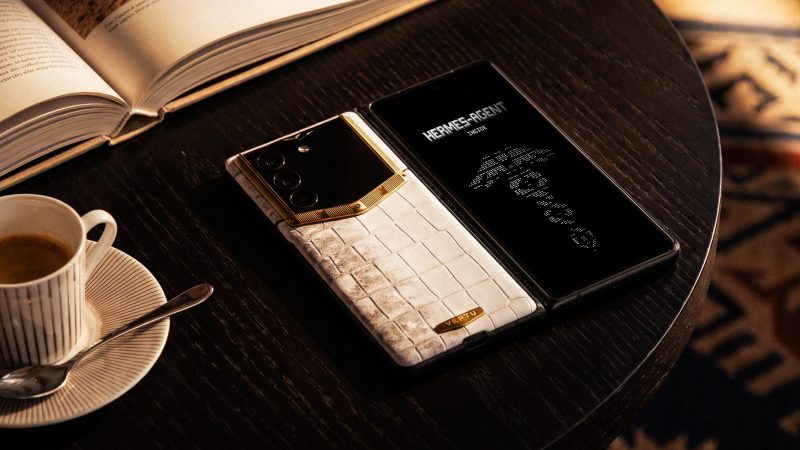
If you’re evaluating a premium device category for clienteling workflows, you may want to review VERTU AlphaFold as a product category reference for foldable, luxury-oriented mobile setups.
Key takeaways
Your WhatsApp business approval phone should be a dedicated, brand-owned asset.
Choose a number type that can receive the setup code reliably; avoid common failure types like IVR lines, toll-free, and short codes.
Standardize international formatting and internal documentation.
Protect account quality with explicit opt-in and disciplined outreach.
Next steps
If you want, I can adapt this into a one-page internal SOP for your boutique teams (including a checklist they can run in five minutes before onboarding).
Disclosure: This article references VERTU pages. Editorial judgment remains the priority.