Most “all vertu phones” lists you’ll find online are museum catalogs. Interesting, but not helpful when you’re choosing a device to live with.
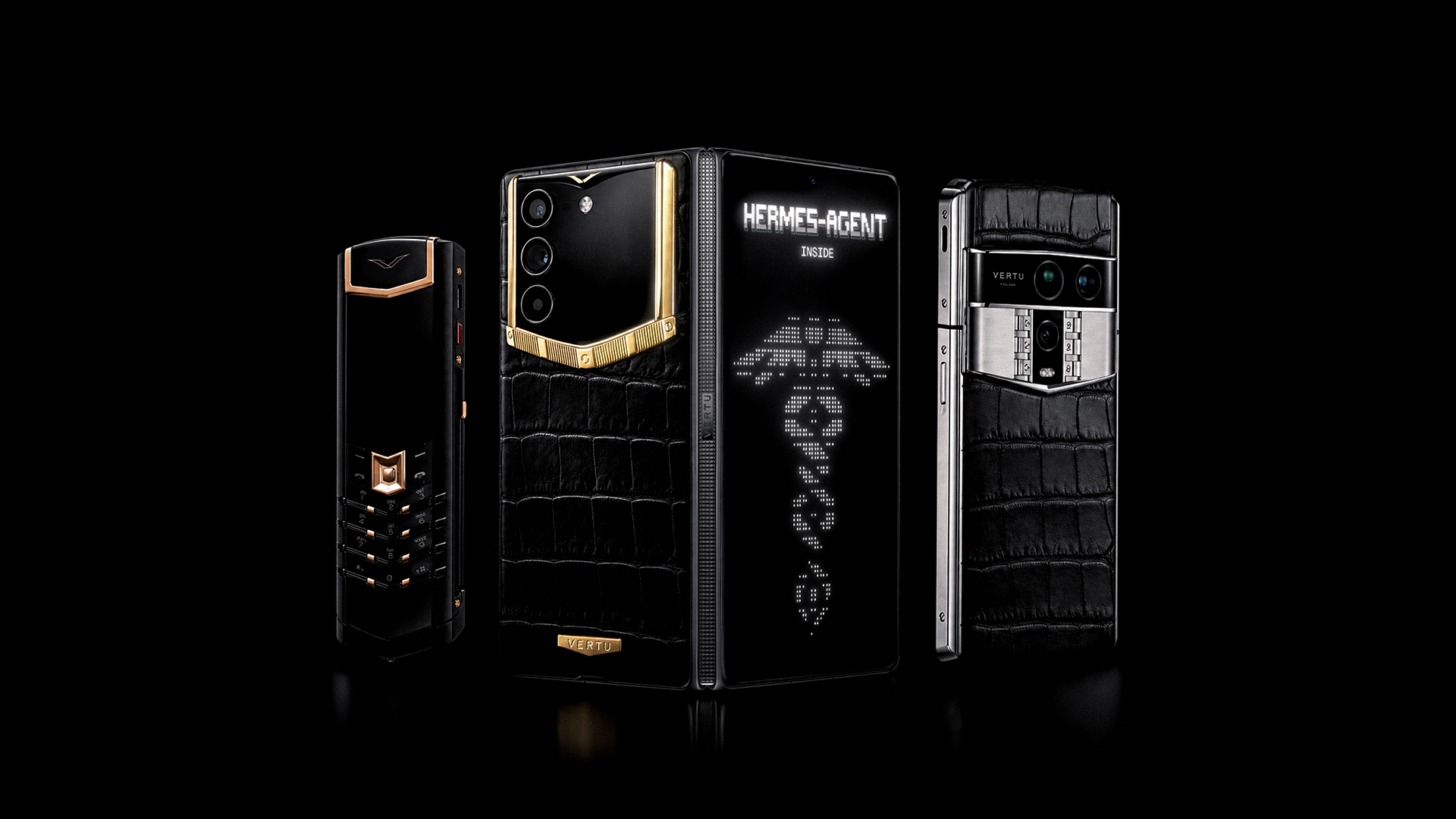
This guide uses a cleaner definition of vertu phone models: the current families shown on VERTU’s official catalog, plus the Signature-era heritage that still shapes how collectors and owners think about the brand.
Key takeaways
VERTU’s lineup is best understood as families plus finishes: the family defines the form factor and daily experience; the finish defines the materials and collectability.
If you want a foldable built around voice-to-action workflows, AlphaFold is positioned as the Hermes Agent phone.
If you want a flagship framed around agent-first interaction and privacy posture, Agent Q is positioned around VAOS and Ruby Talk.
If you want the flip format with VERTU’s “quantum-enhanced” story, Quantum Flip is presented as the new luxury flip phone.
If you want classic VERTU ownership, Signature is a different proposition: tactile keypad lineage, Ruby Key access, and provenance-first buying.
Start with fit, not the finish
Before you compare calfskin vs alligator, decide what role this phone plays in your life. The strongest VERTU choice is rarely the loudest finish. It is the one that reduces friction without expanding your trust boundary.
1) Form factor you will actually use
- Foldablebest when your day includes reading, approvals, and document work, and you prefer more screen without carrying a second device.
- Flagship “candybar”best when you want speed, reach, and a straightforward daily driver that still feels like a crafted object.
- Flipbest when you like the ritual of opening and closing, and you want a distinct device that stays pocketable.
- Keypad heritagebest when you want a quieter communication layer and a collector’s object that changes how you interact with your phone.
2) Your privacy boundary
UHNW buyers usually have three definitions of privacy, and you need to know which one you mean:
- Social privacythe device does not invite attention.
- Operational privacyfewer surfaces for accidental exposure (notifications, app sprawl, messy handoffs).
- Technical privacyisolation, encryption, and clear controls over data movement.
If you don’t define privacy upfront, you’ll end up paying for an idea, not a capability.
3) Your service expectations
A VERTU purchase is often a service decision disguised as a hardware decision. Decide whether the concierge layer is:
essential (you will actually use it)
nice to have
irrelevant
4) Materials that change the ownership experience
Materials matter when they change durability, feel, patina, or the daily ritual. If it only looks expensive, you will tire of it faster than you expect.
5) Provenance and aftercare
If you are buying a rare finish or a heritage piece, provenance is part of the product. Treat it like you would treat it like a watch purchase: documents, identifiers, and the service pathway.
Collector’s note: VERTU pricing and desirability tend to move with materials, scarcity, and service eligibility more than with benchmark specs. Start with the collection, then refine by finish.
Vertu phone models (current lines): what’s active now
The simplest place to orient yourself is the official catalog, because it shows the active families in one view: VERTU phones collection.
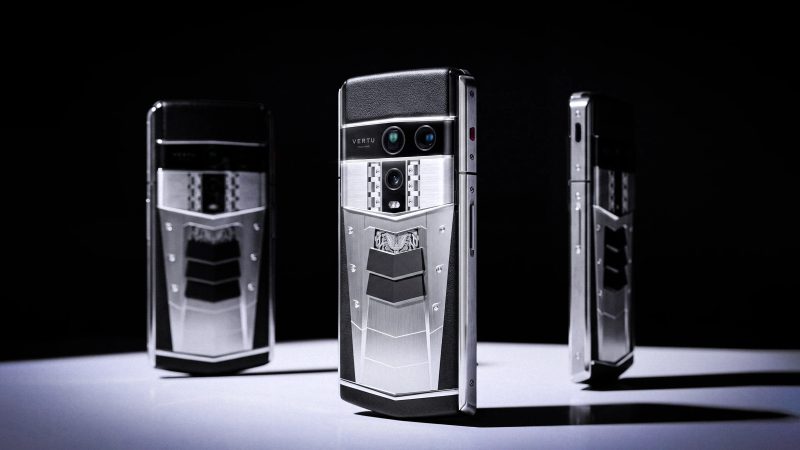
Within that catalog, VERTU currently presents families including AlphaFold, Agent Q, and Quantum Flip, with multiple executions and several items marked NEW.
AlphaFold: the foldable built around Hermes Agent workflows
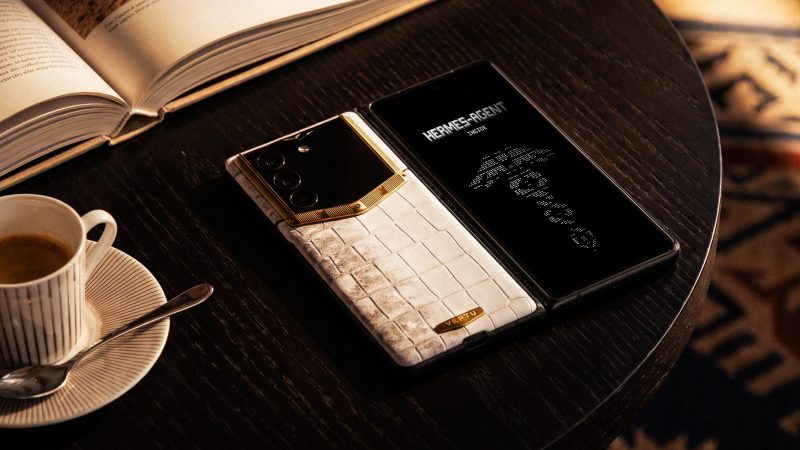
AlphaFold is positioned as a luxury foldable designed around Hermes Agent, with emphasis on turning voice intent into actions across apps. On the official AlphaFold product page, VERTU states Hermes Agent connects with “70+ supported apps” and turns “voice commands into actions” (wording on the AlphaFold Stitched Calfskin page): AlphaFold Stitched Calfskin.
A practical implication for buyers: in VERTU’s own framing, the family defines the core experience, while finishes primarily change the tactile and visual presence.
Who AlphaFold fits
You travel constantly and want a larger work surface without carrying a tablet.
You delegate often and want your phone to behave like a controlled command surface.
You value craft, but you also want modern workflows, not just heritage symbolism.
Who should look elsewhere
You want a small, pocket-first device above everything.
You want a simple phone that stays out of your way.
Agent Q: a flagship framed around VAOS, Ruby Talk, and privacy
Agent Q is positioned as a flagship with a specific worldview: the device is less a grid of apps and more an agent-led system. In VERTU’s announcement, Agent Q is framed around VAOS (VERTU Agent Operating System), Ruby Key reborn as Ruby Talk, and a privacy posture described as Edge Autonomy: VERTU unveils AI Agent Phone Agent Q.
This is not a spec table argument. It is a user model argument.
If you prefer your device to anticipate and structure work, Agent Q is positioned to appeal. If you prefer a device that stays strictly reactive, you may find the narrative mismatched.
Who Agent Q fits
You want a daily driver that feels substantial and deliberate.
You want privacy framing that is central, not an afterthought.
You like the idea of a single, dedicated entry point into assistance and service.
Who should look elsewhere
You only buy devices that live inside a mainstream ecosystem first.
You want a phone that is easily replaced, swapped, or standardized across a team.
Quantum Flip: the “new flip phone” in the lineup
Quantum Flip appears in the current catalog as a flip option. VERTU also positions it as the new luxury flip phone with quantum-enhanced framing in its official announcement: Vertu’s new Quantum Flip.
If you are searching for “vertu latest phone” or “vertu new phone,” use two filters:
what is marked NEW in the official catalog
what has a recent official announcement page on vertu.com
Everything else is rumor, reseller copy, or old inventory dressed up as a launch.
Who Quantum Flip fits
You want flip ergonomics and a strong “private device” feel.
You want something that is distinct from a mainstream slab phone.
Who should look elsewhere
You want maximum screen with minimum compromise (a foldable usually wins).
You want a phone that disappears into the background.
How to read finishes and editions without getting lost
In the catalog, you will see variations like stitched calfskin, alligator, themed editions, and special collections. It is easy to over-index on the names.
A practical way to read the lineup:
- Choose the family firstAlphaFold vs Agent Q vs Quantum Flip.
- Choose the material tiercalfskin vs more exotic leathers.
- Decide whether scarcity matterslimited editions and themed executions.
- Define your bespoke boundarywhat you will customize, and what you will not.
The point is not to buy the loudest piece. The point is to buy the one you will still respect six months in.
How to verify: If you are buying a rare finish or a limited edition, treat provenance as a checklist, not a feeling. Verify identifiers, match documents, and confirm service eligibility before you move money.
How finishes and materials change the decision
If you’re choosing between two executions inside the same family, ask one question: will this change how I use the phone, or only how it photographs?
Here’s a practical way to think about materials:
Calfskin tends to be the most understated daily choice. It wears in, not out.
Alligator and rarer hides shift the phone toward a collector’s object. You buy it for the tactile and visual presence, and you accept that it will attract more attention.
Limited and themed editions only make sense when you can prove the story. If you cannot verify provenance, treat “limited” as marketing.
This is also where your lifestyle matters. If you spend your life moving through airports, cars, meeting rooms, and hotel lobbies, the best finish is often the one that stays elegant under hard use.
The classic era: where Signature fits today
Signature is not just “an old model.” It is a different definition of what a phone is.
VERTU’s own guide frames the Signature phone as an iconic keypad lineage, with emphasis on tactile, discreet communication and Ruby Key concierge access. It also provides a structured “what to check before buying” checklist that covers materials, Ruby Key and concierge access, privacy meaning, travel practicality, aftercare, and authenticity: Vertu Signature phone explained.
When a buyer says “I want the classic VERTU,” they usually mean some combination of:
a phone that feels like a crafted object, not a disposable upgrade
a quieter relationship with communication
a service layer that feels personal
collectability, but with proof
A quick Signature fit test
Consider Signature if:
you want a keypad device for calls, discreet messaging, and ritual
you want an object that reads like a watch purchase
you care about Ruby Key access as much as hardware
Avoid Signature as your primary device if:
your life depends on modern app ecosystems
you need constant updates and mainstream accessory compatibility
Buy safely: authenticity and provenance
If you do nothing else, do this.
VERTU’s buying guide emphasizes using official channels and treating authenticity as an auditable process: verify IMEI or serial details, match documentation, and watch for seller red flags: Where to buy a VERTU phone.
A simple authenticity checklist
Verify the IMEI or serial information using official guidance before purchase.
Insist on the original proof of purchase and warranty documentation.
Make sure packaging and authenticity materials match the device identifiers.
Avoid sellers who push off-platform payment or refuse verification details.
FAQ
What are the current VERTU phone models?
The active catalog includes families such as AlphaFold, Agent Q, and Quantum Flip, each with multiple finishes and editions. The most reliable way to see what is current right now is VERTU’s official catalog.
What is the latest VERTU phone?
“Latest” can mean different things. The cleanest definition is: models marked NEW on VERTU’s official catalog, plus any phones with a recent official announcement page on vertu.com.
Are Signature phones still worth buying?
They can be, if you want heritage ownership, keypad tactility, and Ruby Key concierge access, and you can verify provenance and service eligibility.
What should I choose if privacy is my first requirement?
Start by defining what privacy means for you (social, operational, technical). Then shortlist based on form factor and the privacy posture you are comfortable with.
Next steps
Shortlist by family first, then by finish. If you are buying new, start with the official catalog. If you are buying pre-owned, treat provenance like a process.
Disclosure: This article references VERTU pages. Editorial judgment remains the priority.