

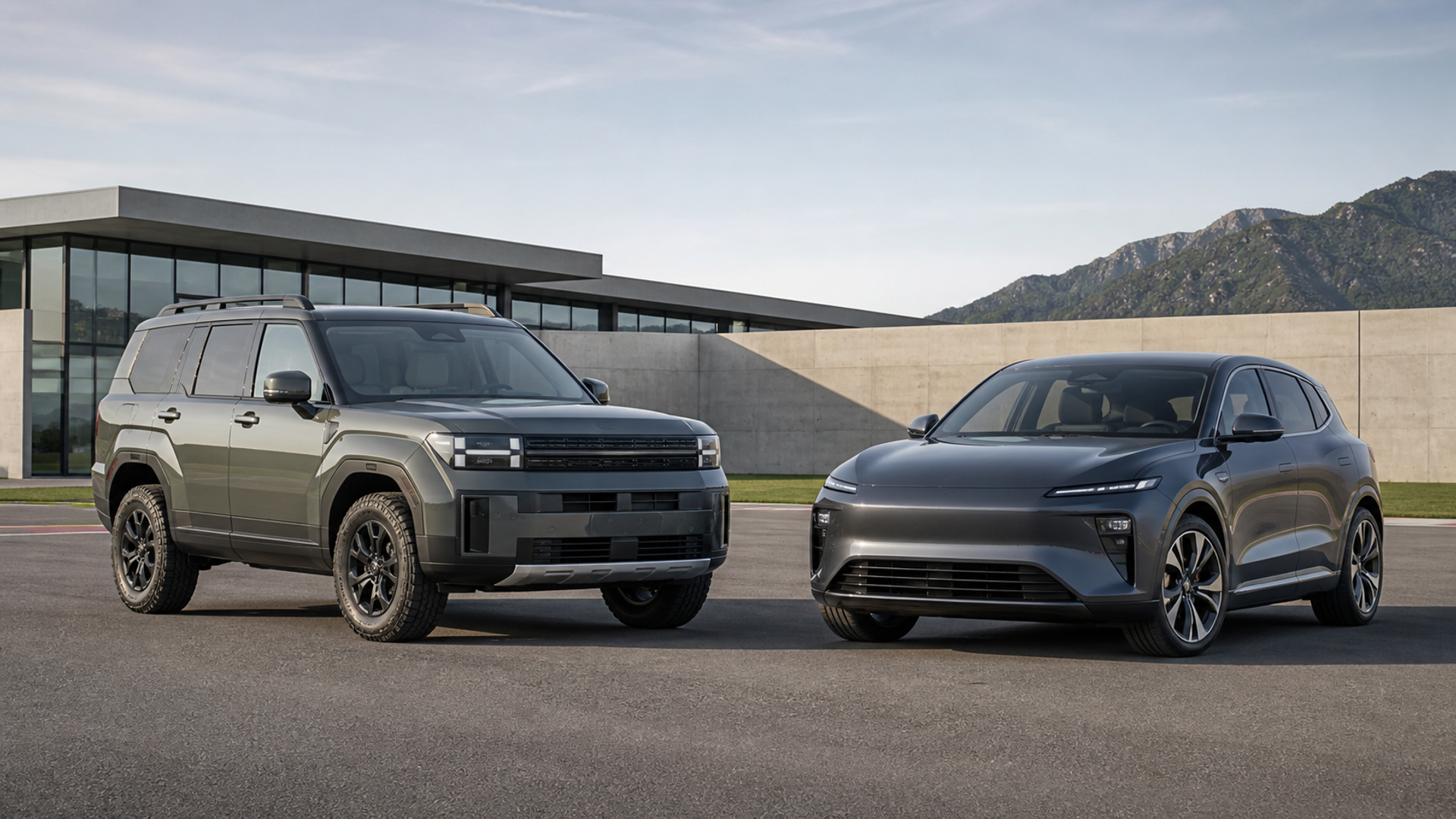
Crossover and SUV are marketing terms layered over several engineering and regulatory classifications. Crossovers are commonly associated with car-like unibody construction, while traditional SUVs are commonly associated with body-on-frame architecture, greater towing ambition and more severe off-road hardware. Yet many vehicles sold as SUVs are unibody, and some crossovers meet regulatory truck definitions. The badge therefore cannot prove construction, clearance, payload, towing, third-row usability or safety performance. A useful comparison starts with the exact platform and certified ratings, then asks whether the owner really needs the capability that adds mass, height, cost and manoeuvring difficulty.
Architecture is a tendency, not a badge
Choose a crossover when passenger comfort, efficient packaging, road manners and urban usability dominate. Choose a traditional SUV when verified towing, low-range hardware, durability under severe load or genuine off-road geometry is necessary. Choose the exact vehicle when the labels overlap, because construction, tyres, suspension, payload, seating and driver-assistance calibration vary more than the category names suggest.
| Decision factor | Crossover | Traditional SUV | Choose the exact vehicle |
|---|---|---|---|
| Construction | Usually unibody and car-derived | Often body-on-frame | Verify the platform |
| Ride and handling | Often tuned for road comfort and control | Can prioritise load and articulation | Test on the normal route |
| Space efficiency | Can package passengers efficiently | May trade interior room for hardware | Measure occupied rows |
| Towing and payload | Ranges from modest to substantial | Often offers higher certified limits | Read both ratings together |
| Off-road use | Usually light-trail focused | May add low range and robust geometry | Verify angles, tyres and recovery points |
| Daily friction | Often easier to park and fuel | Size and mass can add operating cost | Price the real annual pattern |
This suv vs crossover matrix is the article's working value object. Read the suv vs crossover rows together: the decisive failure mode depends on this topic's evidence, operating context and reader objective.
Regulatory labels blur the showroom language
Evidence 1. EPA reporting separates sedan/wagon, car SUV, truck SUV, pickup and minivan/van categories rather than treating every SUV alike.
Evidence 2. Regulatory car-versus-truck classification can depend on drive configuration, weight and design criteria, so marketing language is not a technical guarantee.
Evidence 3. Unibody construction can improve packaging and road behaviour, while body-on-frame construction can support severe load and repair objectives; neither is automatically superior.
Evidence 4. Towing capacity is constrained by payload, tongue weight, cooling, brakes and local licence rules as well as the advertised maximum.
Reader-visible sources checked for this article:
epa.gov — reader-visible current or official evidence
epa.gov — reader-visible current or official evidence
For suv vs crossover, these sources establish only the claims inside their documented scope. Recheck every changeable specification, availability condition, price, policy or service term in the relevant market before acting.
Measure the mission before the footprint
Read construction as a stop/go test: usually unibody and car-derived supports the first option; often body-on-frame supports the second; and verify the platform supports the third. Record which source proves the condition and when it was checked.
A buyer can resolve ride and handling without starting from a brand preference. Ask whether often tuned for road comfort and control; compare that with whether can prioritise load and articulation; then use test on the normal route as the third route's safeguard. An unknown condition stays unknown.
On space efficiency, popularity is not enough. The evidence for option one is that can package passengers efficiently. Option two means may trade interior room for hardware. Option three is rational where measure occupied rows. Recheck any changeable term immediately before commitment.
The decision changes at towing and payload. Choose the first path only if ranges from modest to substantial; move to the second when often offers higher certified limits; use the third when read both ratings together. Save the downside that would make this row fail.
For off-road use, the first route works when usually light-trail focused; the second requires may add low range and robust geometry. The control for the third is verify angles, tyres and recovery points. Verify this row against the exact product, property, account or environment before it can reverse the decision.
The daily friction row exposes a practical boundary. Route one assumes often easier to park and fuel, while route two is defensible only when size and mass can add operating cost. Route three depends on price the real annual pattern. If that evidence is absent, keep the more reversible option.
Facts that would reverse the current choice
Reversal control 1 — Construction. Before choosing Crossover, write down how the decision changes if “Usually unibody and car-derived” proves false. Do the same for Traditional SUV and “Often body-on-frame”. Keep the Choose the exact vehicle route available until “Verify the platform” is verified. This control belongs to suv vs crossover; update it from the cited source or exact supplier rather than copying a generic checklist.
Reversal control 2 — Ride and handling. Before choosing Crossover, write down how the decision changes if “Often tuned for road comfort and control” proves false. Do the same for Traditional SUV and “Can prioritise load and articulation”. Keep the Choose the exact vehicle route available until “Test on the normal route” is verified. This control belongs to suv vs crossover; update it from the cited source or exact supplier rather than copying a generic checklist.
Reversal control 3 — Space efficiency. Before choosing Crossover, write down how the decision changes if “Can package passengers efficiently” proves false. Do the same for Traditional SUV and “May trade interior room for hardware”. Keep the Choose the exact vehicle route available until “Measure occupied rows” is verified. This control belongs to suv vs crossover; update it from the cited source or exact supplier rather than copying a generic checklist.
Reversal control 4 — Towing and payload. Before choosing Crossover, write down how the decision changes if “Ranges from modest to substantial” proves false. Do the same for Traditional SUV and “Often offers higher certified limits”. Keep the Choose the exact vehicle route available until “Read both ratings together” is verified. This control belongs to suv vs crossover; update it from the cited source or exact supplier rather than copying a generic checklist.
Reversal control 5 — Off-road use. Before choosing Crossover, write down how the decision changes if “Usually light-trail focused” proves false. Do the same for Traditional SUV and “May add low range and robust geometry”. Keep the Choose the exact vehicle route available until “Verify angles, tyres and recovery points” is verified. This control belongs to suv vs crossover; update it from the cited source or exact supplier rather than copying a generic checklist.
Reversal control 6 — Daily friction. Before choosing Crossover, write down how the decision changes if “Often easier to park and fuel” proves false. Do the same for Traditional SUV and “Size and mass can add operating cost”. Keep the Choose the exact vehicle route available until “Price the real annual pattern” is verified. This control belongs to suv vs crossover; update it from the cited source or exact supplier rather than copying a generic checklist.
Freeze the passenger layout
Load adults, child seats and normal luggage into every row and keep the seats in realistic positions. Measure knee room, head room, access, boot height and remaining cargo volume. For this SUV versus crossover decision, record the exact item, environment, date, measurement and source in an evidence log. Separate observed behaviour from category shorthand, repeat the check under the conditions that matter, and price the downside of a wrong choice. If the third row consumes the luggage plan, move to a different size rather than category. When that condition appears, reopen the choice instead of defending the original preference.
Audit the tow calculation
Combine occupants, accessories, luggage and tongue weight against payload before considering trailer maximum. Use the door-jamb and manual values for the exact configuration. For this SUV versus crossover decision, record the exact item, environment, date, measurement and source in an evidence log. Separate observed behaviour from category shorthand, repeat the check under the conditions that matter, and price the downside of a wrong choice. If payload closes first, reject the headline tow rating. When that condition appears, reopen the choice instead of defending the original preference.
Drive the difficult daily route
Use narrow parking, broken surfaces, motorway merging and a full lock turn. Record visibility, camera latency, ride, steering and passenger movement. For this SUV versus crossover decision, record the exact item, environment, date, measurement and source in an evidence log. Separate observed behaviour from category shorthand, repeat the check under the conditions that matter, and price the downside of a wrong choice. If capability creates daily friction, choose the smaller architecture. When that condition appears, reopen the choice instead of defending the original preference.
Verify off-road hardware
Check clearance at loaded condition, tyre specification, spare, recovery points, low range and cooling. Match each feature to an actual route rather than an imagined expedition. For this SUV versus crossover decision, record the exact item, environment, date, measurement and source in an evidence log. Separate observed behaviour from category shorthand, repeat the check under the conditions that matter, and price the downside of a wrong choice. If the route needs specialist equipment absent from the vehicle, change the plan. When that condition appears, reopen the choice instead of defending the original preference.
Model five-year cost
Include tyres, brakes, fuel or electricity, tax, insurance, servicing and depreciation. Use the exact wheel and engine specification. For this SUV versus crossover decision, record the exact item, environment, date, measurement and source in an evidence log. Separate observed behaviour from category shorthand, repeat the check under the conditions that matter, and price the downside of a wrong choice. If a larger badge absorbs the budget for safety or maintenance, downsize. When that condition appears, reopen the choice instead of defending the original preference.
Four ownership patterns change the answer
City family use
A well-packaged crossover can deliver the useful room with less daily bulk. Define the fact that would reverse this recommendation before committing.
Frequent heavy towing
A properly rated traditional SUV may offer the needed cooling, payload and stability. Define the fact that would reverse this recommendation before committing.
Rural mixed surfaces
Tyres, suspension travel and repair access can matter more than marketing class. Define the fact that would reverse this recommendation before committing.
Executive road travel
Seat comfort, noise and refuelling strategy can outweigh maximum capability. Define the fact that would reverse this recommendation before committing.
Action checklist
Verify construction.
Verify exact trim.
Measure occupied seating.
Measure cargo with seats used.
Read payload.
Calculate tongue weight.
Read tow rating.
Inspect tyres and spare.
Test parking.
Test broken roads.
Price five-year running.
Define unused capability.
Continue the decision
The linked VERTU articles expand adjacent parts of the suv vs crossover decision. They do not substitute for the external evidence above.
The crossover-or-SUV conclusion
Choose a crossover when passenger comfort, efficient packaging, road manners and urban usability dominate. Choose a traditional SUV when verified towing, low-range hardware, durability under severe load or genuine off-road geometry is necessary. Choose the exact vehicle when the labels overlap, because construction, tyres, suspension, payload, seating and driver-assistance calibration vary more than the category names suggest.
Keep the suv vs crossover decision reversible until its material cost, safety, access, privacy and compatibility facts are verified. Unknown evidence stays unknown; it is never silently scored as favourable.
![How to Scan Receipts and Documents with Your Phone [Full Guide]](https://cdn.sanity.io/images/e0gp1l2g/production/0db13feec1d5e72b8a8a5f976d1f3e86619c9228-3840x1860.webp?w=180&h=180&q=78&auto=format&fit=crop)
![How to Scan Receipts and Documents with Your Phone [Full Guide]](https://cdn.sanity.io/images/e0gp1l2g/production/0db13feec1d5e72b8a8a5f976d1f3e86619c9228-3840x1860.webp?w=800&h=450&q=82&auto=format&fit=crop)
![Top 10 Two-Tone Carbon-Fibre Watches for Men [2026 List]](https://cdn.sanity.io/images/e0gp1l2g/production/18870799ba33fab0e038968359cd5772d7d7db30-1024x576.webp?w=800&h=450&q=82&auto=format&fit=crop)
![Top 10 Luxury Watches with Digital Complication Displays for Men [Latest]](https://cdn.sanity.io/images/e0gp1l2g/production/c4f6bf8c080f291c39f7cc85c7344ecff2fd3799-1024x553.webp?w=800&h=450&q=82&auto=format&fit=crop)