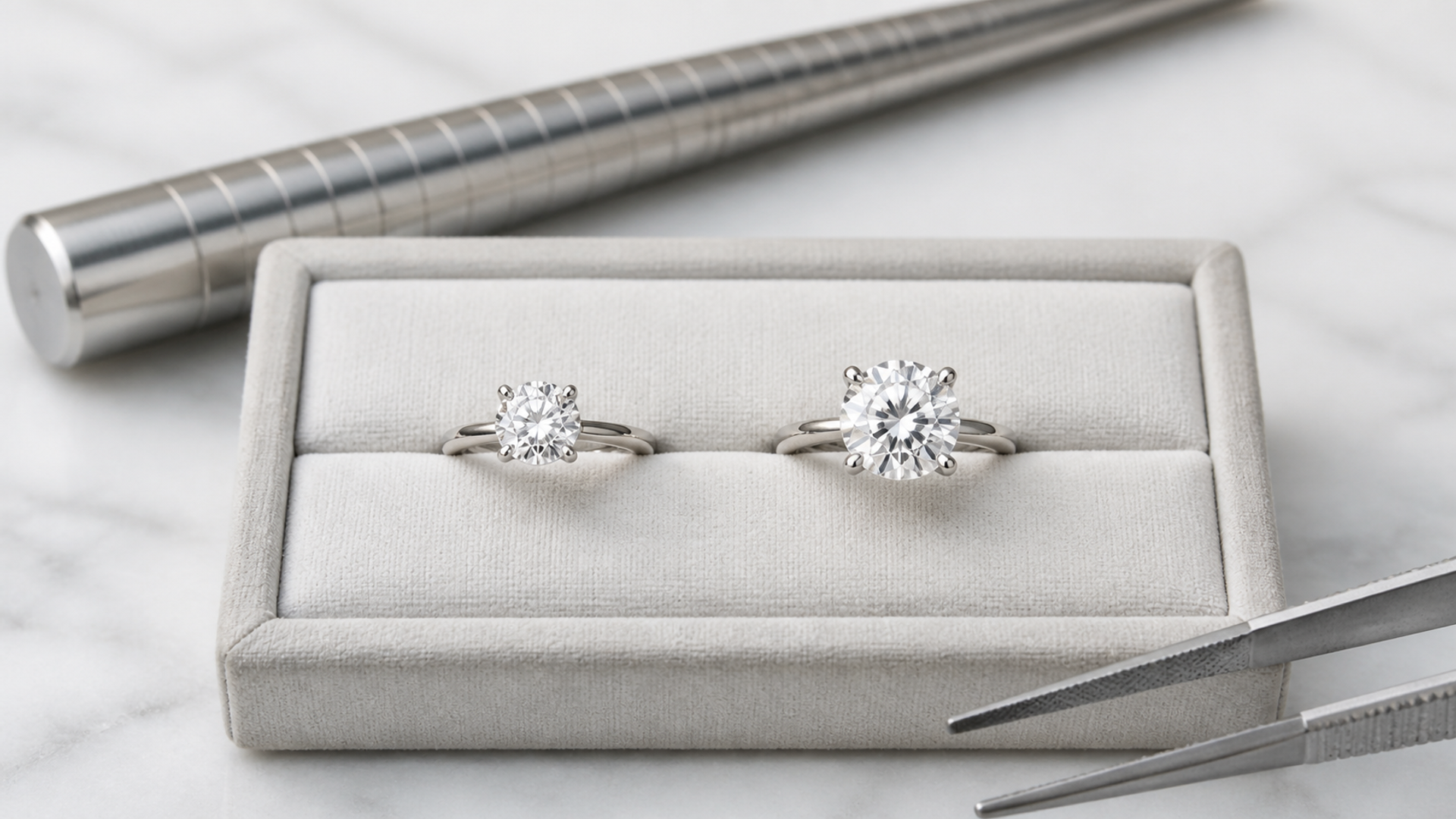
A one-carat and a two-carat diamond do not look exactly twice as large because carat measures weight, while face-up presence depends on cut and millimetres. The decision should balance spread, cut, setting security, finger coverage, colour visibility and budget rather than using the milestone number as the only measure of luxury.
Separate weight from visible size
Choose one carat when cut quality, setting and financial headroom matter more than maximum presence; two carats when the larger look is central and the complete quality and setting budget remains sound; or optimise spread and setting when finger coverage is the actual objective.
| Decision factor | One-carat centre | Two-carat centre | Optimise spread and setting |
|---|---|---|---|
| Visual goal | Refined scale and cut lead | Stronger centre-stone presence leads | Millimetre spread leads |
| Budget | Funds protect cut and setting | Two-carat total remains comfortable | Shift weight to craftsmanship |
| Setting | Lower leverage suits daily wear | Prongs and band support larger stone | Bezel or halo changes coverage |
| Colour and clarity | Smaller stone may mask some differences | Larger facets may reveal more | Inspect exact stone in setting |
| Finger coverage | One-carat millimetres fit | Two-carat millimetres fit | Shape can create more spread |
| Ownership | Insurance and replacement are manageable | Higher-value cover is planned | Documentation and inspections lead |
This 1 carat vs 2 carat diamond matrix is the article's working value object. Read the 1 carat vs 2 carat diamond rows together: the decisive failure mode depends on this topic's evidence, operating context and reader objective.
What diamond evidence establishes
Evidence 1. GIA defines carat as a unit of weight equal to 200 milligrams, not a direct diameter measurement.
Evidence 2. Cut proportions influence a diamond’s face-up dimensions and light return, so equal carat weights can appear different.
Evidence 3. Finger size, stone shape, band width and setting change perceived coverage.
Evidence 4. A larger centre stone can increase setting leverage and insurance exposure, making craftsmanship and inspection more important.
Reader-visible sources checked for this article:
gia.edu — reader-visible current or official evidence
gia.edu — reader-visible current or official evidence
For 1 carat vs 2 carat diamond, these sources establish only the claims inside their documented scope. Recheck every changeable specification, availability condition, price, policy or service term in the relevant market before acting.
Balance spread, setting and budget
The decision changes at visual goal. Choose the first path only if refined scale and cut lead; move to the second when stronger centre-stone presence leads; use the third when millimetre spread leads. Save the downside that would make this row fail.
For budget, the first route works when funds protect cut and setting; the second requires two-carat total remains comfortable. The control for the third is shift weight to craftsmanship. Verify this row against the exact product, property, account or environment before it can reverse the decision.
The setting row exposes a practical boundary. Route one assumes lower leverage suits daily wear, while route two is defensible only when prongs and band support larger stone. Route three depends on bezel or halo changes coverage. If that evidence is absent, keep the more reversible option.
Read colour and clarity as a stop/go test: smaller stone may mask some differences supports the first option; larger facets may reveal more supports the second; and inspect exact stone in setting supports the third. Record which source proves the condition and when it was checked.
A buyer can resolve finger coverage without starting from a brand preference. Ask whether one-carat millimetres fit; compare that with whether two-carat millimetres fit; then use shape can create more spread as the third route's safeguard. An unknown condition stays unknown.
On ownership, popularity is not enough. The evidence for option one is that insurance and replacement are manageable. Option two means higher-value cover is planned. Option three is rational where documentation and inspections lead. Recheck any changeable term immediately before commitment.
Facts that would reverse the current choice
Reversal control 1 — Visual goal. Before choosing One-carat centre, write down how the decision changes if “Refined scale and cut lead” proves false. Do the same for Two-carat centre and “Stronger centre-stone presence leads”. Keep the Optimise spread and setting route available until “Millimetre spread leads” is verified. This control belongs to 1 carat vs 2 carat diamond; update it from the cited source or exact supplier rather than copying a generic checklist.
Reversal control 2 — Budget. Before choosing One-carat centre, write down how the decision changes if “Funds protect cut and setting” proves false. Do the same for Two-carat centre and “Two-carat total remains comfortable”. Keep the Optimise spread and setting route available until “Shift weight to craftsmanship” is verified. This control belongs to 1 carat vs 2 carat diamond; update it from the cited source or exact supplier rather than copying a generic checklist.
Reversal control 3 — Setting. Before choosing One-carat centre, write down how the decision changes if “Lower leverage suits daily wear” proves false. Do the same for Two-carat centre and “Prongs and band support larger stone”. Keep the Optimise spread and setting route available until “Bezel or halo changes coverage” is verified. This control belongs to 1 carat vs 2 carat diamond; update it from the cited source or exact supplier rather than copying a generic checklist.
Reversal control 4 — Colour and clarity. Before choosing One-carat centre, write down how the decision changes if “Smaller stone may mask some differences” proves false. Do the same for Two-carat centre and “Larger facets may reveal more”. Keep the Optimise spread and setting route available until “Inspect exact stone in setting” is verified. This control belongs to 1 carat vs 2 carat diamond; update it from the cited source or exact supplier rather than copying a generic checklist.
Reversal control 5 — Finger coverage. Before choosing One-carat centre, write down how the decision changes if “One-carat millimetres fit” proves false. Do the same for Two-carat centre and “Two-carat millimetres fit”. Keep the Optimise spread and setting route available until “Shape can create more spread” is verified. This control belongs to 1 carat vs 2 carat diamond; update it from the cited source or exact supplier rather than copying a generic checklist.
Reversal control 6 — Ownership. Before choosing One-carat centre, write down how the decision changes if “Insurance and replacement are manageable” proves false. Do the same for Two-carat centre and “Higher-value cover is planned”. Keep the Optimise spread and setting route available until “Documentation and inspections lead” is verified. This control belongs to 1 carat vs 2 carat diamond; update it from the cited source or exact supplier rather than copying a generic checklist.
Compare millimetres and cut together
Place exact stones on the same neutral background and finger scale. Record length, width, depth and cut information. A deeply cut stone can carry weight where it does not add face-up spread.
Build a complete budget
Include setting, metal, report, resizing, tax, insurance and future prong checks. Protect cut and secure workmanship before maximising carat. A milestone number is not useful if the setting becomes the weak point.
Test proportion on the hand
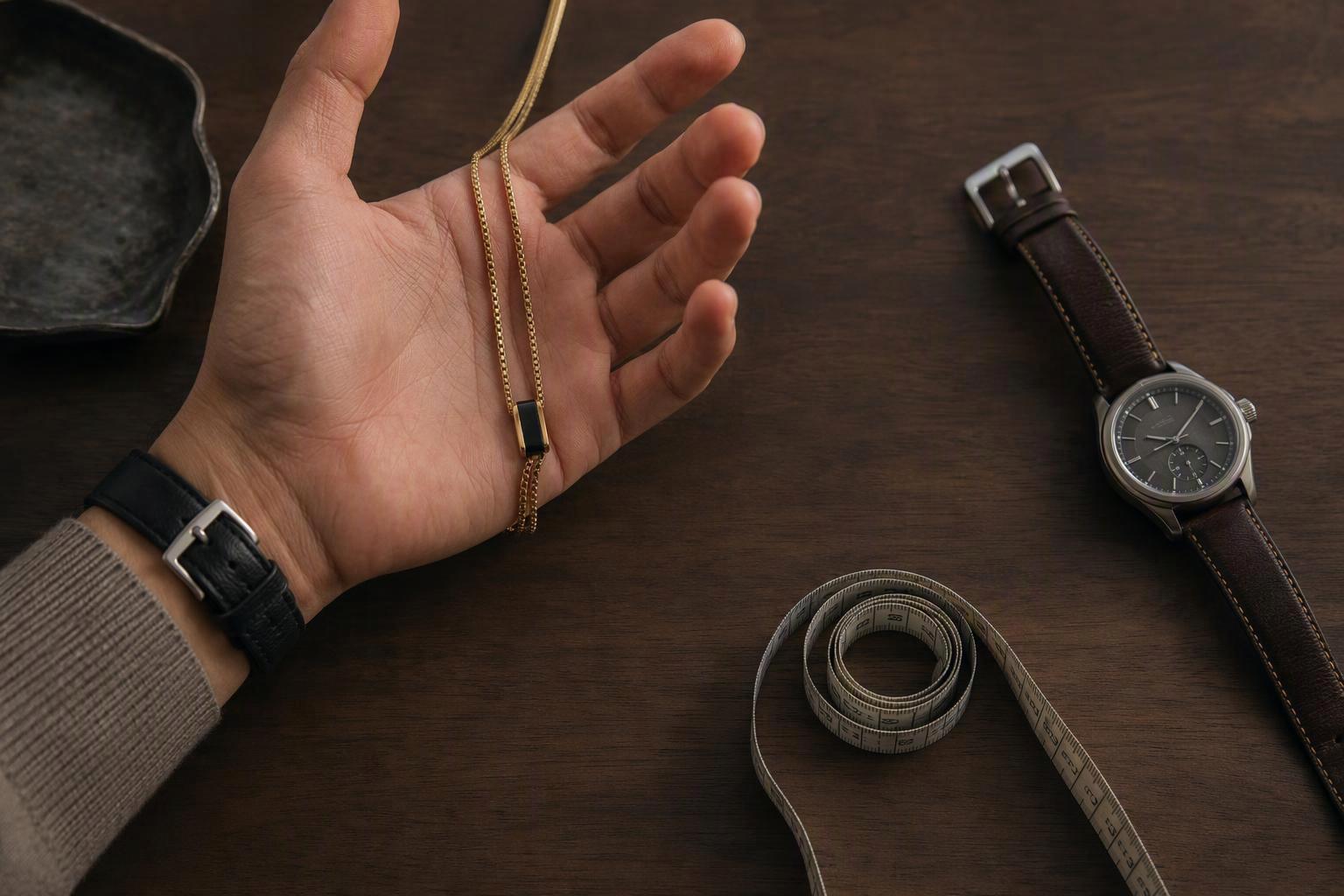
Use temporary holders or accurate replicas with the intended band width. View from conversational distance and in photographs. The wearer’s hand and wardrobe can make one carat feel balanced or two carats feel appropriate.
Document and maintain the ring
Match report, inscription where applicable and invoice. Photograph the ring, arrange insurance when appropriate and inspect prongs after impacts or on the jeweller’s advised schedule. Do not treat future value as guaranteed.
Three carat decisions
Cut-first buyer
One carat can preserve brilliance and craftsmanship within a controlled total budget. Define the fact that would reverse this recommendation before committing.
Presence-first buyer
Two carats can work when setting and ownership costs remain comfortably funded. Define the fact that would reverse this recommendation before committing.
Coverage-first buyer
A well-spread shape or setting may deliver the preferred look without chasing weight alone. Define the fact that would reverse this recommendation before committing.
Action checklist
Compare exact millimetres.
Protect cut quality.
View on the actual hand.
Include setting in budget.
Check band proportion.
Verify report and inscription.
Price insurance.
Plan prong inspections.
Avoid guaranteed resale claims.
Keep all documentation.
A bounded Concierge role after the lounge plan
Where available and subject to service terms, eligible VERTU clients may ask human Concierge support to compare lounge options by terminal, dwell time, workspace, showers, dining and fallback routing for an authorised itinerary. The airport, airline, lounge network, card issuer and membership provider remain the authoritative sources for access, capacity, opening hours, fees, guest rules and day-of-travel changes.
Availability and service terms apply. This support is not a guarantee of lounge entry, a quiet seat, a shower, a meal, a transfer or an emergency response, and it is not an emergency service. Any booking or itinerary change requires user authorisation. Travellers retain control over payment and account credentials and retain responsibility for airline, airport and membership terms, passport requirements and direct confirmation of every trip-critical detail.
Continue the decision
The linked VERTU articles expand adjacent parts of the 1 carat vs 2 carat diamond decision. They do not substitute for the external evidence above.
The carat verdict
Choose one carat when cut quality, setting and financial headroom matter more than maximum presence; two carats when the larger look is central and the complete quality and setting budget remains sound; or optimise spread and setting when finger coverage is the actual objective.
Keep the 1 carat vs 2 carat diamond decision reversible until its material cost, safety, access, privacy and compatibility facts are verified. Unknown evidence stays unknown; it is never silently scored as favourable.