A foldable can be expensive and still not be luxury.
“Luxury” isn’t a price tier. It’s a promise about how the object is made, how it protects you, and how it behaves when your day turns unpredictable—international travel, sensitive calls, identity exposure, and the quiet friction of getting things done fast.
A working definition of a luxury foldable phone
A luxury foldable phone is a foldable designed and supported as a high-trust personal instrument—where materials and finishing, privacy architecture, AI boundaries, and a service layer are treated as first-class features.
It’s what makes a foldable feel less like a gadget and more like something you own.
Collector’s note: The market often describes foldables as part of the premium segment; “luxury” is frequently used as a positioning layer rather than a formal category. See, for example, how Grand View Research frames foldables as a premium segment.
What it is not
Not just an expensive phone. Price can signal ambition; it doesn’t guarantee restraint, longevity, or support.
Not just “premium specs.” Cameras and chips date quickly. Privacy posture and service discipline don’t.
Not just a foldable with a fancy finish. Materials without governance are decoration.
Luxury AI phone vs. luxury foldable phone
A luxury AI phone sells you on capability: the phone can understand, summarize, plan, and act.
A luxury foldable phone sells you on command: the phone gives you a bigger, more versatile workspace—and then earns the right to sit at the center of your private life.
In practice, the two can overlap. But the difference matters:
If the hero feature is AI, the buyer’s question is: What can it do?
If the hero feature is the foldable form factor, the buyer’s question is: Can I trust it—mechanically and operationally—over years of real use?
Luxury begins where those two questions meet.
What makes luxury foldable phones truly premium
Most comparisons stop at thickness, cameras, and crease visibility.
A luxury standard is stricter. It asks whether the device behaves well when the stakes are high.
1) Craft and materials that improve with ownership
Luxury materials aren’t there to impress strangers. They’re there to reduce friction for the owner.
The test is tactile and practical:
Does the finish resist the “micro-wear” that makes premium objects look tired?
Do edges, seams, and hinges feel intentional—like a watch clasp—not merely functional?
Is there evidence of hand-finishing, personalization, or small-batch discipline?
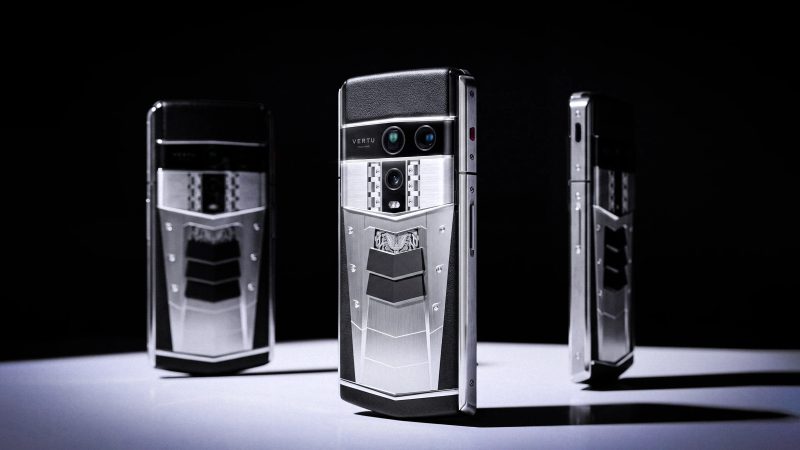
VERTU has long framed luxury smartphones around rare materials, craft, and personalization.
2) Durability confidence, not durability theater
Foldables live or die by confidence:
Hinge confidence: consistent resistance, predictable half-open positions, no “feel drift.”
Display confidence: fewer surprises in the inner display stack over time.
Service confidence: when something happens, you know what happens next.
A useful way to think about this is ownership risk: what downtime, repair complexity, and friction will cost you over the life of the device.
3) Privacy architecture that assumes you have something to lose
For UHNW owners, privacy isn’t a “setting.” It’s an operating posture.
Start with hardware-backed security. Apple’s security documentation explains the Secure Enclave as a hardware-isolated component that protects keys and sensitive operations.
Then look for practical compartmentalization:
Separation of spaces: keep sensitive work away from everyday apps.
Permission discipline: the phone should make it easy to say no.
Minimized exposure: fewer places where data can be copied, cached, or forwarded.
How to verify: Ask yourself where your most sensitive data actually lives day-to-day—documents, chats, credentials, travel itineraries, approvals. A privacy-first phone should make it easier to keep those artifacts separated, not just encrypted.
4) AI that respects boundaries (governance beats cleverness)
AI is now part of the phone’s value proposition. But for luxury buyers, the question is not only intelligence—it’s governance.
A luxury standard is:
the AI has clear scope (what it can access)
the AI has clear stop points (when it must ask)
the AI minimizes retention and prevents accidental cross-app leakage
Even large ecosystem players acknowledge the privacy tension of cloud AI. Apple’s Private Cloud Compute explainer is useful here—not as a universal standard, but as an example of how privacy-preserving cloud AI is being positioned.
5) Concierge as a risk-reduction layer, not a perk
Service is where “premium” becomes luxury.
It’s also where many phones quietly fail: you can buy the hardware, but you can’t buy back the time you lose to repairs, onboarding friction, or support loops.
Even mainstream premium foldables used concierge framing. Business Insider reported Samsung offered Galaxy Fold Premier Service (24/7 concierge), including onboarding and in-person help. TechCrunch also described Samsung’s high-touch support layer for Fold owners in its coverage of the Galaxy Fold concierge service.
Luxury phones should treat service as part of the product—not a separate department.
Hermes phone as a luxury AI foldable concept
If you combine the above criteria, you get a clear concept:
A “Hermes phone” (as a category idea) is a foldable that behaves like a discreet executive instrument:
craft you can feel
privacy posture you can maintain while traveling
AI that’s useful but constrained
concierge that reduces friction and exposure
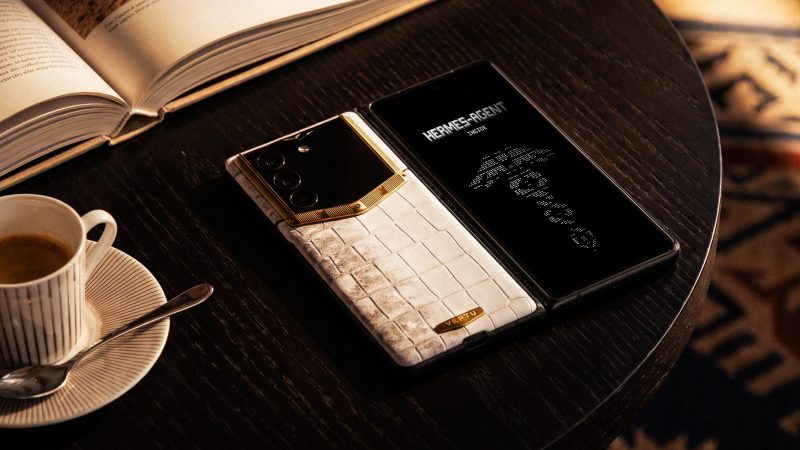
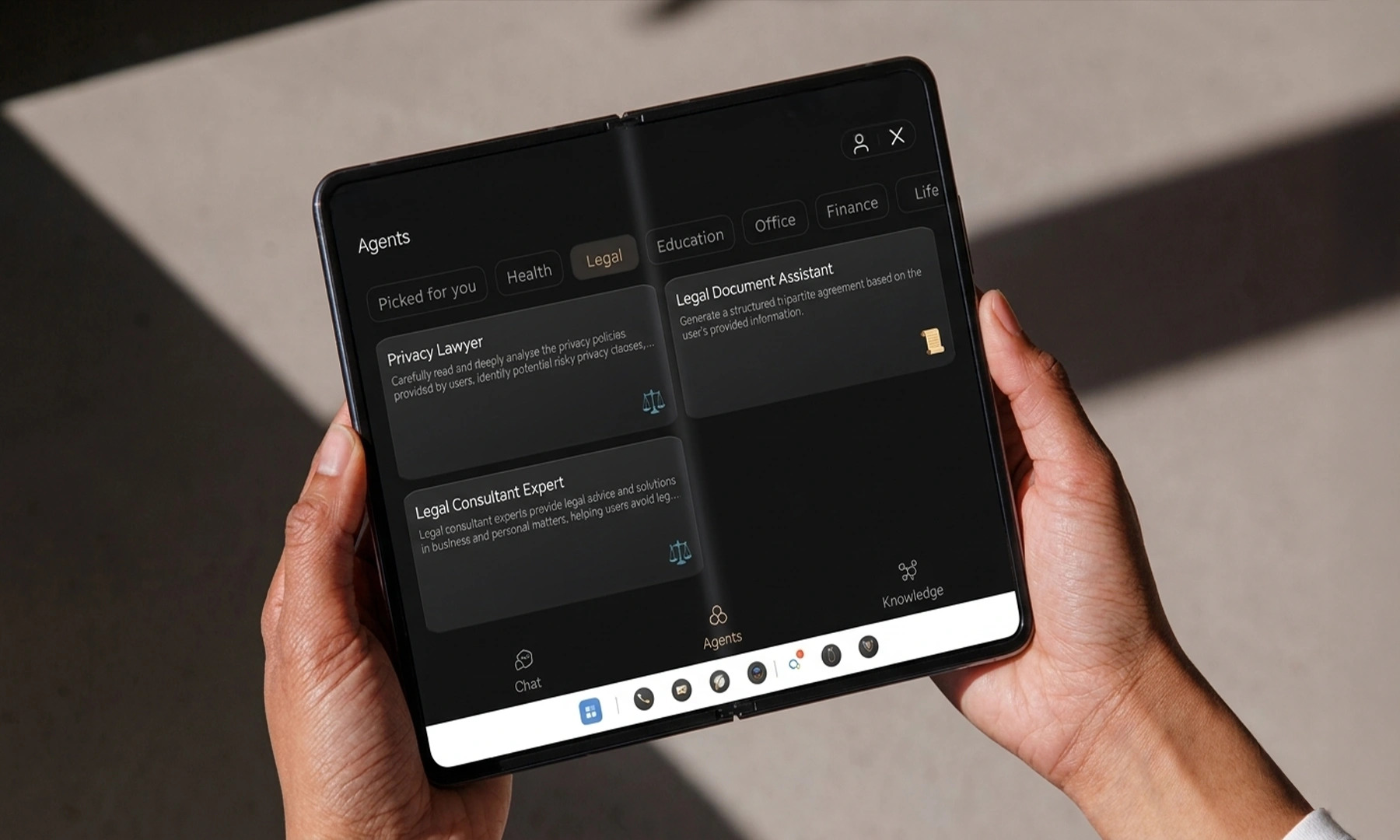
Within VERTU’s lineup, AlphaFold is positioned as a luxury AI foldable concept through its Hermes Agent narrative and privacy-first framing. If you want the product-specific sources of truth, start with Hermes Agent and the explainer Hermes Agent on AlphaFold.
Key Takeaway: In luxury foldables, AI is only impressive when it’s governed. The differentiator isn’t “more AI.” It’s AI that knows where it is not allowed to go.
Luxury foldable phones: a five-part standard you can audit
Most spec comparisons tell you what a phone can do.
Luxury comparisons should tell you what a phone will protect—and how it will behave when things go wrong.
What to ask before you buy a luxury foldable
Use these questions to separate a luxury story from a luxury system:
What is the privacy model? Where are the boundaries—and who enforces them?
What is separated by design? Work/personal, sensitive/everyday, identity-facing/private.
What happens when something breaks? Support path, turnaround expectations, and escalation.
How does AI handle permissions? Does it ask before acting? Can you audit what it touched?
What is the craft provenance? Materials, finishing, and personalization that’s more than a colorway.
Key takeaways
Luxury foldable phones are defined by materials, governance, privacy posture, and service, not price.
A luxury AI phone emphasizes capability; a luxury foldable phone emphasizes trusted command.
Secure enclaves and privacy-preserving cloud AI architectures show how serious vendors think about protecting sensitive operations (see Apple’s The Secure Enclave (Apple Platform Security) and its Private Cloud Compute explainer).
In market language, a premium foldable phone is the spec-tier label; “luxury” is the ownership and identity layer.
Concierge support is not fluff—it’s an ownership-risk reducer.
For a practical decision framework across durability, service, privacy posture, and AI governance, see VERTU’s guide: cheap foldable phone vs luxury foldable.
FAQ
Are luxury foldable phones only about rare materials?
No. Materials matter, but luxury is the system: materials plus privacy posture, AI boundaries, and a service layer that reduces downtime and exposure.
Is “luxury folder phone” the same as “luxury foldable phone”?
In search behavior, “luxury folder phone” is usually a variant people mean as “luxury foldable phone.” In writing, it’s safer to use “foldable” for clarity.
Do foldables create new privacy risks?
They can. A larger screen encourages more work-like behavior—documents, approvals, travel logistics—so the device often carries higher-value information. That’s why compartmentalization and hardware-backed security (like a secure enclave) matter.
Watch: why foldables are positioned as premium
Next steps
If you’re evaluating luxury foldables, start with the criteria—not the spec sheet. Then shortlist devices that can prove their privacy posture and service model.
If you want to see how VERTU frames the ownership model across durability, service, privacy, and AI governance, see the guide mentioned above.
Disclosure: This article references VERTU pages. Editorial judgment remains the priority.