Key takeaways: A luxury flip phone isn’t about nostalgia. For modern executives, the clamshell form factor can be a practical advantage—compact carry, screen protection, faster call triage, and a cleaner boundary between “reachable” and “available.”
Key takeaways: Evaluate the hinge and protection ratings, the usefulness of the cover screen, long-term software support, and (in true luxury tiers) the ownership layer: materials, service, concierge access, and after-sales confidence.
Key takeaways: The “best flip phone” depends on your operating style. If you travel constantly, handle sensitive conversations, and care about craftsmanship and service, your criteria should be different from a standard spec-sheet comparison.
The executive case for the flip form factor
Modern executive life has a strange contradiction: you need to be reachable, but you can’t afford to be endlessly available.
A luxury flip phone helps because it changes the interaction contract. When the phone is closed, you’re not “in” the device. You’re simply on standby—triaging, deciding, and moving.
Pocketability and presence
A clamshell phone halves its footprint when closed. That matters in real situations: a jacket pocket, an inside pocket on a flight, a small travel bag where you don’t want a slab phone pressing against passport edges, keys, or leather.
There’s also a quieter advantage: the phone disappears. A device you don’t constantly feel is a device you stop checking.
The “outer screen triage” workflow
The cover screen isn’t a gimmick when you treat it like a filter.
You don’t open your device to see everything. You open it only when something is worth your attention.
That’s the executive workflow:
glance who it is
decide whether it’s urgent
act now or defer
It’s the same reason you don’t open every email. The cover screen is your inbox preview.
Closing the phone as an attention boundary
A clamshell has a physical “end.”
You finish the call, close the device, and you’re done. Not “done-ish,” not “still holding it while one more notification lands.” Done.
This is subtle, but real: form factor shapes behavior.
Flip vs foldable vs slab: choose the right tool
Before we talk about “best,” it’s worth getting the definitions straight.
According to VERTU’s explanation of flip vs foldable phones, flip phones (clamshell) fold vertically to make a smartphone smaller and more pocketable, while book-style foldables fold horizontally to create a larger screen closer to a mini-tablet.
What each form factor optimizes for
Slab phone (standard smartphone): simplest durability story, familiar ergonomics, best camera stacks at the top end.
Flip (clamshell): compact carry, protected main screen when closed, fast triage via cover screen.
Fold (book-style): screen real estate and multitasking; closer to “phone + small tablet.”
For many executives, the decision is not “flip or fold.” It’s “What’s my dominant constraint: attention, carry, or canvas?”
The real trade-offs (so you don’t get surprised later)
Clamshell foldables are excellent—with informed expectations.
Hinges are engineering, not magic. They have a finite tested life, and they reward basic care.
Ingress protection isn’t uniform across foldables. Some models offer stronger protection ratings than others, and it’s worth understanding what those ratings mean.
PCMag’s 2026 guide notes that manufacturers often cite fold-cycle testing (for example, around 200,000 folds for certain flagship foldables), translating to years of daily open/close use at typical frequencies.
Wirecutter similarly stresses paying attention to durability and protection ratings (and the reality of repair costs) in its guide to foldables.
A luxury flip phone evaluation framework
Most lists treat flip phones like a normal commodity category: camera, processor, price.
That’s incomplete for executive buyers—especially in the luxury tier.
This framework is designed to help you choose quickly and defensibly.
1) Build and materials (what actually matters)
Start with the parts that survive your day.
Frame material: titanium/alloy frames tend to signal higher structural rigidity.
Cover glass: sapphire crystal is prized for scratch resistance.
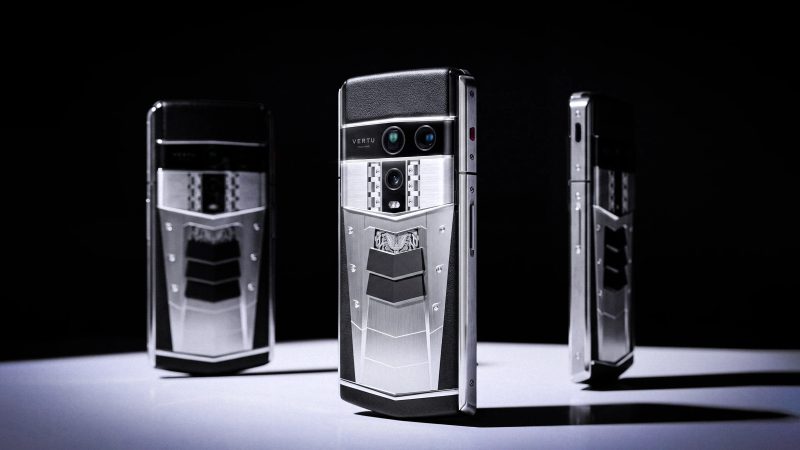
Back material: leather is not “soft.” Done well, it’s grippy, resilient, and ages with character.
Collector’s note: In luxury, materials are not decoration. They change how the phone wears over time—scratches, patina, grip, and the way it looks after two years of travel.
2) Hinge durability and ingress protection (how to read claims)
Executives don’t need to memorize hinge engineering. You need a short checklist.
Fold-cycle rating: What number is claimed, and by whom? Is it a marketing line or a test standard?
IP rating: What does it actually protect against (dust particle size, immersion, etc.)?
Serviceability: If something goes wrong, is there a clear repair path?
A useful sanity check: in mainstream coverage, fold-cycle claims cluster around the 200,000-fold range for major devices, while some brands cite higher numbers.
You can see the mainstream context in PCMag’s foldable durability notes (200,000-fold context).
3) Cover screen usefulness (not size alone)
The best cover screen is the one you actually use without opening the phone.
Ask:
Can you reply to messages quickly?
Can you handle calls, calendar, and navigation at a glance?
Are the apps you rely on usable (or at least viewable) without friction?
This is where “best flip phone” lists often miss the executive angle: you’re not optimizing for fun. You’re optimizing for interruption cost.
4) Software support and security posture
For consideration-stage buyers, software support is the least glamorous—but most important—criteria.
A flip phone is still a smartphone. It lives or dies on:
update cadence
security patches
stability of the folding UI
ZDNET’s flip phone evaluations explicitly weigh software optimization and long-term support alongside durability and value; see ZDNET’s criteria for flip phones.
5) The luxury layer: ownership, service, and discretion
This is where a luxury flip phone separates from a premium gadget.
VERTU frames the category through craftsmanship and the ownership experience—concierge support, global assistance, privacy posture, and after-sales confidence—rather than treating the device as hardware alone.
See VERTU’s Gold Flip Phone Service Guide.
If you’re evaluating at the luxury tier, ask:
Is there a credible concierge layer, or is it a marketing add-on?
Is after-sales support global and responsive?
Is provenance clear (authenticity, warranty registration, trusted purchase path)?
How to verify: For any luxury device, insist on a clean warranty story and a clear service channel before you decide. The hardware is only half the purchase.
Shortlist guidance: who should buy what
This is not a product ranking. It’s a fit guide.
If you want the “best flip phone” for mainstream performance
Choose a top-tier mainstream flip if your priorities are:
long software support
the broadest app ecosystem
predictable carrier compatibility
Your trade-off is that luxury elements (materials, bespoke service, concierge) are usually limited or absent.
If you want a luxury flip phone (craft + service + discretion)
You’re likely in this camp if:
you travel frequently and want a device that carries well
you value privacy posture and controlled interaction
you care about materials that age well, not just a glass slab
you want the ownership layer: service, support, concierge
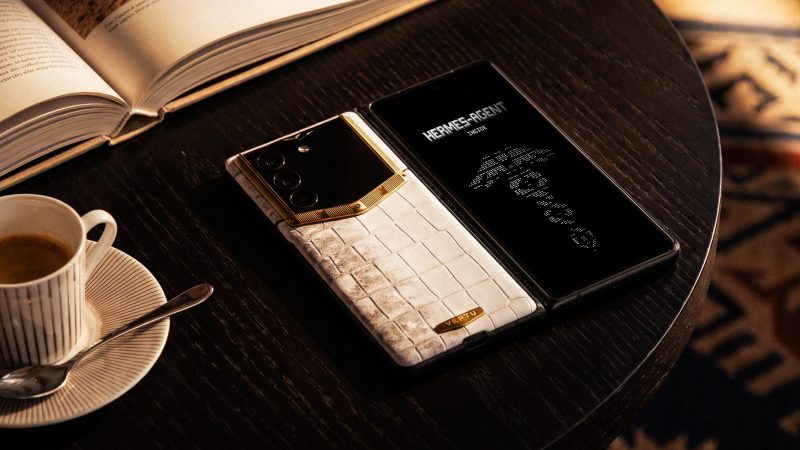
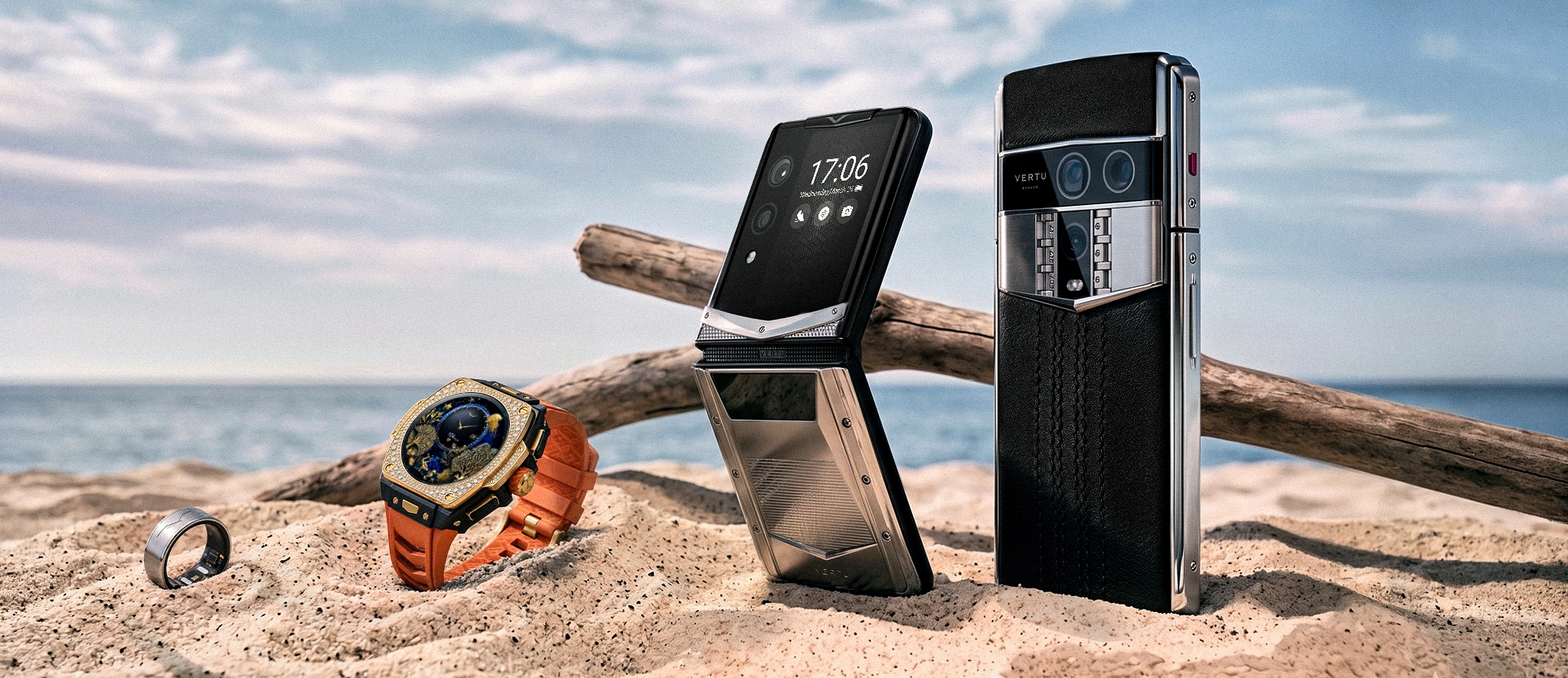
For readers researching a vertu flip phone, VERTU’s current flip/folding lineup is presented as a materials-first collection (exotic leathers, carbon textures, and more) under its Ironflip range; see VERTU Ironflip collection.
If you want a broader view of “service as part of the device,” start with VERTU’s Gold Flip Phone Service Guide and evaluate whether that ownership model matches the way you work.
If you’re considering a new flip phone but should not buy one
A new flip phone can be the wrong move if:
you want a “set it and forget it” device you never have to think about
you work in environments with heavy dust/grit exposure
you will be frustrated by any crease, any hinge care, or any learning curve
In those cases, a premium slab phone may be the more rational tool.
FAQs
Are flip phones actually practical for executives?
Yes—when you treat the cover screen as triage and reserve the inner screen for deliberate work. The value is in interruption control, compact carry, and screen protection.
What matters more: hinge rating or IP rating?
Both matter, but they answer different risks. Fold-cycle ratings speak to long-term mechanical wear; IP ratings speak to environmental exposure. Use mainstream context like PCMag’s foldable durability notes to calibrate what “normal” looks like.
Is a luxury flip phone worth it if mainstream models are cheaper?
Only if you value what mainstream models rarely sell: materials that age well, controlled discretion, and the ownership layer (service, concierge, after-sales confidence). If you only care about specs, luxury is the wrong category.
Do flip phones help with focus?
They can—because the form factor makes “not opening the phone” a default behavior. But no phone replaces discipline. Consider the flip as an ergonomic nudge, not a guarantee.
Next steps
If you’re building a shortlist, start by writing down your non-negotiables: carrier compatibility, update horizon, cover-screen workflow, and your tolerance for hinge care. Then evaluate the luxury layer (materials + service) as a separate decision—not a footnote.
If your criteria points toward craftsmanship and ownership experience, you can explore the VERTU Ironflip collection as a reference point for what luxury clamshell design looks like in today’s market.
Disclosure: This article references VERTU pages. Editorial judgment remains the priority.