_拷贝-919i4yud.webp)
Frequent business travel punishes your phone in ways a normal day doesn’t.
You’re running maps, email, calendar, boarding passes, ride-hailing, hotspot, and back-to-back calls—often while your phone is fighting weak signal in airports, elevators, and unfamiliar carrier networks. Then the moment you actually need it—hotel check-in, a 2FA code, a last-minute gate change—it’s at 7%.
A large battery phone helps. But for a true business traveller phone, capacity alone isn’t the point. The point is predictability: you can finish the day, recover quickly during short breaks, and stay connected across borders.
Why frequent business travellers drain phones faster than they expect
Battery anxiety usually isn’t caused by one big mistake. It’s a pile-up of small, unavoidable travel realities:
Weak signal = higher power draw. Your phone works harder searching and switching networks.
Always-on work apps. Email, chat, and security tools keep syncing in the background.
Screen time spikes. Boarding passes, documents, navigation, and video calls are screen-heavy.
Hotspot and tethering. If you’ve ever done a Zoom call from a taxi, you know.
Key TakeawayThe best long battery smartphone for travel is the one that survives the “worst hour” of your day—when signal is weak and everything is time-sensitive.
What “large battery” really means (and why mAh isn’t enough)
A large battery phone is usually described by battery capacity in mAh. Higher capacity can translate into longer runtime, but real endurance is a three-part equation:
Battery size (capacity)
Efficiency (chipset, display, software power management)
Your travel conditions (signal strength, roaming, hotspot use)
VERTU’s own battery-life guidance frames the decision similarly: look for battery size, fast charging, and intelligent optimization that reduces background drain, not just a big number on a spec sheet (VERTU’s long battery life guide).
A practical threshold for business travel
For frequent travel, “large” typically means 5,000mAh and up—but if your workday includes hotspot use, heavy calls, and constant navigation, the real question becomes: How quickly can you recover?
Which brings us to the feature that separates merely “big battery” from “travel-ready.”
Fast charging that matters for a large battery phone: 65W and the “top-up window”
Business travellers don’t charge in long, calm sessions.
You charge in top-up windows:
12 minutes before boarding
18 minutes in a lounge
9 minutes between meetings
20 minutes during hotel check-in
That’s why 65W fast charging is more than a spec—it’s an operational advantage.
What to verify before you rely on 65W
Does the phone actually accept 65W? A charger can offer 65W, but the device only draws what it supports.
Does your charger support USB-C Power Delivery (PD)? USB-C PD is the standard that enables negotiation between charger and device for higher-power charging.
Do you need PPS? Some phones use PPS (a USB PD feature) to reach their fastest charging mode by dynamically adjusting voltage and current. Plugable’s explainer on PPS USB-C Power Delivery charging is a clear, practical reference.
Is your cable rated for the job? A fast charger plus a weak cable is a slow charger. Make sure your USB-C cable supports the wattage/current you expect.
Are you using one charger for everything? A 65W-class charger is often chosen because it can cover a phone and a laptop in one travel kit—useful context in Docking Drawer’s overview of 30W vs 65W USB‑C charging.
Pro TipIf your travel day depends on fast charging, test your full kit once—charger, cable, and phone—before you fly.
Stable connection: what a travel-ready phone does differently
When a phone loses connection, it’s rarely dramatic. It’s just expensive:
missed calls
delayed messages
VPN dropouts
2FA failures
documents that won’t load
So a business traveller phone should be evaluated as a connectivity tool, not just a handset.
Non-negotiables for frequent travellers
Unlocked hardware, so you’re not boxed into one carrier.
Dual SIM / eSIM flexibility, so you can keep your home number active while running travel data.
Reliable Wi‑Fi + cellular handoff, because you will jump between airport Wi‑Fi, hotel Wi‑Fi, and cellular constantly.
Even carrier-led travel guidance emphasizes these fundamentals: unlocked status, eSIM/dual SIM support, and a focus on battery and reliability (T‑Mobile’s travel phone checklist).
The simple setup that reduces travel friction
If your phone supports it, the lowest-friction approach is:
home SIM (or home eSIM) for calls/SMS/2FA
travel eSIM for data
It’s not glamorous, but it prevents a lot of “I can’t receive the code” disasters.
Security and continuity (because you travel with sensitive work)
For many executives, travel increases risk: unfamiliar networks, more device handling, and more urgency.
At minimum, treat these as baseline:
strong screen lock + biometrics
encrypted backups
remote wipe enabled
a dedicated authenticator app (and recovery codes stored safely)
From VERTU’s own executive-oriented framing, modern high-end phones should balance strong signal and security for people who cannot afford disruptions (strong-signal and security features for executives).
A checklist you can use before you buy
If you’re choosing a large battery phone specifically for frequent business travel, run this checklist.
Must-haves
Battery capacity that matches your day (and doesn’t collapse under weak signal)
Fast charging you can actually reproduce with your travel kit
Dual SIM or eSIM support for travel line strategy
Global band support appropriate for where you travel
Reliable Wi‑Fi performance (hotels will test your patience)
Deal-breakers (avoid buyer regret)
A phone that only hits “fast charging” with a proprietary brick you won’t carry
A device locked to a carrier, limiting travel SIM options
Poor thermal management (gets hot while charging or on hotspot)
Overly aggressive “battery saver” modes that break background work notifications
⚠️ WarningIf a seller can’t clearly explain what charging standard the phone supports (USB-C PD / PPS) or what charger/cable you need to reach top speed, assume you won’t get the headline performance on the road.
Recommendation: the travel-ready spec profile (with a real example)
If your goal is a large battery phone that behaves like a dependable travel tool, the spec profile to look for is straightforward:
6,000mAh+ battery for real endurance headroom
65W fast charging for meaningful top-ups in short windows
Global connectivity (multi-generation cellular + modern Wi‑Fi)
Security features that support confidential work while moving
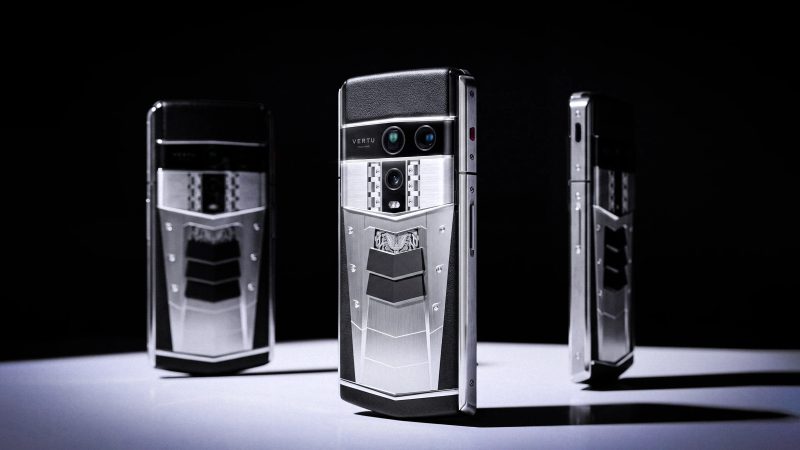
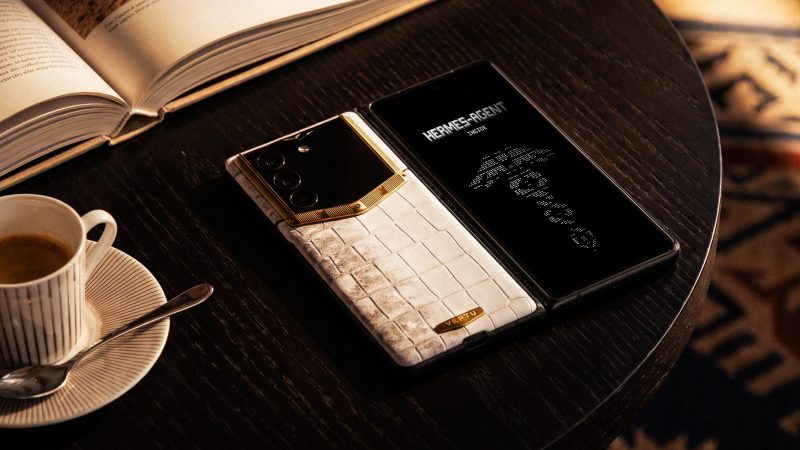
One option that matches this profile on paper—using first-party specs—is the VERTU ALPHAFOLD specifications page, which lists:
“6500 mAh; 65W fast charging”
connectivity: “Global 5G/4G/3G/2G, Wi‑Fi 7, Bluetooth 5.4, NFC”
security features including “Private Space; End-to-end Encryption; encrypted V-Talk; triple-system isolation”
Placed in a travel context, that combination is exactly what frequent travel punishes and rewards: battery headroom, fast recovery, and a stable connection stack.
Key takeaways
A large battery phone matters most when travel conditions are worst: weak signal, hotspot use, constant screen time.
For frequent business travel, fast charging is the multiplier—it turns short breaks into meaningful uptime.
Verify charging standards (USB-C PD / PPS) and cable capability, not just the watt number.
Treat connectivity as a feature: unlocked hardware and eSIM/dual SIM flexibility reduce travel failures.
If you need a phone that matches 6,500mAh + 65W, confirm those specs on an official product page before you buy.
FAQ
Is a bigger battery always better for business travel?
Not always. A bigger battery helps, but real travel-day runtime also depends on efficiency and signal conditions. A slightly smaller battery paired with better power management and faster charging can be the more reliable choice.
Will 65W fast charging work with any 65W USB-C charger?
Not necessarily. Your phone must support the charging standard and power profile; the charger must support USB-C PD (and sometimes PPS); and the cable must be rated appropriately. If one piece is wrong, charging often falls back to a slower mode.
What’s the best line setup for international business travel?
If your phone supports it, keep your home line active (for calls/SMS/2FA) and use a travel eSIM for data. It’s the simplest way to stay reachable without relying on expensive roaming.
Does dual SIM reduce battery life?
It can. Keeping two lines active may increase radio activity in some situations. If your endurance is tight, consider disabling the secondary line when you don’t need it.
Next steps
If you want a simple, purchase-ready rule: choose the phone that gives you the most usable time between charging opportunities, not just the biggest battery number.
If you’re evaluating a VERTU option specifically, start by reviewing the official VERTU ALPHAFOLD specifications and travel-oriented features on the product page.
Disclosure: This article references VERTU pages. Editorial judgment remains the priority.