

Introduction
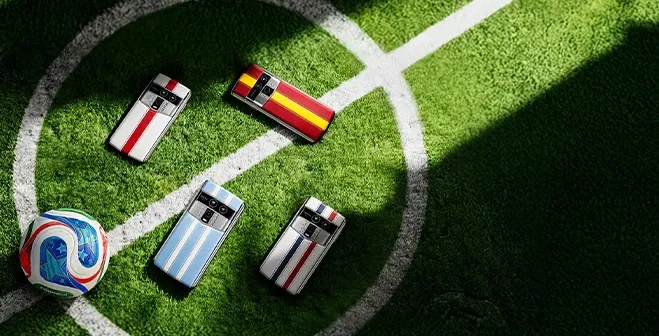
A major 2026 tournament hosted across North America is the kind of moment collectors remember, not because of a logo, but because of what it represents: three countries, 16 host cities, and a long runway of travel, hospitality, and high-stakes schedules converging in one season of global attention.
The VERTU World Cup 2026 Edition aims to commemorate that scale for people who live in motion. Owners who cross borders often. People who want their technology to feel finished, personal, and quietly rare.
Collector value, in this category, isn’t built on spec sheets. It comes from three things that hold up over time: a design language you can recognize at a glance, materials that age with dignity, and an ownership experience that still matters after the unboxing. In VERTU terms, that means craftsmanship you can feel in-hand, paired with service infrastructure that treats the phone as an object with a life, not a disposable device.
You should also expect a familiar shape to the release: multiple tiers, clear pricing cues (without always publishing every number), and availability windows that open and close by region. That’s how serious limited editions protect scarcity without forcing buyers into a scramble.
Finally, authenticity is part of the design. Provenance markers like numbering, documentation, and a digital certificate aren’t marketing decoration. They’re the difference between “collectible” and “collectible with resale confidence,” especially as counterfeits become more sophisticated.
Key takeaways: This guide shows you the signatures to look for in the VERTU World Cup 2026 Edition, from design cues and a Grade 5 titanium frame to verification steps like a certificate of authenticity and blockchain COA.
Design Language
Tri‑nation cues and edition identity
A tri-nation edition has one hard job: look event-linked without becoming souvenir-like.
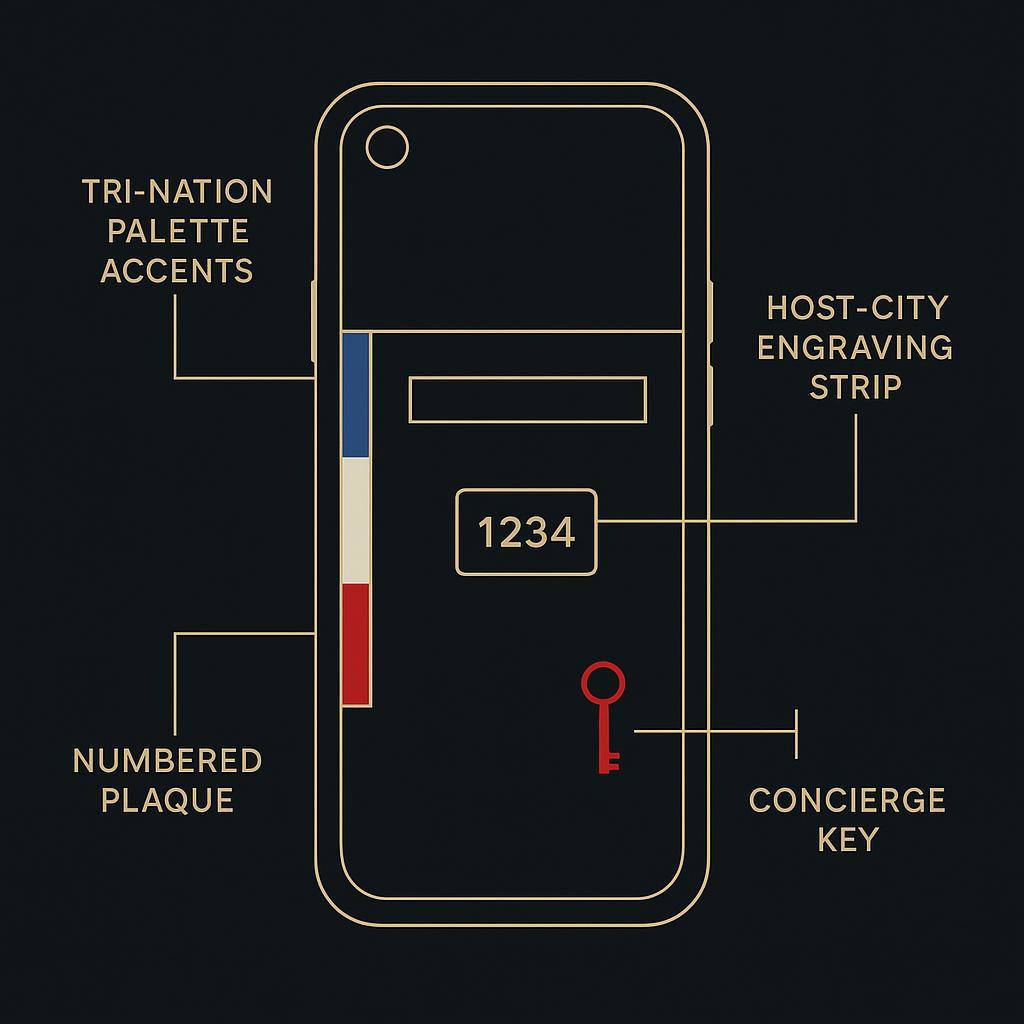
Done well, the cues are abstract. Think restraint over literalism: a palette that nods to three hosts, geometry that suggests motion across borders, and a motif system that can live on metal and leather without shouting.
For collectors, this matters because the best limited editions don’t age like posters. They age like objects. If the identity is built from proportion, texture, and finish, it stays elegant long after the moment that inspired it.
Collector’s note: If you’re evaluating any limited edition luxury smartphone, look for cues that are engineered into the object (engraving, finishing, material transitions), not applied on top.
Engravings, palettes, and city motifs
Engraving is where an edition can be both personal and verifiable.
A collector-grade approach is to treat the exterior as a map of signals:
Micro-engraved coordinate-style details that reference host-city spirit without relying on protected marks
A disciplined tri-nation palette used sparingly as an accent, not a wrap
A numbered plaque or plate that feels permanent, not printed
Collector’s note: Engravings do double duty. They carry story, and they give authenticators something physical to examine. In a world of perfect-looking replicas, small manufacturing truths matter.
Packaging and unboxing experience
Packaging is often dismissed as theatre. Collectors know better.
The box is the first proof of intent: materials, tolerances, the way components nest, the presence of documentation, and whether the whole experience feels like a finished object rather than consumer electronics. A serious edition typically includes more than a phone in a tray. It includes the narrative artifacts: numbering, paperwork, and a clear path to service.
This is where VERTU’s heritage is easy to integrate without forcing the point. The brand’s identity was built on the idea that ownership is supported, curated, and human-backed. In a limited edition tied to a season of travel and time sensitivity, the unboxing should signal that what you bought is not only crafted, but also looked after.
Materials & Craftsmanship
Grade 5 titanium and sapphire crystal
If the exterior is the signature, materials are the argument.
Grade 5 titanium (Ti‑6Al‑4V) is valued in premium manufacturing because it offers a rare blend: high strength without excess weight, plus strong corrosion resistance for long-term wear. It’s widely used in demanding industries, including aerospace and medical applications, for precisely those reasons.
Sapphire crystal enters the conversation for a different reason: surface integrity. Synthetic sapphire is rated 9 on the Mohs scale, which is why it’s long been a luxury standard for scratch resistance in watch crystals. For a collector piece, that matters because visual perfection is part of perceived condition, and condition is part of value.
For titanium context: Ti‑6Al‑4V is commonly used for high-performance parts and is prized for strength-to-weight and corrosion resistance, as summarized in references like Ti‑6Al‑4V (Wikipedia).
For sapphire context: Citizen explains sapphire crystals are “scratch resistant” and difficult to scratch without very hard materials in Citizen’s sapphire vs mineral crystal overview.
For a watch-industry definition of sapphire crystal, Longines explains it is synthetic aluminum oxide and highlights its scratch resistance in Longines’ sapphire crystal explainer.
Exotic leathers, ceramic accents, precious inlays
Luxury phones succeed or fail on tactile truth.
Leather isn’t only about rarity. It’s about how the device behaves in real life: grip, warmth in-hand, and how the surface develops character. Ceramic accents bring a different kind of appeal: a smoother feel, deep color, and a surface that can stay visually clean for longer.
Precious inlays should be treated as punctuation, not volume. The collector instinct is to look for where the maker chose restraint: a small signature detail, an intentional contrast, a finish that you notice only when light hits at the right angle.
Hand assembly, numbering, digital COA
Hand assembly is not a slogan if the evidence shows up in consistency.
Collectors look for:
Clean transitions between materials
Precise alignment around seams, screws, and edges
Numbering that is integrated into the object (not just the box)
Documentation that matches the physical identifiers
A digital certificate of authenticity can add another layer when it’s bound to the physical device. NFC-based verification is increasingly used to let an owner check identity with a tap, and blockchain records are used by luxury consortia to create tamper-resistant authenticity and provenance trails.
For background on NFC as an anti-counterfeiting tool, STMicroelectronics explains how NFC can authenticate products and check origin in how to use NFC to fight counterfeiting. For blockchain-based authenticity in luxury, Aura Blockchain Consortium outlines the idea of tamper-resistant authenticity records in their explainer on authenticating luxury goods with blockchain.
Editions, Pricing & Availability
VERTU World Cup 2026 Edition: what “limited” should mean
This is where a collector mindset helps. When an edition is genuinely limited, you should be able to point to the proof: tiering, controlled allocation, and a verification trail that survives resale.
Tiering: core, precious‑metal, bespoke
Collectors usually see three tiers because they map to three different buyer motivations.
- Core tierthe purest expression of the edition’s identity. You’re buying the design language and material baseline.
- Precious‑metal tiera heavier statement, often with more obvious rarity cues.
- Bespoke tierthe version that becomes personal. Custom engraving, leather selection, and build details calibrated to the owner.
Pricing cues tend to follow the same logic. The more bespoke the build and the more complex the materials, the less the edition behaves like a standard SKU and the more it behaves like a commissioned object.
Availability timeline across US/Mexico/Canada
A tri-nation year changes the rhythm of availability.
Rather than one global drop, you should expect a phased approach tied to travel patterns, private previews, and allocation windows that feel local while still reflecting global demand. The practical reason is simple: limited editions don’t scale like consumer launches.
If you want the most reliable window, treat official brand communications and direct allocation confirmation as the source of truth. That matters more than rumors for any collectible release.
Concierge allocations and provenance
Allocation is the quiet architecture behind scarcity.
In luxury, “availability” is often less about checkout buttons and more about how the brand controls distribution, verifies the buyer, and protects the long-term integrity of the edition. This is where service and provenance overlap.
A well-designed provenance flow looks like this:
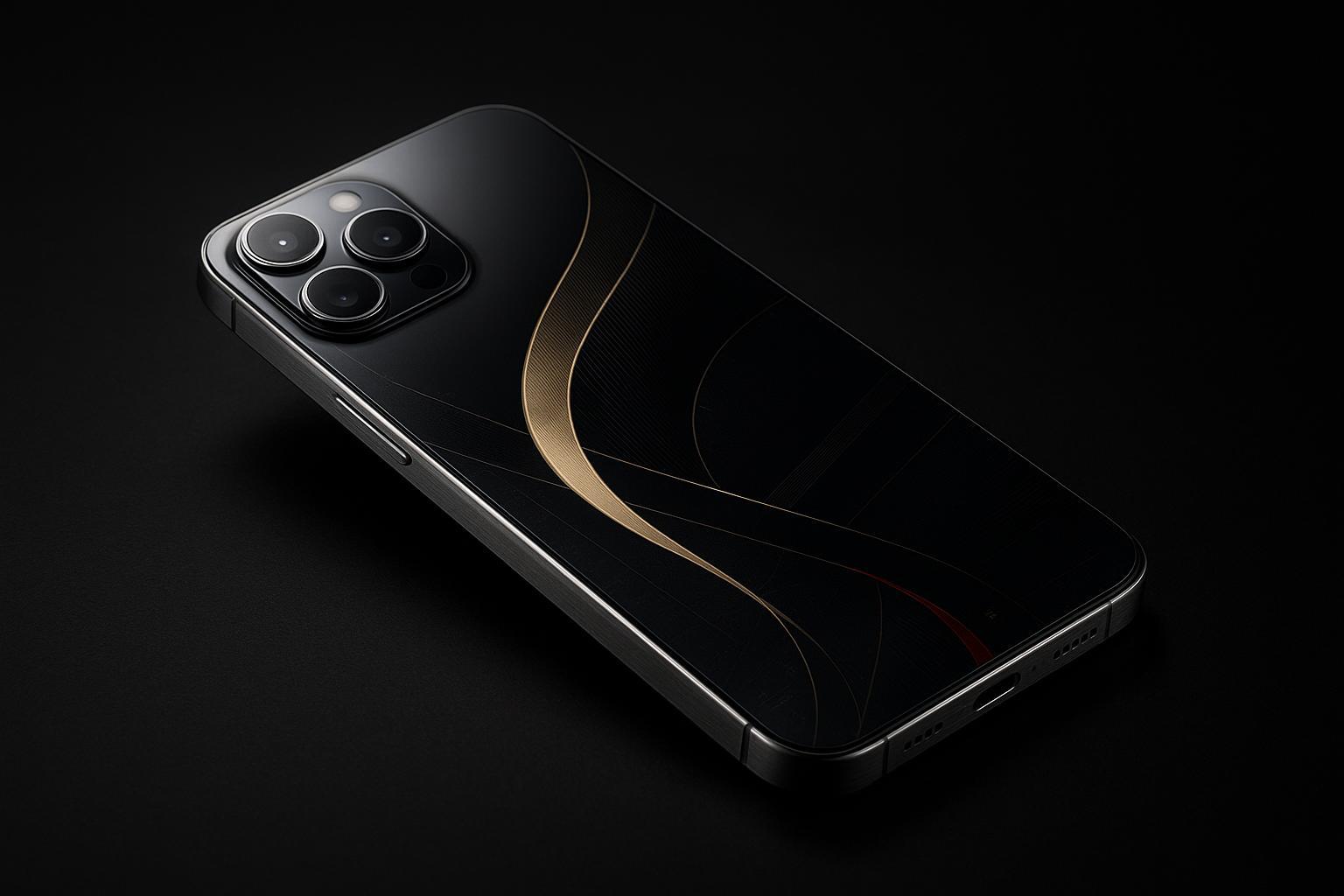
Serial engraving on the device (and mirrored in documentation)
NFC-based verification so the owner can confirm identity quickly
Digital certificate that records authenticity in a durable way
Transfer support for resale or gifting, preserving the chain of custody
The point isn’t to make ownership complicated. It’s to make it defensible.
How to verify: For VERTU devices, use the brand’s own guidance at check authenticity. For service access context, see VERTU Concierge and the Ruby Key.
Conclusion
A collector doesn’t buy a limited edition because it is rare. They buy it because it’s legible.
The key signatures to look for in a 2026 tri-nation edition are design cues that read as intentional (not literal), engraving and numbering that behave like proof, and a materials hierarchy that makes sense: titanium for structure and longevity, sapphire for surface integrity, and leather or ceramic details that turn daily handling into a tactile experience.
Pricing tiers typically map to scarcity and personalization. Core editions concentrate the design story, precious-metal tiers heighten the physical statement, and bespoke tiers create the most durable kind of rarity: an object tied to a specific owner.
If you want to reserve, treat allocation and authenticity safeguards as part of the decision, not an afterthought. Start with the official campaign hub at VERTU World Cup 2026, and confirm numbering and verification steps before purchase.
Disclosure: This article references VERTU pages. Editorial judgment remains the priority.
![Top 10 Tourbillon Watches for Men [2026 Latest]](https://cdn.sanity.io/images/e0gp1l2g/production/8cb6bc45133cf9453382fc7d074465af588bb610-1800x1080.webp?w=180&h=180&q=78&auto=format&fit=crop)
![Top 10 Tourbillon Watches for Men [2026 Latest]](https://cdn.sanity.io/images/e0gp1l2g/production/8cb6bc45133cf9453382fc7d074465af588bb610-1800x1080.webp?w=800&h=450&q=82&auto=format&fit=crop)
![Top 10 Anniversary Gift Watches for Men [Full Guide]](https://cdn.sanity.io/images/e0gp1l2g/production/00dfa030a876edbe6ea7b146f6b1d8197c7656b0-3840x1860.webp?w=800&h=450&q=82&auto=format&fit=crop)