Introduction
The 2026 tournament is an unusual kind of trip. It’s not just “international travel,” and it’s not just “a big event.” It’s a fast-moving, multi-city calendar where timing, access, and frictionless logistics matter.
If you’re buying a phone specifically for World Cup season, the right choice isn’t the one with the loudest spec sheet. It’s the one that behaves like dependable infrastructure: it roams without drama, secures your digital life, captures stadium-grade footage, and stays useful when the crowd (and the network) gets dense.
This guide ranks picks for high-net-worth hospitality use, security, and truly travel-ready connectivity—so you can choose a luxury smartphone for the 2026 World Cup without hype.
Official tie-ins and collectibles
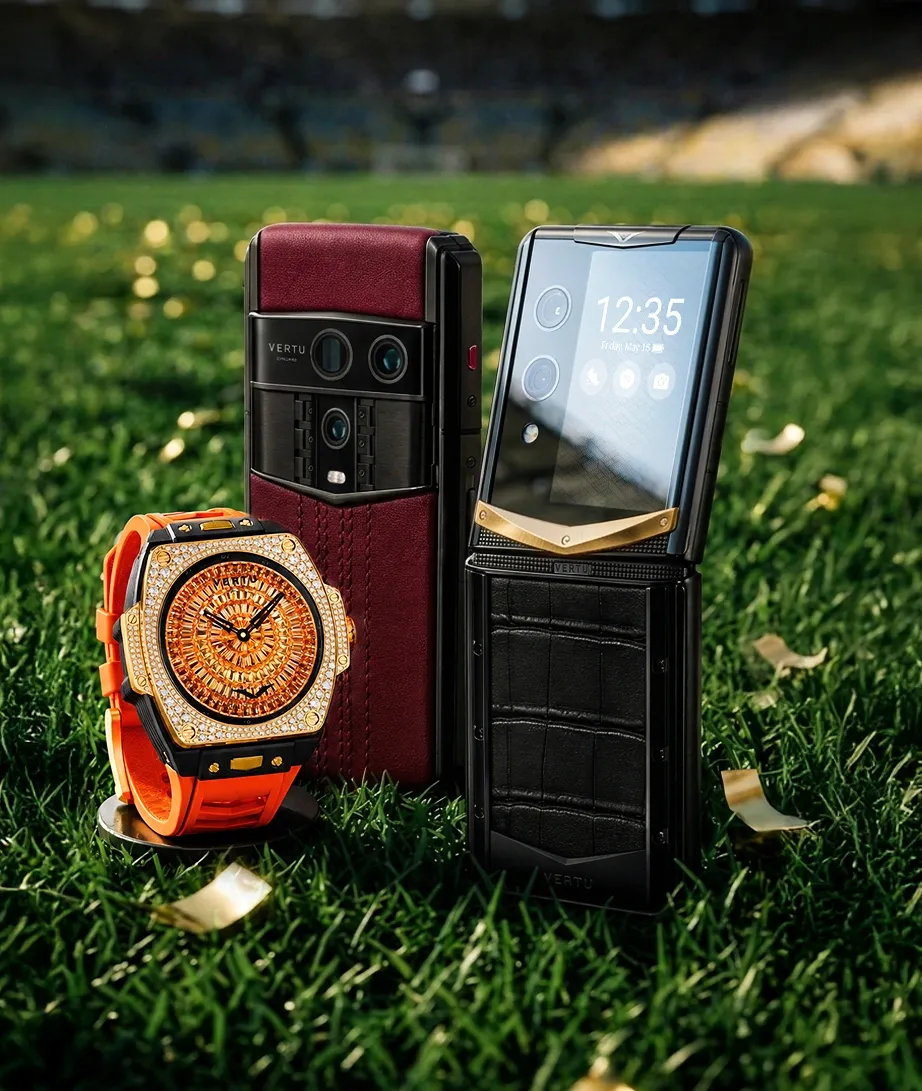
Motorola razr FIFA World Cup 26 Edition
If you’re the kind of buyer who values provenance as much as performance, “official” editions can be appealing—especially around a tournament where memorabilia is part of the culture.
Two practical notes before you chase a branded variant:
Availability is a window, not a season. Tournament editions often appear in limited sales waves. If you want one, you’ll likely need to commit early—and accept that colorways and storage configurations may be constrained.
Treat the edition as a collectible first, a travel tool second. A foldable can be genuinely useful for match-day multitasking, but official branding alone doesn’t guarantee the best roaming support, the best camera stabilization, or the best long-term service experience.
How to verify: Ask for a verifiable model number/SKU and confirm the radio bands and eSIM support for your travel route before you buy.
Licensed vs. non-licensed limited editions
Licensed editions trade on legitimacy. Non-licensed limited editions trade on scarcity.
For World Cup buyers, the risk profile differs:
Licensed versions are usually easier to validate and less likely to create uncomfortable surprises at customs or insurance claims.
Non-licensed “limited” builds can be gorgeous—but you’re often buying into a story without a clear chain of custody.
If your World Cup trip includes high-security hospitality, border crossings, and packed stadium entries, you want scarcity and certainty.
Authenticity checks and availability windows
For collectibles, the purchase process matters as much as the device.
Buy from a source with a clear paper trail: invoice, warranty documentation, and a verifiable serial/IMEI.
Confirm return and service terms in writing—especially if you’re buying abroad.
If a seller can’t clearly explain what makes an edition “official,” assume it isn’t.
Elite picks for luxury travelers (best luxury smartphone for 2026 World Cup)
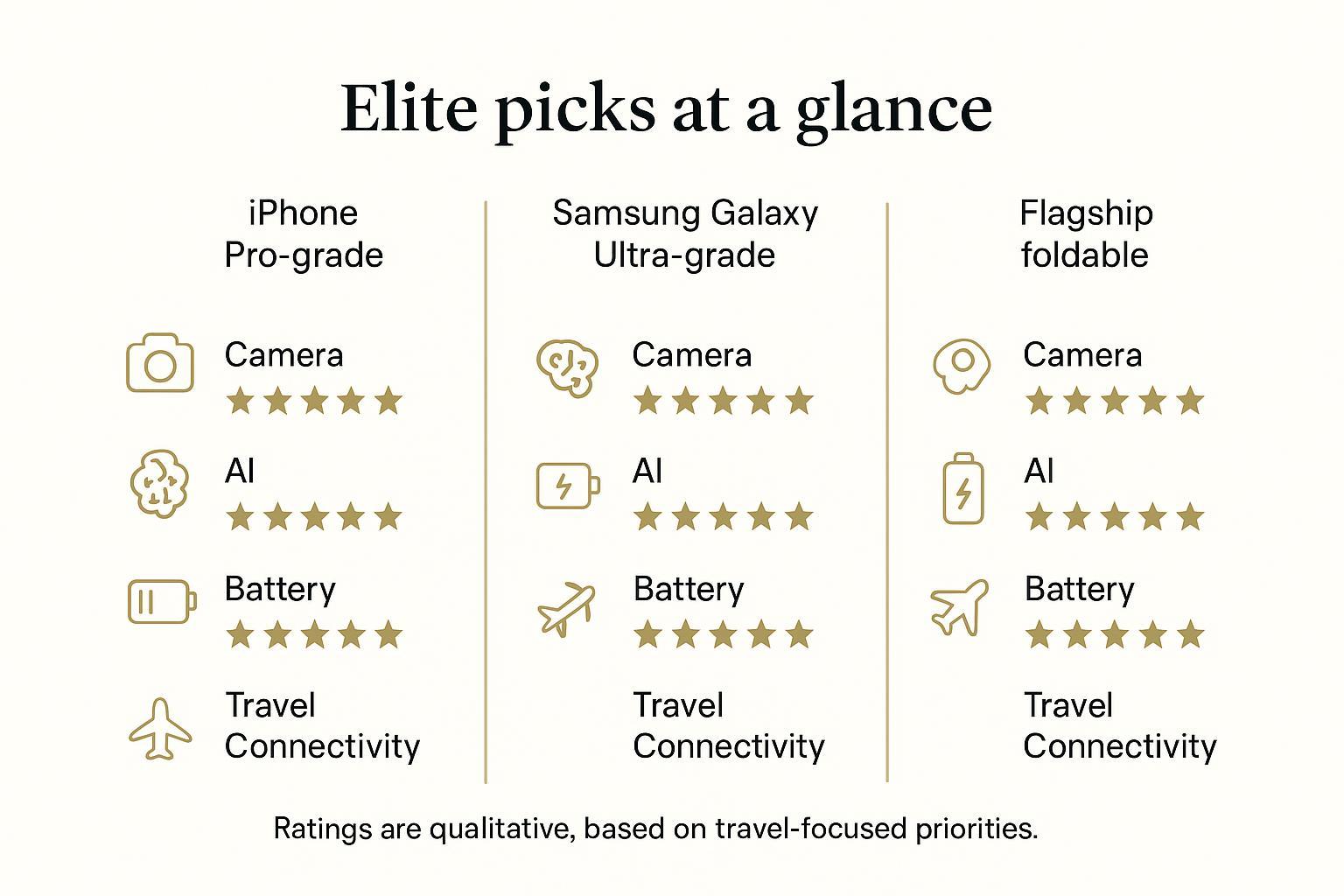
These are the three archetypes that most often satisfy World Cup travel reality: cross-border roaming, unpredictable match-day connectivity, heavy camera use, and a zero-patience tolerance for security headaches.
iPhone Pro‑grade (latest generation)
Choose an iPhone Pro-grade model if your priority is predictable behavior under pressure.
Camera consistency in stadium lighting: You’re dealing with contrast, fast motion, and harsh floodlights. The “best” camera isn’t always the one with the biggest numbers—it’s the one that gets the shot quickly and cleanly.
Ecosystem stability: If your travel, tickets, payments, and identity management already live in Apple’s world, switching platforms right before the tournament is an unnecessary risk.
Practical emergency readiness: You want the phone that your team, your family office, and your assistants can reliably reach.
Best for: buyers who value a calm, proven experience and don’t want to debug their trip.
Samsung Galaxy Ultra‑grade (latest generation)
Choose a Galaxy Ultra-grade model if you want maximum flexibility—especially for international work patterns.
Telephoto reach for the “real” shot: In a stadium, you’re often capturing from a distance. Strong zoom and stabilization can matter more than raw sensor size.
Power-user workflows: Multi-window use, document handling, and rapid context switching can be meaningful if you’re balancing match days with deals.
Android latitude: If you use multiple secure apps, travel SIMs, and region-specific services, the flexibility can be an advantage.
Best for: business-first travelers who want a phone that behaves like a portable command center.
Flagship foldable for replays and multitask
Choose a flagship foldable if your World Cup life includes constant parallel work: tickets open while messaging your driver; replay clips while coordinating seating; maps while on a call.
The key is to treat foldables as a travel productivity category, not a novelty.
The larger canvas makes sense for boarding passes, hospitality details, and match-day coordination.
The risk is durability and service logistics. If you’re buying a foldable for this trip, after-sales support and repair turnaround are part of the purchase decision.
Collector’s note: A luxury foldable only earns its place if it comes with a service model that matches the lifestyle—fast response, clear coverage, and global practicality.
Alternatives by archetype
If you’re already deep into a shortlist, this is the fastest way to align a phone with how you’ll actually use it during the tournament.
If you’re searching for a World Cup 2026 travel phone, your archetype matters more than another round of spec comparisons.
Status‑first collectible seeker
Your priorities:
Provenance and authenticity
Design, materials, and rarity
A purchase story you’d be comfortable defending later
Your trade-off: collectible editions can lag behind mainstream flagships on roaming breadth or update cadence. If you’re buying for status, don’t pretend it’s purely rational—just make sure the fundamentals won’t fail you at the gate.
Business‑first power user
Your priorities:
Cross-border connectivity with minimal switching
Battery endurance for long days
Security posture and controlled notifications
Your trade-off: you may need to calibrate camera and luxury cues. Your phone can look understated and still be elite—especially if it protects your data and never drops the connection when timing matters.
Foldable replay enthusiast
Your priorities:
Big-screen replays and split-screen multitasking
Comfortable media editing and sharing
A hinge that feels like a promise, not a gamble
Your trade-off: foldables are only “travel-smart” when the service model is strong. If you’re crossing borders and moving city-to-city, choose a brand with predictable support.
Connectivity, security, imaging essentials
This is where most “best phone” lists lose the plot. For World Cup travel, you’re not buying a device—you’re buying your ability to move.
If secure luxury smartphone is part of your requirement set, treat security as travel readiness, not a separate topic.
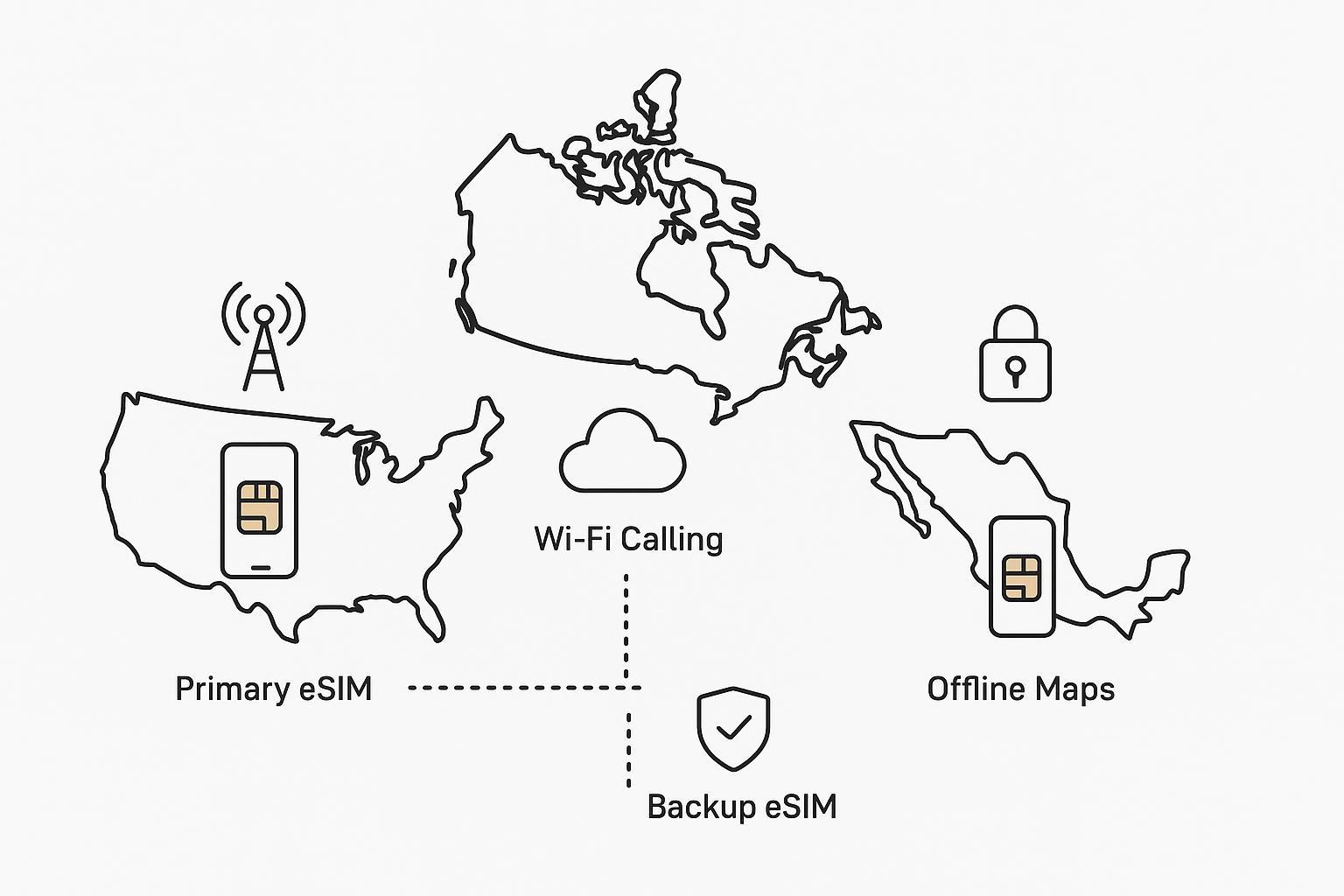
Roaming and 5G bands across U.S./Canada/Mexico
Start with two non-negotiables:
Unlocked device (carrier-unlocked). If it’s locked, your options collapse.
Correct radio variant for North America. The same phone name can hide different band support depending on model/SKU.
If you’re planning cross-border travel, think in terms of eSIM roaming US–Canada–Mexico as a system, not a last-minute add-on.
Then decide your connectivity posture:
If you’re doing multi-city, multi-country travel, a regional eSIM strategy is often simpler than improvising local SIMs in each country.
If you need voice/SMS, confirm whether your plan is data-only or includes calling—CNET notes many travel eSIM options differ here, and hotspot allowances can vary meaningfully in practice (CNET’s 2026 guide to eSIM plans for World Cup travelers).
On‑device AI, translation, and offline capability
AI matters for this tournament in one way: reducing friction when you don’t have the time (or the signal) for friction.
Look for:
Offline translation and downloadable language packs (especially for quick phrases, directions, and logistics).
On-device summarization for long itineraries and changing schedules.
Reliable offline maps and saved tickets/QR codes.
In practice, the most valuable “AI feature” is the one that keeps working when the network doesn’t.
Stadium‑grade camera capture and stabilization
A stadium is a hostile environment for cameras: distance, motion, harsh lighting, and constant jostling.
Prioritize:
Stabilization you can trust one-handed.
Fast capture speed (the moment arrives once).
Telephoto that holds detail from a distance.
And remember: the best World Cup photo is often the one you captured instantly—then shared confidently—without fighting your phone.
Concierge, ecosystem, and bespoke options
Luxury phones are judged differently at this level: not by how they test, but by how they support you.
24/7 support, warranty, and global service access
If you’re moving between host cities (and possibly across borders), service is not an afterthought—it’s part of travel readiness.
Concierge-grade support means:
A clear path to help when something fails at the worst time.
A service experience that respects privacy.
Practical coordination: replacement logistics, repair routing, and guidance without friction.
This is also where luxury ownership can feel materially different. For example, VERTU positions its ownership experience around a service layer—see how it frames VERTU luxury concierge service and the idea of one-touch access to VERTU 24/7 concierge service. In a World Cup travel context, that’s less about “features” and more about reducing coordination load when your calendar is dense.
Accessories ecosystem for travel days
World Cup travel punishes weak setups. Build a kit that’s quiet, reliable, and redundant:
A high-quality power bank (and a second one if you’re coordinating a group).
A compact charging set that works in multiple environments.
A privacy screen if you’re working from lounges or hospitality.
Your accessories shouldn’t advertise themselves. They should simply remove problems.
Bespoke materials and personalization guidance
If you’re commissioning a luxury device, personalize the parts that change your daily relationship with it:
Materials you’ll enjoy touching hundreds of times a day.
Finishes that age gracefully.
Personalization that signals taste, not noise.
If you want the ownership experience to extend beyond the object, evaluate brands that treat customization and access as part of the ecosystem. The best versions of this feel like a quiet privilege rather than a marketing claim—more akin to a “passport” model for experiences and support (VERTU describes this kind of approach in its passport to exclusive experiences).
Conclusion
If you’re buying a luxury smartphone for the 2026 World Cup, the smartest choice is the one that minimizes friction when timing matters.
The shortlist logic is simple:
Choose iPhone Pro‑grade when predictability and ecosystem stability are your risk-reduction tools.
Choose Galaxy Ultra‑grade when you want maximum flexibility for international, business-heavy travel.
Choose a flagship foldable when multitasking and big-screen replays genuinely change how you move through match days—and when service support is strong enough to match.
Final check before you commit: connectivity, camera, AI/offline capability, security posture, durability, and the reality of support.
Align your pick with your travel plan, stadium access style, and hospitality rhythm—and you’ll arrive with a phone that behaves like infrastructure.
Disclosure: This article references VERTU pages. Editorial judgment remains the priority.
![Top 10 Tourbillon Watches for Men [2026 Latest]](https://cdn.sanity.io/images/e0gp1l2g/production/8cb6bc45133cf9453382fc7d074465af588bb610-1800x1080.webp?w=800&h=450&q=82&auto=format&fit=crop)