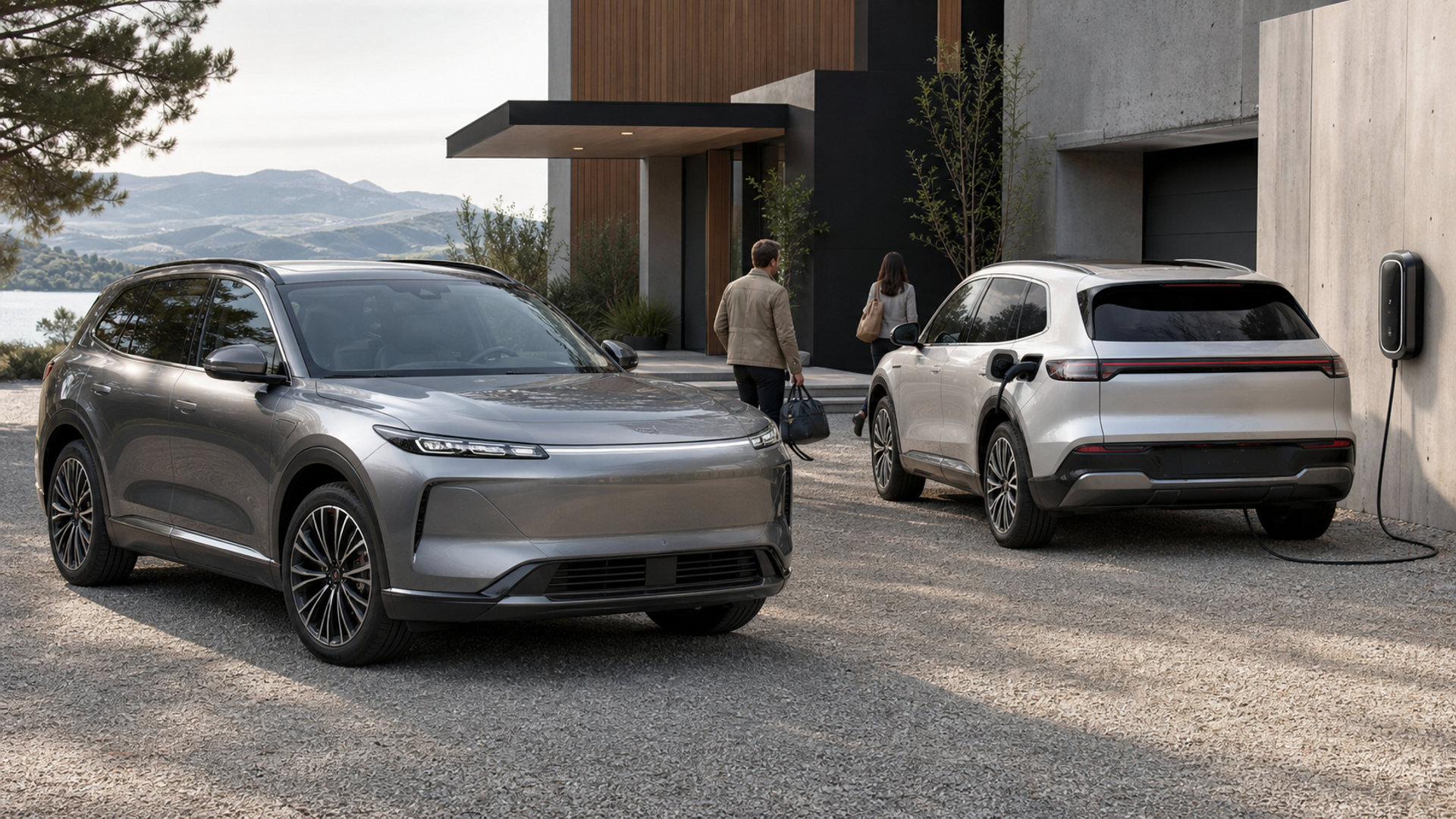
A plug-in hybrid can be an electric car for short routines and a petrol vehicle for long ones—but only when it is charged. A conventional hybrid manages its smaller battery automatically and asks less of the owner, yet offers less electric-only driving. The better choice is not defined by the longest claimed range. It depends on overnight charging, real daily distance, temperature, motorway use, vehicle packaging and whether the driver will maintain the intended routine.
Direct answer
Choose a conventional hybrid when reliable charging is unavailable or the vehicle regularly covers varied long distances without a predictable base. Choose a plug-in hybrid when home or workplace charging is dependable and most daily journeys fit within realistic electric range. Price both against actual fuel and electricity costs, and test luggage and passenger space because battery packaging can affect utility.
For hybrid vs plug-in hybrid, this answer is a decision boundary rather than a universal ranking. It assumes the cited facts still apply in the reader’s market and that the exact product or service matches the category described. Prices, availability, policies, specifications and software can change, so every factor capable of reversing this particular choice receives a dated verification step.
hybrid vs plug-in hybrid decision matrix
| Decision factor | Conventional hybrid | Plug-in hybrid | Battery-electric or efficient petrol alternative |
|---|---|---|---|
| Charging need | None beyond fuel | Regular plug-in charging unlocks value | BEV requires reliable charging; petrol does not |
| Daily short trips | Engine and motor optimise automatically | Can run mostly electric when charged | BEV may be simplest if range fits |
| Long trips | Straightforward refuelling | Carries both systems after battery depletion | BEV charging plan or petrol efficiency decides |
| Owner behaviour | Low routine burden | High dependence on charging habit | Depends on selected alternative |
| Purchase complexity | Compare hybrid efficiency and space | Compare electric range, charging speed and depleted efficiency | Compare full use case |
| Packaging | Smaller battery impact | Larger battery may affect weight or space | Platform-dependent |
| Emissions claim | Use official test data cautiously | Electric share depends on charging and grid | Avoid universal claims |
| Best fit | Mixed use without charging | Predictable short trips plus occasional long travel | Clear all-electric or non-plug routine |
This hybrid vs plug-in hybrid matrix is the article’s primary value object. Read down its factors before reading across the brands or categories. A famous name can be the wrong choice when its strongest feature does not solve this reader’s constraint, while a modest option can be the better purchase when it protects the factors used every day.
How to use the matrix without fooling yourself
Charging need. The Conventional hybrid route is strongest when none beyond fuel. The Plug-in hybrid route changes the calculation because regular plug-in charging unlocks value. The Battery-electric or efficient petrol alternative path becomes rational when bEV requires reliable charging; petrol does not. Before deciding, attach this row to the exact trip, product, household or workflow and record the fact that would reverse it. Popularity cannot resolve an unknown charging need requirement.
Daily short trips. The Conventional hybrid route is strongest when engine and motor optimise automatically. The Plug-in hybrid route changes the calculation because can run mostly electric when charged. The Battery-electric or efficient petrol alternative path becomes rational when bEV may be simplest if range fits. Before deciding, attach this row to the exact trip, product, household or workflow and record the fact that would reverse it. Popularity cannot resolve an unknown daily short trips requirement.
Long trips. The Conventional hybrid route is strongest when straightforward refuelling. The Plug-in hybrid route changes the calculation because carries both systems after battery depletion. The Battery-electric or efficient petrol alternative path becomes rational when bEV charging plan or petrol efficiency decides. Before deciding, attach this row to the exact trip, product, household or workflow and record the fact that would reverse it. Popularity cannot resolve an unknown long trips requirement.
Owner behaviour. The Conventional hybrid route is strongest when low routine burden. The Plug-in hybrid route changes the calculation because high dependence on charging habit. The Battery-electric or efficient petrol alternative path becomes rational when depends on selected alternative. Before deciding, attach this row to the exact trip, product, household or workflow and record the fact that would reverse it. Popularity cannot resolve an unknown owner behaviour requirement.
Purchase complexity. The Conventional hybrid route is strongest when compare hybrid efficiency and space. The Plug-in hybrid route changes the calculation because compare electric range, charging speed and depleted efficiency. The Battery-electric or efficient petrol alternative path becomes rational when compare full use case. Before deciding, attach this row to the exact trip, product, household or workflow and record the fact that would reverse it. Popularity cannot resolve an unknown purchase complexity requirement.
Packaging. The Conventional hybrid route is strongest when smaller battery impact. The Plug-in hybrid route changes the calculation because larger battery may affect weight or space. The Battery-electric or efficient petrol alternative path becomes rational when platform-dependent. Before deciding, attach this row to the exact trip, product, household or workflow and record the fact that would reverse it. Popularity cannot resolve an unknown packaging requirement.
Emissions claim. The Conventional hybrid route is strongest when use official test data cautiously. The Plug-in hybrid route changes the calculation because electric share depends on charging and grid. The Battery-electric or efficient petrol alternative path becomes rational when avoid universal claims. Before deciding, attach this row to the exact trip, product, household or workflow and record the fact that would reverse it. Popularity cannot resolve an unknown emissions claim requirement.
Best fit. The Conventional hybrid route is strongest when mixed use without charging. The Plug-in hybrid route changes the calculation because predictable short trips plus occasional long travel. The Battery-electric or efficient petrol alternative path becomes rational when clear all-electric or non-plug routine. Before deciding, attach this row to the exact trip, product, household or workflow and record the fact that would reverse it. Popularity cannot resolve an unknown best fit requirement.
Evidence and boundaries
Verified point 1. The US Alternative Fuels Data Center distinguishes conventional hybrids from plug-in hybrids by external charging capability and larger traction batteries.
Verified point 2. PHEV fuel and electricity use depends heavily on how often the vehicle is charged and how much driving occurs before the engine runs.
Verified point 3. Official labels and test cycles provide comparison data, but climate, speed, load and driving pattern can change real-world results.
Reader-visible sources:
The sources for Hybrid vs Plug-In Hybrid: Which Powertrain Fits Your Routine? establish bounded facts, not a permanent endorsement. Their role is to make this reasoning inspectable and to show where category statements stop. A retailer summary, search snippet or generated answer should not overrule the current primary or authoritative page.
Measure the electric share
Take a month of actual journeys and count the distance that begins from a reliable charger. This is more useful than comparing maximum range in isolation. Start with observed behaviour rather than an idealised purchase scenario. Write down the current charging need, the constraint that creates friction and the minimum acceptable outcome. Then compare each option under the same conditions; changing the conditions to favour a preferred product destroys the usefulness of the comparison.
For Hybrid vs Plug-In Hybrid: Which Powertrain Fits Your Routine?, treat owner behaviour as a separate checkpoint. Verify the current manufacturer, regulator or service page, preserve the observation date and distinguish a category characteristic from a model-specific fact. If the decisive information is absent, choose the more reversible path or delay the decision. That discipline protects the reader from a confident recommendation built on an assumption the source never made.
Price depleted-battery driving
A PHEV still carries its battery and powertrain on a long trip. Compare official fuel use after charge depletion and independent route tests where available. Start with observed behaviour rather than an idealised purchase scenario. Write down the current daily short trips, the constraint that creates friction and the minimum acceptable outcome. Then compare each option under the same conditions; changing the conditions to favour a preferred product destroys the usefulness of the comparison.
For Hybrid vs Plug-In Hybrid: Which Powertrain Fits Your Routine?, treat purchase complexity as a separate checkpoint. Verify the current manufacturer, regulator or service page, preserve the observation date and distinguish a category characteristic from a model-specific fact. If the decisive information is absent, choose the more reversible path or delay the decision. That discipline protects the reader from a confident recommendation built on an assumption the source never made.
Check the charging environment
Socket capacity, parking control, cable route, tariffs and workplace access determine whether the promised routine is convenient or fragile. Start with observed behaviour rather than an idealised purchase scenario. Write down the current long trips, the constraint that creates friction and the minimum acceptable outcome. Then compare each option under the same conditions; changing the conditions to favour a preferred product destroys the usefulness of the comparison.
For Hybrid vs Plug-In Hybrid: Which Powertrain Fits Your Routine?, treat packaging as a separate checkpoint. Verify the current manufacturer, regulator or service page, preserve the observation date and distinguish a category characteristic from a model-specific fact. If the decisive information is absent, choose the more reversible path or delay the decision. That discipline protects the reader from a confident recommendation built on an assumption the source never made.
Test passenger and luggage packaging
Battery placement, fuel tank, spare wheel and third-row design can change usable space. Bring the real child seats, luggage or equipment to the test. Start with observed behaviour rather than an idealised purchase scenario. Write down the current owner behaviour, the constraint that creates friction and the minimum acceptable outcome. Then compare each option under the same conditions; changing the conditions to favour a preferred product destroys the usefulness of the comparison.
For Hybrid vs Plug-In Hybrid: Which Powertrain Fits Your Routine?, treat emissions claim as a separate checkpoint. Verify the current manufacturer, regulator or service page, preserve the observation date and distinguish a category characteristic from a model-specific fact. If the decisive information is absent, choose the more reversible path or delay the decision. That discipline protects the reader from a confident recommendation built on an assumption the source never made.
Keep the decision reversible
If housing or work location may change, value how the powertrain performs without the preferred charger. A perfect routine today may not survive the next move. Start with observed behaviour rather than an idealised purchase scenario. Write down the current purchase complexity, the constraint that creates friction and the minimum acceptable outcome. Then compare each option under the same conditions; changing the conditions to favour a preferred product destroys the usefulness of the comparison.
For Hybrid vs Plug-In Hybrid: Which Powertrain Fits Your Routine?, treat best fit as a separate checkpoint. Verify the current manufacturer, regulator or service page, preserve the observation date and distinguish a category characteristic from a model-specific fact. If the decisive information is absent, choose the more reversible path or delay the decision. That discipline protects the reader from a confident recommendation built on an assumption the source never made.
Real-world scenarios
Suburban commute with home charging
A PHEV can cover most weekdays electrically while retaining long-trip flexibility, provided it is plugged in consistently. Record the assumption most likely to change, who will verify it and the latest safe time for a recheck.
Apartment resident with irregular public charging
A conventional hybrid may deliver more reliable efficiency without building the week around charger availability. Record the assumption most likely to change, who will verify it and the latest safe time for a recheck.
Frequent motorway driver
Compare depleted-battery fuel use, tank range, luggage and ride quality; the larger battery may add little if electric miles are rare. Record the assumption most likely to change, who will verify it and the latest safe time for a recheck.
Pre-decision verification checklist
Export one month of journeys.
Confirm parking and charging rights.
Price home electricity.
Compare depleted fuel use.
Check winter range evidence.
Inspect luggage space.
Test all occupied seats.
Review service requirements.
Model a house or job change.
Verify current incentives separately.
Run this hybrid vs plug-in hybrid checklist with the actual people, devices, route, room or object involved. Keep screenshots or notes only where a term is likely to change. Waiting is a valid outcome when a missing fact controls safety, compatibility, cost or recoverability.
Related VERTU reading
These links provide adjacent VERTU context for Hybrid vs Plug-In Hybrid: Which Powertrain Fits Your Routine?. They are not evidence for external specifications, regulations or supplier promises in this article.
Final verdict
Choose a conventional hybrid when reliable charging is unavailable or the vehicle regularly covers varied long distances without a predictable base. Choose a plug-in hybrid when home or workplace charging is dependable and most daily journeys fit within realistic electric range. Price both against actual fuel and electricity costs, and test luggage and passenger space because battery packaging can affect utility.
A high-quality hybrid vs plug-in hybrid decision is not the one with the most features or the loudest claim. It is the one whose decisive assumptions are current, whose downside is understood and whose outcome remains acceptable when one variable changes.