

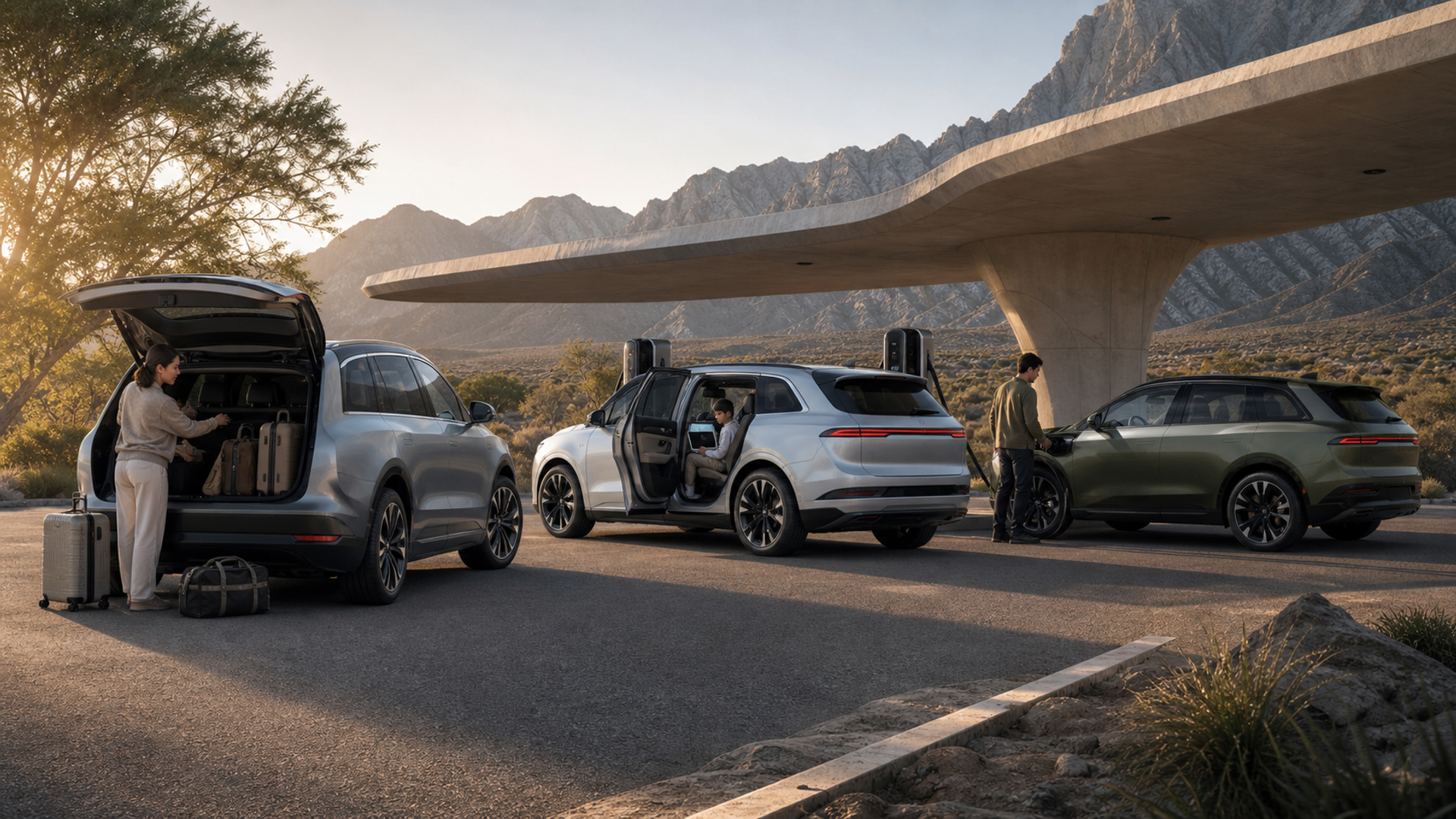
The best luxury electric SUV in 2026 is the one that completes your regular long route with a realistic charging buffer, remains quiet on poor surfaces and provides the cabin and luggage space your household actually uses. BMW iX, Mercedes-Benz EQS SUV, Volvo EX90 and Rivian R1S represent different answers: road-focused comfort, three-row luxury, safety-led family design and adventure utility.
Headline range is only the first filter. Charging curve, charger reliability, wheel size, climate, payload and route speed determine the ownership experience. This guide uses those practical factors rather than ranking vehicles by maximum output.
Luxury electric SUV shortlist
| Vehicle | Strongest use case | Main strength | Hard check before ordering |
|---|---|---|---|
| BMW iX | Two-row executive and family travel | Refined road manners and efficient packaging | Design preference, options and luggage needs |
| Mercedes-Benz EQS SUV | Quiet three-row or chauffeur-oriented use | Comfort-led cabin and flexible seating | Third-row reality, wheel choice and interface |
| Volvo EX90 | Family use with safety-led priorities | Calm Scandinavian cabin and three-row format | Software maturity and charging on your routes |
| Rivian R1S | Family adventure and rough-road use | Utility, storage and capability | Service coverage and long-distance charging |
| Porsche Macan Electric | Owner-driver seeking a smaller footprint | Dynamic focus and premium charging architecture | Rear space, options and delivered cost |
| Cadillac Escalade IQ | Large-cabin North American use | Space, presence and long-distance intent | Physical size and market availability |
Availability, battery and equipment vary by country. Verify the exact model year, derivative and market specification rather than importing a review from another region.
Replace advertised range with a route buffer
Start with the longest journey made at least monthly. Map the distance, elevation, climate and reliable high-power chargers. Then require a buffer at arrival: many owners will be more comfortable planning to reach a charger with 15 to 25 per cent remaining rather than using the last theoretical kilometre.
Reduce the published range assumption for sustained high speed, winter heating, extreme heat, roof boxes, heavy payload or towing. The precise adjustment depends on the vehicle and conditions, so use owner data cautiously and treat a test on your route as the strongest evidence.
The correct question is not “which SUV has the longest range?” It is “which SUV reaches the charger I trust, in bad conditions, without making passengers anxious?” A shorter-range vehicle with a stable charging curve and excellent route infrastructure may be easier to own than a longer-range one with poor charger coverage.
Charging speed needs context
Peak kilowatts appear in headlines but are reached only under suitable battery temperature, state of charge and charger conditions. What matters on a road trip is the time required to add the energy needed for the next leg. A broad, sustained curve can be more useful than a brief peak.
Test plug-and-charge or payment flows before a critical trip. Confirm whether the car preconditions the battery when navigating to a charger, which networks are integrated and how faults are reported. Carry the necessary apps or cards, but avoid building a route around a single unit with no backup.
Home charging remains the largest convenience advantage. Have an electrician assess supply, cable route and overnight tariff before delivery. A vehicle that wakes each morning at the desired charge can remove fuel-station time from most weeks.
BMW iX: a refined two-row benchmark
The current BMW iX combines a large two-row cabin with an electric-first platform. Its strength is the way packaging, quietness and performance support daily road use without requiring a third row. It suits buyers who want executive comfort and a manageable footprint relative to the largest electric SUVs.
Test the steering and regenerative-braking settings in traffic, then ride in the rear on broken pavement. Large wheel options can change noise and impact quality. Inspect the boot with real luggage because the sloping rear and parcel shelf determine usable shape.
Mercedes-Benz EQS SUV: space and isolation
Mercedes presents the EQS SUV as a comfort-focused electric SUV with flexible seating depending on configuration. It can suit a family needing a third row or a buyer who values a quiet rear environment. Its interface and curved body shape are distinctive; both deserve a long in-person test.
Third-row availability is not the same as third-row suitability. Adults should enter, sit and exit with the second row set realistically. Check luggage remaining when every seat is occupied. If the third row is used only several times a year, compare the compromise with hiring a larger vehicle on those occasions.
Volvo EX90: family calm and safety-led design
The Volvo EX90 follows a Scandinavian approach: visual calm, family packaging and extensive sensing technology. It is appealing to buyers who want three rows without the visual mass of the largest flagships.
Software deserves scrutiny. Pair phones, create profiles, use navigation and test the functions needed without mobile coverage. Ask which features are active at delivery and which depend on later updates. A promised function should not receive full value until it is operational in the target country.
Rivian R1S: utility beyond the hotel entrance
Rivian’s R1S combines three-row family packaging with storage and off-road capability. It is the strongest candidate here for buyers who regularly carry outdoor gear, travel on poor roads or need a vehicle that can move between city and remote use.
That capability has costs: size, tyre expense, service geography and efficiency under certain conditions. Check the nearest service path and realistic recovery plan before taking the car far from major centres. Adventure value depends on support as well as ground clearance.
Porsche Macan Electric and other road-focused choices
The Macan Electric is relevant for an owner-driver who wants a smaller electric SUV with stronger dynamic priorities. Rear accommodation and luggage should be tested against the household, and options can move the delivered cost quickly. It may be the best drive in the shortlist and the wrong family tool.
Large alternatives such as Cadillac Escalade IQ target buyers who want significant space and road presence. Their physical dimensions require a garage, city and charging-site audit. A luxury vehicle that does not fit the owner’s regular parking is a design mismatch, regardless of cabin quality.
Comfort: silence exposes other noise
Removing an engine makes wind, tyre, suspension and trim sounds more noticeable. Drive at motorway speed and on coarse asphalt. Listen from the rear seat, where road noise and body movement can differ from the driver’s impression.
Seat comfort should be tested beyond a showroom. Check thigh support, headrest position, ventilation noise and whether the floor height forces the knees upward. In three-row vehicles, battery packaging can affect foot position.
Wheel choice is again critical. Smaller wheels with more tyre sidewall often improve ride, efficiency and replacement cost. They may provide more real luxury than the largest visual option.
Family, chauffeur and road-trip decision matrix
Choose iX for two-row refinement and daily executive travel. Choose EQS SUV when comfort and a possible third row matter. Choose EX90 for family-focused design and a calmer visual vocabulary. Choose R1S when utility and rough-road use are genuine weekly needs. Choose Macan Electric when the driver is primary and the household can accept less space.
Chauffeur users should test rear ingress, seat controls, device charging, privacy and ride. Families should test child-seat access, third-row exit, pram loading and cabin storage. Road-trippers should run the charging plan in both directions because elevation and wind can change the result.
Compare these vehicles with the wider best luxury SUVs guide. If a low seating position and easier motorway efficiency suit the use, the best luxury electric cars comparison may be the better category.
Ownership and commerce checks
Confirm that the exact vehicle is supported in your country. Charging connector, navigation services, remote app, warranty, roadside assistance and parts logistics can differ. An imported specification may create software or service friction that no purchase discount offsets.
Obtain quotes for home charging, insurance and tyres. Ask for battery-warranty terms and what diagnostic evidence is available on a used vehicle. For business use, model downtime and replacement transport as costs.
Cold-weather, towing and roof-load use require separate planning. Heating the cabin and battery can reduce the energy available for distance, while a trailer or roof box changes aerodynamic demand. Do not extrapolate from an unladen summer test. Ask the manufacturer for the exact towing and load limits, then plan the most difficult recurring journey with a larger reserve and at least one backup charger.
If the vehicle will be parked for weeks during travel, test remote monitoring, charge limits and 12-volt battery behaviour. A premium electric SUV should return ready for use; ownership procedures that depend on undocumented workarounds are a warning sign.
Final decision
The best luxury electric SUVs in 2026 are specialised. BMW iX is the polished two-row road choice; Mercedes-Benz EQS SUV prioritises comfort and space; Volvo EX90 serves family calm; Rivian R1S adds serious utility; Porsche Macan Electric keeps the driver central.
Choose with a route, charger and household test. When the vehicle fits the real journey with a healthy buffer, charges where you already stop and remains comfortable on your worst road, electric luxury becomes effortless rather than performative.
Sources
BMW, iX Electric SUV, accessed 1 August 2026.
Mercedes-Benz, EQS SUV, accessed 1 August 2026.
Volvo, EX90, accessed 1 August 2026.
Rivian, R1S, accessed 1 August 2026.


![Top 10 Luxury Smartwatches for Business Travel [2026]](https://cdn.sanity.io/images/e0gp1l2g/production/8b5e5b21db42a1c5f040e828bd041857353a8eb2-2560x1382.webp?w=800&h=450&q=82&auto=format&fit=crop)