

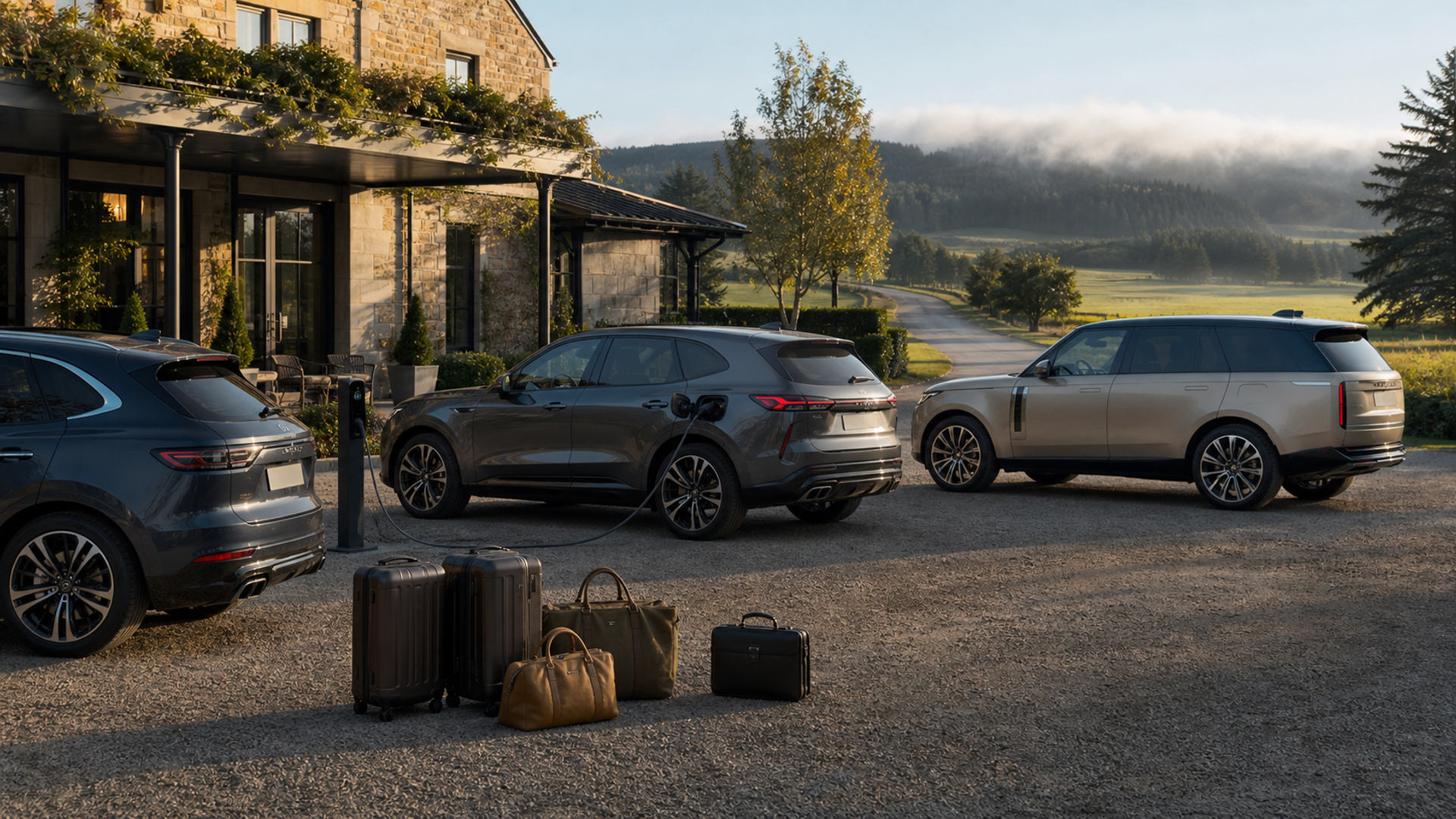
The best luxury hybrid SUV in 2026 is the one whose powertrain matches your charging access and journey pattern. A plug-in hybrid can deliver quiet electric commuting and easy long-distance travel, but only when it is charged regularly. A conventional hybrid asks less of the owner and can be efficient in mixed use, yet it cannot provide the same electric-only routine. Luxury should be judged by how smoothly the system works around passengers, luggage and time—not by the longest specification sheet.
This guide shortlists five credible approaches: Lexus RX 450h+ and RX 500h, BMW X5 xDrive50e, Volvo XC90 Plug-in Hybrid, Porsche Cayenne E-Hybrid and Range Rover Sport Electric Hybrid. It uses official 2026 manufacturer information and avoids treating estimated range or launch timing as guaranteed real-world performance.
Quick shortlist
| Model | Hybrid type | Best for | Key compromise to test |
|---|---|---|---|
| Lexus RX 450h+ | Plug-in hybrid | Quiet daily use and approachable ownership | Cargo, rear-seat and charging fit |
| Lexus RX 500h | Performance conventional hybrid | Drivers without dependable charging | No meaningful plug-in electric routine |
| BMW X5 xDrive50e | Plug-in hybrid | Balanced performance, commute and road trip | Option complexity and charging routine |
| Volvo XC90 Plug-in Hybrid | Plug-in hybrid, 6 or 7 seats | Family space and third-row flexibility | Third-row and luggage trade-off |
| Porsche Cayenne E-Hybrid | Plug-in hybrid | Driver engagement and chassis choice | Options, cargo and running cost |
| Range Rover Sport Electric Hybrid | Plug-in hybrid | Comfort, design and genuine all-terrain use | Complexity, size and ownership planning |
First choose between hybrid and plug-in hybrid
A conventional hybrid charges itself through the engine and regenerative braking. It suits owners who cannot reliably plug in, park on the street or cover unpredictable distances. Its electric motor improves efficiency and response but is not intended to deliver a long electric commute.
A plug-in hybrid has a larger battery and can travel a meaningful distance without starting the engine. It works best when the owner can charge at home or work and most daily trips fit within the electric range. Once the battery is depleted, the vehicle continues as a hybrid, but carrying a large battery without charging can undermine the reason to buy it.
Before comparing models, audit seven days of driving. Record daily distance, cold starts, motorway share, passenger count, luggage and charging access. If you cannot name where the car will charge at least several times per week, a conventional hybrid may be the more honest choice.
Lexus RX: two different hybrid answers
Lexus offers both approaches in the 2026 RX. The official 2026 RX newsroom overview says the RX 450h+ plug-in hybrid uses a 2.5-litre four-cylinder hybrid system and gives a manufacturer-estimated 85 MPGe combined rating. Lexus’s current RX Plug-in Hybrid page states a manufacturer-estimated 38 miles of electric range.
The RX 500h takes a performance-hybrid route instead. Lexus states that its turbocharged 2.4-litre engine, six-speed automatic, rear eAxle and DIRECT4 all-wheel drive produce 366 hp and 406 lb-ft. It suits a driver who wants immediate hybrid response without building life around a plug.
Choose the 450h+ when regular charging and quiet local driving matter. Choose the 500h when dependable charging is absent and driver response matters more than electric commuting. In both, test rear-seat comfort, boot shape and interface use rather than assuming Lexus refinement solves every ergonomic preference.
BMW X5 xDrive50e: the all-rounder
BMW’s current plug-in hybrid overview lists the 2026 X5 xDrive50e with an estimated electric range around 40 miles. The exact estimate depends on model year, wheel and certification status, so use the number as a planning guide and confirm the vehicle’s window sticker.
The X5 is compelling because it combines a substantial electric commute with strong long-distance performance and a practical two-row cabin. It feels like one car rather than an electric car and petrol car awkwardly sharing space when the calibration is right.
Test brake blending at low speed, the transition when the engine starts, ride quality on the chosen wheels and cargo floor around the battery packaging. BMW options can transform both comfort and price; compare the car you will order, not a fully equipped demonstrator.
Volvo XC90 Plug-in Hybrid: family utility
Volvo’s official 2026 XC90 Plug-in Hybrid page presents a six- or seven-seat luxury SUV with up to 32 miles of EPA-estimated electric range, up to 530 miles combined range and 455 hp. Those figures make it a distinctive choice for families that need a third row.
The XC90’s value is spatial flexibility, not class-leading electric range. Test the third row with the actual passengers, then load the luggage you use when every seat is occupied. A seven-seat vehicle can have limited holiday luggage capacity with all seats raised.
Volvo’s drive-mode explanation includes Hybrid, Pure, Power, Off-road and Constant AWD modes. The useful question is whether the system makes daily choices simple. A family vehicle should not require repeated menu work to deliver the expected mode.
Porsche Cayenne E-Hybrid: driver-first luxury
Porsche’s official Cayenne model overview lists the E-Hybrid within a broad range of petrol, hybrid and electric models. Porsche’s current 2026 technical data identifies a 25.9 kWh gross battery for the Cayenne E-Hybrid, 463 hp combined and 4.6 seconds from 0–60 mph with the relevant configuration.
The Cayenne is the shortlist choice for a driver who wants steering, chassis and powertrain response to remain central. The hybrid system supports performance as well as local electric use. Its vast options catalogue can also make two Cayennes feel very different.
Specify carefully. Large wheels may affect ride and range; chassis systems add capability and cost; hybrid packaging affects luggage space. Test a vehicle close to the intended build. A perfectly judged demonstrator with options you do not order is poor evidence.
Range Rover Sport Electric Hybrid: comfort and capability
Range Rover Sport combines a refined road posture with real all-terrain systems. Land Rover’s official Range Rover Sport innovation page highlights all-wheel steering, which turns the rear wheels in the same direction at higher speeds and the opposite direction at low speeds, producing a turning circle of less than 36 feet on the described configuration.
The Electric Hybrid is attractive to buyers who want silent local running without giving up long-distance or off-road flexibility. However, range, powertrain and specification differ by market and model year. Confirm the exact PHEV derivative, official local range figure, charging standard and availability.
Test entry height, rear-seat ride, boot access, low-speed manoeuvring and the interface. The Range Rover Sport’s strength is the breadth between motorway calm and rough-road ability. If your use never needs that breadth, a simpler SUV may deliver more value.
How to compare electric range honestly
Manufacturer estimates use standard procedures and are essential for comparison, but weather, speed, tyres, heating, load and driving style change real results. A PHEV with a quoted 38 miles may cover a 30-mile commute comfortably in mild weather and start the engine in winter.
Build a range buffer. Take your longest routine day, add 20–30% for conditions and detours, and compare it with the official estimate. If the result is close, plan for occasional engine use rather than treating it as failure.
Charging speed matters less for many PHEVs than charging convenience. Overnight home charging can make modest AC speed sufficient. Public rapid charging is useful only when the vehicle supports it and the stop fits the journey. Confirm connector, onboard charger and cable with the local-market vehicle.
Passenger comfort requires a real test
Luxury SUV comparisons often focus on acceleration because it is easy to publish. Rear-seat ride, door aperture, seat-base length, climate control and road noise matter more on a four-hour journey. Bring the tallest passenger, fit the child seat if relevant and drive on a poor road.
Large wheels can improve appearance and steering response while reducing compliance and electric range. Air suspension may change both comfort and loading height. Test the exact wheel and suspension combination.
For a broader non-hybrid reference, the best luxury SUVs in 2026 guide compares comfort, craft and capability. Buyers deciding between two performance-oriented models can use the Porsche Cayenne vs Range Rover Sport comparison once live.
Ownership and charging checklist
Where will the vehicle charge overnight?
What is the electric range on the exact local specification?
Does the trip pattern include regular journeys beyond that range?
How much boot space is lost to hybrid packaging?
Is third-row access usable with child seats installed?
Which warranty covers the high-voltage battery and hybrid components?
What service network supports the car on common routes?
Does the configured wheel and suspension combination remain comfortable?
Are price and tax incentives confirmed for the buyer’s country?
Prices, taxes and incentives are deliberately not ranked here because they change by market and date. Use the official local configurator and a written retailer quote.
Which model should you choose?
Choose the Lexus RX 450h+ for a calm premium commute with regular charging, or RX 500h when you want a performance hybrid without a plug. Choose the BMW X5 xDrive50e for a strong all-round blend of electric routine, road-trip ease and driver appeal. Choose the Volvo XC90 when six or seven seats are central.
Choose the Porsche Cayenne E-Hybrid when chassis engagement matters enough to justify careful specification. Choose Range Rover Sport when refined travel and genuine terrain capability both appear in the brief.
Final verdict
The best luxury hybrid SUV is the one you will operate as designed. A regularly charged PHEV can make daily travel quiet and long journeys easy; an uncharged one becomes unnecessary complexity. Audit your week, test passengers and luggage, verify the local specification, and choose the powertrain that removes friction rather than adding another obligation.
Sources
Lexus, 2026 Lexus RX: Extending the Range, accessed 2 August 2026.
Lexus, 2026 RX Plug-in Hybrid, accessed 2 August 2026.
BMW USA, Plug-in Hybrid Electric Vehicles, accessed 2 August 2026.
Volvo Cars, 2026 XC90 Plug-in Hybrid, accessed 2 August 2026.
Porsche, Cayenne model overview, accessed 2 August 2026.
Land Rover, Range Rover Sport innovations, accessed 2 August 2026.
![How to Scan Receipts and Documents with Your Phone [Full Guide]](https://cdn.sanity.io/images/e0gp1l2g/production/0db13feec1d5e72b8a8a5f976d1f3e86619c9228-3840x1860.webp?w=180&h=180&q=78&auto=format&fit=crop)
![How to Scan Receipts and Documents with Your Phone [Full Guide]](https://cdn.sanity.io/images/e0gp1l2g/production/0db13feec1d5e72b8a8a5f976d1f3e86619c9228-3840x1860.webp?w=800&h=450&q=82&auto=format&fit=crop)
![Top 10 Two-Tone Carbon-Fibre Watches for Men [2026 List]](https://cdn.sanity.io/images/e0gp1l2g/production/18870799ba33fab0e038968359cd5772d7d7db30-1024x576.webp?w=800&h=450&q=82&auto=format&fit=crop)
![Top 10 Luxury Watches with Digital Complication Displays for Men [Latest]](https://cdn.sanity.io/images/e0gp1l2g/production/c4f6bf8c080f291c39f7cc85c7344ecff2fd3799-1024x553.webp?w=800&h=450&q=82&auto=format&fit=crop)