

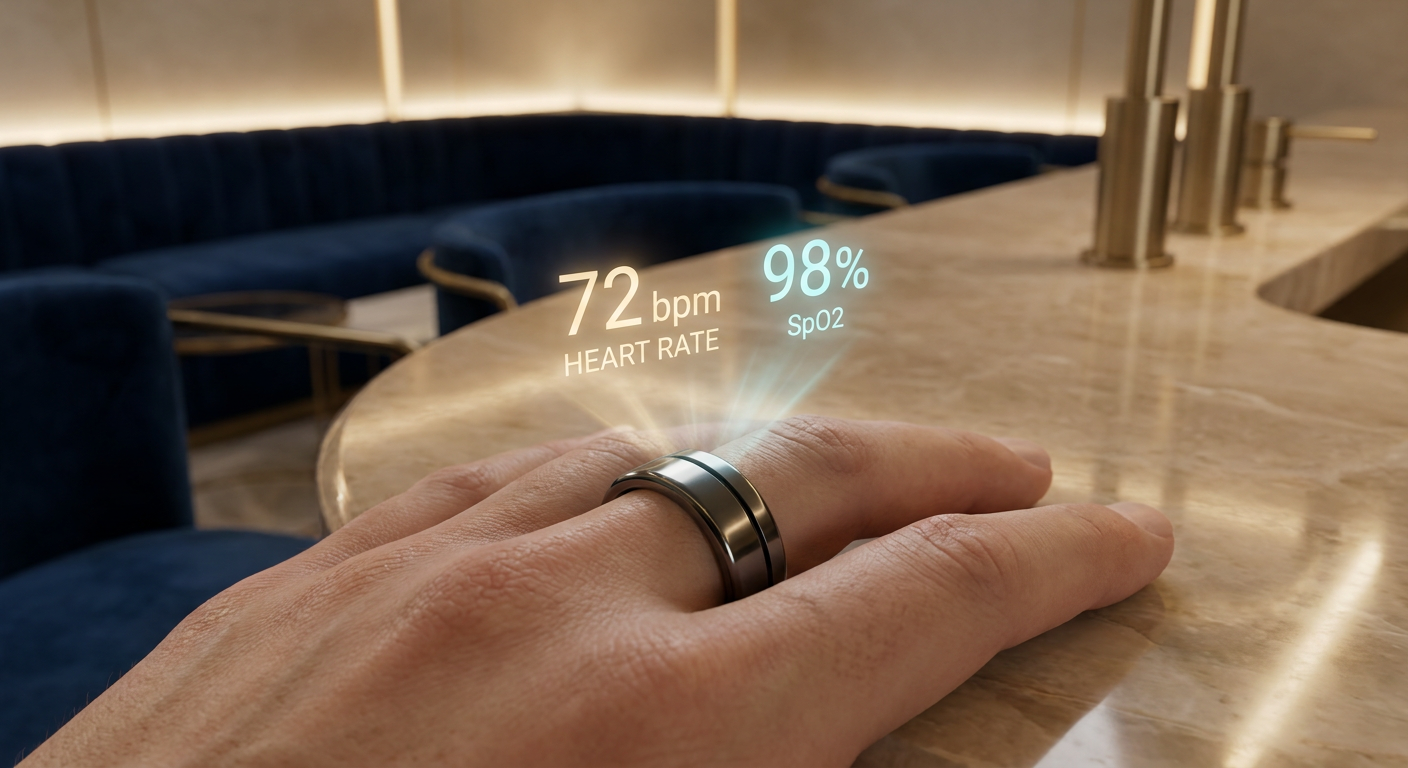
Key TakeawaySmart rings deliver continuous, medical-grade biometrics by capitalizing on the dense arterial blood flow in your fingers. By measuring photoplethysmography (PPG) waveforms at the palmar digital arteries, these discreet devices track resting heart rate, beat-to-beat variability (HRV), and blood oxygen saturation (SpO2) with accuracy rivaling clinical chest straps and pulse oximeters—all without the distraction of a glowing wrist screen.
Introduction
Wearable health tracking has evolved dramatically over the past decade. For years, monitoring your body meant strapping a bulky, screen-dominated watch to your wrist—a device that constantly buzzed with notifications, required frequent charging, and felt out of place with formal attire. Today, the frontier of personal health technology has shifted toward quiet discretion.
Smart rings with heart rate and SpO2 monitoring offer continuous biometric insights previously accessible only through clinical diagnostic equipment or cumbersome lab setups. Worn unobtrusively on the finger, these lightweight titanium and ceramic bands quietly log thousands of data points every night and day. They measure subtle shifts in your autonomic nervous system, track blood oxygen saturation drops during sleep, and gauge your physical recovery before you even step out of bed.
Readers will learn the physiological science behind finger-based optical sensors, how heart rate, HRV, and SpO2 are calculated from light reflection, how accurate these devices are when benchmarked against clinical standards, and how to evaluate the leading models on the market today.
What Makes a Smart Ring So Powerful
The Science Behind the Sensors
At the core of every health-focused smart ring lies an optical technique called photoplethysmography, commonly abbreviated as PPG. The fundamental physics of PPG is simple yet precise: light travels through biological tissue, and blood absorbs light differently depending on its volume and oxygenation level.
On the inner surface of a smart ring, tiny micro-LEDs emit specific wavelengths of light into the skin. As your heart contracts during each cardiac cycle, it pumps a wave of arterial blood through your digital capillaries. This sudden pulse increases the total blood volume in your finger tissue, causing more light to be absorbed. Between heartbeats, as pressure drops and blood recedes, light absorption decreases. A high-sensitivity photodetector positioned alongside the LEDs measures these microscopic changes in reflected light, converting the optical signal into a continuous waveform known as a pulse wave.
Cardiac Systole (Heart Beat) → Arterial Surge → Higher Blood Volume → Increased Light Absorption
Cardiac Diastole (Rest Phase) → Pressure Drops → Lower Blood Volume → Reduced Light Absorption
Modern smart rings deploy multiple light wavelengths to capture different physiological events:
- Green Light (~525 nm)Green light has a shallow penetration depth, making it exceptionally sensitive to rapid, shallow pulse changes. Rings use green LEDs primarily for active, daytime heart rate measurement.
- Red Light (~660 nm) and Infrared Light (~940 nm)Red and infrared wavelengths penetrate much deeper into cutaneous tissue. Because oxygenated hemoglobin absorbs infrared light more readily while deoxygenated hemoglobin absorbs more red light, alternating these two beams enables the ring to calculate arterial blood oxygen saturation (SpO2).
Why Fingers Beat Wrists
Many health enthusiasts wonder why a thin band on a finger often yields cleaner biometric data than a multi-hundred-dollar smartwatch. The answer lies in human vascular anatomy.
The arteries supplying your hand—specifically the palmar digital arteries branching along the sides of each finger—sit remarkably close to the skin surface, typically between 0.5 and 1.2 millimeters beneath the epidermis. Furthermore, the finger contains a dense network of arteriovenous anastomoses and capillary beds. This rich blood supply creates a high perfusion index (PI), which measures the ratio of pulsatile arterial blood signal to non-pulsatile background tissue signal.
At the finger, the perfusion index typically ranges between 2% and 8%. On the dorsal side of the wrist, where traditional smartwatches rest, the perfusion index drops dramatically to between 0.2% and 2%. The wrist contains thick skin, tendons, radial bone structures, and deep-lying blood vessels, forcing smartwatch sensors to push light through dense tissue.
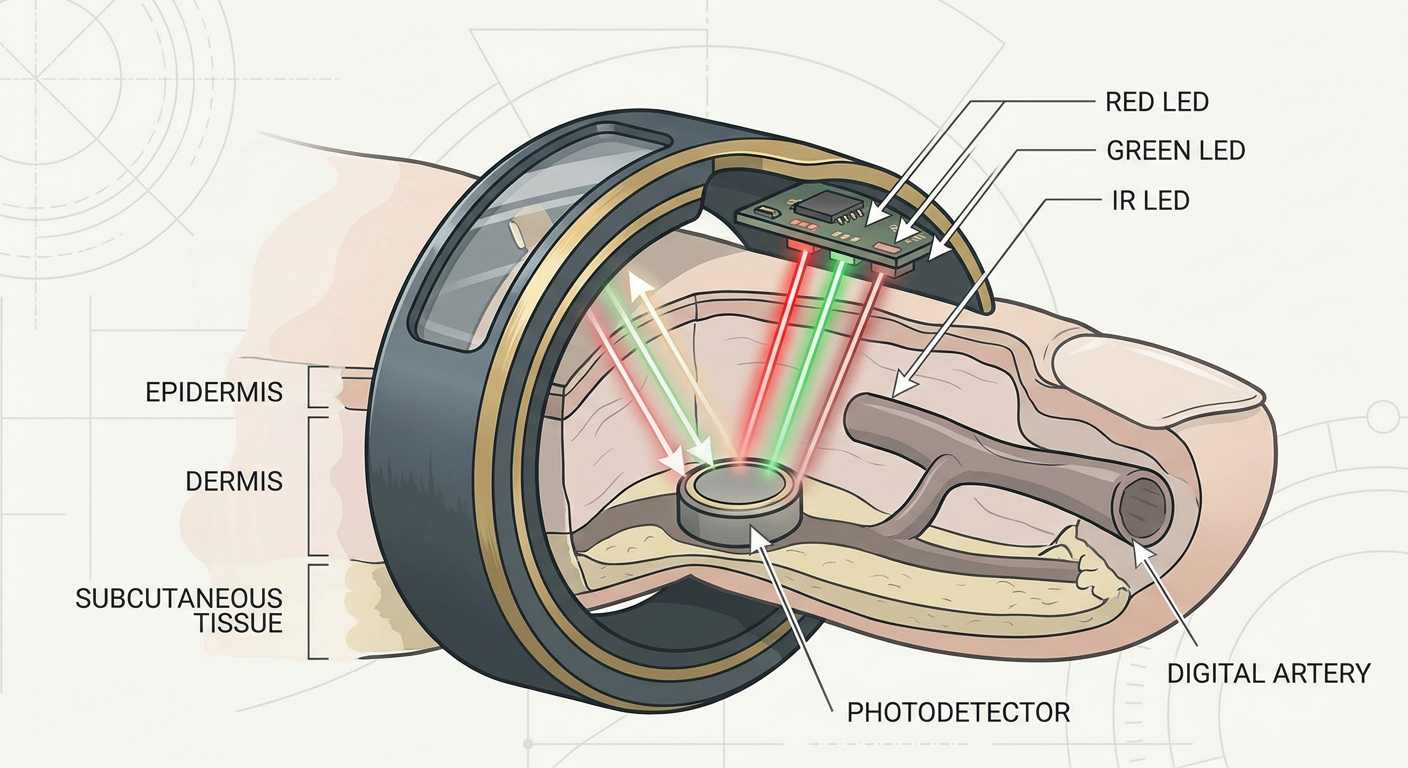
Additionally, finger-worn devices benefit from superior mechanical stability during sleep. While wristwatches slide along the arm or lift off the skin as you turn over, a properly fitted ring maintains snug, constant optical contact against the palmar digital arteries. This steady physical contact minimizes motion artifacts, allowing the ring's algorithm to isolate clean arterial pulses with minimal background noise.
The Health Metrics That Matter Most
Heart Rate: Your Body's Rhythm
Heart rate is the foundation of cardiovascular tracking, representing the exact number of times your heart beats per minute (bpm). While daytime heart rate reflects your response to movement, stress, and caffeine, your nocturnal resting heart rate (RHR) serves as an essential baseline of physical health.
During deep sleep, your body enters a parasympathetic-dominant state. Your heart rate drops to its lowest daily point, allowing the heart muscle to repair and replenish energy stores. A smart ring continuously tracks your nocturnal heart rate curve throughout the night.
- Optimal Resting PatternA healthy nocturnal curve resembles a hammock—heart rate gradually declines during the first half of the night, reaches its lowest point (the trough) near mid-sleep, and gently rises as body temperature rises before waking.
- Elevated Baseline SignalsAn elevated night-time resting heart rate—even 3 to 5 beats above your personal baseline—frequently signals late-night alcohol consumption, intense late workouts, onset of illness, or acute mental stress.
Heart Rate Variability: The Recovery Signal
While resting heart rate counts total beats, Heart Rate Variability (HRV) measures the subtle, millisecond-level variation in time between consecutive heartbeats. Contrary to popular belief, a healthy heart does not beat like a metronome. If your heart rate is 60 beats per minute, the time between beats is not a uniform 1.00 second; it fluctuates constantly—1.05 seconds, 0.94 seconds, 1.02 seconds.
This fluctuation is governed by your autonomic nervous system (ANS):
- Sympathetic Nervous System (SNS)The "fight-or-flight" branch. When activated by exertion, stress, or danger, it speeds up heart rate and makes beat-to-beat intervals rigid and uniform, causing HRV to drop.
- Parasympathetic Nervous System (PNS)The "rest-and-digest" branch. Governed by the vagus nerve, it slows the heart rate and introduces natural variability between beats, causing HRV to rise.
Smart rings calculate HRV overnight using the root mean square of successive differences (rMSSD), expressed in milliseconds. Higher nocturnal HRV indicates a well-recovered autonomic nervous system capable of adapting quickly to stress. A sharp, sustained drop in your baseline HRV warns that your body is overtrained, under-rested, or fighting off a subclinical infection.
Pro TipCompare your HRV only against your own historical baseline. HRV is highly individual and depends heavily on age, genetics, and baseline fitness; comparing your raw millisecond score to someone else's is medically meaningless.
SpO2: The Oxygen Connection
Pulse oximetry, or SpO2 monitoring, estimates the percentage of oxygen-saturated hemoglobin relative to total hemoglobin in your blood. Healthy individuals typically maintain a resting daytime SpO2 between 95% and 100%.
To calculate SpO2, a smart ring fires alternating pulses of red (660 nm) and infrared (940 nm) light into your finger tissue. The ring's optical processor compares the ratio of absorbed red light to absorbed infrared light during each pulse wave:
Absorption Ratio R = (AC / DC){Red}{(AC / DC){Infrared}}
Because oxygenated hemoglobin (HbO_2) absorbs significantly more infrared light, a lower ratio R indicates higher blood oxygenation. The ring's algorithm maps this ratio directly to your estimated SpO2 percentage.
Overnight SpO2 tracking is critical because oxygen levels naturally drop slightly during deep sleep, but sustained dips below 90% indicate potential upper airway resistance, sleep apnea, or altitude-induced hypoxia.
Beyond the Basics: What Your Ring Can Tell You
Sleep Apnea Screening and Respiratory Health
Obstructive sleep apnea (OSA) affects hundreds of millions of adults worldwide, yet up to 80% of mild-to-moderate cases remain undiagnosed. Traditional sleep apnea testing requires overnight stays in a sleep laboratory wired to an electroencephalogram, chest straps, and nasal cannulas.
Smart rings provide an accessible, non-invasive screening tool for breathing disruptions. By pairing continuous SpO2 sampling with nocturnal movement and pulse wave amplitude analysis, ring algorithms track the Oxygen Desaturation Index (ODI)—the frequency of events per hour where blood oxygen drops by 3% or more from baseline.
When a temporary airway collapse occurs, blood oxygen plummets, followed by a sudden spike in heart rate and micro-arousal as the brain briefly awakens the body to restore breathing. Recognizing these recurring patterns enables smart rings to flag potential sleep breathing disruptions early, prompting users to seek formal medical evaluation.
Altitude Adaptation and Fitness Optimization
For alpine skiers, mountain climbers, and frequent international travelers visiting high-altitude destinations, smart rings serve as an indispensable physiological guide. At higher elevations, lower atmospheric pressure reduces the partial pressure of oxygen, leading to arterial oxygen desaturation.
By tracking nocturnal SpO2 trends during mountain stays, your ring reveals how effectively your respiratory system is acclimating to thinner air. A gradual recovery of nocturnal SpO2 back toward your sea-level baseline signals successful physiological adaptation.
In daily fitness management, combining SpO2 data with overnight HRV and resting heart rate yields a holistic recovery score. Rather than relying on rigid training schedules, athletes can adjust workout intensity based on whether their autonomic nervous system has fully restored its adaptive capacity.
The Evolution of Wearable Luxury
Early health trackers were unapologetically industrial—black silicone straps, plastic casings, and bright screens that disrupted dinner conversations. As health monitoring shifts from an occasional check-up into a lifelong habit, discerning individuals demand devices that harmonize with personal style and luxury timepieces.
Modern smart rings represent the convergence of high-precision micro-engineering and fine jewelry craftsmanship. Cast in grade-5 titanium, scratch-resistant biocompatible ceramics, and precious metal finishes such as physical vapor deposition (PVD) gold and rose gold, these devices weigh less than four grams while housing complex multi-sensor arrays.
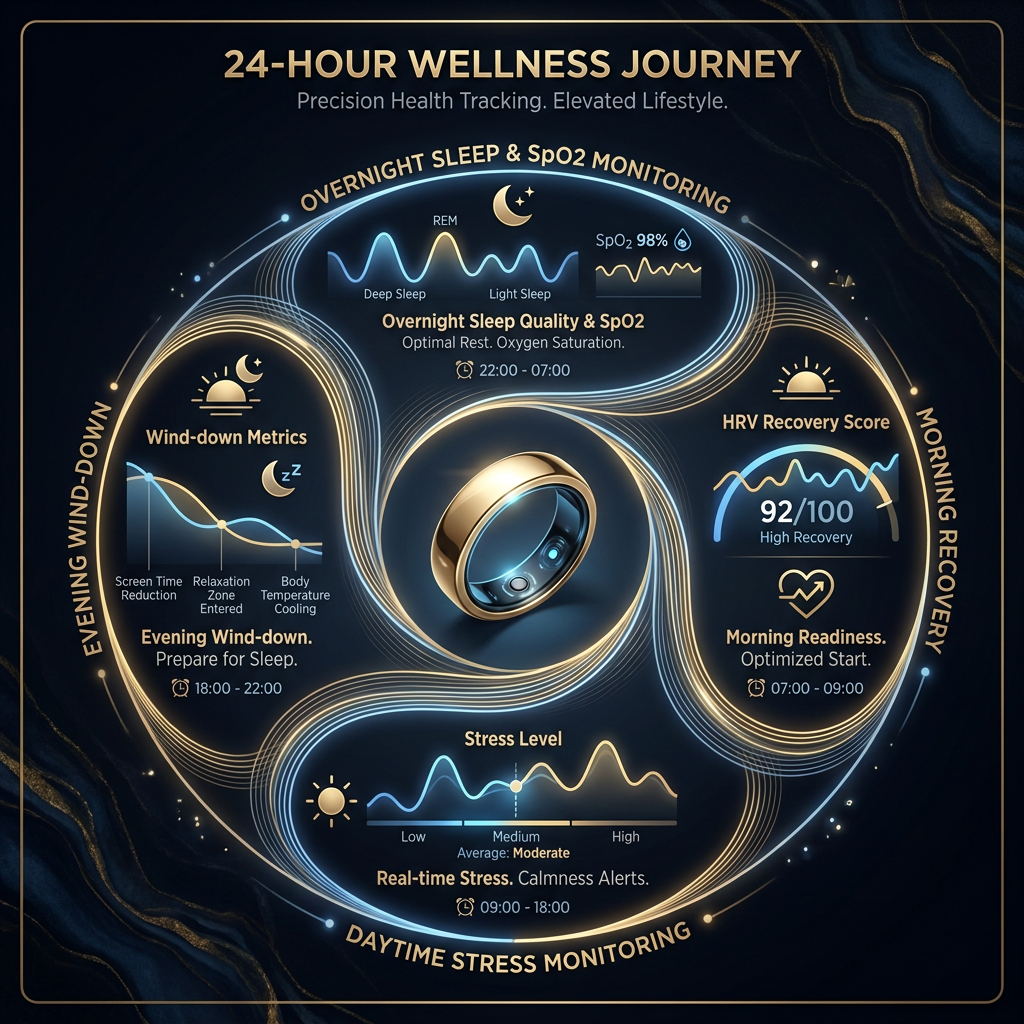
This architectural shift reflects a broader movement in technology: technology that serves you quietly without demanding your constant attention. Leading luxury technology creators, such as VERTU's luxury digital ecosystem, have pioneered this philosophy by pairing bespoke craftsmanship and end-to-end data privacy with personal assistance services. In the same manner, a luxury smart ring acts as an invisible personal health concierge, collecting vital health intelligence while remaining virtually weightless on your hand.
How Accurate Are Smart Rings, Really
What the Clinical Data Shows
When evaluating smart rings, the essential question is how closely their optical readings align with clinical reference standards—specifically electrocardiograms (ECG/EKG) for heart rate and HRV, and polysomnography (PSG) for sleep stages.
Peer-reviewed clinical validation studies offer reassuring evidence:
- Nocturnal Resting Heart RateA comprehensive clinical review published in the electrocardiogram agreement study published in PMC demonstrated that leading smart rings achieve a 99.6% correlation (r² = 0.996) with medical-grade 3-lead ECGs for nocturnal heart rate, with an average bias of less than 0.7 beats per minute.
- Heart Rate Variability (rMSSD)Nocturnal HRV readings showed a 98.0% agreement (r² = 0.980) with ECG recording, confirming that quiet-state finger PPG reliably captures millisecond-level inter-beat intervals.
- Blood Oxygen Saturation (SpO2)A 2025 clinical review of medical-grade smart rings (2025) found that ring-based pulse oximetry operates within a Root Mean Square Error (A rms) of 2.1% when benchmarked against hospital pulse oximeters in the 70–100% SpO2 range.
To see a detailed scientific walkthrough comparing smart ring optical sensor performance against laboratory diagnostic equipment, watch the expert analysis below:
Knowing the Limitations
While smart rings excel at resting and nocturnal health tracking, optical sensing inherently faces physiological and environmental constraints:
- Motion Artifacts During High-Intensity ExerciseRapid hand movements, weightlifting grips, or running vibrations cause the ring to shift subtly on the finger. This introduces movement noise into the optical signal. For intense athletic tracking, chest straps remain superior.
- Peripheral VasoconstrictionIn cold ambient temperatures, the sympathetic nervous system constricts peripheral blood vessels in your extremities to preserve core body heat. Reduced blood flow to the fingers weakens the PPG pulse signal, occasionally causing transient gaps in daytime SpO2 or heart rate readings.
- Skin Pigmentation and TattoosMelanin in darker skin tones absorbs green light wavelengths more readily. Premier smart ring manufacturers overcome this by automatically modulating LED intensity and incorporating infrared sensors, but extreme skin pigmentation or dark finger tattoos can still attenuate optical signals.
The 2026 Smart Ring Landscape
Premium Contenders, Compared
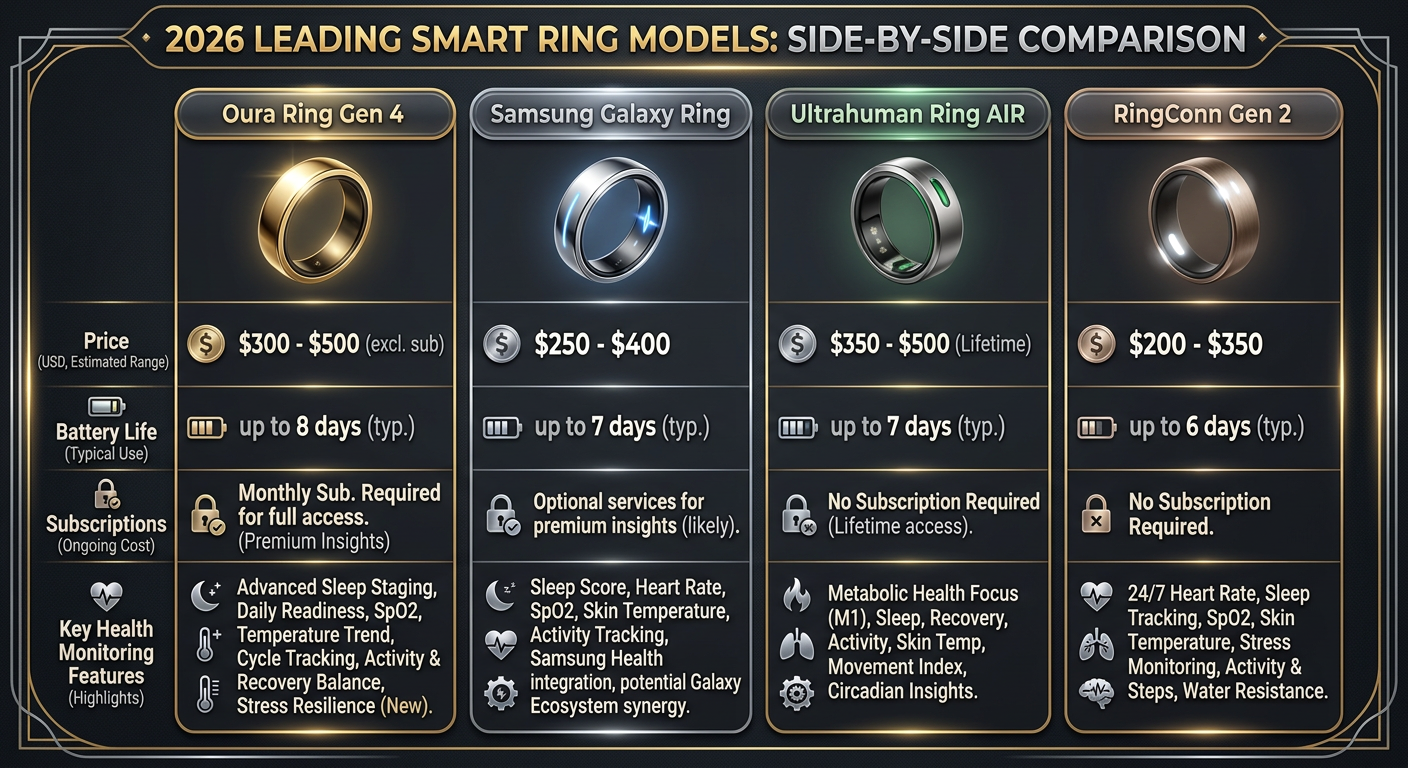
The smart ring market has matured rapidly into a competitive ecosystem featuring distinct engineering philosophies, pricing structures, and subscription models.
Smart Ring Model | Starting Price | Typical Battery Life | Subscription Fee | Standout Health Features |
|---|---|---|---|---|
Oura Ring Gen 4 | $349 – $499 | 5–8 days | $5.99/mo ($69.99/yr) | Recessed Smart Sensing sensors, industry-gold-standard sleep staging, comprehensive HRV recovery trends |
Samsung Galaxy Ring | $399 | ~7 days | $0 (No fee) | Grade-5 titanium shell, Samsung Health integration, energy score, pinch-gesture controls |
Ultrahuman Ring AIR | $349 | 4–6 days | $0 (No fee) | Ultralight 2.4g design, real-time glucose/metabolic correlation, circadian phase alignment |
RingConn Gen 2 | $299 | 10–12 days | $0 (No fee) | Exceptional battery longevity, built-in sleep apnea risk screening, lightweight contoured profile |
New Releases to Watch
As the market expands, manufacturers are pushing sensor miniaturization even further. The latest designs feature fully recessed, flat sensor nodes that eliminate skin indentations, improved multi-wavelength LED arrays, and advanced machine-learning models trained on broader demographic datasets.
Future sensor development focuses on non-invasive continuous blood pressure trend estimation via pulse transit time (PTT) and early-stage blood glucose directional tracking—innovations that promise to expand the smart ring from a recovery tracker into a comprehensive health guardian.
What to Consider Before You Buy
Finding the Perfect Fit
Unlike a smartwatch with an adjustable strap, a smart ring must fit your finger precisely to function. An ill-fitting ring will produce erratic biometric data or fail to record altogether.
- Use a Dedicated Sizing KitNever guess your ring size based on traditional jewelry sizing. Wear a plastic sizing ring from the manufacturer for at least 24 hours before ordering.
- Account for Finger SwellingHuman fingers expand and contract throughout the day due to temperature, hydration, and sodium intake. A ring that feels comfortable in the afternoon may feel tight upon waking.
- Choose the Right FingerIndex, middle, and ring fingers offer the strongest digital arterial pulse signals. Most manufacturers recommend wearing the device on your index or middle finger of your non-dominant hand for maximum sensor stability.
Battery, Budget, and Subscriptions
When selecting a smart ring, evaluate the total long-term cost of ownership alongside hardware specifications.
While models like the Samsung Galaxy Ring, RingConn Gen 2, and Ultrahuman Ring AIR require only a one-time hardware purchase, the Oura Ring Gen 4 requires a recurring monthly subscription ($5.99/month) to unlock detailed health dashboards, sleep staging, and historical trends. Over a three-year ownership cycle, subscription fees add approximately $210 to the total investment. Balance your desire for software polish and clinical research backing against the simplicity of a subscription-free model.
Conclusion
Smart rings equipped with heart rate and SpO2 monitoring have transformed personal health tracking from a noisy, screen-filled chore into a seamless lifestyle enhancement. By leveraging the rich arterial vascular structure of your fingers, these compact devices deliver continuous, medical-grade biometric intelligence while respecting your visual peace and personal aesthetic.
The underlying PPG optical technology is clinically validated, the algorithms are maturing rapidly, and the market offers options tailored to every priority—whether you value multi-week battery life, subscription-free software, or deep sleep staging research.
These devices offer a powerful, intimate window into your body's daily rhythms and autonomic recovery. However, smart rings are designed to empower proactive wellness—they should complement, rather than replace, professional medical diagnosis and regular physician consultation.
Disclosure: This article references VERTU pages. Editorial judgment remains the priority.
![How to Scan Receipts and Documents with Your Phone [Full Guide]](https://cdn.sanity.io/images/e0gp1l2g/production/0db13feec1d5e72b8a8a5f976d1f3e86619c9228-3840x1860.webp?w=180&h=180&q=78&auto=format&fit=crop)
![How to Scan Receipts and Documents with Your Phone [Full Guide]](https://cdn.sanity.io/images/e0gp1l2g/production/0db13feec1d5e72b8a8a5f976d1f3e86619c9228-3840x1860.webp?w=800&h=450&q=82&auto=format&fit=crop)
![Top 10 Two-Tone Carbon-Fibre Watches for Men [2026 List]](https://cdn.sanity.io/images/e0gp1l2g/production/18870799ba33fab0e038968359cd5772d7d7db30-1024x576.webp?w=800&h=450&q=82&auto=format&fit=crop)
![Top 10 Luxury Watches with Digital Complication Displays for Men [Latest]](https://cdn.sanity.io/images/e0gp1l2g/production/c4f6bf8c080f291c39f7cc85c7344ecff2fd3799-1024x553.webp?w=800&h=450&q=82&auto=format&fit=crop)