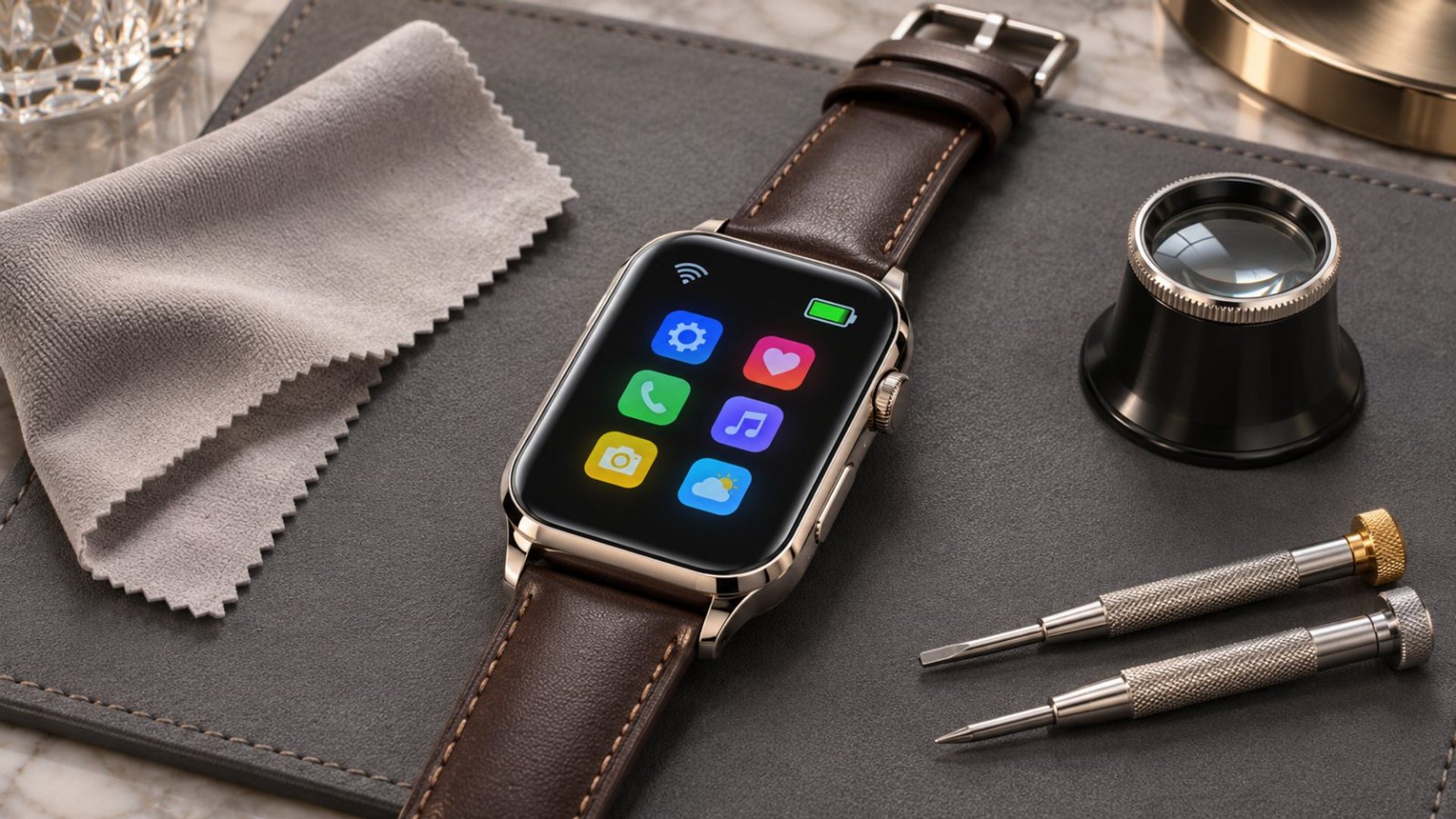
Luxury watch service for a smartwatch should follow the specific maker's guidance and the watch's condition, rather than a fixed overhaul interval borrowed from a mechanical movement. A connected watch combines an electronic display, rechargeable battery, software, sensors, case, strap and seals. Inspect it routinely and arrange professional assessment when battery life changes sharply, moisture appears, controls fail or the case is damaged. Check the exact model's warranty and service terms before any repair.
Is there a standard service interval for a luxury smartwatch?
No single interval fits every luxury smartwatch. Mechanical-watch advice often concerns lubrication, gaskets and moving parts in a traditional movement. A smartwatch has different wear mechanisms: rechargeable-cell ageing, charging contacts, software compatibility, a bonded display and model-specific seals. Some components can be cleaned or adjusted by the owner; others require specialised tools and a maker-approved process. Treat a calendar reminder as a prompt to inspect, not as a mandate to open the case.
Start with the manual and service policy for your exact model and edition. A generic online claim that every watch should be opened after three or five years is not enough evidence for a sealed electronic watch. Opening a case without the required procedure may affect its seals and warranty. If a shop proposes a routine overhaul, ask what fault or manufacturer requirement the work addresses, what will be tested afterwards and whether original parts are available.
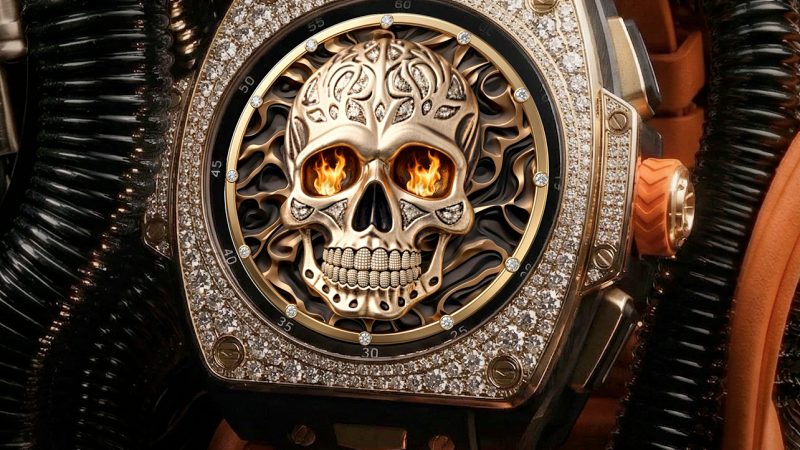
VERTU's Grand Watch collection is relevant to this question, but the current brand knowledge base does not state a universal service interval for it. Owners should identify their exact Grand Watch variant and ask VERTU support for that model's current care, battery, parts and authorised-service guidance. Do not transfer a quoted interval from another watch or an older edition.
What can you inspect at home each month?
Use a brief monthly check as an owner habit, not a manufacturer-mandated service schedule. Look for a lifting screen edge, cracked glass, loose crown or button, damaged strap attachment, unusual heat, corrosion around contacts and visible moisture under the display. Confirm that charging starts reliably and that the watch does not shut down at a substantial indicated charge. Note any abrupt change rather than trying to diagnose internal parts yourself.
Clean only with the materials and method listed for your particular watch and strap. Separate advice for metal, leather, ceramic and textiles where the manufacturer does so. A damp cloth that is acceptable for a case may harm an untreated leather strap. Avoid solvents, compressed air, sharp tools and direct sprays unless the maker explicitly permits them. Dry the watch before charging, and inspect the charging interface for debris without scraping it.
Check software updates and phone compatibility while the watch is functioning normally. Updates can fix faults or change battery use, but they may require a charged watch and a backup or sync. Before service, record the software version, paired phone model and a description of the fault. Photos of physical damage help distinguish a warranty question from a wear issue. This simple record saves time when a technician needs to reproduce an intermittent problem.
When does battery behaviour justify service?
Rechargeable batteries have finite service lives, but runtime alone does not reveal the cause of a decline. Compare days with similar settings, display brightness, notifications, workout tracking and network conditions. Verify the charger and cable, check for dirt on contacts and review recent updates. A sudden drop, repeated shutdown, failure to charge or unusual heat deserves support attention. Do not keep charging a visibly swollen or damaged watch.
Apple's Apple Watch battery-health guide describes a maximum-capacity reading on supported Apple Watches. Its repair page states a below-80-percent battery capacity threshold for a particular AppleCare service benefit. These are Apple-specific examples, not a VERTU Grand Watch threshold or a general smartwatch replacement rule. Other makers may provide different diagnostics, coverage or no user-facing battery-health percentage.
Before booking service, ask whether the maker can diagnose the battery without replacing the whole watch, whether replacement is offered for the exact edition and what happens to the device's data. Request a written estimate after inspection if the watch is out of coverage. A shop that promises a universal replacement cost without seeing the model or condition may be overlooking case construction and parts availability.
Do water resistance and seals need periodic checks?
Water resistance is a model-specific property and can change after impact, ageing, opening the case or damage to a seal. Do not assume a luxury case or a past immersion claim makes a current watch safe for a pool or shower. Read the exact rating and use guidance, including restrictions involving hot water, soap, pressure and strap materials. A rating on one Grand Watch variant does not automatically apply to another.
If the watch has been dropped, the glass is cracked or moisture appears beneath the display, stop exposing it to water and seek an authorised evaluation. An owner cannot establish seal integrity by looking at the outside. A qualified service centre may be able to perform a model-appropriate pressure or seal check, but ask whether such a test is available for your exact watch. After any case-opening repair, request documentation of the post-service checks performed.
Water damage is not always visible immediately. Intermittent charging, button faults or condensation after exposure can be warning signs. Do not use heat, a hairdryer or repeated charging to “dry out” an affected watch. Follow the maker's handling instructions and arrange assessment. This protects the watch and gives the service team a clearer account of what happened.
Which changes call for an earlier appointment?
Book an assessment when a control sticks, a display lifts or flickers, the case or strap attachment loosens, the charger overheats, moisture appears or the watch restarts unexpectedly. A battery that swells or produces heat requires prompt, cautious handling. Wear that affects the strap's secure fit deserves attention even when the electronics appear normal. These symptoms matter more than whether the watch has reached an arbitrary birthday.
Distinguish cosmetic care from functional repair. Surface marks may be a matter of preference, but a deep scratch across the display or a bent lug can have consequences for protection and secure wear. Polishing a coated surface can change its finish; an unauthorised battery swap can affect seals. Ask what the maker recommends and whether the proposed work changes the appearance, rating or coverage of the watch.
If a fault follows a software update, note the version and date. Support may advise a restart or setting review. Do not postpone service for visible damage, moisture or abnormal heat. Give the team both physical symptoms and software history.
How should you prepare a luxury smartwatch for service?
Find the purchase record, serial or model identifier, warranty details and a concise fault timeline. Sync or back up information as the maker instructs, and ask how to remove the watch from any linked account or payment service without disrupting diagnostics. Record the watch's condition with photographs before handing it over. Remove a third-party strap if the service centre asks, but keep any part needed to demonstrate the fault.
Ask for an itemised estimate covering diagnosis, parts, labour, shipping and taxes; confirm what can change after inspection. Ask whether parts are original and whether a repair affects water resistance or warranty. For a premium finish, request clarity about handling of decorative case surfaces and strap fittings. If replacement rather than component repair is proposed, ask what happens to the original watch and stored data.
Do not assume a conventional watchmaker is equipped to reseal a connected watch. Battery, display and software work may need maker-specific procedures. The shirt-cuff fit guide can help with an external fit issue, but a suspected internal fault belongs with authorised service. Use the VERTU guides for broader care context.
What is a sensible ongoing care plan?
Keep a simple record of purchase date, software version, cleaning method, charging changes and any past repair. Make your own monthly visual check, follow published care instructions and contact the maker when a meaningful symptom appears. Before a trip or important event, confirm the watch charges, runs for your expected day and has a secure strap. If you use water features, confirm the model's current guidance and seek a seal assessment after damage or opening.
For Grand Watch, the practical next step is to identify the exact edition from its case or documentation and obtain current VERTU instructions for that edition. There is no evidence here for a fixed Grand Watch overhaul timetable. The right service moment follows verified model guidance and observed condition, with professional assessment for faults that a careful owner check cannot resolve.
Frequently asked questions
Should I service my smartwatch every three years?
Do not apply a universal three-year rule. Follow the exact maker's schedule, if one exists, and seek service sooner for battery, water, display or control problems.
Can a regular watchmaker replace its battery?
Some shops may offer the work, but confirm their authorisation, exact-model parts, resealing and post-repair testing before agreeing. Ask the maker first.
Does a shorter charge mean the battery has failed?
Not necessarily. Settings, software, charger condition and use can alter runtime. Compare similar days and seek diagnosis if the change is sudden or severe.
Is my Grand Watch service interval the same as an Apple Watch?
No. Apple service thresholds and features apply to Apple models. Ask VERTU for guidance on your exact Grand Watch variant.