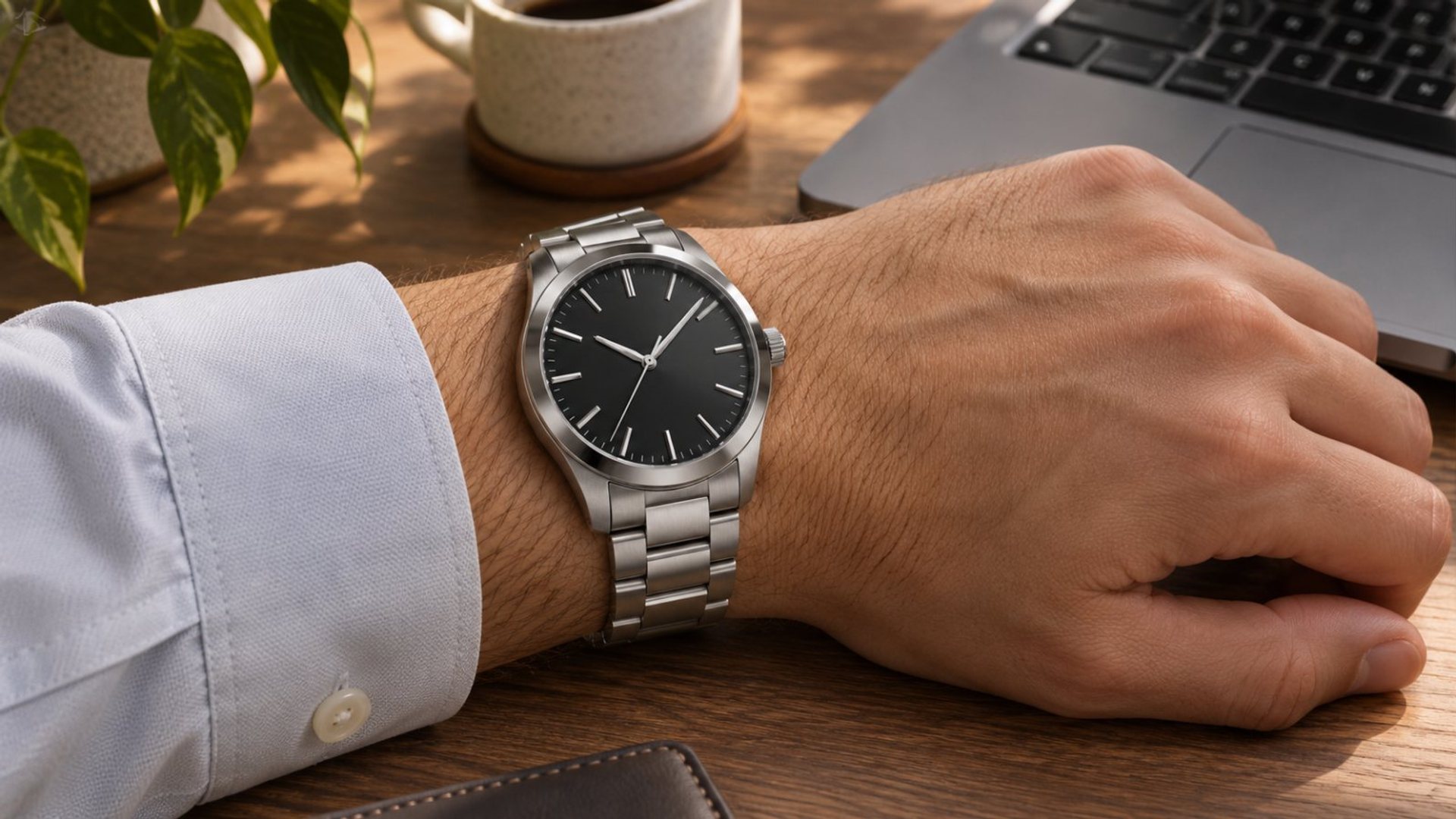
Watch weight can contribute to wrist fatigue over a long day, but a gram figure by itself cannot predict comfort. Total worn weight, where the case sits, strap material, clasp position and your work all change how pressure feels. A watch that is centered and secure often wears more comfortably than one that slides and repeatedly pulls at the wrist. Test the complete watch on your own wrist for several hours before treating its specification as a verdict.
Does a heavier watch always tire the wrist?
No. Weight is one input, not a universal comfort threshold. Two watches with the same listed mass can feel different if one has a broad, flat case and flexible strap while the other has a tall case and a stiff bracelet. A loose heavy case can rotate toward the underside of the wrist and require constant correction. A too-tight strap can create pressure even on a comparatively light watch.
Consider the watch as a worn system: case, strap or bracelet, clasp and any extra links. Product pages sometimes state case-only weight while a buyer experiences the mass of the complete fitted watch. If you compare models, ask for the weight in the configuration you will wear and check whether links have been removed. A published number is useful for shortlisting, but it is not a medical or ergonomic limit.
Comfort also changes through the day. The wrist may feel different after a warm commute, exercise, a salty meal or hours at a keyboard. A fit that seems ideal at a counter can feel restrictive later. Build a trial around the day you actually have, with sitting, walking and ordinary hand movement, rather than a brief pose in front of a mirror.
How does weight distribution change the feel?
A large portion of a watch's mass is concentrated in its case. If the case overhangs the wrist or stands high, it can rock as the arm moves. A balanced strap or bracelet supports the case from both sides and keeps it centered. If the clasp sits far off-center, the bracelet can pull the case toward one edge. The same total mass then feels more intrusive because it shifts repeatedly.
Check the watch from above and from the side. Do the lugs sit within the usable flat area of your wrist? Does the case settle without a gap at either end? Do the strap halves bend naturally around the wrist, or do they hold the case away from it? A stiff new strap may soften with ordinary wear, but that possibility should not excuse a clearly poor initial fit. Ask about another strap length or a compatible material.
For a metal bracelet, link count and micro-adjustment matter. Removing links from only one side can move the clasp away from the underside of the wrist. An experienced retailer can distribute links so the case and clasp sit more evenly. If a bracelet has small incremental adjustments, try them during the day rather than forcing a single fixed circumference to work in all conditions. Never leave a clasp so loose that the watch can slip off.
How tight should a watch feel during work?
It should stay in position without cutting into the skin. You should be able to move your hand normally and notice no persistent pressure mark or numbness. Smartwatch sensors may need stable contact for certain functions, but that does not justify overtightening. Apple's watch-fit guidance describes a fit that is snug yet comfortable and notes that users may loosen the strap after exercise. That advice concerns Apple Watch; use your own watch maker's instructions for sensor placement and strap materials.
For typing, notice whether the case or clasp touches the desk when your wrist rests. If it does, move the keyboard, change hand position or shift the watch slightly above the wrist bone where the maker permits. Do not bend the wrist unnaturally to avoid the case. A short trial across a meeting, a walk and a work block gives better evidence than trying to calculate an ideal number of grams from wrist circumference alone.
Apple's band guidance also stresses compatible sizing and warns against forcing a band into its slot. The general lesson is to check attachment and fit, not to force an ill-fitting part. For a different brand, use only compatible straps or bracelets and obtain advice when the attachment design is unclear.
What is a useful daylong fit test?
Begin with the watch secured and centered. Note how it feels during a quiet half-hour, after an hour of typing, during a walk and toward the end of the day. At each point, check whether the case has rotated, whether the clasp digs in and whether the same spot has become sore. Record any changes in temperature or activity. A simple note is enough; there is no need for a precise comfort score.
Change one variable at a time. If the bracelet feels tight in the afternoon, try its permitted micro-adjustment or a professional link adjustment. If the case slides, shorten the strap slightly without creating pressure. If the clasp is the problem, ask whether another strap or clasp configuration is available. If the case itself overhangs your wrist, a strap change may have limited effect; compare a smaller or lower-profile watch.
Try the watch with the clothes you usually wear. A rigid shirt cuff can push a tall case toward the hand, making the watch feel heavier or more intrusive. Our case-thickness and shirt-cuff guide explains how to check that interaction. A watch that feels fine with a short sleeve may need a different position or cuff choice at work.
When should you stop adjusting and take it off?
Take a break if the watch causes persistent pain, tingling, numbness, visible swelling, broken skin or a rash. Do not tighten it further to stop movement. Clean and dry the watch and strap as directed, and consider whether a material or clasp is irritating the skin. Seek medical advice for symptoms that persist or worsen; an article cannot diagnose the cause. A watch should fit daily life without requiring you to ignore discomfort.
For a loose clasp, damaged link or strap that could release unexpectedly, stop wearing the watch until it is inspected. A poorly secured heavy watch creates a drop risk and can abrade the wrist. An authorised retailer or service centre can assess the attachment and advise on parts. A home adjustment may be reasonable for a compatible system with clear instructions, but avoid improvised pins, adhesives or forced tools.
How should you compare a VERTU Grand Watch?
The VERTU Grand Watch collection includes different finishes and configurations. The current brand knowledge base does not provide one universal Grand Watch weight, so do not infer a single gram figure or fit from the collection name. Identify the exact edition and ask for its case, bracelet or strap specifications, including whether any published mass is case-only or complete. Then try that configuration on your wrist.
Use the same daylong questions as for any watch: Does the case sit inside the wrist's flat area? Does it stay centered when you walk? Does the clasp press against a keyboard surface? Can the strap be adjusted in small increments? If your routine includes formal cuffs, consider height as well as mass. A premium finish is easier to appreciate when you do not have to reposition the watch all day.
If you already own the watch, start with fit before deciding that its weight is the sole problem. Ask a qualified retailer about link balance or a compatible alternative strap. For maintenance issues rather than fit, see our luxury smartwatch service guide. A fit adjustment should not become an unauthorised case or electronics repair.
What should decide the purchase?
Compare the complete worn configuration, try it at normal working height and give it enough time to reveal sliding or pressure. Weight can narrow a shortlist, but balance, case geometry and adjustment determine whether the watch remains welcome at the end of the day. If you cannot try it for hours, check the return and sizing terms before purchase and keep the first fitting careful and reversible.
There is no honest universal “maximum comfortable watch weight” in grams. The most useful measurement is your own repeatable experience with the exact case and strap. Select the version that remains secure, allows natural movement and leaves the wrist comfortable after the activities that fill your day.
Frequently asked questions
Is watch weight more important than size?
Both matter, along with case shape and strap fit. A heavy balanced watch may feel better than a lighter one that overhangs or slides.
Can a different strap reduce wrist fatigue?
It may improve balance and pressure distribution, but it cannot remove case weight. Check exact compatibility and try a reversible fit change.
Should a watch leave a mark on my wrist?
A brief impression may occur, but persistent pain, numbness, swelling or broken skin is a reason to remove it and seek appropriate help.